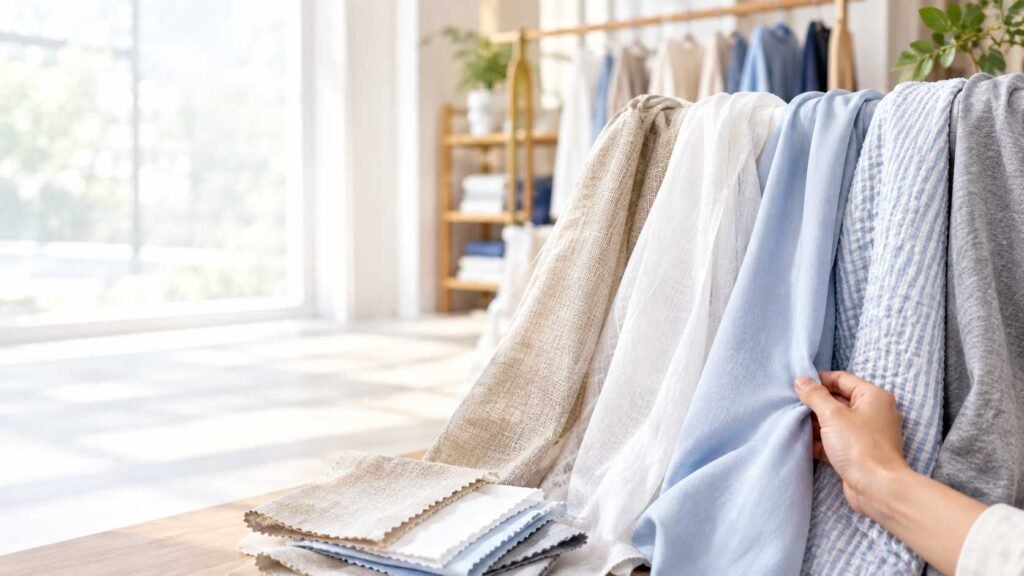
The best lightweight summer fabrics combine three properties, not one: low fabric weight (under 150 GSM), breathability from an open weave structure, and moisture management to move sweat away from skin. Linen, cotton voile/lawn, and lightweight Tencel excel at all three; some low-GSM synthetics feel light but trap heat because weight alone doesn't guarantee breathability. Here's the distinction that most 'summer fabric' lists skip — and why it matters more than the GSM number on the tag.
Lightweight Fabrics for Summer
The Mistake Hiding in Most 'Lightweight Fabric' Advice
Most summer fabric guides treat 'lightweight' as a single property measured purely by weight. But a fabric can be low-GSM and still feel hot, because weight only tells you how much material there is — not how well air moves through it. A tightly woven 100 GSM polyester can trap more heat against skin than a slightly heavier, loosely woven 140 GSM linen, because the linen's open weave structure lets air circulate in a way density alone doesn't determine.
This is the gap between 'lightweight' and 'cool' — they overlap often, but not always, and the fabrics that get this wrong are usually synthetic blends optimized for low weight and wrinkle resistance rather than actual heat management.
Linen: The Benchmark for Hot-Weather Performance
Linen consistently outperforms other natural fibers in heat, and for reasons beyond just being 'light.' Flax fibers are naturally hollow and more thermally conductive than cotton, meaning linen actively pulls heat away from the body rather than just failing to trap it. It also absorbs moisture readily and dries fast, which is why a linen shirt feels noticeably cooler than a cotton one in genuinely hot, humid conditions.
Typical weight: 100–170 GSM for apparel-weight linen
Best for: extreme heat, high humidity, all-day wear in tropical or desert climates
Trade-off: wrinkles heavily — a fabric that's cool specifically because its loose weave and natural stiffness don't cling to the body, which is also what causes the wrinkling most people associate with it
Cotton Voile and Lawn: Sheer Weight Without Sacrificing Cotton's Comfort
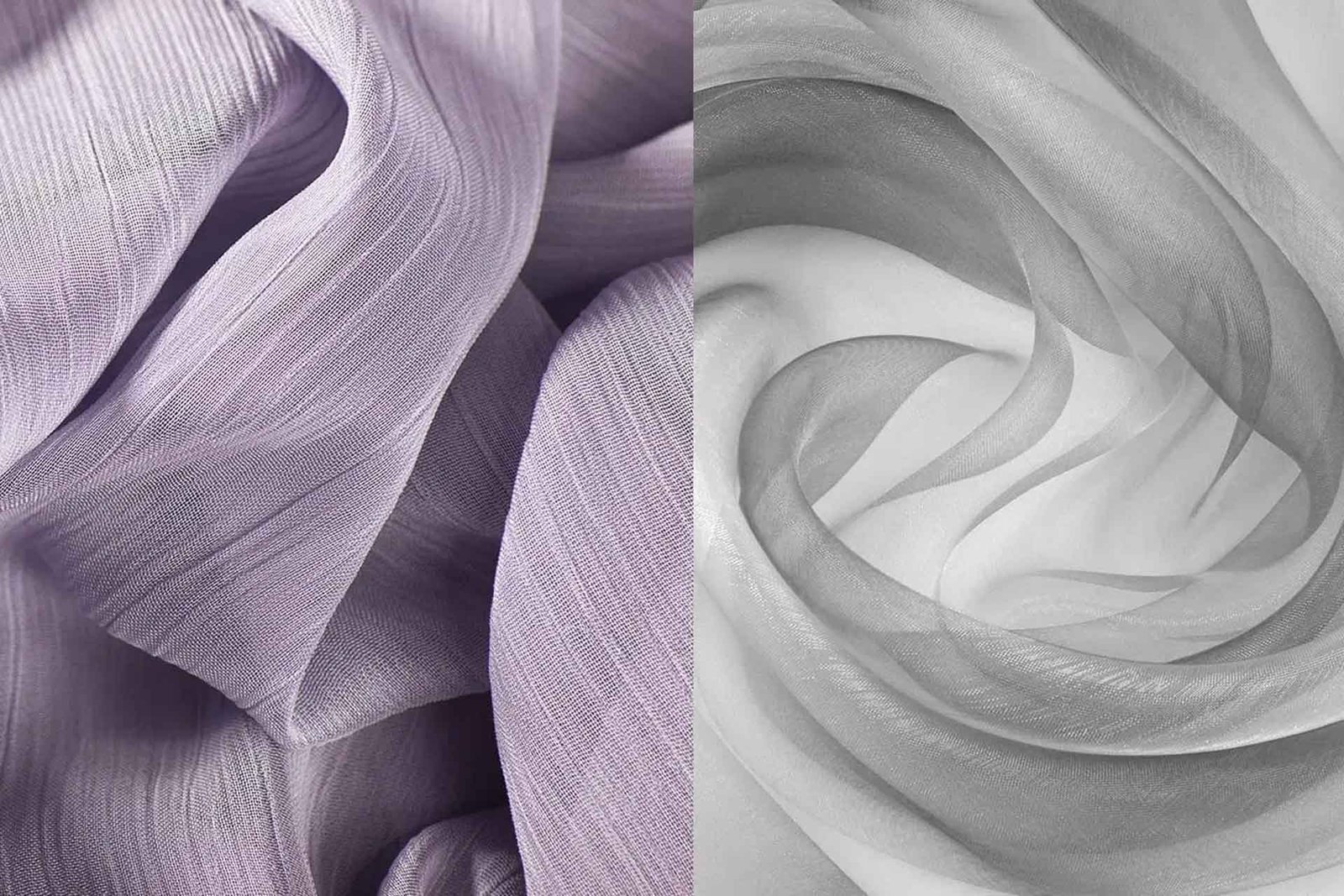
Voile and lawn are ultra-lightweight, sheer cotton weaves — essentially cotton spun and woven to be as thin and open as possible while remaining a stable fabric.
Typical weight: 60–100 GSM
Best for: summer dresses, lightweight shirts, layering pieces in extreme heat
Trade-off: the sheerness that makes it so breathable also means less durability and often requires lining for garments needing more structure or opacity
Tencel (Lyocell): The Quiet Overperformer
Tencel manages moisture better than cotton at a comparable weight, largely due to the fiber's structure, which absorbs and releases moisture more efficiently. It also has a natural slight sheen and smooth hand feel that makes it drape coolly against skin, similar to a lightweight silk.
Typical weight: 100–150 GSM
Best for: smart-casual summer wear, warm-climate everyday clothing, anyone wanting cotton's comfort without cotton's slower drying time
Trade-off: less widely available and typically pricier than cotton or linen at comparable weights
Seersucker: Texture Doing the Cooling Work, Not Just Weight
Seersucker's signature puckered texture isn't decorative — the fabric is woven so parts of it bunch slightly, creating small air pockets that hold the fabric away from skin. This means seersucker can feel cooler than a flat-woven fabric of the same GSM, because the structure is doing work that weight alone doesn't capture.
Typical weight: 120–180 GSM
Best for: humid climates where fabric clinging to skin is the main discomfort, classic warm-weather tailoring
Trade-off: the textured weave is less smooth and more casual-looking than flat cottons, limiting it to certain style contexts
Lightweight Cotton Jersey (Knit, Not Woven)
Unlike the woven fabrics above, lightweight jersey knit is stretchy and moves with the body, which changes how 'cool' is delivered — through airflow from an open knit structure rather than a rigid open weave.
Typical weight: 120–160 GSM
Best for: casual t-shirts, everyday summer basics, athletic-adjacent wear
Trade-off: knits can cling to sweat more than an open weave like linen, since the stretch structure sits closer to the body
The Trap: Lightweight Synthetics That Feel Cool at First but Trap Heat
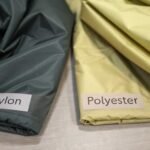
Many performance polyester fabrics are marketed as 'cooling' or 'breathable' at very low GSM (sometimes under 100 GSM), and the low weight genuinely does make them feel light in the hand. But polyester's fiber structure is far less absorbent than natural fibers, so instead of pulling moisture away and evaporating it, sweat can sit on the fabric surface — which feels fine for short bursts of activity but becomes uncomfortable over a full hot day of low airflow.
Where this works well: athletic wear designed for short, high-intensity activity with genuine engineered wicking channels
Where it fails: all-day summer wear in humid climates, where the lack of natural absorbency becomes noticeable after a few hours
Quick Reference: Matching Lightweight Fabric to Summer Use
| Use Case | Best Fabric Choice |
|---|---|
| Extreme heat, high humidity | Linen |
| Sheer summer dresses/layering | Cotton voile or lawn |
| Smart-casual, all-day comfort | Tencel |
| Classic warm-weather tailoring | Seersucker |
| Casual everyday basics | Lightweight cotton jersey |
| Short bursts of activity/athletic | Technical wicking synthetics |
The Real Question to Ask Before Trusting a 'Lightweight' Label
GSM alone doesn't tell you if a fabric will actually feel cool — weave/knit structure and fiber absorbency matter just as much. Before assuming a low-GSM fabric will keep you comfortable, ask: does this fabric's structure let air move through it, and does the fiber absorb moisture or just sit on top of it? A fabric that answers 'yes' to both is genuinely built for heat; a fabric that's just thin is only halfway there.
Conclusion
Lightweight summer fabric isn't just about low GSM — it's the combination of low weight, an open weave or knit structure, and a fiber that manages moisture rather than trapping it against skin. Linen remains the benchmark for genuinely hot, humid conditions, while cotton voile, Tencel, and seersucker each solve the heat problem through slightly different mechanisms. The fabrics that disappoint in real summer heat are usually the ones optimized for low weight alone, without the breathability and moisture management that actually make a fabric feel cool.