Twill is not a fiber, not a brand, and not a specific fabric — it is a weave structure. The same twill construction can be produced in cotton, polyester, polyester-viscose blend, polyester-cotton blend, wool, nylon, or linen, producing fabrics that look and perform completely differently depending on the fiber used. What they share is a defining structural characteristic: a diagonal rib pattern created by passing weft threads over and under multiple warp threads in a staggered sequence. This guide covers the mechanics of twill weave, the full range of twill construction variants, how different fiber combinations affect performance, and what garment manufacturers and fabric buyers need to specify when sourcing twill fabric for production.
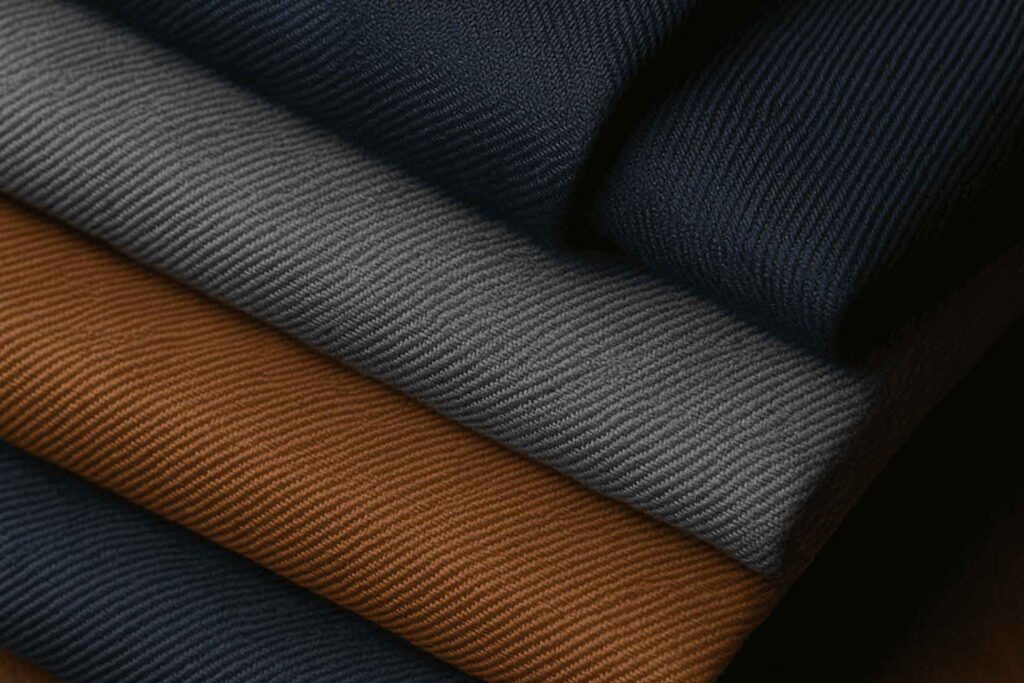
What Type of Fabric Is Twill
How Twill Weave Works — The Structural Mechanics
Understanding twill at the structural level helps buyers evaluate fabric behavior before ordering samples, and helps production teams anticipate how a fabric will perform in cutting, sewing, and finishing.
In a plain weave — the simplest woven structure — each weft thread passes alternately over one warp thread and under the next, creating a balanced grid pattern with equal interlacing on both faces. The result is a stable, relatively stiff fabric with minimal drape.
In a twill weave, the weft thread passes over two or more warp threads before going under one or more, and this sequence shifts one thread to the right or left with each successive row. The shifting offset is what creates the characteristic diagonal line — the twill line — on the fabric surface.
This structural difference has direct performance consequences:
Longer float length = more drape. Because weft threads are not interlaced at every warp thread, they have more freedom to move with the fabric structure. The longer the float, the more fluid the drape — which is why twill fabrics drape more naturally than plain weave at the same weight.
Fewer interlacing points = softer hand feel. With fewer thread crossings per square centimeter, twill fabrics have a softer surface than plain weave equivalents. The threads can move slightly against each other, producing the characteristic smooth hand feel of twill suiting and workwear fabrics.
Diagonal structure = better wrinkle recovery. Stress applied to twill fabric is distributed diagonally rather than horizontally and vertically as in plain weave. This diagonal distribution means creases form and recover more readily — the structural basis for twill's superior wrinkle resistance compared to plain weave at equivalent fiber composition and weight.
Denser packing = higher durability. Twill constructions allow more threads per unit area than plain weave because the floating threads pack more closely together. This higher thread density increases abrasion resistance and tear strength — explaining why twill is the default construction for workwear, denim, and heavy-duty uniform fabric.
Twill Weave Notation — Reading Fabric Specifications
Twill weaves are described using a notation system that tells you exactly how threads interlace. Understanding this notation allows buyers to read fabric specifications accurately and compare constructions from different suppliers.
The notation format is: [over] / [under]
1/1 — Plain weave. Over one, under one. Not a twill — included for reference.
2/1 Twill — Over two, under one. The weft passes over two warp threads, then under one. Produces a clear but relatively fine diagonal rib. The diagonal appears more prominently on one face (the face side) than the other. Used in lightweight suiting, uniform shirts, and casualwear where a subtle twill texture is preferred.
2/2 Twill — Over two, under two. A balanced twill where the diagonal appears similarly on both faces. Produces a fabric with good dimensional stability and a clean surface. Common in mid-weight suiting fabrics and formal trouser cloth.
3/1 Twill — Over three, under one. The weft passes over three warp threads before going under one. Produces a more pronounced diagonal with longer floats, giving the fabric more drape and a smoother face surface. This is the construction used in most denim and in heavier workwear fabrics. The face side is clearly smoother than the reverse.
4/1 Twill — Over four, under one. Very long floats, highly pronounced diagonal, maximum drape. Less common in standard apparel — used in specialized suiting and some premium dress fabrics where maximum surface smoothness is specified.
Satin weave is technically an extreme form of twill (typically 4/1 or higher) where the diagonal is deliberately suppressed to create a smooth, lustrous surface. Included here because buyers sometimes encounter 'satin twill' as a specification — it refers to a twill construction with a satin-like surface finish.
Twill Weave Variants — Construction Types and Their Applications
Beyond the basic notation, several named twill variants produce distinctive surface effects with specific applications in garment manufacturing.
Standard Twill (S-twill and Z-twill) The diagonal line in a twill weave runs either from lower-left to upper-right (Z-twill) or from lower-right to upper-left (S-twill). Most commercial twill fabric is Z-twill. S-twill and Z-twill can be combined in a single fabric to create pattern effects. In standard single-direction twill, the designation is rarely specified by buyers — it is a production parameter managed by the mill.
Herringbone Twill The twill direction reverses at regular intervals — alternating between S-twill and Z-twill — creating a V-shaped or chevron pattern on the fabric surface. The width of the herringbone repeat determines the scale of the pattern: narrow repeats (2–4 threads) produce a subtle micro-herringbone; wider repeats (8–16 threads) produce a bold, clearly visible chevron. Herringbone is the most widely specified decorative twill variant in formal suiting and blazer fabric production.
Broken Twill The diagonal direction changes irregularly rather than at fixed intervals, disrupting the continuous twill line and creating a more textured, less directional surface appearance. Used in casual denim and some workwear fabrics where the standard twill diagonal is not desired.
Elongated Twill A twill variant where the warp and weft thread counts differ, creating an asymmetric diagonal angle. The standard 45-degree twill diagonal can be made steeper or shallower by adjusting thread density. Steep twill (closer to 63 degrees) is used in some suiting fabrics; shallow twill (closer to 27 degrees) in some workwear constructions.
Diamond Twill Combines S-twill and Z-twill sections in both warp and weft directions, creating a diamond or lozenge pattern on the fabric surface. Less common in commercial apparel production — used in decorative textile applications and some traditional uniform fabrics.
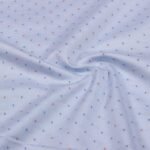
Dobby Twill Combines a twill base construction with a dobby loom mechanism that produces small geometric patterns — micro-checks, dots, or geometric shapes — woven into the fabric alongside the diagonal twill rib. Used in premium suiting and formal shirt fabrics where subtle surface pattern differentiation is required without the cost of jacquard weaving.
Twill Fabric by Fiber — Full Production Range
The same twill construction produces completely different fabrics depending on the fiber used. This section covers the full fiber range available in twill construction for garment manufacturing.
Cotton Twill The original twill fabric — denim is a cotton 3/1 twill. Cotton twill fabrics range from lightweight shirt-weight constructions (120–150 GSM) through mid-weight chino and trouser cloth (180–220 GSM) to heavyweight canvas and workwear fabric (280–400 GSM). Cotton twill is breathable, soft, and comfortable but wrinkles more than synthetic blends and has lower dimensional stability without pre-treatment.
Typical applications: chinos, casualwear, workwear, denim, canvas bags, military uniform cloth.
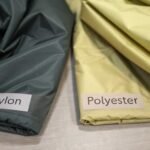
Polyester Twill (T Twill) 100% polyester twill offers excellent color retention, dimensional stability, and wash durability at low cost. Less breathable than cotton or viscose blends and has a stiffer hand feel than TR twill. Used in budget-tier uniform programs, lining fabrics, flag cloth, and applications where cost efficiency and dimensional stability are the primary drivers.
Typical applications: budget uniforms, linings, flags, industrial workwear.
Polyester-Viscose Twill (TR Twill) The dominant suiting and formal trouser fabric globally. TR twill combines polyester's dimensional stability and wrinkle recovery with viscose's drape and surface sheen. The result is the fabric used in the majority of formal trouser, suit jacket, and institutional uniform production worldwide. Available across a wide GSM range from lightweight tropical weight (150–170 GSM) through standard suiting weight (180–220 GSM) to heavier blazer weight (220–260 GSM).
Standard compositions: 65/35 polyester-viscose (most widely used), 80/20 polyester-viscose (enhanced wrinkle recovery), 63/33/4 polyester-viscose-spandex (stretch formal trousers).
Typical applications: formal trousers, suit jackets, institutional uniforms, school blazers, corporate wear.
Polyester-Cotton Twill (TC Twill) TC twill balances the breathability and moisture absorption of cotton with the dimensional stability and wash durability of polyester. The standard fabric for workwear, school uniforms, and hospitality garments that require high-frequency washing performance alongside reasonable wearer comfort. Common compositions: 65/35 or 80/20 polyester-to-cotton.
Typical applications: workwear, school uniforms, hospitality uniforms, security uniforms, medical scrubs.
Nylon Twill Nylon twill offers the highest abrasion resistance of any common apparel fiber in a woven construction. Used in performance outerwear, military-style garments, tactical workwear, and bag fabric where durability under extreme conditions is the specification requirement. Heavier than equivalent polyester constructions at the same GSM due to nylon's higher fiber density.
Typical applications: tactical workwear, outdoor jackets, military-style garments, bags and luggage.
Wool and Wool-Blend Twill Wool twill is the premium end of the suiting spectrum — natural temperature regulation, distinctive hand feel, and a surface character that synthetic blends cannot fully replicate. Wool-polyester blends (typically 55/45 or 60/40 wool-to-polyester) reduce cost and improve dimensional stability while retaining most of wool's performance. TR-wool blends add viscose for additional drape alongside the wool and polyester components.
Typical applications: premium suit collections, luxury uniform programs, high-end corporate wear.
Linen Twill Linen twill is less common than cotton twill but is used in premium casualwear and summer suiting where the natural texture of linen is part of the product identity. Linen twill wrinkles significantly — this is considered part of its aesthetic in casual applications but limits its use in formal garments.
Typical applications: summer casualwear, linen blazers, resort wear.
Twill Fabric GSM — Full Range by Application
| GSM Range | Construction Feel | Fiber Options | Typical Applications |
|---|---|---|---|
| 100–140 GSM | Very lightweight | Cotton, linen, TR | Summer shirts, lightweight dresses, tropical linings |
| 140–180 GSM | Lightweight | TR, TC, cotton | Lightweight trousers, summer uniforms, casual shirts |
| 180–220 GSM | Mid-weight | TR, TC, polyester | Standard uniform trousers, corporate wear, school uniforms |
| 220–260 GSM | Substantial | TR, wool blend, TC | Formal suit jackets, blazers, premium uniform jackets |
| 260–320 GSM | Heavy | Cotton, TC, nylon | Workwear, heavy-duty cargo trousers, tactical garments |
| 320–400 GSM | Very heavy | Cotton, nylon, canvas | Industrial workwear, canvas, heavy-duty outdoor garments |
Twill vs Plain Weave vs Satin — Production Comparison
Buyers sourcing woven fabric regularly compare these three fundamental weave structures. The table below summarizes the key production-relevant differences.
| Factor | Twill Weave | Plain Weave | Satin Weave |
|---|---|---|---|
| Diagonal structure | Yes — characteristic diagonal rib | No — balanced grid | Suppressed — smooth face |
| Drape | Good — flexible diagonal structure | Moderate — rigid grid | Excellent — long floats |
| Wrinkle recovery | Good | Moderate | Moderate — floats snag |
| Abrasion resistance | High — dense thread packing | Moderate | Low — long floats catch |
| Hand feel | Smooth, soft | Firm, balanced | Very smooth, slippery |
| Dimensional stability | High | Very high | Lower — floats shift |
| Typical GSM range | Wide — 100–400+ GSM | Wide — 80–300 GSM | Typically 100–200 GSM |
| Cutting behavior | Stable | Very stable | Slips — requires care |
| Best applications | Suiting, workwear, denim, uniforms | Shirts, lining, canvas | Formal wear, lining, special occasion |
Twill Fabric in Production — What Manufacturers Need to Know
Cutting direction matters Twill fabric has a distinct face and reverse side, and the diagonal rib runs in a specific direction. When cutting pattern pieces, all pieces must be cut with the twill diagonal running in the same direction — mixing cut directions produces a visible color and texture difference between panels in the finished garment. This is a production error that cannot be corrected after assembly.
Selvage and usable width Standard twill fabric is produced at 60 inches (152 cm) loom width. After selvage allowance, usable cutting width is typically 57–59 inches. Confirm usable width with your supplier before pattern grading — a difference of 2 inches in usable width significantly affects fabric consumption calculations on large orders.
Pressing behavior Twill fabrics — particularly TR and wool blend twills — respond well to steam pressing and can be finished to a smooth, flat surface. Confirm maximum pressing temperature with the supplier before production pressing begins. Excessive heat damages viscose and spandex components in TR and TR Spandex constructions.
Shrinkage allowance Pure cotton twill can shrink 3–5% in the first wash without pre-treatment. TR and TC twill fabrics have substantially better dimensional stability — typically ≤3% after standard washing — but shrinkage allowance should still be built into pattern grading based on the confirmed test report specification.
Seam behavior The diagonal structure of twill fabric means that bias-cut seams — seams cut at 45 degrees to the grain — will stretch significantly more than straight-grain seams. Pattern pieces and seam allowances should be designed to avoid bias-grain seams in areas subject to stress, unless intentional stretch is part of the garment design.
Key Specifications to Confirm When Sourcing Twill Fabric
| Specification | What to Confirm | Typical Standard |
|---|---|---|
| Fiber composition | Exact percentages, confirmed by lab test | Per agreed spec |
| Twill construction | 2/1, 2/2, 3/1, herringbone, dobby | Per design requirement |
| Twill direction | Z-twill or S-twill | Confirm for pattern matching |
| GSM | Physical sample weighing | ±5% tolerance |
| Width | Usable width after selvage | 57–59' from 60' roll |
| Color fastness — washing | Grade rating | Minimum Grade 4 |
| Color fastness — rubbing | Dry and wet rub | Minimum Grade 3–4 |
| Shrinkage | Warp and weft after standard wash | ≤3% for synthetic blends |
| Stretch recovery | If spandex blend | Minimum 90% recovery |
| Surface finish | Anti-wrinkle, soft hand, anti-static | Per end-use requirement |
| Certifications | OEKO-TEX, GOTS, GRS | Per buyer requirement |
| MOQ | Minimum order per color | Confirm before design sign-off |
| Lead time | Stock vs custom | Stock: 3–7 days / Custom: 20–35 days |
Frequently Asked Questions — Twill Fabric
Is denim a twill fabric? Yes. Denim is a 3/1 cotton twill — the weft thread passes over three warp threads and under one, producing the characteristic diagonal rib visible on the reverse of denim fabric. The indigo dyeing of the warp threads (with undyed weft) is what gives denim its distinctive two-tone color effect, but the underlying construction is standard twill weave.
Is twill fabric better than plain weave? Neither is objectively better — they serve different applications. Twill offers better drape, softer hand feel, and higher durability than plain weave at the same fiber composition and weight. Plain weave offers higher dimensional stability, simpler construction, and lower production cost. For formal trousers, workwear, and uniforms, twill is generally the better specification. For shirts, lightweight linings, and applications requiring maximum stability, plain weave is more appropriate.
What is the difference between twill and herringbone? Herringbone is a variant of twill — it uses the same diagonal float structure but reverses the twill direction at regular intervals to create the V-shaped chevron pattern. All herringbone fabric is twill; not all twill fabric is herringbone. Standard twill has a continuous diagonal running in one direction; herringbone alternates direction to create the pattern.
Can twill fabric be produced with stretch? Yes. Adding 2–5% spandex to a woven twill construction produces 2-way or 4-way stretch twill. This is the standard construction for stretch formal trousers (TR Spandex twill), stretch workwear (TC Spandex twill), and fitted uniform garments. The twill surface appearance is maintained while the spandex provides controlled elastic recovery.
What is the minimum order quantity for wholesale twill fabric? At XINGYE TEXTILE, standard MOQ for twill fabric is 500 meters per color for stock constructions across TR, TC, polyester, and cotton twill. Custom constructions, herringbone patterns, or special finishes may require higher MOQ — contact our team to confirm for your specific requirement.
Wholesale Twill Fabric — Factory Direct from XINGYE TEXTILE
XINGYE TEXTILE manufactures and supplies wholesale twill fabric across the full fiber range — TR twill, TC twill, polyester twill, cotton twill, herringbone twill, and TR Spandex stretch twill — direct from our production facility in Shijiazhuang, China.
We supply garment manufacturers, uniform contractors, workwear brands, and wholesale fabric buyers in 50+ countries with consistent quality, factory-direct pricing, and flexible MOQ from 500 meters per color. Physical samples available before bulk commitment.
→ Browse Twill Fabric Collection → Browse Herringbone Fabric → Browse TR Fabric — Polyester Viscose Twill → Browse TC Fabric — Polyester Cotton Twill → Browse Fabric for Suits → Browse Fabric for Workwear → Read: Is Twill Fabric Comfortable? → Read: What Is a Twill Suit? → Request a Sample or Quote