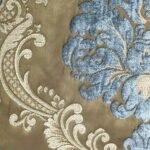
Damask is one of the oldest and most distinctive woven textile categories in the world — a figured fabric where the pattern is created by the interplay of two different weave structures within the same cloth, producing a reversible design that appears in contrasting light and shadow rather than contrasting colors. Originally produced in Damascus (from which it takes its name) using silk yarn, damask is now produced globally in polyester, cotton, viscose, and silk compositions across an enormous range of weights and applications — from lightweight evening wear fabric through to heavyweight upholstery and decorative textiles. This guide explains what damask fabric is, how it differs from jacquard and brocade, the main types and compositions available, and what buyers and manufacturers need to know when sourcing damask fabric at wholesale scale.
What is Damask Fabric
What Makes Damask Fabric Unique — The Weave Structure
Damask is defined by its construction method, not its fiber content. Understanding how damask is made explains why it looks and behaves differently from other patterned fabrics.
Damask is produced on a jacquard loom — a loom with a mechanism that controls individual warp threads independently, allowing complex pattern structures to be woven directly into the fabric. The pattern in damask is created by alternating between two weave structures within the same cloth: typically a satin weave for the pattern motif and a plain or twill weave for the ground, or vice versa.
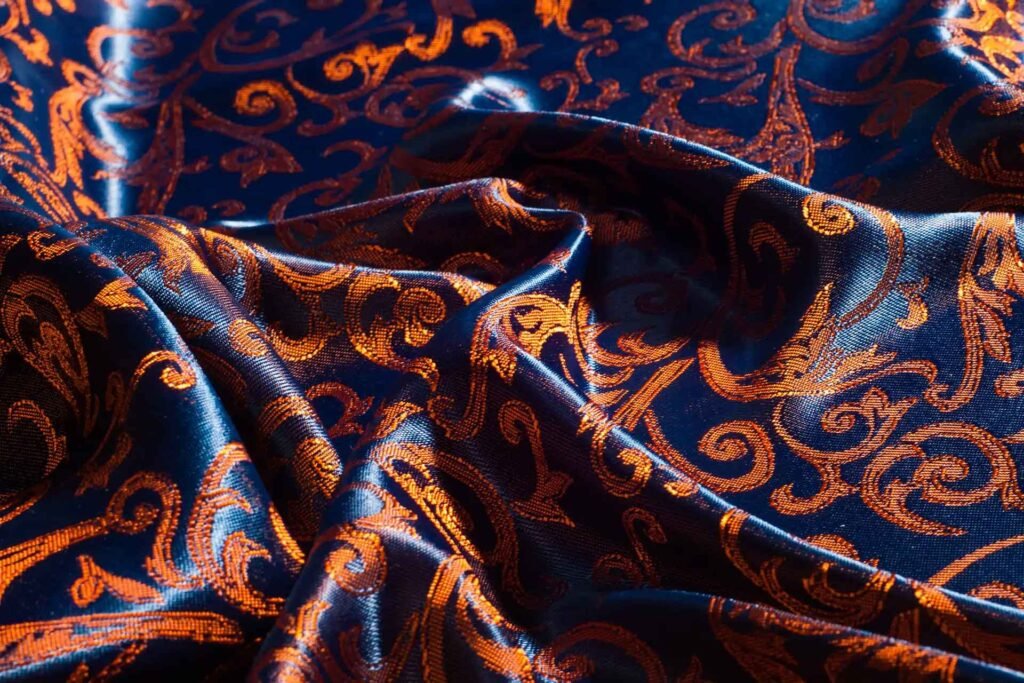
Because satin weave and plain/twill weave reflect light differently, the pattern appears as a contrast of light and shadow on the fabric surface — without using different colored yarns. This is what gives damask its characteristic subtle, self-colored pattern: the design is structural, not chromatic.
Three properties result directly from this construction:
Reversibility. True damask is reversible — the pattern appears on both faces of the fabric, with the figure and ground swapped. On one face the pattern motif is satin weave against a plain ground; on the reverse the pattern is plain weave against a satin ground. This reversibility is a defining characteristic that distinguishes genuine woven damask from printed imitations.
Pattern permanence. Because the pattern is created by the weave structure itself, it cannot fade, wash out, or wear away. Damask fabric maintains its pattern for the full service life of the garment or textile — a critical advantage for formal tablecloths, hotel bedding, and upholstery applications requiring long-term appearance consistency.
Subtle, self-colored elegance. The light-and-shadow pattern of damask produces a formal, refined aesthetic that is distinctive without being bold. This visual character is why damask has been the fabric of choice for formal dining, luxury hospitality, and ceremonial garments across centuries and cultures.
Damask vs Jacquard vs Brocade — Key Differences
These three terms are frequently confused in fabric sourcing. Understanding the relationship between them is essential for accurate specification.
| Factor | Damask | Jacquard | Brocade |
|---|---|---|---|
| Loom type | Jacquard loom | Jacquard loom | Jacquard loom |
| Pattern method | Two weave structures — same yarn | Any weave combination | Supplementary weft threads added |
| Color | Self-colored — one yarn color | Any number of colors | Multiple colors — supplementary yarns |
| Reversibility | Yes — pattern reverses on back | Not necessarily | No — supplementary yarns visible on back |
| Surface texture | Flat — no raised pile or extra yarn | Varies | Raised — supplementary yarns create relief |
| Typical weight | Light to heavy | Light to heavy | Medium to heavy |
| Typical applications | Table linen, upholstery, formal garments | Fashion, home textiles, decorative | Formal garments, ceremonial textiles, luxury upholstery |
The practical distinction: All damask is jacquard — damask is a specific type of jacquard fabric defined by its self-colored reversible pattern structure. Not all jacquard is damask — jacquard covers any fabric woven on a jacquard loom, including multi-color figured fabrics and brocade. Brocade is a separate category distinguished by supplementary weft threads that create raised pattern elements not present in damask.
→ Full Comparison: Damask vs Jacquard vs Brocade
Damask Fabric by Fiber Composition
100% Polyester Damask The most widely produced damask composition globally — excellent color fastness, wrinkle resistance, dimensional stability, and easy care at the lowest cost per meter. Polyester damask accepts disperse dye at high temperature, producing vivid, saturated colors with excellent washing and light fastness. The smooth polyester filament yarn enhances the satin weave sections of the damask pattern, producing a fabric with good visual clarity and sheen.
Best for: commercial hotel and hospitality textiles (tablecloths, napkins, bed runners), curtains and drapes, upholstery fabric for commercial furniture, promotional and decorative applications where easy care and cost efficiency are the primary drivers. GSM range: 180–400 GSM.
100% Cotton Damask Pure cotton damask delivers natural breathability, moisture absorption, and the matte, natural surface character of cotton fiber alongside the damask pattern structure. Cotton damask is the traditional specification for fine dining table linen — restaurant and hotel tablecloths that will be laundered repeatedly in commercial washing machines require the dimensional stability and wash durability of pre-shrunk cotton damask.
Best for: fine dining table linen, hotel bedding, formal napkins, high-quality bed covers, and applications where natural fiber credentials and breathability are specification requirements. GSM range: 150–350 GSM.
Polyester-Cotton Blend Damask (TC Damask) TC damask — typically 65/35 or 55/45 polyester-to-cotton — combines the easy-care performance of polyester with the natural feel and breathability of cotton. TC damask is widely used in hospitality and institutional applications where the volume of laundering required makes pure cotton impractical but the natural feel of pure polyester is not acceptable.
Best for: mid-market hotel linen, institutional table linen, restaurant tablecloths, and commercial bedding programs. GSM range: 180–320 GSM.
100% Silk Damask The original damask composition — silk damask produces unmatched luster, the most fluid drape, and the most visually distinctive pattern contrast of any damask composition. Silk filament's triangular cross-section reflects light in multiple directions, giving silk damask its characteristic shimmering quality that synthetic alternatives cannot fully replicate.
Best for: luxury evening wear, bridal fabric, high-end curtains and drapes, ceremonial textiles, luxury gift packaging, and any application where the prestige and visual quality of silk are part of the product's value proposition. GSM range: 80–250 GSM. MOQ: 500 meters minimum — higher cost and limited stock availability compared to synthetic damask.
Viscose/Rayon Damask Viscose damask blends the fluid drape and soft sheen of viscose fiber with the structural pattern of damask weave — producing a fabric with better drape than polyester damask at lower cost than silk. Viscose accepts dye readily, producing rich colors with good depth. The trade-off is lower dimensional stability than polyester — viscose damask requires careful handling in production and washing.
Best for: evening wear, formal blouses, decorative home textiles, and mid-market fashion applications where silk-like drape at accessible pricing is required. GSM range: 100–280 GSM.
Spandex Blend Damask Adding 2–5% spandex to damask base constructions — typically polyester or viscose — produces a fabric with comfort stretch alongside the formal damask pattern. Used in fitted formal garments where the structured appearance of damask is required alongside ease of movement.
Best for: fitted evening wear, formal occasion garments, structured blouses and jackets where comfort stretch is a specification requirement alongside damask aesthetics.
Damask Fabric GSM Guide
| GSM Range | Character | Best Applications |
|---|---|---|
| 80–180 GSM | Lightweight, fluid drape | Evening wear, formal blouses, silk damask garments, lining |
| 180–300 GSM | Mid-weight, balanced structure | Curtains, standard table linen, bed runners, casual upholstery |
| 300–450 GSM | Substantial, structured | Heavy curtains, sofa upholstery, formal tablecloths, hotel bedding |
| 450–650 GSM | Heavyweight, maximum body | Heavy upholstery, decorative wall panels, luxury table covers |
Width options: 140cm and 150cm for garment applications; 280cm for home textile and curtain applications (reduces seam requirements in wide curtain panels).
Damask Fabric Applications
Hotel and Hospitality Table Linen Damask tablecloths and napkins are the standard for formal dining in luxury hotels, restaurants, and private clubs — the self-colored pattern provides visual elegance without the color complexity of printed table linen, and the woven pattern maintains its appearance through hundreds of commercial laundering cycles. Cotton and TC damask at 250–350 GSM are the standard specifications for commercial table linen programs.
Curtains and Drapes Damask curtains — particularly in polyester and viscose compositions at 200–350 GSM — are a major home textile category for luxury residential and hospitality interior applications. The formal pattern of damask curtain fabric provides visual structure and elegance without requiring additional decorative elements. Width of 280cm is standard for curtain fabric to minimize vertical seaming in wide panels.
Upholstery Damask upholstery fabric at 300–650 GSM is used for sofa covering, chair upholstery, bed headboards, and decorative wall panels in luxury residential and hospitality interiors. The pattern permanence of woven damask — unlike printed upholstery fabric — ensures the design maintains its integrity through years of use and cleaning.
→ Full Guide: Damask Upholstery Fabric
Evening Wear and Formal Garments Lightweight silk and viscose damask at 80–180 GSM is used in evening gowns, formal blouses, bridal wear, and ceremonial garments where the self-colored pattern of damask provides formal elegance without requiring embellishment. The reversibility of damask fabric also allows garment designers to use either face of the fabric for different visual effects within the same garment.
Hotel Bedding and Bed Linen Damask bed covers, pillow shams, and decorative bed runners are widely specified in luxury hotel bedding programs — the woven pattern provides visual differentiation from plain bed linen without the maintenance complexity of embroidered or heavily printed bedding. Polyester and cotton damask at 200–300 GSM are standard for hotel bedding applications.
Decorative and Ceremonial Applications Damask fabric is used in luxury gift packaging, decorative book covers, ceremonial altar cloths, and high-end product presentation where the formal aesthetic of damask communicates quality and prestige. Heavyweight polyester damask at 350–500 GSM provides the structural body required for decorative applications without lining or backing.
Key Specifications to Confirm When Sourcing Damask Fabric
| Specification | What to Confirm | Standard |
|---|---|---|
| Fiber composition | Exact percentages, lab test confirmed | Per agreed spec |
| Pattern construction | True woven damask vs printed imitation | Confirm reversibility for woven damask |
| GSM | Physical sample weighing | ±5% tolerance |
| Width | 140cm, 150cm, or 280cm | Per application requirement |
| Color fastness — washing | Grade rating | Minimum Grade 4 |
| Color fastness — rubbing | Dry and wet | Minimum Grade 3–4 |
| Color fastness — light | UV stability for curtains | Minimum Grade 4 |
| Shrinkage | Warp and weft after standard wash | ≤3% polyester / ≤5% cotton |
| FR compliance | For hospitality and contract applications | EN ISO 11612 or local standard |
| Certifications | OEKO-TEX Standard 100 | Per buyer requirement |
| MOQ | Per order type | See below |
| Lead time | Stock vs custom | Stock: 3–5 days / Custom: 7–10 days |
MOQ by Order Type:
| Order Type | MOQ |
|---|---|
| Stock damask, standard colors | 500–1,000 meters per color |
| Custom dyeing or pattern | 1,000–2,000 meters per color |
| Complex custom pattern | 2,000+ meters |
| Silk damask | 500 meters minimum |
Frequently Asked Questions — Damask Fabric
What is the difference between damask and brocade? Damask is a self-colored reversible fabric where the pattern is created by alternating between two weave structures — satin and plain or twill — within the same yarn. The pattern appears as a contrast of light and shadow without color difference. Brocade adds supplementary weft threads in different colors to create raised, multi-colored pattern elements on the fabric surface — brocade is not reversible and has a more three-dimensional, embellished appearance than damask. Both are produced on jacquard looms but produce visually and structurally different results.
Is damask fabric durable? Damask durability depends on fiber composition. Polyester damask is highly durable — excellent wash durability, color fastness, and dimensional stability make it suitable for commercial hospitality applications with high-frequency laundering. Cotton damask is durable for table linen and bedding with proper care — pre-shrunk cotton damask maintains its appearance through hundreds of commercial wash cycles. Silk damask requires dry cleaning and careful handling — its durability in wear is limited by silk fiber's sensitivity to abrasion and moisture compared to synthetic alternatives.
Can damask fabric be washed? Polyester and TC damask can be machine washed — excellent dimensional stability and color fastness make these compositions suitable for commercial and domestic laundering. Cotton damask should be washed according to the supplier's care instructions — pre-shrunk cotton damask can typically be machine washed; unsanforized cotton damask should be hand washed or professionally laundered to control shrinkage. Silk damask requires dry cleaning — silk fiber loses significant strength when wet and is prone to water spotting and shrinkage.
What is the difference between woven damask and printed damask? True woven damask has its pattern created by the weave structure — the fabric is reversible, the pattern cannot be washed off, and both faces of the fabric show the same design in reversed light-shadow contrast. Printed damask has a plain or simple woven base fabric with the damask pattern applied by printing — it is not reversible, the pattern may fade or wash out over time, and the fabric lacks the three-dimensional surface texture of woven damask. For commercial applications where long-term pattern integrity matters — hospitality linen, upholstery, formal curtains — woven damask is the correct specification.
What is the minimum order for wholesale damask fabric? Standard MOQ for stock damask in regular colors is 500–1,000 meters per color. Custom dyeing and pattern development requires 1,000–2,000 meters minimum. Complex custom patterns start from 2,000 meters. Silk damask minimum is 500 meters. Free A4 swatches available — contact our team to request samples with test reports.
Source Wholesale Damask Fabric from XINGYE TEXTILE
XINGYE TEXTILE supplies wholesale damask fabric — polyester, cotton, TC blend, viscose, and silk compositions — in weights from 80 to 650 GSM and widths from 140cm to 280cm, serving hotel and hospitality linen programs, curtain and upholstery manufacturers, formal garment producers, and wholesale fabric buyers worldwide. Factory-direct pricing, MOQ from 500 meters for stock colors, free swatches available before bulk commitment.
Contact our sourcing team with your composition requirement, GSM, width, application, quantity, and destination for a formal quotation within 24 hours.
→ Browse Our Full Fabric Range → Browse Upholstery Fabric → Browse Fabric for Suits → Read: Damask Upholstery Fabric Guide → Read: Damask vs Jacquard vs Brocade → Read: What Is Dobby Fabric? → Request a Free Swatch → Get a Wholesale Quote