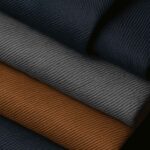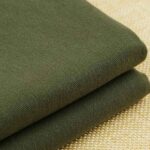
The short answer is yes — twill fabric is comfortable, durable, and one of the most widely produced woven constructions in global garment manufacturing. But comfort is only one of the reasons twill dominates workwear, uniforms, formal trousers, and casualwear production worldwide. This guide explains what makes twill comfortable, how different fiber compositions and GSM ranges affect performance, and what garment manufacturers and apparel buyers need to know when sourcing twill fabric at wholesale scale.
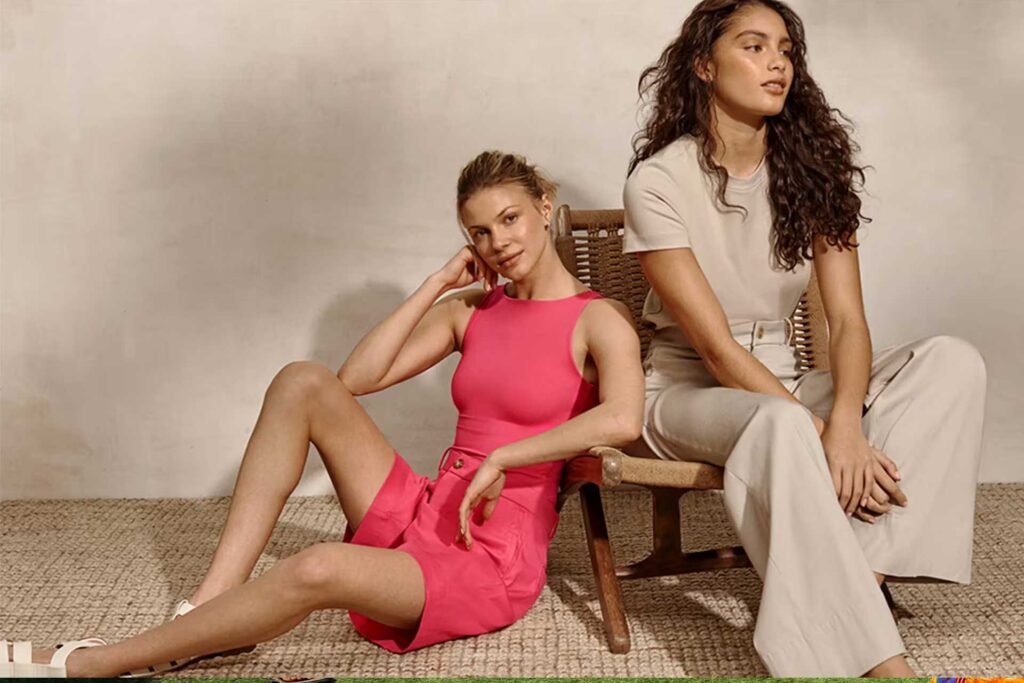
Is Twill Comfortable
1. What Makes Twill Fabric Comfortable?
Twill fabric gets its distinctive properties from its weave structure. Unlike plain weave, where threads cross over and under each other in a simple alternating pattern, twill weave threads pass over multiple warp threads before going under — creating a characteristic diagonal rib on the fabric surface.
This diagonal structure has three direct effects on comfort:
More drape, less stiffness. The floating threads in a twill weave give the fabric more flexibility and movement than plain weave at the same weight. Twill trousers and uniforms hold their shape without feeling rigid or restrictive.
Softer hand feel over time. Twill fabrics — especially cotton and cotton-blend twills — soften noticeably with washing while retaining their structural integrity. A pair of cotton twill chinos after twenty washes feels noticeably better than when new.
Better wrinkle recovery. The diagonal structure distributes stress more evenly across the fabric than plain weave, which means twill recovers from creasing more readily. This is why twill is the dominant construction for trousers, uniforms, and workwear — garments that need to maintain a presentable appearance through a full working day.
2. How Comfortable Is Twill? It Depends on Fiber Composition
Twill is a weave structure, not a fiber. The same twill construction can be produced in cotton, polyester, polyester-cotton blend, polyester-viscose blend, wool, or linen — and each fiber combination produces a completely different comfort profile.
Cotton Twill
The softest and most breathable twill option. Pure cotton twill has excellent moisture absorption and feels comfortable against skin in warm conditions. Trade-offs: it wrinkles more than synthetic blends, shrinks without pre-treatment, and has lower abrasion resistance. Best for casualwear, chinos, and garments where natural comfort is the priority over durability.
Polyester-Cotton Twill (TC Twill)
The most widely used twill in workwear and uniform manufacturing globally. TC twill in 65/35 or 80/20 polyester-to-cotton ratios combines the breathability and softness of cotton with the dimensional stability, wrinkle resistance, and abrasion resistance of polyester. It survives industrial washing cycles without significant shrinkage or color loss — making it the standard specification for school uniforms, hospitality workwear, and industrial garments.
Polyester-Viscose Twill (TR Twill)
The dominant construction for formal trousers, suits, and institutional uniforms. TR twill typically runs 65/35 or 80/20 polyester-to-viscose. The viscose component gives the fabric a soft, fluid drape and a subtle sheen that closely resembles natural wool — while polyester maintains wrinkle recovery and shape retention. TR twill is the fabric behind most formal suit trousers and blazers produced in China for global markets.
100% Polyester Twill
Lower cost than blends, high color fastness, and excellent durability. Polyester twill is less breathable than cotton or viscose blends and can feel warmer against skin in hot conditions. Used primarily in budget-tier uniforms, lining applications, and garments where cost efficiency is the primary driver.
Wool and Wool-Blend Twill
The premium end of the twill spectrum. Wool twill has natural temperature regulation, excellent drape, and a distinctive surface texture. Wool-polyester blends balance the premium feel of wool with improved durability and easier care. Used in high-end suiting and formal uniforms for premium market positioning.
3. Twill Fabric GSM Guide — Choosing the Right Weight
GSM (grams per square meter) determines how a twill fabric drapes, performs, and feels in the finished garment. Specifying the wrong GSM is one of the most common sourcing mistakes — a fabric that's too light lacks structure, while a fabric that's too heavy is uncomfortable and difficult to work with in production.
| GSM Range | Characteristics | Best Applications |
|---|---|---|
| 120–160 GSM | Lightweight, fluid drape, breathable | Summer trousers, lightweight uniform shirts, casual chinos |
| 160–200 GSM | Mid-weight, balanced structure and drape | Standard uniform trousers, workwear shirts, school uniforms |
| 200–260 GSM | Substantial weight, excellent structure | Formal suit trousers, heavyweight workwear, cargo trousers |
| 260–320 GSM | Heavy, highly durable | Industrial workwear, heavy-duty cargo pants, outerwear |
For most uniform and workwear applications, the 160–220 GSM range covers the majority of specifications. Always request a physical sample and verify GSM independently before confirming bulk production — supplier tolerance is typically ±5%.
4. Common Twill Weave Variations
Not all twill is the same. Several weave variations produce different surface textures and performance characteristics within the twill family.
2/1 Twill
The simplest twill construction — each thread passes over two and under one. Produces a clear diagonal rib and a relatively light, flexible fabric. Used in lightweight uniform shirts and casual garments.
3/1 Twill
The standard construction for most workwear and uniform trousers. The thread passes over three and under one, creating a more pronounced diagonal and a denser, more durable fabric. Denim uses a 3/1 twill construction.
2/2 Twill
Balanced twill where threads pass over two and under two alternately. Produces a fabric with similar appearance on both faces and good dimensional stability. Common in suiting fabrics and formal trousers.
Herringbone Twill
A variation where the diagonal direction reverses at regular intervals, creating a V-shaped or chevron pattern. Herringbone retains all the structural advantages of twill while adding visible texture. Widely used in suits, blazers, and premium trousers.
Stretch Twill
Standard twill construction with 2–5% spandex added to the warp or weft. Produces 2-way or 4-way stretch without significantly changing the fabric appearance. The dominant construction for modern stretch trousers, fitted uniforms, and active-duty workwear where ease of movement matters.
5. Twill Fabric Applications in Garment Manufacturing
Twill is one of the most versatile woven constructions in apparel manufacturing. Its combination of durability, drape, and wrinkle resistance makes it the default specification across multiple garment categories.
Workwear and Industrial Uniforms
TC twill is the standard fabric for workwear globally. The polyester component provides abrasion resistance and dimensional stability through repeated industrial washing; the cotton component maintains breathability for workers in physically demanding environments. Common specification: 65/35 TC twill, 200–240 GSM, twill weave.
School and Institutional Uniforms
TC twill dominates school uniform production worldwide for the same reasons it works in workwear — durability, easy care, and color retention. GSM typically ranges from 160 to 200 depending on climate and garment type.
Formal Trousers and Suits
TR twill is the backbone of formal trouser and suit production. The viscose content delivers the drape and surface sheen expected in formal garments; the polyester content provides wrinkle recovery and shape retention. Most formal trousers produced in China for global export use TR twill in the 180–220 GSM range.
Chinos and Casualwear
Cotton twill and cotton-blend twill dominate casualwear production. The softness and breathability of cotton-based twills make them the preferred choice for chinos, casual trousers, and everyday garments across all price points.
Cargo and Outdoor Trousers
Heavyweight TC or 100% cotton twill in the 240–320 GSM range is used for cargo trousers, outdoor workwear, and military-style garments where durability and abrasion resistance are the primary requirements.
Thobe and Gulf Region Garments
TR twill is widely used in thobe and kandura production for Gulf markets. The fabric delivers the smooth surface, white color stability, and fluid drape required for traditional Gulf garments in formal and everyday wear contexts.
6. Key Specifications to Confirm When Sourcing Twill Fabric
If you're sourcing twill fabric for production, these are the specifications to confirm with your supplier before placing a bulk order:
| Specification | What to Confirm | Typical Standard |
|---|---|---|
| Fiber composition | Lab test report, not supplier declaration only | Per agreed spec |
| GSM | Physical sample weighing | ±5% tolerance |
| Weave construction | 2/1, 3/1, 2/2, herringbone, stretch | Per design requirement |
| Width | Usable width after selvage | 57–59' usable from 60' roll |
| Color fastness — washing | Grade rating | Minimum Grade 4 |
| Color fastness — rubbing | Dry and wet rub | Minimum Grade 3–4 |
| Shrinkage | Warp and weft after standard wash | ≤3% |
| Finish | Anti-wrinkle, moisture-wicking, DWR, anti-static | Per end-use requirement |
| Certifications | OEKO-TEX, GOTS, GRS | Per buyer requirement |
| MOQ per color | Minimum order quantity | Confirm before design sign-off |
| Lead time | Stock vs custom production | Stock: 3–7 days / Custom: 20–35 days |
7. Frequently Asked Questions — Twill Fabric
Is twill fabric hot to wear?
It depends on fiber composition. Cotton twill is breathable and comfortable in warm weather. Polyester twill retains more heat and is better suited to cooler conditions or air-conditioned environments. TR and TC blends sit between the two — more breathable than pure polyester but more durable than pure cotton. For hot climate workwear, a 65/35 TC twill in 160–180 GSM is the most common specification.
Does twill fabric shrink?
Pure cotton twill can shrink 3–5% if not pre-washed or Sanforized. Polyester-cotton and polyester-viscose twills have much lower shrinkage rates — typically ≤3% after standard washing — because the polyester component resists dimensional change. Always confirm the shrinkage rate on the fabric test report before bulk production.
Is twill fabric stretchy?
Standard woven twill has minimal natural stretch. Stretch twill — produced by adding 2–5% spandex to the construction — provides significant 2-way or 4-way stretch while maintaining the appearance of a woven fabric. Stretch twill is increasingly specified for fitted uniforms, active-duty workwear, and modern casualwear.
What is the difference between twill and denim?
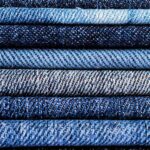
Denim is a specific type of twill — typically a 3/1 cotton twill woven with indigo-dyed warp threads and undyed weft threads. All denim is twill, but not all twill is denim. The term 'twill' covers a much broader range of constructions, weights, and fiber compositions used across workwear, formalwear, and casualwear.
What is the minimum order quantity for wholesale twill fabric?
MOQ varies by supplier and fabric type. At XINGYE TEXTILE, standard MOQ for twill fabric is 500 meters per color for stock constructions. Custom GSM, composition, or finish development may require higher MOQ — contact us to confirm for your specific requirement.
Wholesale Twill Fabric — Factory Direct from XINGYE TEXTILE
XINGYE TEXTILE manufactures and supplies wholesale twill fabric across the full range of compositions, weights, and constructions — TR twill, TC twill, polyester twill, cotton twill, herringbone, and stretch twill — direct from our production facility in Shijiazhuang, China.
We supply garment manufacturers, uniform contractors, apparel brands, and wholesale fabric buyers in 50+ countries with consistent quality, factory-direct pricing, and flexible MOQ from 500 meters per color. Physical samples are available before bulk commitment.
Our technical team can advise on the right twill specification for your garment category, target market, and certification requirements.