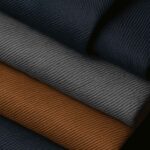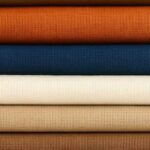
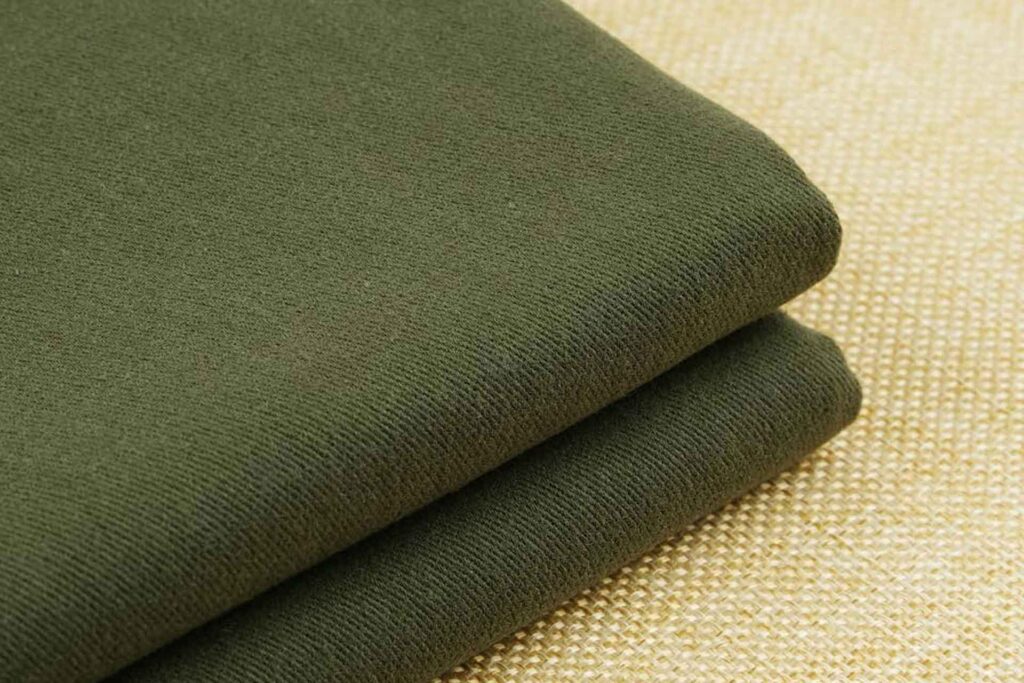
Cotton twill is one of the most widely produced woven fabric constructions in global garment manufacturing — used in workwear, school uniforms, chinos, cargo trousers, hospitality uniforms, and military-style garments across every price point and market. In pure cotton form and as the cotton component in polyester-cotton (TC) blends, cotton twill delivers the breathability, softness, and moisture absorption that synthetic fabrics alone cannot match. This guide covers the full application range of cotton and cotton-blend twill fabrics, how to select the right specification for your garment category, and what wholesale buyers need to confirm when sourcing cotton twill fabric for production.
What Is Cotton Twill Fabric Used For
What Makes Cotton Twill Different from Other Cotton Fabrics
Cotton can be woven in several constructions — plain weave, twill, satin, and dobby among them. The choice of construction significantly affects how the finished fabric performs in production and in wear.
Cotton plain weave — the simplest construction — produces a balanced, stable fabric with a smooth surface and minimal texture. It is used in lightweight shirting, lining, and canvas applications where dimensional stability is the priority.
Cotton twill uses the diagonal float structure of twill weave, where weft threads pass over multiple warp threads before interlacing. This produces three performance advantages over plain weave cotton that are directly relevant to garment manufacturing:
Higher thread density and durability. The twill construction allows more threads per unit area than plain weave, producing a denser, more abrasion-resistant fabric at the same fiber weight. This is why cotton twill — not cotton plain weave — is the standard construction for workwear, cargo trousers, and military uniform cloth.
Better drape and flexibility. The diagonal float structure gives cotton twill more drape and movement than plain weave at equivalent GSM. Cotton twill trousers and uniforms conform more naturally to body movement than plain weave equivalents.
Softer hand feel. Fewer interlacing points per unit area means the threads can move slightly against each other, producing the characteristic smooth, soft surface feel of cotton twill that plain weave cannot replicate at the same weight.
Pure Cotton Twill vs TC Twill — Which to Specify
For most institutional and commercial garment applications, buyers face a choice between pure cotton twill and polyester-cotton (TC) twill. Understanding the performance trade-offs between these two options is the most important specification decision in cotton twill sourcing.
Pure Cotton Twill
Pure cotton twill delivers maximum breathability, moisture absorption, and natural comfort. It accepts dye readily and produces rich, saturated colors. The trade-offs are significant for high-wash-frequency applications: pure cotton twill can shrink 3–5% without pre-treatment, wrinkles more than synthetic blends, and has lower dimensional stability after repeated industrial washing.
Pure cotton twill is the right specification when:
- Natural fiber certification is required (GOTS certified organic cotton)
- The garment category prioritizes breathability over easy-care performance
- The end market positions natural fiber as a product selling point
- Wash frequency is moderate and industrial washing is not standard
TC Twill (Polyester-Cotton Blend)
TC twill blends polyester and cotton — typically 65/35 or 80/20 polyester-to-cotton — to combine the breathability and softness of cotton with the dimensional stability, wrinkle resistance, and wash durability of polyester. The result is a fabric that performs significantly better than pure cotton in institutional and commercial uniform applications where garments are washed frequently, need to hold their shape through a full working day, and must maintain color consistency across multiple production batches.
TC twill is the right specification when:
- Garments will be subject to frequent industrial or commercial washing
- Dimensional stability and shape retention through repeated wear are required
- Color consistency across large multi-batch orders is a procurement requirement
- Cost efficiency is a primary driver alongside performance
For the majority of workwear, school uniform, hospitality, and commercial garment programs globally, TC twill is the more practical and cost-effective specification over pure cotton twill.
Cotton and TC Twill Applications — Full Garment Category Coverage
Workwear and Industrial Uniforms TC twill in 200–240 GSM is the global standard for industrial workwear — overalls, coveralls, work trousers, and work shirts across manufacturing, construction, logistics, and maintenance sectors. The polyester component provides abrasion resistance and dimensional stability through industrial washing; the cotton component maintains breathability for workers in physically demanding environments. Common specification: 65/35 TC, 3/1 twill, 220 GSM.
School Uniforms TC twill dominates school uniform production worldwide. The fabric must survive daily wear, frequent washing, and the physical demands of active children while maintaining a presentable appearance. TC twill in 160–200 GSM delivers the durability and easy-care performance that school uniform buyers require. Pure cotton twill is specified in premium school uniform programs where natural fiber positioning is part of the school's brand identity.
Hospitality and Service Industry Uniforms Restaurant, hotel, and hospitality uniforms require fabrics that maintain a clean, professional appearance through multiple shifts and daily washing. TC twill in 180–200 GSM is the standard specification — durable enough for daily commercial washing, breathable enough for kitchen and service environments, and available in a wide color range for brand-specific uniform programs.
Security and Corporate Uniforms Security uniforms, corporate workwear, and facility management uniforms are typically specified in TC twill at 200–220 GSM. The fabric needs to hold its shape and color through heavy use, maintain a formal appearance, and withstand the physical demands of active outdoor work.
Chinos and Casual Trousers Cotton twill is the defining fabric of the chino trouser — the original chino was a cotton twill military uniform trouser that transitioned into casualwear. Modern chino production uses both pure cotton twill (for premium natural fiber positioning) and TC twill (for easy-care casualwear). GSM typically ranges from 180 to 220 for trouser weight.
Cargo Trousers and Outdoor Garments Heavyweight cotton twill and TC twill in 240–320 GSM is used for cargo trousers, outdoor workwear, and military-style garments where fabric durability in high-abrasion areas is the primary requirement. The higher GSM provides the structural strength needed for reinforced pocket construction, knee patches, and the heavy-use applications of outdoor and tactical garments.
Medical Scrubs and Healthcare Uniforms TC twill in 160–180 GSM is widely used in medical scrub production — the polyester component provides dimensional stability through autoclave-level washing temperatures; the cotton component maintains the breathability required for clinical environments. Antimicrobial finishing is increasingly specified for healthcare uniform fabric.
Children's Clothing and Schoolwear Cotton twill and TC twill in lighter weights (140–180 GSM) are used in children's clothing where softness, safety, and washability are the primary requirements. OEKO-TEX Standard 100 certification is typically required for children's garment fabric in European and North American markets.
Cotton and TC Twill GSM Guide
| GSM Range | Fabric Character | Best Applications |
|---|---|---|
| 120–150 GSM | Lightweight, soft, good drape | Lightweight shirts, summer uniforms, children's clothing |
| 150–180 GSM | Mid-light, balanced | School uniform shirts, lightweight trousers, medical scrubs |
| 180–220 GSM | Mid-weight, structured | Standard workwear trousers, chinos, school uniform trousers |
| 220–260 GSM | Substantial, durable | Heavy workwear, cargo trousers, industrial uniforms |
| 260–320 GSM | Heavy, maximum durability | Canvas workwear, tactical garments, outdoor heavy-duty |
For institutional uniform programs, 180–220 GSM TC twill covers the majority of trouser and outerwear specifications. For shirt-weight applications, 150–180 GSM is standard.
TC Twill Composition Options — Choosing the Right Polyester-Cotton Ratio
The polyester-to-cotton ratio in TC twill directly affects the balance between breathability and durability. Different ratios suit different application requirements.
65% Polyester / 35% Cotton — Most Widely Used The standard TC blend for the majority of workwear and uniform applications globally. Balanced performance across wrinkle resistance, dimensional stability, breathability, and cost. The cotton content is sufficient to deliver meaningful breathability and moisture absorption; the polyester content ensures the fabric survives repeated industrial washing without significant shrinkage or color loss.
80% Polyester / 20% Cotton Higher polyester content for enhanced wrinkle recovery and dimensional stability. Preferred for formal uniform applications where a crisp, pressed appearance must be maintained through a full working day without ironing. Slightly less breathable than 65/35 TC but significantly more resistant to creasing.
50% Polyester / 50% Cotton Equal blend for buyers who prioritize breathability alongside durability. More breathable than standard 65/35 TC while retaining better dimensional stability than pure cotton. Used in healthcare uniforms, food industry garments, and applications where comfort in warm environments is the primary driver alongside wash durability.
35% Polyester / 65% Cotton Higher cotton content for near-natural fiber comfort with synthetic durability improvement. Used in premium workwear and uniform programs where the buyer wants to position the product as 'predominantly natural fiber' while maintaining better easy-care performance than pure cotton.
Functional Finishes for Cotton and TC Twill
Standard cotton and TC twill fabrics can be enhanced with functional finishes for specific application requirements.
Flame Retardant (FR) Critical safety requirement for oil and gas, welding, electrical utility, and petrochemical workwear. FR-treated cotton twill meets EN ISO 11612 and NFPA 2112 standards. Note that FR finish must be specified at fabric production stage — it cannot be applied effectively to finished garments. Confirm compliance with the applicable standard for your destination market before ordering.
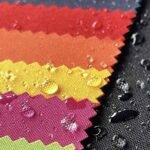
Water Repellent (DWR) Durable water repellent finish for outdoor workwear and garments used in wet environments. DWR treatment causes liquid to bead and roll off the fabric surface. Applied to TC twill for outdoor hospitality uniforms, agricultural workwear, and construction site garments.
Anti-Wrinkle / Easy-Iron Resin finishing improves crease recovery in cotton and TC twill, reducing the ironing requirement for school uniforms and formal garments. Particularly valuable for school uniform shirt fabric where parents expect easy-care performance.
Antimicrobial Applied to TC twill for healthcare, food industry, and hospitality uniform applications where bacterial growth and odor control are specified requirements. Confirm test standard (AATCC 100 or ISO 20743) and durability through washing cycles before bulk production.
Anti-Static Required for TC twill used in electronics manufacturing workwear, cleanroom garments, and petrochemical industry uniforms where electrostatic discharge is a safety risk.
Sanforized Pre-Shrinking Mechanical pre-shrinking treatment that reduces wash shrinkage in cotton and TC twill to ≤1%. Essential for pure cotton twill applications where dimensional stability after washing is a specification requirement.
Key Specifications to Confirm When Sourcing Cotton and TC Twill
| Specification | What to Confirm | Typical Standard |
|---|---|---|
| Fiber composition | Exact polyester/cotton percentages, lab test confirmed | Per agreed spec |
| Twill construction | 2/1, 2/2, 3/1 | |
| GSM | Physical sample weighing | ±5% tolerance |
| Width | Usable width after selvage | 57–59' from 60' roll |
| Color fastness — washing | Grade rating | Minimum Grade 4 |
| Color fastness — rubbing | Dry and wet rub | Minimum Grade 3–4 |
| Shrinkage | Warp and weft after standard wash | ≤3% for TC; ≤5% for pure cotton |
| Functional finish | FR, DWR, antimicrobial, anti-static | Per end-use requirement |
| Certifications | OEKO-TEX, GOTS (organic cotton), GRS | Per buyer requirement |
| MOQ | Minimum order per color | Confirm before design sign-off |
| Lead time | Stock vs custom | Stock: 3–7 days / Custom: 20–35 days |
H2: 8. Frequently Asked Questions — Cotton and TC Twill
Is TC twill better than pure cotton twill for uniforms? For most institutional uniform applications — school uniforms, workwear, hospitality uniforms — TC twill outperforms pure cotton twill in the specifications that matter most: dimensional stability after repeated washing, wrinkle recovery, and color retention across multiple production batches. Pure cotton twill is the better choice when natural fiber certification, maximum breathability, or organic cotton positioning is a buyer requirement.
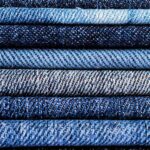
What is the difference between cotton twill and denim? Denim is a specific type of cotton twill — typically a 3/1 cotton twill woven with indigo-dyed warp threads and undyed weft threads, producing the characteristic two-tone blue color. Standard cotton twill is piece-dyed after weaving, producing a uniform color throughout. Both are cotton twill constructions — denim is a subset of cotton twill, not a separate fabric category.
Can TC twill be certified organic? TC twill containing polyester cannot be certified under GOTS, which requires 100% organic natural fiber input. However, TC twill can be certified under OEKO-TEX Standard 100 for chemical safety, and if the polyester component is recycled PET, the fabric may qualify for GRS (Global Recycled Standard) certification. For buyers requiring organic certification, pure cotton twill from GOTS-certified organic cotton is the appropriate specification.
What GSM is standard for workwear TC twill? 200–240 GSM is the standard range for industrial workwear TC twill globally. Lighter weights (180–200 GSM) are used for service industry and hospitality uniforms; heavier weights (240–320 GSM) for industrial, construction, and outdoor workwear where maximum fabric durability is the specification requirement.
What is the minimum order quantity for wholesale cotton and TC twill fabric? At XINGYE TEXTILE, standard MOQ for TC twill and cotton fabric is 500 meters per color for stock constructions. Custom composition, GSM, functional finish, or color development may require higher MOQ — contact our team to confirm for your specific requirement.
Wholesale Cotton and TC Twill Fabric — Factory Direct from XINGYE TEXTILE
XINGYE TEXTILE manufactures and supplies wholesale cotton fabric and TC twill fabric — polyester-cotton blends in 65/35, 80/20, and custom ratios — direct from our production facility in Shijiazhuang, China. We supply workwear manufacturers, uniform contractors, school uniform buyers, and wholesale fabric sourcing managers in 50+ countries with consistent quality, factory-direct pricing, and flexible MOQ from 500 meters per color.
Physical samples available before bulk commitment. Our technical team can advise on the right cotton or TC twill specification for your garment category, functional finish requirements, and certification needs.
>→ Browse Cotton Fabric → Browse TC Fabric — Polyester Cotton Twill → Browse TC Spandex Fabric → Browse Fabric for Workwear → Browse Fabric for Uniforms → Read: What Type of Fabric Is Twill? → Request a Sample or Quote