The Right Fabric Saves You Thousands. The Wrong One Costs You Every Month.
Most uniform buyers choose fabric by asking two questions: 'What does it look like?' and 'How much does it cost?' Both are reasonable — and both are wrong.
A uniform is not a regular garment. It's worn 8-12 hours a day, washed 3-7 times a week, sometimes in industrial laundry at 75°C with aggressive chemicals. It's expected to look professional at 7 PM as it did at 8 AM. It's expected to fit the same person 6 months from now. And it's expected to do all of this while representing your brand.
The fabric determines all of that. Not the style. Not the cut. The fabric.
This guide covers the best fabrics for uniforms across every major industry — hospitality, healthcare, corporate, industrial, security, and school — with real numbers for durability, shrinkage, and cost per wear.
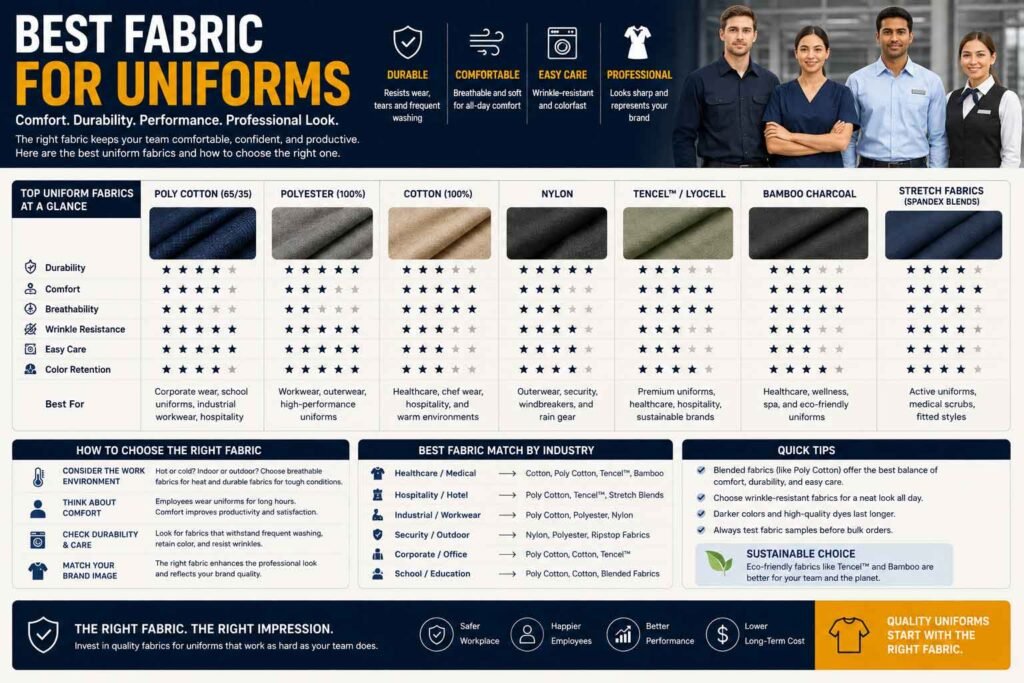
Best Fabric for Uniforms
The 5 Requirements Every Uniform Fabric Must Meet
Before comparing fabrics, understand what a uniform fabric must do:
| Requirement | Why It Matters | Benchmark |
|---|---|---|
| Wrinkle resistance | Uniforms are worn all shift — no time to iron mid-day. Must look professional at hour 12 | 50%+ polyester content, or wrinkle-resistant finish |
| Industrial laundry durability | Most uniforms are washed hot (60-75°C), frequently (3-7x/week), aggressively | Survive 60-100+ wash cycles without visible degradation |
| Shrinkage control | Uniforms must fit consistently for 6-12 months. A shirt that shrinks a size after 20 washes fails | ≤2-3% residual shrinkage |
| Color fastness | Brand colors must stay consistent through repeated washing. Re-orders must match | Color fastness 4+ (AATCC 61), Delta E < 1.5 |
| Cost per wear | The real cost is price ÷ wash cycles. A cheap fabric that dies in 30 washes costs more than a premium fabric that lasts 100 | Lower cost per wear wins |
The Uniform Fabric Shortlist
| Fabric | Composition | Best For | Wash Life | Cost |
|---|---|---|---|---|
| TR 65/35 (poly-viscose) | 65% Polyester / 35% Viscose | Suits, blazers, formal uniforms, hospitality | 80-100+ cycles | $$ |
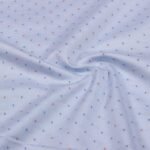
| TC 65/35 (poly-cotton) | 65% Polyester / 35% Cotton | Work shirts, healthcare, industrial | 60-80 cycles | $$ |
| CVC 60/40 (cotton-rich) | 60% Cotton / 40% Polyester | Premium shirts, summer uniforms | 50-70 cycles | $$ |
| 50/50 Nylon-Cotton Ripstop | 50% Nylon / 50% Cotton | Tactical, security, industrial heavy-duty | 100+ cycles | $$$ |
| Performance poly with spandex | Poly + 3-7% spandex | Stretch uniforms, activewear-style | 80-100+ cycles | $$$ |
| Polyester (100%) | 100% Polyester | Budget uniforms, lining, hi-vis | 100+ cycles | $ |
| Cotton (100%) | 100% Cotton | Casual uniforms, premium shirts | 20-30 cycles | $$ |
| Wool / wool blend | Wool + poly/viscose | Premium formal uniforms | 40-60 (dry clean) | $$$$ |
Best Fabric by Industry
1. Hospitality (Hotels, Restaurants)
The job: Front-of-house and back-of-house staff, industrial laundry 3-5x/week, food and beverage stains, 8-12 hour shifts.
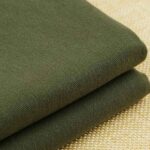
The fabric: TR 65/35 for front-of-house (suits, blazers, vests, dress trousers). TC 65/35 for back-of-house (kitchen shirts, housekeeping).
| Area | Fabric | Why |
|---|---|---|
| Front desk / management | TR 65/35 gabardine | Sharp drape, wrinkle-free, holds crease, industrial washable |
| Restaurant servers | TR 65/35 twill | Stain-resistant finish available, durable, professional |
| Kitchen staff | TC 65/35 twill | Breathable in heat, durable, affordable |
| Housekeeping | TC 65/35 twill | Stain-resistant, easy care, survives bleach exposure |
| Banquet / events | TR 65/35 with spandex (TRS) | Stretch for mobility, sharp appearance |
Watch out for: Food stains — specify stain-resistant (hydrophobic) finish for front-of-house garments.
2. Healthcare (Scrubs, Lab Coats, Patient Care)
The job: Daily washing (often at home or industrial), chemical exposure, aerosol exposure in dental, comfort for 12-hour shifts.
The fabric: TC 65/35 for standard scrubs. Performance poly with spandex for premium scrubs. TC twill or cotton for lab coats.
| Garment | Fabric | Why |
|---|---|---|
| Standard scrubs | TC 65/35 or TR 65/35 | Durable, wrinkle-resistant, affordable, easy care |
| Premium scrubs (stretch) | 4-way stretch poly with spandex | Comfort for 12-hour shifts, shape retention |
| Lab coats | TC 65/35 twill | Professional, bleach-safe, industrial washable |
| Antimicrobial scrubs | TC with silver-ion finish | Odor and bacteria control |
Watch out for: Aerosol exposure (dental, surgical) — consider fluid-resistant finishes.
3. Corporate (Offices, Banks, Airlines)
The job: Professional appearance is the product. Dry cleaning or industrial laundry. Wrinkle-free through long days.
The fabric: TR 65/35 or TRW (with wool) for suits and blazers. TC 65/35 poplin for shirts.
| Garment | Fabric | Why |
|---|---|---|
| Suits / blazers | TR 65/35 gabardine or TRW | Wool-like drape at uniform cost, industrial washable |
| Dress shirts | TC 65/35 poplin | Crisp, wrinkle-resistant, affordable |
| Trousers | TR 65/35 gabardine | Holds crease, durable, professional |
| Airline crew | TRS (with spandex) | Stretch for movement in confined spaces, sharp look |
Watch out for: Re-order color matching — specify Delta E < 1.5 to keep fleet uniforms consistent.
4. Industrial & Workwear (Warehouses, Factories, Construction)
The job: Heavy abrasion, kneeling, bending, machine contact, hi-vis requirements, industrial laundry.
The fabric: TC 65/35 heavy twill (240-300 GSM) for general workwear. 50/50 nylon-cotton ripstop for heavy-duty. FR fabrics where required.
| Garment | Fabric | Why |
|---|---|---|
| Work shirts | TC 65/35 twill | Durable, wrinkle-resistant, breathable |
| Work trousers | TC 65/35 twill or nylon-cotton ripstop | Abrasion resistance, reinforced knees |
| Hi-vis vests | 100% polyester (ANSI rated) | Fluorescent color retention, reflective tape mounting |
| FR workwear | FR cotton or FR blends | Flame resistance (NFPA 70E) |
| Warehouse polos | Cotton-poly jersey | Comfortable, breathable, easy care |
Watch out for: Abrasion at knees, seat, and elbows — specify reinforced construction and heavier GSM (260+).
5. Security & Tactical
The job: Duty belt weight (10-20 lbs), kneeling, running, vehicle time, professional authority.
The fabric: TC 65/35 twill for standard security. 50/50 nylon-cotton ripstop for tactical.
| Garment | Fabric | Why |
|---|---|---|
| Security shirts | TC 65/35 twill | Professional, wrinkle-free, durable |
| Security trousers | TC 65/35 twill or nylon-cotton ripstop | Reinforced belt loops, crotch gusset, cargo pockets |
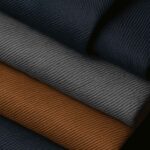
| Tactical uniforms | 50/50 nylon-cotton ripstop | Tear resistance, abrasion resistance |
| Dress uniforms | TR 65/35 gabardine | Formal, holds crease |
Watch out for: Duty belt wear — reinforced belt loops and waistband are as important as fabric.
6. School Uniforms
The job: Rough wear by kids, weekly washing, budget-sensitive, color consistency across years.
The fabric: TR 65/35 for blazers and trousers. TC 65/35 for shirts. CVC 60/40 for premium shirts.
| Garment | Fabric | Why |
|---|---|---|
| Blazers | TR 65/35 twill | Durable, holds shape, kid-proof |
| Trousers / skirts | TR 65/35 twill | Crease retention, durability |
| Shirts | TC 65/35 or CVC 60/40 poplin | Breathable, comfortable, easy care |
| Polos | Cotton-poly jersey | Comfortable, affordable, easy care |
Watch out for: Kids grow and uniforms get handed down — durability and sizing consistency matter more than fashion.
GSM Guide by Garment
| Garment | Recommended GSM |
|---|---|
| Uniform shirts (woven) | 180-220 GSM (poplin) |
| Uniform shirts (knit/polo) | 200-240 GSM |
| Uniform trousers | 240-300 GSM |
| Suits / blazers | 260-320 GSM |
| Skirts | 220-280 GSM |
| Lab coats | 200-240 GSM |
| Heavy workwear | 280-350 GSM |
The Cost Per Wear Calculation
This is the calculation that should drive every uniform fabric decision:
Cost per wear = (fabric price per garment + garment cost) ÷ wash cycles
| Fabric | Garment Cost (approx.) | Wash Cycles | Cost Per Wear |
|---|---|---|---|
| Budget cotton | ¥60 | 20 | ¥3.00 |
| Standard cotton | ¥80 | 30 | ¥2.67 |
| TC 65/35 | ¥70 | 60 | ¥1.17 |
| TR 65/35 | ¥80 | 80 | ¥1.00 |
| Nylon-cotton ripstop | ¥120 | 100 | ¥1.20 |
| Performance poly+spandex | ¥110 | 80 | ¥1.38 |
The surprise: The 'expensive' TR fabric has the LOWEST cost per wear because it lasts 4x longer than budget cotton. Buying cheap fabric is the most expensive way to run a uniform program.
Fabric Selection Decision Framework
| Your Situation | Recommended Fabric |
|---|---|
| Formal uniforms, suits, blazers | TR 65/35 gabardine (or TRW for premium) |
| Shirts, general workwear | TC 65/35 poplin or twill |
| Summer uniforms, hot climates | TC or CVC 60/40 (more cotton = more breathable) |
| Heavy-duty / tactical | 50/50 nylon-cotton ripstop |
| Stretch / active uniforms | Performance poly with 3-7% spandex |
| Budget priority | TC 65/35 (best value) |
| Premium appearance | TRW (wool blend) or wool |
| Flame resistance required | FR cotton or FR blend |
| Hi-vis required | ANSI-rated 100% polyester |
Buyer's Checklist — What to Verify Before Ordering
- Fiber composition — exact percentages in writing
- GSM — matches your spec within 10%
- Wrinkle resistance — 50%+ polyester content or treated finish
- Anti-pill rating — 4.0+ for high-friction garments (trousers, sleeves)
- Shrinkage — ≤2-3% after 5 industrial washes (AATCC 135)
- Color fastness — 4+ (AATCC 61) — request the test report
- Wash test sample — wash the sample 5x at your actual laundry temperature before bulk
- Color matching across re-orders — Delta E < 1.5
- Stain-resistant finish — for hospitality, food service, and healthcare
- MOQ and lead time — fit your program schedule with buffer
Frequently Asked Questions
Q: What is the most common uniform fabric? A: TC 65/35 (polyester-cotton) is the most widely used uniform fabric globally — it's the default for work shirts, healthcare, and general workwear. TR 65/35 (polyester-viscose) is the standard for formal and suiting-style uniforms. Together they cover most of the uniform market.
Q: Is 100% cotton good for uniforms? A: Only for casual, home-laundered programs. Cotton wrinkles within hours, shrinks 3-8%, fades, and lasts 20-30 industrial wash cycles. For professional uniforms, cotton blends (TC, CVC) or TR are almost always better choices.
Q: What is the best fabric for hot weather uniforms? A: Lightweight TC or CVC (60/40 cotton-rich) in poplin weave, 180-220 GSM. The higher cotton content breathes better. For very hot climates, consider moisture-wicking performance fabrics or lightweight TR with breathable weave.
Q: How many wash cycles should a uniform survive? A: Minimum 50 cycles. Quality TR and TC should survive 60-100+ cycles. If your uniforms are failing before 50 washes, the fabric quality or care process is wrong.
Q: Should uniforms be washed at home or industrially? A: It depends on the program. Industrial laundry (75°C, aggressive) requires TR or high-quality TC. Home laundry is gentler — CVC and cotton blends work. If you don't control the wash, spec the fabric for the harshest possible condition.
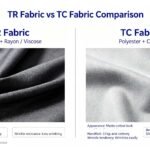
Q: What is the difference between TC and TR for uniforms? A: TC (poly-cotton) breathes better and is more comfortable — best for shirts and hot environments. TR (poly-viscose) drapes better and looks sharper — best for suits, blazers, and formal uniforms. For most uniform programs, both are used: TR for structured garments, TC for shirts.
Get a Quote — Uniform Fabric
XINGYE TEXTILE manufactures uniform fabric across the full spectrum: TR 65/35, TC 65/35, CVC 60/40, nylon-cotton ripstop, performance poly with spandex, and FR options. Gabardine, twill, poplin, and ripstop weaves. GSM range 180-400. Anti-pill treated, heat-set for ≤2% shrinkage, industrial laundry rated. Custom colors matched to your program. OEKO-TEX certified.
Tell us your industry, garment type, and laundry conditions — we'll recommend the right fabric for your uniform program.
Minimum order: 300 meters per color. Sample-first ordering.