They Look Similar at a Glance. They Perform Very Differently.
Gabardine and twill are often confused — and for good reason. Gabardine IS a twill. It belongs to the twill family. But it's a very specific type of twill with a steeper angle, tighter construction, and completely different performance characteristics.
If you're sourcing fabric for uniforms, trousers, suits, or workwear, this distinction matters more than most suppliers will tell you. A supplier can label standard twill as 'gabardine' — many do — and you'll only notice the difference after the uniforms have been washed 20 times.
This guide explains exactly what separates gabardine from standard twill, how to tell them apart, and which one you should specify for your application.
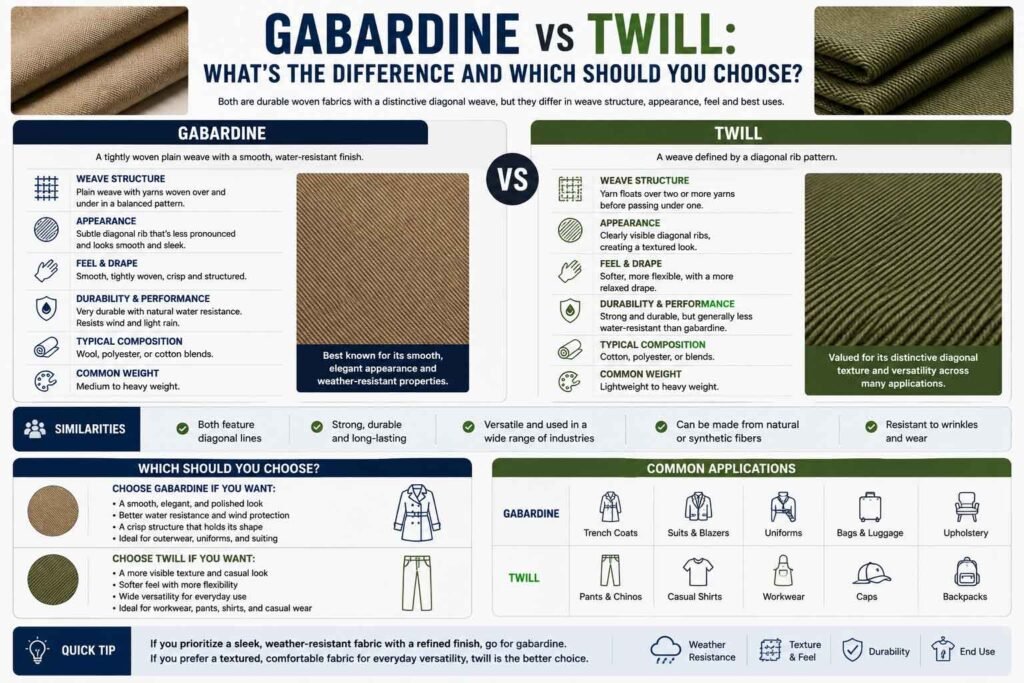
Gabardine vs Twill
The Relationship: Gabardine Is a Type of Twill
Think of it like squares and rectangles: all gabardine is twill, but not all twill is gabardine.
| Fabric | Weave Family | Specifics |
|---|---|---|
| Standard twill | Twill | Diagonal weave, 30-45° angle, balanced density |
| Gabardine | Twill (steep twill) | Diagonal weave, 45-63° angle, warp density 2x weft |
The differences are in three specific construction details:
- Twill angle — gabardine uses a steeper diagonal (45-63° vs 30-45°)
- Thread density — gabardine packs the warp threads at roughly 2x the weft density
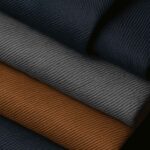
- Surface — gabardine's tight construction creates a smooth, almost flat surface with a barely visible diagonal; standard twill has a pronounced, textured diagonal
Quick Comparison Table
| Factor | Gabardine | Standard Twill |
|---|---|---|
| Twill angle | 45-63° (steep) | 30-45° |
| Warp density | ~2x weft density | Balanced |
| Surface | Smooth, compact, fine rib | Textured, visible diagonal |
| Weight | Typically 220-350 GSM | 180-320 GSM |
| Durability | Excellent — one of the most durable weaves | Good |
| Wrinkle resistance | Excellent (with synthetic blend) | Good |
| Crease retention | Excellent — holds knife-edge crease | Good — holds crease but less sharp |
| Drape | Structured, firm | Softer, more flexible |
| Water resistance | Good — dense surface sheds water | Moderate |
| Wind resistance | Excellent — tightly packed | Moderate |
| Formality | Formal, sharp, professional | Casual to mid-formal |
| Cost | Slightly higher | Slightly lower |
Detailed Comparison
1. Construction — The Technical Difference
Standard twill has a balanced construction: roughly equal warp and weft density. The diagonal lines are clearly visible and have a soft, textured feel.
Gabardine is a steep twill with significantly more warp threads than weft threads (often 2:1). This creates:
- A steeper diagonal angle (45-63°)
- A surface made almost entirely of tightly packed warp yarns
- A smooth, compact, hard-wearing face
- A barely visible diagonal rib
| Construction Detail | Standard Twill | Gabardine |
|---|---|---|
| Warp:weft density ratio | ~1:1 | ~2:1 |
| Twill angle | 30-45° | 45-63° |
| Diagonal visibility | Clearly visible | Fine, subtle |
| Surface feel | Soft, textured | Smooth, firm, almost flat |
2. Durability
Gabardine is significantly more durable than standard twill — this is the main reason it's the standard for high-use uniforms.
The dense warp packing means more yarns share the load at every stress point. The smooth, compact surface resists abrasion better than the raised diagonal of standard twill. Gabardine uniforms outlast standard twill uniforms by roughly 2:1 in industrial laundry conditions.
| Test | Standard Twill | Gabardine |
|---|---|---|
| Abrasion resistance | Good | Excellent |
| Tear strength | Good | Excellent — dense structure |
| Industrial wash cycles | 40-60 (TC) | 80-100+ (TC) |
| Surface wear (seat, knee) | Visible at 6 months | Minimal at 12 months |
| Snag resistance | Moderate — raised diagonal catches | Excellent — smooth surface |
Winner: Gabardine.
3. Crease Retention
This is the most visible difference for uniform wearers.
Gabardine holds a knife-edge crease all day. The dense warp structure provides a stable 'groove' for the crease to settle into. A gabardine trouser crease survives a full day of sitting, driving, and moving.
Standard twill holds a crease, but it softens — the looser structure lets the crease relax over hours of wear. By mid-afternoon, a standard twill trouser crease is noticeably softer.
| Scenario | Standard Twill | Gabardine |
|---|---|---|
| Morning crease | Sharp | Knife-edge |
| After 8 hours wear | Softened | Still sharp |
| After sitting in a vehicle | Visible crease loss | Minimal change |
| After industrial laundry | Re-pressing needed | Holds through drying |
Winner: Gabardine — the reason it dominates uniform trousers.
4. Wrinkle Resistance
Both weaves resist wrinkles better than plain weave (the diagonal structure hides creases). But gabardine's dense construction gives it an edge:
| Scenario | Standard Twill | Gabardine |
|---|---|---|
| After 8 hours wear | Moderate creasing | Minimal creasing |
| After industrial laundry | Wrinkled — light pressing needed | Wrinkle-free — ready to wear |
| After packing | Wrinkled — needs steaming | Few wrinkles — releases when hung |
Winner: Gabardine.
5. Water and Wind Resistance
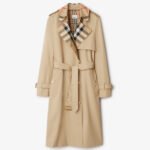
Gabardine was invented by Thomas Burberry in 1879 specifically as a water-resistant, windproof outdoor fabric — that's where the trench coat comes from.
The dense warp surface causes water to bead and roll off. The tight packing blocks wind. Standard twill's raised, textured diagonal is more permeable to both.
| Test | Standard Twill | Gabardine |
|---|---|---|
| Water beading | Moderate — some absorption | Excellent — beads and rolls off |
| Wind resistance | Moderate | Excellent — near-windproof |
| Best use in weather | Casual wear | Outerwear, uniforms |
Winner: Gabardine.
6. Drape and Hand Feel
Standard twill is softer and more flexible. The balanced construction and floating threads give it a supple drape. Chinos, casual pants, and work shirts use twill for this reason.
Gabardine is firmer and more structured. The dense warp packing makes it less flexible — it holds its shape and stands away from the body. This structured drape is what makes gabardine look sharp and formal, but it also means gabardine feels stiffer than twill.
| Scenario | Standard Twill | Gabardine |
|---|---|---|
| Trouser drape | Soft, casual | Structured, formal |
| Jacket drape | Flexible | Firm, holds shape |
| Comfort (all-day wear) | Very comfortable | Comfortable — slightly firmer |
| Movement | Easy | Slightly more restrictive (dense) |
Winner: Twill for casual comfort. Gabardine for structure and formality.
When to Choose Gabardine
| Application | Why Gabardine |
|---|---|
| Uniform trousers | Knife-edge crease, durability, professional appearance |
| Uniform jackets / blazers | Structured drape, sharp look, holds shape |
| Suit trousers | Crease retention, formal appearance |
| Suit jackets | Structured, holds shape |
| Police / military dress uniforms | Formal appearance, durability |
| Trench coats / outerwear | Water resistance, windproof, durable |
| Hotel / restaurant uniforms | Professional, industrial laundry safe |
| Dress skirts | Clean drape, holds shape, professional |
When to Choose Standard Twill
| Application | Why Twill |
|---|---|
| Casual trousers / chinos | Soft, comfortable, relaxed drape |
| Work shirts | Soft, breathable, comfortable for daily wear |
| Casual jackets | Flexible, comfortable |
| School uniforms (shirts) | Soft, affordable, comfortable for kids |
| Casual uniforms | Comfortable for all-day wear |
| Soft outerwear | Flexible, comfortable |
| Home textiles | Soft, drapes well |
How to Tell Them Apart (When a Supplier Hands You a Sample)
| Check | Standard Twill | Gabardine |
|---|---|---|
| Look at the diagonal | Clearly visible, pronounced | Fine, subtle, almost flat |
| Angle of the diagonal | 30-45° (shallow) | 45-63° (steep) |
| Rub the surface | Textured, soft | Smooth, firm, compact |
| Hold it to the light | Light passes through between threads | Dense — less light passes |
| Pinch the fabric | Soft, folds easily | Firmer, holds shape |
| Check the back | Similar to front | Back is smooth, front has fine rib |
Quick Decision Guide
| Your Priority | Choose |
|---|---|
| I need trousers that hold a knife-edge crease | Gabardine |
| I need a soft, comfortable casual fabric | Twill |
| I need formal uniform jackets | Gabardine |
| I need casual work shirts | Twill |
| I need maximum durability in industrial laundry | Gabardine |
| I need water and wind resistance | Gabardine |
| I need a supple drape | Twill |
| I need a sharp, professional look | Gabardine |
Frequently Asked Questions
Q: Is gabardine better than twill? A: Not universally — it depends on the application. Gabardine is better for formal uniforms, trousers, jackets, and outerwear (crease retention, durability, structure). Standard twill is better for casual wear and comfort (softness, flexibility, drape).
Q: Is all gabardine twill? A: Yes — gabardine is a type of steep twill. All gabardine is twill, but not all twill is gabardine.
Q: How can I tell if my fabric is really gabardine? A: Check three things: the diagonal angle (should be 45°+), the surface (smooth and compact, not textured), and the weight (typically 220-350 GSM). A 'gabardine' that feels soft and textured with a visible diagonal is likely standard twill.
Q: Is gabardine more expensive than twill? A: Slightly — the higher warp density uses more yarn per meter. The difference is usually 5-15%.
Q: Which is better for uniforms — gabardine or twill? A: For trousers, jackets, and blazers: gabardine (crease retention, durability, professional appearance). For shirts: standard twill or poplin (comfort, breathability). Most quality uniform programs use gabardine for bottoms and structured garments.
Q: Can gabardine be made from any fiber? A: Yes — wool, cotton, polyester, TR, TC, and nylon can all be woven as gabardine. The fiber determines the hand feel and care; the weave determines the structure and performance.
Get a Quote — Gabardine and Twill Fabric
XINGYE TEXTILE manufactures both gabardine (steep twill) and standard twill fabric in TR, TC, cotton, polyester, and wool-blend compositions. Gabardine: 220-350 GSM, knife-edge crease retention, smooth compact surface. Twill: 180-320 GSM, soft drape, casual to mid-formal. Custom colors, custom development. OEKO-TEX certified.
Tell us what you're making — we'll recommend the right weave and fiber.
Minimum order: 300 meters per color. Sample-first ordering.