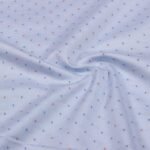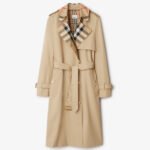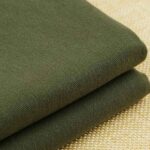
The Fabric Is the Suit — Everything Else Is Details
A suit is judged by three things: cut, construction, and fabric. The cut and construction matter, but the fabric is what people see, feel, and remember. It determines how the suit drapes, how it moves, how it breathes, how long it lasts, and — critically for most buyers — how much it costs.
The problem is that most suit fabric advice comes from fashion blogs that assume an unlimited budget and a bespoke tailor. If you're buying fabric for suit production — as a brand, a uniform program, or a manufacturer — you need practical guidance: what fabric works for what price point, what performs in real-world wear, and what survives industrial care.
This guide covers the suit fabric landscape, from luxury wool to budget polyester, and helps you choose the right fabric for your market, climate, and budget.
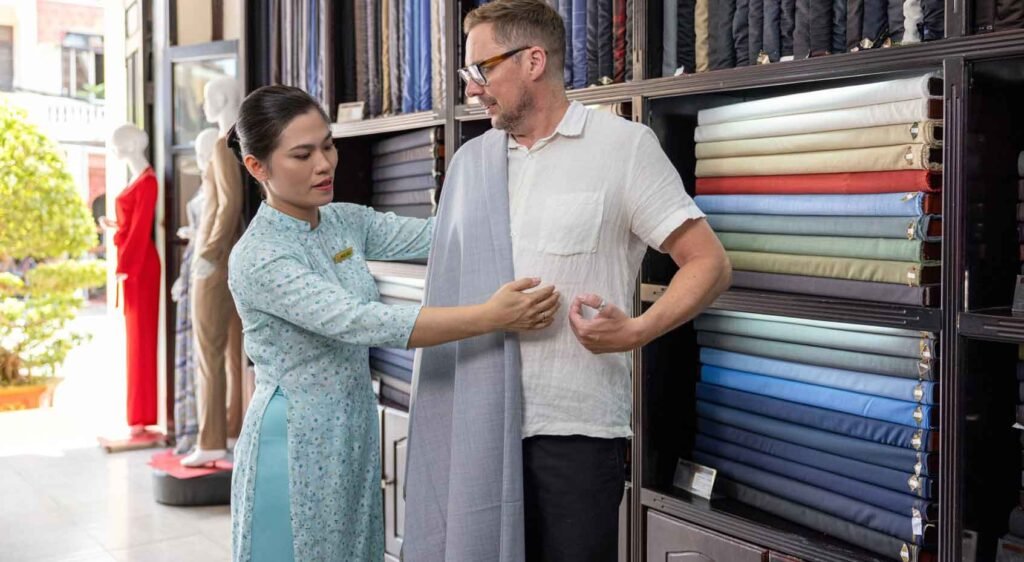
Best Fabric for Suits
The Suit Fabric Hierarchy
| Tier | Fabric | Price Range (per meter) | Who Buys It |
|---|---|---|---|
| Luxury | Super 120s+ wool, cashmere blends, vicuña | ¥300-2,000+ | Bespoke tailoring, luxury brands |
| Premium | Super 100s-120s wool, wool-silk blends | ¥150-300 | High-end RTW, premium uniform programs |
| Mid-range | Wool blends (poly-wool, viscose-wool), quality TR | ¥40-150 | Most RTW suits, corporate uniforms |
| Budget | TR 65/35, polyester gabardine | ¥20-40 | Entry-level suits, mass uniforms, school wear |
| Value engineering | High-quality TR with premium finishing | ¥30-60 | The sweet spot — looks premium, costs budget |
The key insight: For most suit buyers — brands, uniform programs, corporate clients — the sweet spot is high-quality TR (polyester-viscose) at 260-320 GSM with premium finishing. It delivers 80% of wool's appearance at 20% of the cost, and it survives industrial care that would destroy wool.
The Suit Fabric Options — Ranked
1. Wool — The Gold Standard
| Factor | Details |
|---|---|
| What it is | 100% wool, typically worsted wool (fine, smooth yarn) |
| Grades | Super 80s to Super 180s (higher = finer yarn = softer and more expensive) |
| Best for | Premium suits, formal wear, high-end uniforms |
| Pros | Breathes, drapes beautifully, holds shape, natural elasticity, temperature-regulating |
| Cons | Expensive, needs dry cleaning, moths, heavy, wrinkles (in lighter weights) |
| Typical weight | 240-320 GSM (year-round), 200-260 (summer), 300-400 (winter) |
When to choose wool: You're making premium suits, or your customer explicitly demands natural fiber.
When to skip wool: Budget constraints, industrial laundry requirements, warm climates with high wear frequency.
2. Wool Blends — The Practical Premium
| Factor | Details |
|---|---|
| What it is | Wool blended with polyester, viscose, or both |
| Common ratios | 70/30 wool-poly, 50/50 wool-poly, wool-viscose blends |
| Best for | Corporate uniforms, mid-to-premium RTW suits |
| Pros | Wool look and drape at lower cost. Polyester adds wrinkle resistance and durability |
| Cons | Still needs dry cleaning in most cases. Less breathable than pure wool |
| Typical weight | 260-320 GSM |
When to choose wool blend: You need wool's appearance with better durability and lower cost.
3. TR (Polyester-Viscose) — The Value Champion
| Factor | Details |
|---|---|
| What it is | 65% polyester / 35% viscose, woven as gabardine or twill |
| Best for | Uniform suits, entry-to-mid RTW suits, school blazers, hospitality suits |
| Pros | Wrinkle-resistant, durable, industrial laundry safe, holds crease, affordable, drapes well |
| Cons | Less breathable than wool, less prestigious, can look synthetic if low quality |
| Typical weight | 240-320 GSM (standard suit), 180-240 (lightweight) |
When to choose TR: Uniform programs, hospitality, corporate fleets, budget-to-mid RTW, any application with industrial laundry.
The quality variable: High-quality TR with premium finishing (heat-set, anti-pill, calendered) looks dramatically better than cheap TR. The difference is visible in drape, sheen, and hand feel.
4. TR with Wool (TRW) — The Hybrid
| Factor | Details |
|---|---|
| What it is | TR base blended with a percentage of wool |
| Typical composition | 60/30/10 or 50/35/15 poly/viscose/wool |
| Best for | Premium uniforms, mid-range suiting where wool is desired but cost matters |
| Pros | Wool's hand feel and prestige at a fraction of wool's cost. Better drape than standard TR |
| Cons | More expensive than TR. May still require dry cleaning depending on wool content |
When to choose TRW: You want 'wool-like' quality for premium uniforms without paying wool prices.
5. Polyester (100%) — The Budget Option
| Factor | Details |
|---|---|
| What it is | 100% polyester gabardine or twill |
| Best for | Budget suits, student wear, promotional uniforms |
| Pros | Cheapest option, extremely wrinkle-resistant, durable, easy care |
| Cons | Looks and feels synthetic, poor breathability, can look shiny, less prestigious |
| Typical weight | 240-300 GSM |
When to choose polyester: Budget is the absolute priority and appearance expectations are low.
6. Cotton and Linen — The Warm Weather Options
| Factor | Cotton Suiting | Linen Suiting |
|---|---|---|
| What it is | 100% cotton, usually twill or gabardine | 100% linen or linen blend |
| Best for | Casual suits, tropical wear | Summer suits, casual-formal |
| Pros | Breathable, natural, comfortable | Extremely breathable, light, textured elegance |
| Cons | Wrinkles heavily, needs ironing, less formal | Wrinkles heavily, expensive, hard to care for |
| Typical weight | 240-300 GSM | 220-280 GSM |
When to choose: Warm climates, casual-to-semi-formal dress codes, summer capsule collections.
Suit Fabric Comparison Table
| Fabric | Appearance | Durability | Wrinkle Resistance | Breathability | Industrial Wash | Cost | Best Market |
|---|---|---|---|---|---|---|---|
| Wool (100%) | ★★★★★ | ★★★★☆ | ★★★☆☆ | ★★★★★ | ❌ Dry clean | $$$$$ | Premium |
| Wool blend | ★★★★☆ | ★★★★☆ | ★★★★☆ | ★★★★☆ | ❌ Mostly dry clean | $$$$ | Premium-mid |
| TRW (wool-TR) | ★★★★☆ | ★★★★☆ | ★★★★☆ | ★★★★☆ | ⚠️ Depends on wool % | $$$ | Premium uniforms |
| TR 65/35 | ★★★★☆ | ★★★★★ | ★★★★★ | ★★★☆☆ | ✅ 80-100+ cycles | $$ | Uniforms, mid RTW |
| Polyester | ★★☆☆☆ | ★★★★★ | ★★★★★ | ★★☆☆☆ | ✅ | $ | Budget |
| Cotton | ★★★☆☆ | ★★★☆☆ | ★★☆☆☆ | ★★★★★ | ⚠️ Shrinks, wrinkles | $$$ | Casual |
| Linen | ★★★★☆ | ★★★☆☆ | ★☆☆☆☆ | ★★★★★ | ⚠️ Dry clean | $$$$ | Summer |
How to Choose Suit Fabric — Decision Framework
Step 1: Define the end use
| Use Case | Recommended Fabric |
|---|---|
| Premium retail suits | Wool or wool blend |
| Corporate uniform suits | TR 65/35 (industrial washable) or TRW |
| Hotel / hospitality suits | TR 65/35 gabardine |
| School blazers | TR 65/35 twill (kid-proof durability) |
| Bank / finance uniforms | TRW or high-quality TR |
| Airline crew suits | TR 65/35 with stretch (TRS) |
| Casual summer suits | Cotton or linen |
| Budget suits | TR 65/35 or polyester |
Step 2: Consider the climate
| Climate | Recommended Weight & Fiber |
|---|---|
| Hot / humid year-round | Lightweight cotton, linen, or 180-240 GSM TR with breathable weave |
| Temperate (4 seasons) | 260-300 GSM wool, wool blend, or TR |
| Cold winters | 320-400 GSM wool, flannel, heavy TR |
| Air-conditioned indoors only | 240-280 GSM TR or wool blend — climate matters less |
Step 3: Check the care requirements
| Care Method | Fabric Options |
|---|---|
| Industrial laundry (75°C, aggressive) | TR 65/35 ✅, polyester ✅, cotton ⚠️ (shrinks), wool ❌ |
| Dry cleaning | Wool ✅, wool blend ✅, TR ✅, linen ✅ |
| Home washing | Cotton ✅, TR ✅, linen ⚠️, wool ❌ |
| Mixed (occasional industrial) | TR ✅, TRW ⚠️ |
Step 4: Set the budget
| Budget (per meter, FOB) | Realistic Options |
|---|---|
| ¥20-40 | TR 65/35 (good quality), polyester |
| ¥40-80 | Premium TR, TRW with 10-15% wool |
| ¥80-150 | Wool blend (50/50, 70/30), high-quality TRW |
| ¥150+ | Wool 100s-120s, luxury blends |
GSM Guide for Suits
| Weight | Best For |
|---|---|
| 180-220 GSM | Lightweight summer suits, travel suits, warm climates |
| 240-280 GSM | Year-round standard — the most versatile range |
| 280-320 GSM | Executive/formal suits, winter weight, premium drape |
| 320-400 GSM | Winter suits, heavy formal wear, structured jackets |
For uniform programs: 260-300 GSM is the sweet spot — substantial drape, year-round comfort, and industrial laundry durability.
Weave Options for Suit Fabric
| Weave | Characteristics | Best For |
|---|---|---|
| Gabardine (steep twill) | Smooth, compact, durable, holds crease — the uniform standard | Uniform suits, trousers, structured jackets |
| Twill | Softer, more flexible, classic diagonal | Casual suits, blazers |
| Plain weave | Crisp, flat, formal | Summer suits, lightweight jackets |
| Herringbone | Broken twill, textured V-pattern | Premium blazers, textured suits |
| Birdseye | Small dotted pattern | Classic formal suits |
| Flannel (brushed) | Soft, napped surface, warm | Winter suits, casual-formal |
The Anti-Pilling Question
Pilling is the #1 quality complaint in suit fabric — especially in blended fabrics. When buying suit fabric, specify:
- Siro-spun yarns — tighter, smoother yarn that resists pilling
- Singeing + shearing finish — removes surface fibers that cause pilling
- Anti-pill rating 4.0+ (ASTM D4970 or ISO 12945) — the industry benchmark
| Fabric | Pilling Resistance (typical) |
|---|---|
| Wool (worsted) | ★★★★☆ — minimal pilling in quality wool |
| Wool blend | ★★★☆☆ — varies by quality |
| TR (untreated) | ★★☆☆☆ — can pill |
| TR (anti-pill treated) | ★★★★☆ — 4.0+ rating |
| Polyester (filament) | ★★★★★ — filament does not pill |
| Cotton | ★★★☆☆ |
How to Buy Suit Fabric — Supplier Checklist
When ordering suit fabric from a supplier, verify:
- Fiber composition — exact percentages, not 'wool blend' without ratios
- GSM — confirm the weight matches your spec
- Weave — gabardine, twill, or plain — and confirm it's actually that weave
- Anti-pill treatment — specify 4.0+ rating
- Shrinkage — ≤2% after 5 industrial washes (AATCC 135)
- Color fastness — 4+ rating (AATCC 61)
- Wash test report — request actual test data
- Dye lot consistency — Delta E < 1.5 across production runs
- Sample yardage — always order 1-2 meters for hand feel and drape evaluation before bulk
Frequently Asked Questions
Q: What is the best fabric for a first suit? A: For most people, a 260-300 GSM wool blend or high-quality TR in navy or charcoal. It drapes well, looks professional, and survives more abuse than pure wool at half the price.
Q: Is TR fabric good for suits? A: Yes — TR 65/35 is the workhorse of the uniform suit industry. High-quality TR with proper finishing delivers 80% of wool's appearance at 20% of the cost, and it's industrial laundry safe. For premium suits, wool or wool blend is still the choice.
Q: What GSM should a suit be? A: 240-280 GSM for year-round use. 180-220 for summer. 300+ for winter and formal wear. Uniform programs should target 260-300 GSM.
Q: What is the difference between Super 100s and Super 120s wool? A: The 'Super' number refers to the yarn fineness — Super 120s is finer than Super 100s. Finer yarn = softer and lighter fabric, but also more delicate and expensive. Super 100s-120s is the practical sweet spot for most suits.
Q: Can suit fabric be machine washed? A: Wool — no, dry clean only. TR 65/35 — yes, industrial laundry safe. Wool blend — depends on wool content (30%+ wool generally means dry clean). Always check the care label and test before bulk purchase.
Q: What color suit fabric should I buy? A: Navy and charcoal are the two most versatile colors. Navy for business and formal. Charcoal for everyday professional wear. For uniform programs, the color is dictated by the brand.
Q: Why does my TR suit pill? A: Pilling happens when short fibers work loose and tangle on the surface. It's most common in untreated TR and low-quality blends. Specify anti-pill treatment (singeing + shearing, 4.0+ rating) when ordering.
Get a Quote — Suit Fabric
XINGYE TEXTILE manufactures suit fabric in TR 65/35, TRW (wool blend), and premium wool-blend compositions. Gabardine, twill, plain, and herringbone weaves. GSM range 180-400. Anti-pill treated, heat-set for ≤2% shrinkage, color-fast, industrial laundry rated. Custom colors, custom development. OEKO-TEX certified.
Tell us your market, climate, and budget — we'll recommend the right fabric for your suit program.
Minimum order: 300 meters per color. Sample-first ordering.
Premium TR Fabric Manufacturer | Polyester-Viscose Blends for Suiting