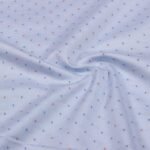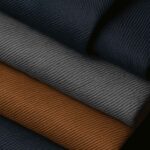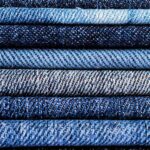
The Honest Comparison — Neither Is 'Better,' But One Is Right for Your Application
If you're choosing between TR fabric (polyester-viscose) and cotton, you're not looking for 'which fabric is best.' You're looking for which one solves your specific problem.
Cotton has been the default textile for thousands of years. It's natural, breathable, and familiar. TR fabric is a modern engineered blend — 65% polyester and 35% viscose — designed to solve the problems that pure cotton has in uniform, suiting, and workwear applications.
The right choice depends on what you're making, how it will be worn, how it will be washed, and what appearance you need it to keep over time.
This comparison covers everything you need to know: hand feel, breathability, durability, cost, care, and which application each fabric suits best.
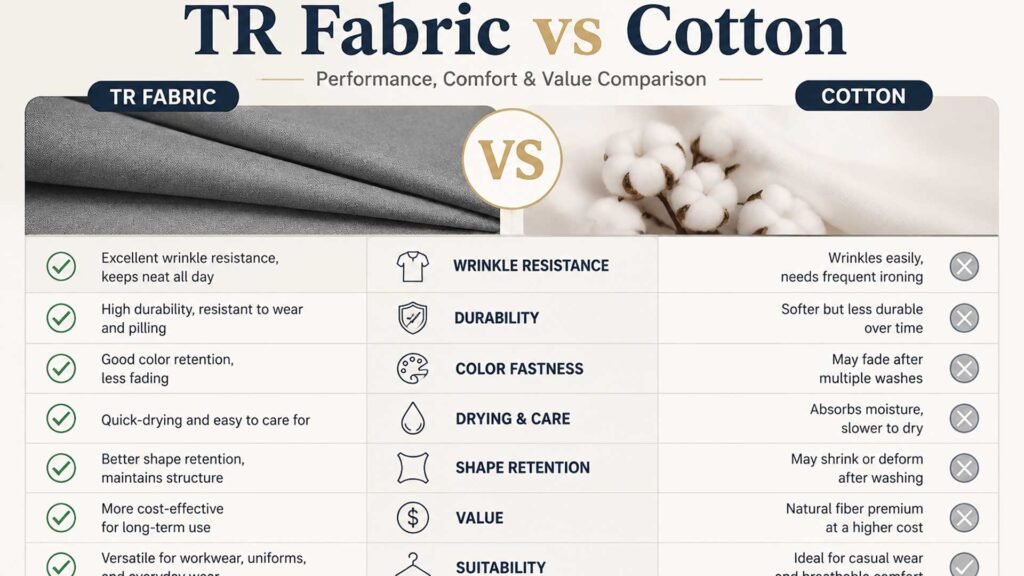
TR Fabric vs Cotton
Quick Comparison Table
| Factor | TR Fabric (65/35 Poly-Viscose) | 100% Cotton |
|---|---|---|
| Hand feel | Smooth, slightly silky, closer to wool | Soft, natural, familiar |
| Drape | Structured, holds shape, clean lines | Softer, more casual drape |
| Breathability | Moderate (better than polyester, less than cotton) | Excellent — naturally breathable |
| Wrinkle resistance | Excellent — naturally wrinkle-resistant | Poor — wrinkles easily |
| Durability (industrial wash) | 80-100+ cycles | 20-30 cycles |
| Shrinkage | ≤2% (heat-set, pre-shrunk) | 3-8% (varies by weave and finish) |
| Color fastness | Excellent — both fibers hold dye well | Good — can fade in hot wash |
| Moisture absorption | Moderate (viscose absorbs, polyester repels) | High — absorbs 25x own weight |
| Pilling resistance | 4.0+ with anti-pill treatment | Good (cotton pills less than synthetics) |
| Cost | $$ (mid-range) | $$ (varies widely by quality) |
| Care | Easy — machine wash, low iron needed | Moderate — ironing required, careful washing |
| Applications | Uniforms, suits, blazers, workwear, thobes | Shirts, casual wear, home textiles, underwear |
What They're Made Of
TR Fabric: 65% Polyester + 35% Viscose (Rayon)
TR is a blend of two engineered fibers. The polyester provides strength, wrinkle resistance, and dimensional stability. The viscose provides softness, breathability, and moisture absorption that pure polyester lacks. The 65/35 ratio is the industry standard because it hits the optimal balance between synthetic durability and natural comfort.
| Component | Where It Comes From | What It Contributes |
|---|---|---|
| Polyester (65%) | Petroleum-based synthetic | Strength, wrinkle resistance, durability, color retention, quick drying |
| Viscose (35%) | Wood pulp (semi-synthetic) | Softness, breathability, moisture absorption, drape, reduced static |
100% Cotton: Natural Cellulose Fiber
Cotton comes from the seed hairs of the cotton plant. It is 100% natural, biodegradable, and has been used for textiles for over 5,000 years. Its performance varies significantly based on the cotton variety, yarn count, weave, and finish — but all cotton shares the same fundamental properties:
| Property | What It Means |
|---|---|
| Natural fiber | Biodegradable, renewable, compostable |
| Hydrophilic | Absorbs water readily (up to 25x its own weight) |
| Breathable | Air passes through the fabric easily |
| Comfortable | Soft against skin, low static, familiar feel |
| Cellulosic | Susceptible to shrinkage, wrinkling, and mildew |
TR vs Cotton — Detailed Comparison
1. Hand Feel
Cotton feels like cotton. It's the fabric everyone knows — soft, familiar, slightly irregular in texture due to natural fiber variations. High-quality long-staple cotton (Egyptian, Supima) is very smooth, but standard cotton has a noticeable 'natural' texture.
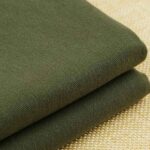
TR feels closer to wool or a premium suiting fabric. The viscose component creates a smoother, more uniform surface than cotton. The polyester component gives it a crispness that cotton lacks. TR fabric drapes with a structured, tailored appearance that cotton cannot match.
Winner: TR for suiting and uniforms. Cotton for casual comfort.
2. Breathability
This is cotton's strongest advantage. Cotton fibers are hollow and allow air to pass through freely. A 100% cotton shirt worn in warm weather allows sweat to evaporate, keeping the wearer cool.
TR fabric is less breathable than cotton because polyester fibers are solid and non-absorbent. The 35% viscose content improves breathability compared to pure polyester, but it cannot match cotton's natural air circulation.
| Condition | Cotton | TR |
|---|---|---|
| Hot, humid weather | Excellent — breathes, absorbs sweat | Moderate — wearable but warmer than cotton |
| Air-conditioned environment | Good — comfortable | Excellent — sufficient breathability, plus wrinkle-free appearance |
| High physical activity | Good — absorbs sweat | Fair — can feel clammy if very active |
Winner: Cotton for hot weather and high activity. TR for moderate and air-conditioned environments.
3. Wrinkle Resistance
This is TR's strongest advantage and cotton's biggest weakness.
Cotton wrinkles. It's a property of the natural cellulose fiber. Hydrogen bonds in the cotton fiber break and reform when the fabric is bent or folded, creating creases that remain until the fabric is ironed. A cotton shirt worn for 8 hours will look noticeably wrinkled by the end of the day. Industrial laundry makes cotton wrinkle even more.
TR fabric resists wrinkles because the polyester component has elastic recovery memory. When the fabric is bent, the polyester fibers return to their original position. A TR shirt or suit worn for 8 hours can be hung overnight and looks fresh the next morning with no ironing.
| Scenario | Cotton | TR |
|---|---|---|
| After 8 hours wear | Visible wrinkling — needs ironing | Minimal creasing — hang and wear |
| After industrial laundry | Heavily wrinkled — needs pressing | Wrinkle-free — ready to wear |
| After packing in a suitcase | Wrinkled — needs steam or iron | Few wrinkles — release when hung |
| In humid weather | Wrinkles more (moisture relaxes fibers) | Stable — polyester content resists moisture-induced wrinkling |
Winner: TR — by a significant margin.
4. Durability and Wash Life
This is the most important factor for uniform buyers.
Cotton fibers break down under industrial laundry conditions — high heat (75°C), aggressive detergents, bleach, and mechanical agitation. A cotton shirt or uniform typically needs replacement after 20-30 wash cycles. The collar and cuffs fray, the fabric thins at stress points, and the color fades noticeably.
TR fabric survives 80-100+ industrial wash cycles. The polyester content provides chemical resistance, heat tolerance, and mechanical strength that cotton lacks. The viscose content is more uniform than natural cotton fibers, which means fewer weak points in the yarn.
| Property | Cotton | TR |
|---|---|---|
| Color fade (20 industrial washes) | Visible — Delta E 4-6 | Minimal — Delta E 1-3 |
| Shrinkage (5 washes) | 3-8% | ≤2% |
| Seam fraying | Starts 10-15 washes | Starts 40-50 washes |
| Pilling | Low (cotton pills less) | 4.0+ with anti-pill treatment |
| Collar delamination | 10-15 washes | 40-50 washes |
| Overall life (industrial laundry) | 20-30 cycles | 80-100+ cycles |
Winner: TR — lasts 3-4x longer in industrial laundry.
5. Shrinkage
Cotton shrinks. It's not a defect — it's a property of cellulose fibers. The fibers swell when wet and contract as they dry, and this movement causes the fabric dimensions to change. Even sanforized (pre-shrunk) cotton can shrink 2-4% over multiple washes. Unsanforized cotton can shrink 8-10%.
TR fabric shrinks ≤2% when properly heat-set during manufacturing. The polyester component provides dimensional stability — it does not absorb water and does not swell. The viscose component can shrink slightly, but heat-setting locks the fabric dimensions before shipment.
| Fabric | Shrinkage (5 washes, 60°C) | Shrinkage (50 washes, 75°C industrial) |
|---|---|---|
| Cotton (pre-shrunk) | 2-4% | 4-8% |
| Cotton (unsanforized) | 5-10% | 8-12% |
| TR (heat-set) | <1% | ≤2% |
Winner: TR — significantly more stable.
6. Moisture Absorption
Cotton absorbs up to 25x its own weight in water. This is good for sweat absorption but bad for drying time. A cotton shirt soaked in sweat takes hours to dry.
TR absorbs less moisture. The polyester component (65%) repels water. The viscose component (35%) absorbs moisture. This means TR fabric dries faster than cotton but does not absorb sweat as effectively.
| Scenario | Cotton | TR |
|---|---|---|
| Sweat absorption | Excellent — absorbs and holds | Moderate — some moisture stays on surface |
| Drying time | Slow — 2-4 hours at room temperature | Fast — 30-60 minutes |
| Feeling when wet | Heavy, cold, clammy | Lightweight, dries quickly |
| Stain absorbency | High — stains soak in quickly | Lower — with stain-resistant treatment, liquids bead off |
Winner: Cotton for moisture absorption. TR for quick drying.
7. Cost
Cotton costs vary wildly based on quality. A 40s budget cotton may be cheaper than TR. A 100s Egyptian cotton is significantly more expensive.
TR is mid-range — more expensive than budget cotton or polyester, less expensive than premium cotton or wool. For its performance, TR offers the best value per wear.
| Fabric | Typical Price (per meter, FOB China) | Cost Per Wear (50 washes) |
|---|---|---|
| Budget cotton (40s poplin) | ¥15-20/m | ~¥1.50 (replaced at 30 washes) |
| Standard cotton (60s poplin) | ¥22-30/m | ~¥2.00 |
| TR 65/35 (240 GSM twill) | ¥18-28/m | ~¥0.35 (lasts 80+ washes) |
| Premium cotton (80s two-ply) | ¥30-45/m | ~¥2.50 |
| Egyptian cotton (Giza 45) | ¥80-120/m | ~¥6.00 |
Winner: TR — lowest cost per wear.
When to Choose TR Fabric Over Cotton
| Application | Choose TR | Why |
|---|---|---|
| Uniforms (hotel, restaurant, corporate) | ✓ | Wrinkle-free, lasts 80+ washes, professional drape, ≤2% shrinkage |
| Suiting and blazers | ✓ | Structured drape, holds crease, resists wrinkles through the day |
| Thobes | ✓ | White stability, wrinkle resistance, smooth hand feel |
| School uniforms | ✓ | Industrial laundry durability, color retention, sizing consistency |
| Summer shirts | ✗ (choose cotton) | Cotton is more breathable in heat |
| Workwear (hot environments) | ✗ (choose cotton or TC) | TR is less breathable in high heat |
| Home textiles | ✗ (choose cotton) | Cotton is softer, more absorbent, washable at home |
| Underwear and base layers | ✗ (choose cotton or modal) | Cotton is gentler against skin for direct contact |
When to Choose Cotton Over TR
| Application | Choose Cotton | Why |
|---|---|---|
| Casual shirts | ✓ | Natural feel, breathable, familiar comfort |
| Hot climate / outdoor wear | ✓ | Superior breathability and moisture absorption |
| Home laundry / personal use | ✓ | Easy to care for at home, no special wash requirements |
| Children's clothing | ✓ | Soft, natural, non-irritating |
| Undergarments | ✓ | Cotton is gentler against sensitive skin |
| Home textiles | ✓ | Sheets, towels, bedding — cotton absorbs moisture and feels soft |
| Project requiring natural fibers | ✓ | Biodegradable, organic options available |
Can They Be Used Together?
Yes — one of the most effective uniform strategies is to use different fabrics for different garments within the same program.
| Garment | Recommended Fabric | Why |
|---|---|---|
| Suit jacket / blazer | TR | Structure, drape, wrinkle resistance |
| Trousers | TR | Holds crease, resists wear from sitting, ≤2% shrinkage |
| Shirt (worn under blazer) | Cotton or TC | Breathable layer next to skin, visible collar stays crisp |
| Uniform polo | Cotton-poly blend | Comfort of cotton plus durability of polyester |
Quick Decision Guide
| Your Priority | Choose |
|---|---|
| I need wrinkle-free uniforms that look sharp all day | TR |
| I need fabric that breathes in hot weather | Cotton |
| I need uniforms to survive industrial laundry | TR |
| I need natural fiber, no synthetics | Cotton |
| I need consistent sizing after repeated washing | TR |
| I need a structured, tailored appearance | TR |
| I need softness against the skin | Cotton |
| I need the lowest cost per wear | TR |
| I need a suit that looks expensive without the wool price | TR |
| I'm making t-shirts | Cotton |
Get a Quote — TR Fabric and 100% Cotton
XINGYE TEXTILE manufactures both TR fabric (polyester-viscose, 65/35) and 100% cotton fabric in a range of weights, weaves, and finishes. TR in twill, gabardine, plain weave, and herringbone — 180-350 GSM. Cotton in poplin, twill, sateen, canvas, and jersey — 120-400 GSM. Custom colors, custom finishes, OEKO-TEX and GOTS certified options.
We don't recommend one over the other. We recommend the right fabric for your application. Tell us what you're making, and we'll help you choose.
Premium TR Fabric Manufacturer | Polyester-Viscose Blends for Suiting