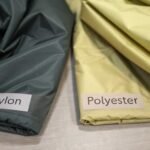
Pure polyester fiber is not naturally stretchy. The polymer chains in polyester are designed to resist deformation and retain shape — which is exactly why polyester dominates applications requiring dimensional stability, from formal trousers to workwear to upholstery. But polyester fabrics can be engineered to deliver significant stretch through two methods: blending with spandex, and knit construction. Understanding which approach is appropriate for your garment category — and how to specify it correctly — is what this guide covers.
Is Polyester Stretchy
Why Pure Polyester Is Not Stretchy — and Why That Is Often an Advantage
Polyester's resistance to stretch comes from its molecular structure. Polyethylene terephthalate (PET) polymer chains are rigid and highly crystalline, which gives polyester fiber its characteristic dimensional stability, wrinkle resistance, and shape retention. A woven fabric made from 100% polyester will not stretch in any meaningful direction under normal wear conditions.
For many garment applications, this is not a limitation — it is the point. Formal trousers, institutional uniforms, workwear, and tailored garments are all specified in woven polyester or polyester-blend fabrics precisely because they need to hold their shape through a full working day without bagging, stretching out at the knees, or losing their crease.
The question of whether to add stretch to a polyester fabric is a design and application decision, not a fiber limitation. Once that decision is made, there are two technically distinct ways to achieve it.
H2: 2. Two Ways to Engineer Stretch Into Polyester Fabric
Method 1: Spandex blending — controlled stretch in woven fabric
Adding spandex (elastane) to a woven polyester or polyester-blend base fabric produces controlled stretch while maintaining the structured appearance of a conventional woven textile. The spandex component — typically 2–5% of the total fiber content — provides elastic recovery without significantly changing the fabric's hand feel, drape, or surface appearance.
This is the approach used in stretch formal trousers, fitted uniforms, and stretch workwear — applications where the fabric needs to look tailored but allow freedom of movement. The result is a fabric that presses, drapes, and sews like a conventional woven, but stretches and recovers when the wearer moves.
Method 2: Knit construction — inherent stretch without spandex
Knitting polyester fiber into a loop structure produces inherent stretch in multiple directions, even without adding spandex. The looped yarn structure allows the fabric to extend and recover as the loops open and close. Knit polyester fabrics are used in activewear, T-shirts, polo shirts, and casual garments where significant stretch and a soft hand feel are both required.
Adding spandex to a knit construction — typically 5–20% for activewear, 20%+ for compression garments — increases stretch recovery and reduces the fabric's tendency to grow or lose shape after repeated wearing and washing.
H2: 3. Polyester Stretch Fabric Types — Which Construction to Specify
| Construction | Spandex % | Stretch Direction | Stretch Level | Best Applications |
|---|---|---|---|---|
| Woven polyester (no spandex) | 0% | None | None | Lining, upholstery, bags, flags |
| Woven polyester + spandex | 2–3% | 2-way | Comfort stretch | Formal trousers, tailored uniforms |
| Woven polyester + spandex | 3–5% | 2-way or 4-way | Moderate stretch | Fitted uniforms, stretch chinos, workwear |
| Knit polyester (no spandex) | 0% | 2-way | Moderate | T-shirts, polo shirts, casualwear |
| Knit polyester + spandex | 5–10% | 4-way | High | Activewear, sportswear, fitted tops |
| Knit polyester + spandex | 15–25% | 4-way | Very high | Compression garments, swimwear base |
| Knit polyester + spandex | 20%+ | 4-way | Maximum | Swimwear, competition sportswear |
Key decision rule: If the finished garment needs to look like a woven fabric — formal trousers, suits, tailored uniforms — specify woven polyester with 2–5% spandex. If the garment is casualwear, activewear, or sportswear where a soft, stretchy hand feel is appropriate — specify knit polyester with or without spandex depending on the stretch level required.
H2: 4. Polyester Blend Options — Choosing the Right Base Fiber
Polyester is rarely used alone in stretch fabric applications. The base fiber blended with polyester determines the overall performance profile of the finished fabric.
Polyester + Spandex (T+S) The simplest stretch construction — polyester base with spandex for elasticity. Used in budget-tier activewear and sportswear where cost efficiency is the primary driver. Lower hand feel quality than polyester-nylon or polyester-viscose blends but the most cost-effective stretch option available.
Polyester + Viscose + Spandex (TR Spandex) The industry standard for stretch formal trousers and fitted institutional uniforms. The viscose component delivers drape and a soft, natural-feeling hand; polyester provides dimensional stability and wrinkle recovery; spandex adds controlled stretch. Standard specification: 63% polyester / 33% viscose / 4% spandex. This construction is used in the majority of stretch formal trouser production for global export markets.
Polyester + Cotton + Spandex (TC Spandex) The standard stretch fabric for workwear, school uniforms, and hospitality garments where breathability, wash durability, and comfort stretch are all required. The cotton component improves moisture absorption and breathability; polyester adds wash durability and dimensional stability; spandex provides the stretch. Common specification: 63% polyester / 33% cotton / 4% spandex, 180–220 GSM.
Nylon + Polyester + Spandex Used in premium activewear where abrasion resistance and stretch recovery are both critical. Nylon contributes superior abrasion resistance and a softer hand feel than polyester alone. Higher cost than pure polyester spandex constructions but justified for performance-tier products where garment durability in high-abrasion areas is a specification requirement.
Polyester + Wool + Spandex (TR Wool Spandex) Premium stretch suiting fabric. Wool contributes natural temperature regulation and a premium hand feel; polyester adds dimensional stability and reduces cost; spandex provides comfort stretch. Used in high-end suit trousers and formal uniform production for premium market positioning.
H2: 5. Woven vs Knit Polyester — Key Differences for Production
Understanding the production implications of woven versus knit polyester stretch fabric helps buyers avoid specification errors before bulk production begins.
| Factor | Woven Polyester Stretch | Knit Polyester Stretch |
|---|---|---|
| Appearance | Structured, tailored, formal | Soft, casual, relaxed |
| Stretch direction | 2-way or 4-way depending on spandex placement | 2-way or 4-way depending on knit structure |
| Stretch level | Comfort stretch to moderate | Moderate to maximum |
| Dimensional stability | High | Moderate — can grow with wear |
| Cutting behavior | Stable, minimal edge curl | Curls at cut edges, requires careful handling |
| Seam construction | Standard lock-stitch for low-stretch; stretch stitch for high-stretch areas | Overlock or flatlock seam required |
| Pressing | Standard pressing temperature | Lower temperature — knit polyester heat-sensitive |
| Typical GSM range | 160–260 GSM | 150–220 GSM |
| Applications | Formal trousers, uniforms, workwear | Activewear, T-shirts, sportswear, casualwear |
H2: 6. 2-Way vs 4-Way Stretch — What to Specify and When
Stretch direction is a critical specification that affects both garment performance and production cost. Many buyers under-specify this detail until production has started.
2-way stretch means the fabric stretches in one direction only — typically across the width (crosswise). Achieved by placing spandex in the weft only of a woven construction. Sufficient for most formal trousers and standard uniform applications where the primary movement need is across the body width when sitting or bending.
4-way stretch means the fabric stretches in both width and length simultaneously. Achieved by placing spandex in both warp and weft directions of a woven fabric, or through knit construction. Required for activewear, fitted sportswear, and garments that need to accommodate full-body movement — bending, squatting, reaching overhead — without restriction.
For formal trousers and standard uniforms: 2-way stretch woven fabric is sufficient and more cost-effective than 4-way. For workwear with high physical demands, activewear, and performance garments: specify 4-way stretch explicitly and confirm with a physical sample test before bulk production.
H2: 7. Polyester Stretch Fabric vs Other Fiber Options — Production Comparison
| Fabric | Stretch Type | Breathability | Wash Durability | Cost | Best For |
|---|---|---|---|---|---|
| 100% Polyester (woven) | None | Low | Excellent | Low | Lining, flags, bags, non-stretch uniforms |
| Polyester Spandex (woven) | 2-way / 4-way | Low-Medium | Excellent | Low-Medium | Budget stretch uniforms, casualwear |
| TR Spandex (woven) | 2-way / 4-way | Medium-High | Very good | Medium | Formal stretch trousers, fitted uniforms |
| TC Spandex (woven) | 2-way / 4-way | Medium | Very good | Medium | Stretch workwear, school uniforms |
| Nylon Spandex (knit) | 4-way | Medium | Excellent | Medium-High | Premium activewear, swimwear |
| Cotton Spandex (knit) | 4-way | High | Good | Medium | Casual stretch, fitted T-shirts |
H2: 8. Key Specifications to Confirm When Sourcing Polyester Stretch Fabric
| Specification | What to Confirm | Typical Standard |
|---|---|---|
| Fiber composition | Exact polyester, viscose/cotton, spandex percentages | Per agreed spec, lab test confirmed |
| Construction | Woven or knit, weave type | Per garment application |
| Stretch direction | 2-way or 4-way | Confirmed by physical sample test |
| Stretch recovery | % recovery after extension | Minimum 90% recovery |
| GSM | Physical sample weighing | ±5% tolerance |
| Color fastness — washing | Grade rating | Minimum Grade 4 |
| Color fastness — rubbing | Dry and wet rub | Minimum Grade 3–4 |
| Shrinkage | Warp and weft after standard wash | ≤3% |
| Width | Usable width after selvage | 57–59' from 60' roll |
| Certifications | OEKO-TEX, GRS where required | Per buyer requirement |
| MOQ | Minimum order per color | Confirm before design sign-off |
| Lead time | Stock vs custom | Stock: 3–7 days / Custom: 20–35 days |
H2: 9. Frequently Asked Questions — Polyester Stretch
Is polyester spandex the same as elastane? Yes. Spandex, elastane, and Lycra all refer to the same fiber — a polyurethane-based elastic fiber. Lycra is a brand name owned by Invista; spandex is the common term in North America; elastane is standard in Europe. All three describe the same material when you see them on a fabric specification.
How much spandex is needed for comfortable stretch in formal trousers? 2–4% spandex in a woven TR or TC base fabric is sufficient for comfort stretch in formal trousers and standard uniforms. This range adds enough elasticity for comfortable all-day wear without significantly affecting the fabric's woven appearance, pressing behavior, or seam performance.
Does polyester spandex lose its stretch over time? Quality polyester spandex fabric maintains stretch recovery through 50+ wash cycles when cared for correctly. Stretch degradation is accelerated by high-temperature washing, bleach, tumble drying on high heat, and prolonged exposure to chlorine (relevant for swimwear). For workwear and uniform applications subject to industrial washing, confirm wash durability performance on the fabric test report before bulk production.
Is woven stretch polyester more expensive than standard woven polyester? Yes, but the cost difference is modest at 2–5% spandex levels — typically 10–20% above the equivalent non-stretch fabric per meter. The production premium for 4-way stretch is slightly higher than 2-way due to the additional spandex in the warp direction. For most uniform and formal garment applications, the cost premium is justified by the significant improvement in wearer comfort and garment longevity.
What is the minimum order quantity for wholesale polyester stretch fabric? At XINGYE TEXTILE, standard MOQ for polyester spandex and TR Spandex fabric is 500 meters per color for stock constructions. Custom composition, GSM, or finish development may require higher MOQ — contact our team to confirm for your specific requirement.
H2: Wholesale Polyester Stretch Fabric — Factory Direct from XINGYE TEXTILE
XINGYE TEXTILE manufactures and supplies wholesale polyester stretch fabric across all major constructions — TR Spandex, TC Spandex, polyester spandex woven, and knit polyester spandex — direct from our production facility in Shijiazhuang, China.
We supply garment manufacturers, uniform contractors, activewear brands, and wholesale fabric buyers in 50+ countries with consistent quality, factory-direct pricing, and flexible MOQ from 500 meters per color. Physical samples available before bulk commitment.
→ Browse TR Spandex Fabric → Browse TC Spandex Fabric → Browse Polyester Fabric → Read: Is Spandex Stretchable? → Read: Is Rayon Stretchy? → Request a Sample or Quote