Polyester Is Everywhere — But Most People Don't Know What It Actually Is
Polyester is the most widely used fiber in the textile industry. It accounts for over 50% of global fiber production — more than cotton, wool, silk, and linen combined. It's in your shirt, your pants, your jacket, your bedsheets, your car seats, and your furniture.
But polyester has a reputation problem. Many consumers associate it with cheap, uncomfortable, 'plastic' clothing. The reality is more nuanced. Polyester is not one single fabric — it's a category of synthetic fibers with a vast range of qualities, finishes, and applications. A high-quality polyester suit fabric is completely different from a budget polyester lining. A performance polyester activewear fabric has nothing in common with a cheap uniform shirting.
This guide covers what polyester fabric is, how it's made, its properties and weaknesses, the different types of polyester, and how to source quality polyester fabric for your project.
Polyester Fabric
What Is Polyester Fabric?
Polyester is a synthetic fiber made from petroleum. The most common type is polyethylene terephthalate (PET) — the same polymer used in plastic water bottles.
Polyester fibers are created by melting PET chips and extruding them through tiny holes (spinnerets) to form continuous filaments. These filaments can be:
- Used as-is for smooth, shiny fabrics (filament polyester)
- Cut into short lengths (staple polyester) and spun like cotton for a more natural hand feel
- Textured, crimped, or twisted for different surface effects
Key facts about polyester:
- First commercialized in the 1950s by DuPont (Dacron) and ICI (Terylene)
- Over 60 million tons produced annually worldwide
- Used in apparel, home textiles, industrial fabrics, and technical textiles
- Can be recycled (rPET) from post-consumer plastic bottles
- Can be blended with natural fibers (cotton, viscose, wool) for improved performance
How Is Polyester Fabric Made?
| Stage | Process | What Happens |
|---|---|---|
| 1. Polymerization | PET chips are produced from petroleum-derived chemicals | Molten polymer is cooled and cut into small chips |
| 2. Melting and extrusion | Chips are melted and forced through spinnerets | Forms continuous filaments |
| 3. Drawing | Filaments are stretched to align the polymer molecules | Increases strength and reduces diameter |
| 4. Texturing (optional) | Filaments are crimped, twisted, or air-jet textured | Creates bulk, softness, or stretch |
| 5. Cutting (for staple) | Filaments are cut into short lengths (32-38mm for cotton-system spinning) | Allows blending with natural fibers |
| 6. Spinning into yarn | Staple fibers are spun into yarn (cotton-system or wool-system) | Produces yarn for woven or knitted fabrics |
Types of Polyester Fabric
Polyester is not one fabric. Different types serve different purposes.
| Type | Characteristics | Best For |
|---|---|---|
| Filament polyester | Smooth, shiny, slippery. Continuous fiber — does not pill | Lining, activewear, sheer curtains, formal wear |
| Staple polyester | Cut short, spun like cotton. Softer, more natural feel, can pill | Shirts, uniforms, bedding, casual wear |
| Textured polyester | Crimped or air-jet textured for bulk and stretch | Sportswear, fleece, casual pants |
| Microfiber polyester | Ultra-fine filaments (<1 denier). Extremely soft, dense weave | Performance apparel, cleaning cloths, soft-shell jackets |
| Recycled polyester (rPET) | Made from post-consumer plastic bottles. Chemically identical to virgin | Eco-conscious apparel, uniforms, activewear |
| High-tenacity polyester | Stronger than standard polyester. Resists stretching and tearing | Industrial fabrics, safety harnesses, bags, outdoor gear |
| Cationic polyester | Modified to accept cationic dyes. Creates two-tone or cross-dye effects | Fashion fabrics, plaid shirting, textured weaves |
| Polyester fleece | Knitted, brushed for softness and warmth | Jackets, blankets, cold-weather mid-layers |
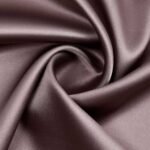
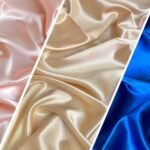
| Polyester satin | Satin weave with filament polyester. Lustrous, smooth, elegant | Evening wear, lining, scarves, lingerie |
Polyester Fabric Properties
| Property | Rating | What It Means |
|---|---|---|
| Strength | ★★★★★ | Stronger than cotton, resists tearing and stretching |
| Wrinkle resistance | ★★★★★ | Does not wrinkle. Hang dry and wear |
| Durability | ★★★★★ | 80-100+ industrial wash cycles with minimal deterioration |
| Quick drying | ★★★★★ | Dries in 30 minutes to 2 hours |
| Color fastness | ★★★★★ | Holds dye extremely well. Fade-resistant |
| Shape retention | ★★★★★ | Does not shrink, stretch, or bag out of shape |
| Stain resistance | ★★★★☆ | Resists water-based stains. Oil-based stains can be problematic |
| Breathability | ★★☆☆☆ | Poor breathability in its pure form — improved by blending |
| Moisture absorption | ★☆☆☆☆ | Absorbs less than 0.4% of its weight in water |
| Static buildup | ★★☆☆☆ | Tends to generate static electricity |
| Pilling | ★★★☆☆ | Staple polyester can pill — anti-pill treatment improves this |
| UV resistance | ★★★☆☆ | Standard polyester degrades in prolonged direct sunlight |
| Biodegradability | ★☆☆☆☆ | Takes 200+ years to decompose |
| Recyclability | ★★★★★ | Can be mechanically or chemically recycled |
Polyester vs Other Fabrics
| Factor | Polyester | Cotton | Viscose | Nylon |
|---|---|---|---|---|
| Strength | Very high | Moderate | Moderate | Very high |
| Wrinkle resistance | Excellent | Poor | Moderate | Excellent |
| Breathability | Poor | Excellent | Good | Poor |
| Moisture absorption | Very low | Very high | High | Low |
| Drying time | Very fast | Slow | Moderate | Fast |
| Softness | Moderate (varies) | High | High | Moderate |
| Cost | Low to moderate | Moderate to high | Moderate | Moderate to high |
Polyester Blends — Why Polyester Is Rarely Used Alone
Most polyester in apparel is used as a blend with natural or cellulosic fibers. The blend compensates for polyester's weaknesses (breathability, hand feel) while retaining its strengths (durability, wrinkle resistance).
| Blend | Ratio | Best For | Why |
|---|---|---|---|
| TC (Poly-Cotton) | 65/35 poly/cotton | Uniforms, shirts, workwear | Balances breathability and durability |
| TR (Poly-Viscose) | 65/35 poly/viscose | Suiting, blazers, dress uniforms | Better drape than TC, closer to wool |
| Poly-Spandex | 90/10 or 85/15 | Activewear, stretch uniforms | Adds stretch without losing durability |
| Poly-Wool | 50/50 to 70/30 | Premium suiting, winter uniforms | Reduces cost, adds wrinkle resistance |
| Poly-Rayon | 50/50 to 80/20 | Fashion, dresses, shirting | Softness of rayon with durability of polyester |
| CVC (Cotton-Rich) | 60/40 cotton/poly | Premium shirts, school uniforms | Cotton-rich with poly's durability |
Common Uses of Polyester Fabric
| Application | Why Polyester |
|---|---|
| Uniforms (hotel, restaurant, corporate) | Wrinkle-resistant, durable, affordable, easy care |
| Activewear and sportswear | Moisture-wicking, quick-drying, stretch-friendly |
| Outerwear and jackets | Water-resistant, lightweight, durable |
| Workwear and industrial | Strong, chemical-resistant, long-lasting |
| Home textiles (curtains, bedding) | Color-fast, easy care, affordable |
| Lining fabric | Smooth, slippery, durable |
| Fleece and blankets | Soft, warm, lightweight |
| Technical and industrial fabrics | High-tenacity options for specialized applications |
How to Buy Polyester Fabric — What to Specify
| Spec Element | What to Ask |
|---|---|
| Filament or staple? | Smooth and shiny (filament) or cotton-like (staple)? |
| Denier / yarn count | 30D (very fine, lining), 75D (standard shirting), 150D+ (heavy fabrics) |
| GSM | 80-120 (lining), 120-180 (shirts), 180-260 (uniforms), 260+ (outerwear) |
| Weave | Poplin, twill, plain, satin, dobby |
| Finish | Anti-pill, moisture-wicking, UV-resistant, water-repellent |
| Recycled content? | rPET — specify percentage if required |
| Certification | OEKO-TEX for chemical safety. GRS for recycled content |
Polyester Care Instructions
- Wash: Machine wash warm (40°C). For white polyester, higher temperatures are safe
- Bleach: Chlorine bleach is safe for white polyester. Oxygen bleach preferred
- Dry: Tumble dry low or hang dry. Polyester dries quickly
- Iron: Low heat (synthetic setting). High heat melts polyester — this is permanent damage
- Dry clean: Safe
Frequently Asked Questions
Q: Is polyester fabric bad for the environment? A: Standard polyester is petroleum-based and non-biodegradable, which has environmental drawbacks. However, recycled polyester (rPET) reduces carbon footprint by 30-55% and diverts plastic bottles from landfills. Polyester is also more durable than natural fibers, meaning fewer replacements over time.
Q: Is polyester fabric breathable? A: Pure polyester has poor breathability because the fibers do not absorb moisture. This is why polyester is usually blended with cotton or viscose for clothing worn against the skin. Performance polyester fabrics are engineered with moisture-wicking finishes to improve comfort during activity.
Q: Does polyester shrink? A: Properly heat-set polyester shrinks less than 1%. Low-quality polyester may shrink 2-3%. Always request a shrinkage test from your supplier.
Q: Does polyester pill? A: Staple (spun) polyester can pill, especially if it is low quality or not treated. Filament polyester does not pill. Anti-pill treatments are available and recommended for uniform and workwear applications.
Q: Is polyester safe to wear? A: Yes. Polyester is chemically stable, non-allergenic for most people, and widely used in clothing, bedding, and medical textiles. OEKO-TEX certified polyester is tested for harmful substances.
Get a Quote — Polyester Fabric from XINGYE TEXTILE
XINGYE TEXTILE manufactures polyester fabric and polyester blend fabrics — including TC (poly-cotton) and TR (poly-viscose) — for uniform programs, garment manufacturing, and textile sourcing worldwide. Filament and staple options. Poplin, twill, gabardine, plain weave, satin, and dobby. GSM range 80-350. Custom colors, custom finishes. OEKO-TEX certified. Recycled (rPET) options available.
Minimum order: 300 meters per color. Sample-first ordering.