Denim is one of the most enduring and widely produced fabrics in global garment manufacturing — a sturdy 3/1 twill woven fabric originally made from cotton, now available in stretch and blended compositions that extend its application range from classic jeans and jackets to modern fitted casualwear and workwear. XINGYE TEXTILE supplies wholesale denim fabric in 100% cotton, cotton-spandex stretch, and cotton-polyester blend compositions — from 4oz lightweight denim through to 16oz heavyweight fabric — serving garment manufacturers, denim brands, and wholesale buyers worldwide with factory-direct pricing, flexible composition options, and fast sample turnaround.
Where to Get Denim Fabric
What Is Denim Fabric?
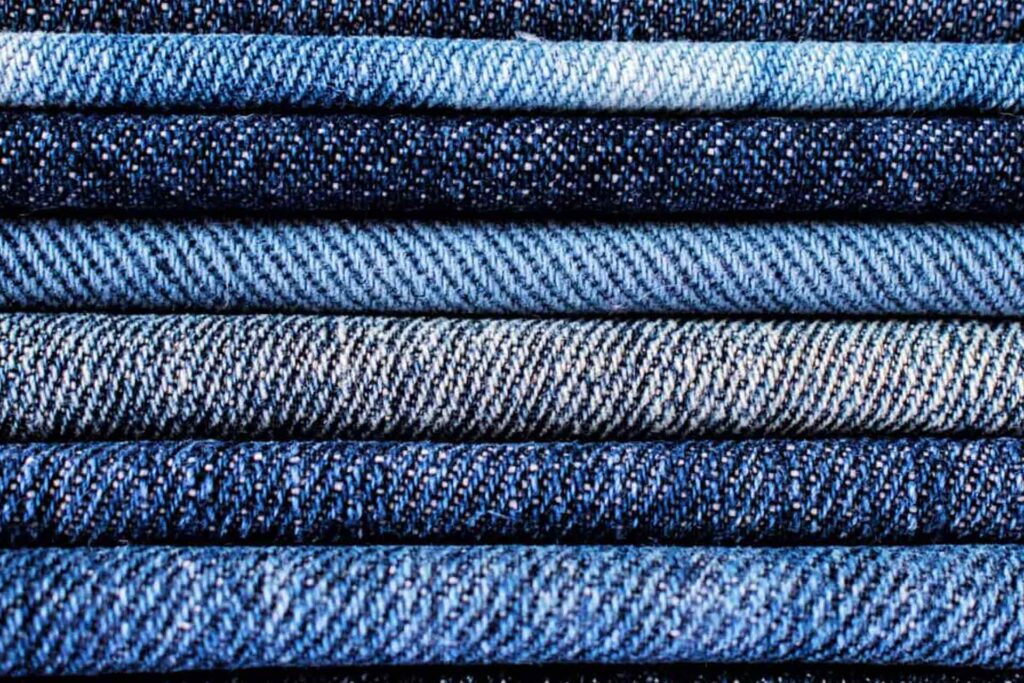
Denim is a 3/1 twill woven fabric — the weft thread passes over three warp threads and under one, creating the characteristic diagonal rib visible on the reverse of denim fabric. The warp threads are traditionally dyed with indigo, while the weft threads remain undyed, producing denim's distinctive two-tone color effect where the face appears blue and the reverse appears lighter.
This construction gives denim three defining performance properties that have sustained its dominance in global garment production for over a century:
Exceptional durability. The dense 3/1 twill construction packs more threads per unit area than plain weave, producing a fabric with high tensile strength and abrasion resistance. Denim garments outlast equivalent plain weave constructions at the same fiber weight — a key reason denim became the standard fabric for workwear before transitioning into casualwear.
Characteristic texture and appearance. The diagonal twill rib, indigo warp dyeing, and progressive fading through wear give denim a visual character that no other fabric replicates. This aesthetic identity is why denim remains a core fabric category in global fashion and casualwear production despite being over 150 years old.
Versatility across applications. Denim's weight range — from lightweight 4oz shirting denim to heavyweight 16oz selvedge-weight fabric — allows a single fabric category to cover jeans, jackets, shirts, trousers, skirts, bags, and workwear within a consistent aesthetic language.
Denim Fabric Compositions — Which to Specify
We supply denim fabric in three base compositions, each suited to different garment categories, performance requirements, and price points.
100% Cotton Denim Pure cotton denim is the original and most widely produced denim composition globally. It delivers the authentic denim hand feel, natural breathability, and characteristic fading behavior that cotton fiber produces uniquely. Pure cotton denim stiffens slightly when new and softens progressively with washing and wear — the break-in characteristic that denim buyers associate with quality.
Pure cotton denim is the correct specification for: classic jeans, denim jackets, workwear, and any garment where authentic denim aesthetics and natural fiber credentials are part of the product identity.
Cotton Spandex Stretch Denim Adding 1–3% spandex to a cotton denim base produces stretch denim with 2-way or 4-way elasticity while retaining the appearance and character of conventional denim. Stretch denim is now the dominant specification in fitted jeans production globally — the spandex component allows closer-fitting silhouettes without restricting movement, and the fabric recovers its shape after wearing rather than bagging at the knees and seat as pure cotton denim can.
Cotton spandex stretch denim is the correct specification for: fitted jeans, skinny and slim-cut trousers, stretch denim jackets, and any denim garment where close fit and ease of movement are both required.
Cotton Polyester Blend Denim Blending polyester with cotton in denim production reduces raw material cost, improves dimensional stability, and enhances color retention compared to pure cotton. Cotton-polyester denim has lower shrinkage than pure cotton denim and maintains its appearance more consistently through repeated washing — advantages for budget-tier jeans production and garment programs where easy-care performance is a specification requirement alongside denim aesthetics.
Cotton-polyester denim is the correct specification for: budget-tier jeans and casual trousers, school uniform denim garments, and applications where cost efficiency and wash durability are prioritized over pure cotton authenticity.
Denim Fabric Weight Guide — OZ Explained
Denim fabric weight is measured in ounces per square yard (oz) rather than grams per square meter (GSM) — the standard unit used across the denim industry globally. Understanding denim weight is essential for matching fabric to garment category and end-use requirements.
| Weight (OZ) | Fabric Character | Best Applications |
|---|---|---|
| 4–6 oz | Very lightweight, soft drape | Denim shirts, lightweight summer dresses, chambray-style garments |
| 6–8 oz | Lightweight, good drape | Lightweight jeans, denim skirts, casual trousers |
| 8–10 oz | Mid-weight, standard jeans weight | Standard jeans, casual denim jackets, everyday casualwear |
| 10–12 oz | Mid-heavy, structured | Premium jeans, denim workwear shirts, structured jackets |
| 12–14 oz | Heavy, substantial | Heavy jeans, denim outerwear, workwear |
| 14–16 oz | Very heavy, maximum durability | Selvedge-style premium jeans, heavy workwear, industrial applications |
For standard jeans production, 8–12 oz is the most widely specified range. Lightweight denim at 4–7 oz is used for shirts and summer garments; heavyweight denim above 12 oz for premium and workwear applications.
Stretch vs Non-Stretch Denim — Key Differences for Production
| Factor | Non-Stretch Denim | Stretch Denim (Cotton Spandex) |
|---|---|---|
| Elasticity | None — rigid woven structure | 2-way or 4-way depending on spandex placement |
| Fit silhouette | Relaxed, straight, wide-leg cuts | Fitted, slim, skinny cuts |
| Comfort in wear | Stiffens initially, softens with wear | Comfortable from first wear |
| Shape retention | Can bag at knees and seat over time | Recovers shape after wearing |
| Production handling | Stable, easy to cut and sew | Requires stretch-capable seam construction |
| Shrinkage | 3–5% pure cotton without pre-treatment | Lower — polyurethane spandex stabilizes dimensions |
| Best for | Classic jeans, workwear, jackets | Fitted jeans, slim trousers, modern casualwear |
Production note for stretch denim: Seams in stretch denim garments — particularly inseams, crotch seams, and waistband attachment — must be sewn with stretch-capable stitching (overlock or chain stitch) to prevent seam breakage when the fabric extends in wear. Standard lock-stitch seams will fail in high-stretch areas of stretch denim garments.
Denim Fabric Applications
Jeans and Denim Trousers The primary application for denim globally. 8–12 oz cotton or cotton spandex denim is the standard specification for jeans production across all price points. Stretch denim at 9–11 oz is the dominant specification for fitted and slim-cut styles; non-stretch cotton denim at 10–14 oz for relaxed, straight, and wide-leg cuts; heavyweight non-stretch at 12–16 oz for premium and selvedge-style production.
Denim Jackets and Outerwear 10–14 oz non-stretch cotton denim is the standard specification for denim jackets, trucker jackets, and denim outerwear. The heavier weight provides the structure and durability required for outerwear applications. Stretch denim jackets use 9–11 oz cotton spandex construction for fitted silhouettes.
Workwear and Industrial Garments Heavy cotton denim at 12–16 oz has a long history in workwear production — the original denim application before casualwear adoption. The dense construction provides abrasion resistance and durability for physically demanding work environments. Non-stretch pure cotton denim is preferred for workwear where flame retardant finishing may be required.
Denim Shirts and Lightweight Garments Lightweight denim at 4–7 oz is used for denim shirts, chambray-style garments, and lightweight dresses where the denim aesthetic is required without the weight and stiffness of standard jeans-weight fabric. Cotton or cotton-polyester blend at this weight range produces a garment with good drape and comfortable all-day wear.
Casual Skirts and Dresses 6–9 oz denim — both stretch and non-stretch — is widely used in denim skirt and dress production. Stretch denim at this weight provides the drape and ease of movement required for fitted dress silhouettes; non-stretch at slightly heavier weights for structured skirt styles.
School Uniform and Institutional Garments Cotton-polyester blend denim at 8–10 oz is increasingly specified for school uniform denim garments — trousers, skirts, and casual jackets — where easy-care performance, color consistency across large orders, and cost efficiency are the primary procurement requirements.
Key Specifications to Confirm When Sourcing Wholesale Denim
| Specification | What to Confirm | Typical Standard |
|---|---|---|
| Fiber composition | Cotton %, spandex %, polyester % | Per agreed spec, lab test confirmed |
| Weight | OZ per square yard, physical sample verified | ±5% tolerance |
| Stretch direction | 2-way or 4-way for stretch denim | Confirmed by sample test |
| Stretch recovery | % recovery after extension | Minimum 90% for stretch denim |
| Width | Usable width after selvage | 57–59' from 60' roll |
| Color fastness — washing | Grade rating | Minimum Grade 3–4 (denim fading is expected) |
| Color fastness — rubbing | Dry and wet crocking | Minimum Grade 3 dry, Grade 2–3 wet |
| Shrinkage | Warp and weft after standard wash | ≤3% cotton-polyester / ≤5% pure cotton |
| Certifications | OEKO-TEX Standard 100 | Per buyer requirement |
| MOQ | 1,000 yards per color and style | Confirm before design sign-off |
| Lead time | Stock vs custom | Stock: 3–7 days / Custom: 20–30 days |
Note on denim color fastness: Denim crocking — color transfer through rubbing — is an inherent characteristic of indigo-dyed denim fabric, particularly when new. Grade 2–3 wet crocking is industry standard for denim and does not indicate a quality defect. Buyers should communicate expected crocking levels to their end customers and specify washing before first wear in garment care instructions.
Frequently Asked Questions — Wholesale Denim Fabric
What is the difference between denim and chambray? Both denim and chambray are woven cotton fabrics with indigo-dyed warp threads, but they differ significantly in weight and construction density. Denim is a heavy 3/1 twill weave — structured, stiff when new, and highly durable. Chambray is a lightweight plain weave — soft, fluid, and comfortable from first wear. Chambray is used in shirts and lightweight garments; denim in jeans, jackets, and workwear. Both are available in our product range.
Can denim fabric be produced in colors other than indigo blue? Yes. While indigo blue is the traditional and most widely produced denim color, denim fabric is also produced in black, grey, white, and a range of fashion colors through different dyeing processes. Black denim uses sulfur dyeing of the warp threads; raw white denim uses undyed warp and weft. Contact our team with your target color for availability and pricing.
Is stretch denim more expensive than non-stretch? Yes — the addition of spandex and the modified weaving process required for stretch construction add cost compared to equivalent non-stretch denim at the same weight. The cost premium is typically 10–20% above non-stretch denim per yard. For fitted jeans production where stretch is a core performance requirement, the cost premium is generally justified by the improved fit and wearer comfort.
Does denim fabric shrink? Pure cotton denim can shrink 3–5% in the first wash without pre-shrinking treatment. Sanforized denim — mechanically pre-shrunk — reduces shrinkage to approximately 1% and is the standard specification for most commercial jeans production. Cotton-polyester blend denim has better dimensional stability than pure cotton. Confirm shrinkage specification on the fabric test report before bulk production and build appropriate shrinkage allowance into pattern grading.
What is the minimum order quantity for wholesale denim fabric? Our standard MOQ is 1,000 yards per color and style. Free stock fabric samples are available before bulk commitment. Customized samples — specific color, weight, or composition development — incur a sample fee that is fully refundable against the subsequent bulk order. Samples are dispatched within 3–5 working days of confirmation.
Request Wholesale Denim Fabric Samples and Pricing
XINGYE TEXTILE supplies wholesale denim fabric — 100% cotton, cotton spandex stretch, and cotton polyester blend — in weights from 4oz to 16oz, serving jeans manufacturers, denim brands, casualwear producers, and wholesale fabric buyers worldwide. Factory-direct pricing, MOQ 1,000 yards per color and style, free stock samples available.
Contact our sourcing team with your composition, weight, quantity, and destination — we will provide a formal quotation within 24 hours.
→ Browse Fabric for Denim Garments → Browse Our Full Fabric Range → Request a Free Stock Sample → Get a Wholesale Quote