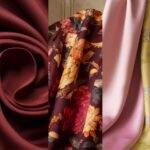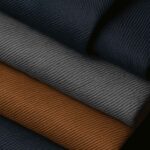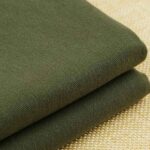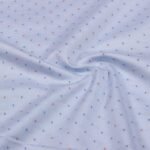
Pure rayon fiber has very little natural elasticity — less than cotton in most cases. On its own, a woven rayon fabric will not stretch in any meaningful way. But whether a rayon fabric is stretchy in production depends on two factors that have nothing to do with the fiber itself: how the fabric is constructed, and what it is blended with. This guide explains the real stretch profile of rayon, how to engineer stretch into rayon-based fabrics, and what apparel manufacturers need to specify when sourcing rayon and rayon-blend fabrics for production.
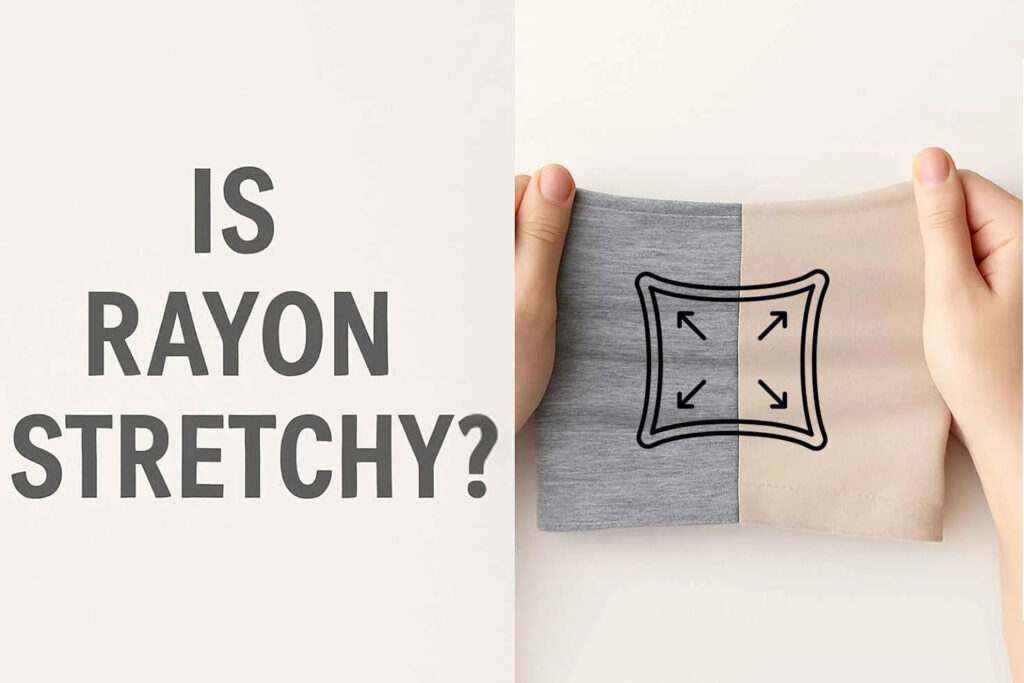
Is Rayon Stretchy
Why Pure Rayon Is Not Stretchy — and Why That Rarely Matters
Rayon is a regenerated cellulose fiber. Its molecular structure gives it excellent moisture absorption, soft hand feel, and fluid drape — but very limited elastic recovery. When a pure woven rayon fabric is pulled, it deforms rather than springs back. This is why garments made from 100% woven rayon can lose their shape over time, particularly in areas subject to repeated stress like knees, elbows, and seat seams.
However, for the majority of garments where rayon is specified — dresses, blouses, linings, formal trousers, and casualwear — natural stretch is not a primary requirement. Rayon is chosen for its drape, its breathability, and its soft hand feel. In these applications, the absence of stretch is not a problem.
Where stretch becomes necessary — fitted uniforms, active casualwear, modern trousers — rayon is blended with polyester and spandex to produce TR Spandex fabric, which delivers rayon's drape alongside engineered stretch performance. This is the production solution used across global uniform and formal garment manufacturing.
Two Ways to Add Stretch to Rayon Fabric
For apparel manufacturers who need both rayon's drape and stretch performance, there are two approaches: construction-based stretch and blend-based stretch.
Construction-based stretch — knit rayon
Knitting rayon fiber into a loop structure rather than weaving it produces a fabric with inherent stretch in multiple directions, even without spandex. Rayon jersey and rayon knit fabrics are widely used in dresses, T-shirts, and casual tops where a soft, stretchy hand feel is required. The trade-off is that knit rayon has lower dimensional stability than woven rayon — it requires careful handling in production and tends to curl at cut edges.
Knit rayon is suitable for: jersey dresses, casual tops, loungewear, and lightweight casualwear where stretch and softness are the primary requirements.
Blend-based stretch — rayon spandex or TR spandex
Adding spandex to a woven rayon or TR base fabric produces controlled stretch in a fabric that retains the appearance of a conventional woven textile. This is the approach used in formal and uniform garment production where the fabric needs to look structured and tailored while providing ease of movement.
A typical TR Spandex specification — 63% polyester, 33% viscose, 4% spandex — delivers 2-way or 4-way stretch in a fabric that drapes, presses, and sews like a conventional woven suiting fabric. This construction is the industry standard for stretch formal trousers and fitted institutional uniforms globally.
Rayon Stretch Fabric Options — Which Construction to Specify
Different garment categories require different stretch constructions. The table below maps garment type to the appropriate rayon-based stretch fabric specification.
| Garment Category | Recommended Construction | Typical Specification |
|---|---|---|
| Formal stretch trousers | TR Spandex woven | 65% polyester / 31% viscose / 4% spandex, 180–220 GSM |
| Fitted institutional uniforms | TR Spandex woven | 65% polyester / 31% viscose / 4% spandex, 160–200 GSM |
| Casual dresses and tops | Rayon jersey knit | 95% rayon / 5% spandex, 150–180 GSM |
| Blouses and lightweight shirts | Woven rayon (no stretch needed) | 100% rayon or rayon blend, 100–140 GSM |
| Loungewear and sleepwear | Modal spandex knit | 95% modal / 5% spandex, 160–200 GSM |
| Summer casualwear | Rayon challis woven | 100% rayon, 110–130 GSM |
For formal and uniform applications, TR Spandex woven fabric is almost always the correct specification — it provides the structured appearance buyers expect from woven fabric with the stretch performance modern uniforms require.
For casualwear and dresses where softness and natural drape are the priority, rayon jersey knit or lightweight woven rayon without spandex is the more appropriate choice.
TR Spandex Fabric — The Production Standard for Stretch Rayon
TR Spandex fabric — polyester, viscose, and spandex blend — is the most widely used stretch fabric in formal trouser and institutional uniform production globally. Understanding its construction helps buyers specify correctly.
Why polyester is added to the blend Pure rayon (viscose) lacks the dimensional stability and wash durability required for uniform production. Adding polyester — typically 60–65% of the blend — provides wrinkle recovery, shrinkage resistance, and wash durability. The polyester component is what allows TR fabric to survive repeated industrial washing without losing its shape or color.
Why viscose is retained Viscose contributes the drape, surface sheen, and soft hand feel that formal garment buyers expect. A fabric made from polyester and spandex alone would feel stiff and synthetic. The viscose component — typically 30–35% of the blend — is what gives TR Spandex its characteristic fluid drape and comfortable wear performance.
What spandex adds At 2–5% of the blend, spandex adds controlled stretch and recovery without significantly changing the fabric's woven appearance. The result is a fabric that looks and presses like conventional suiting fabric but allows full freedom of movement in wear — bend, squat, reach — without the trousers losing their crease or the uniform losing its shape.
Standard TR Spandex specifications for uniform and formal trouser production:
- 63% polyester / 33% viscose / 4% spandex — the most common specification for standard stretch uniform trousers
- 60% polyester / 36% viscose / 4% spandex — higher viscose content for enhanced drape in premium formal trousers
- 65% polyester / 31% viscose / 4% spandex — higher polyester content for enhanced wash durability in institutional uniforms
Production Considerations for Rayon and Rayon-Blend Stretch Fabrics
Rayon-based fabrics — whether woven or knit, with or without spandex — have specific production characteristics that manufacturers need to account for before committing to bulk production.
Shrinkage management
Pure rayon woven fabric can shrink 3–8% in the first wash. TR and TR Spandex fabrics have substantially better dimensional stability — typically ≤3% shrinkage — because the polyester component resists dimensional change. Always confirm shrinkage specification on the fabric test report and build shrinkage allowance into pattern grading for pure rayon constructions.
Wet strength loss
Rayon loses significant tensile strength when wet — up to 40–50% compared to its dry strength. This affects seam performance in high-wash-frequency garments. For institutional uniforms subject to industrial washing, TR Spandex with higher polyester content is more appropriate than high-viscose blends.
Cutting and handling
Woven rayon and TR fabrics slip during cutting due to their fluid drape. Use non-slip cutting table surfaces, sharp blades, and cut in single or low-ply layers where precision is critical. Knit rayon fabrics curl at cut edges — allow fabric to relax flat before cutting and use rotary cutters rather than straight blades.
Pressing temperature
Rayon and viscose fibers are heat-sensitive. Excessive pressing temperature causes permanent damage and sheen loss. Confirm the recommended pressing temperature with your fabric supplier — typically 140–160°C for rayon blends — and test on a sample before production pressing begins.
Seam construction for stretch fabrics
TR Spandex and rayon spandex fabrics require stretch-capable seam construction. Standard lock-stitch seams will break when the fabric is stretched beyond the thread's elasticity. Use overlock or zigzag stitching in seams subject to stretch in wear, and elastic thread in waistbands and fitted areas.
Key Specifications to Confirm When Sourcing Rayon and Rayon-Blend Fabric
| Specification | What to Confirm | Typical Standard |
|---|---|---|
| Fiber composition | Exact percentages of rayon, polyester, spandex | Per agreed spec, confirmed by lab test |
| Construction | Woven or knit, weave type | Per garment application |
| GSM | Physical sample weighing | ±5% tolerance |
| Shrinkage | Warp and weft after standard wash | ≤3% for TR blends |
| Color fastness — washing | Grade rating | Minimum Grade 4 |
| Color fastness — rubbing | Dry and wet rub | Minimum Grade 3–4 |
| Stretch direction | 2-way or 4-way if spandex blend | Per garment requirement |
| Stretch recovery | % recovery after extension | Minimum 90% |
| Pressing temperature | Maximum safe temperature | Confirm before bulk production |
| Width | Usable width after selvage | 57–59' from 60' roll |
| Certifications | OEKO-TEX, GRS where required | Per buyer requirement |
| MOQ | Minimum order per color | Confirm before design sign-off |
| Lead time | Stock vs custom | Stock: 3–7 days / Custom: 20–35 days |
Frequently Asked Questions — Rayon Stretch
Does rayon stretch out of shape over time?
Woven rayon without spandex can lose its shape in areas subject to repeated stress — seat, knees, elbows — particularly after multiple washes. This is one reason TR fabric (polyester-viscose blend) is preferred over pure rayon for uniform and workwear production: the polyester component provides the dimensional stability that pure rayon lacks.
Is rayon jersey stretchy?
Yes. Rayon jersey is a knit construction that has significant natural stretch even without spandex. Adding 5% spandex to rayon jersey increases stretch recovery and reduces the fabric's tendency to grow or distort after washing. Rayon jersey with spandex is the standard construction for fitted casual dresses and tops.
What is the difference between rayon spandex and TR spandex?
Rayon spandex is a two-fiber blend — viscose and spandex only. It has excellent drape and stretch but lower wash durability than TR spandex. TR spandex adds polyester to the blend, which significantly improves dimensional stability, wrinkle recovery, and wash performance. For uniform and formal garment production, TR spandex is almost always the correct specification over pure rayon spandex.
Can rayon be blended with cotton for stretch?
Cotton-rayon blends are used in casualwear and dresses but do not provide stretch without the addition of spandex. The blend improves hand feel and breathability compared to pure cotton but does not address the stretch performance requirement on its own. For stretch in a cotton-rayon blend, spandex at 3–5% needs to be added to the construction.
What is the minimum order quantity for wholesale rayon and TR fabric?
At XINGYE TEXTILE, standard MOQ for rayon fabric and TR Spandex fabric is 500 meters per color for stock constructions. Custom composition, GSM, or finish development may require higher MOQ — contact our team to confirm for your specific requirement.
Wholesale Rayon, Viscose & TR Spandex Fabric — Factory Direct from XINGYE TEXTILE
XINGYE TEXTILE manufactures and supplies wholesale rayon fabric, 100% viscose fabric, and TR Spandex fabric direct from our production facility in Shijiazhuang, China. We supply garment manufacturers, uniform contractors, apparel brands, and wholesale fabric buyers in 50+ countries with consistent quality, factory-direct pricing, and flexible MOQ from 500 meters per color.
Physical samples are available before bulk commitment. Our technical team can advise on the right rayon or TR Spandex specification for your garment category, stretch requirements, and certification needs.
→ Browse 100% Rayon Fabric → Browse TR Spandex Fabric → Browse TR Fabric (Polyester-Viscose) → Read: Is Viscose Fabric Breathable? → Request a Sample or Quote