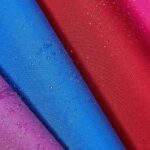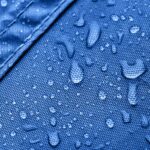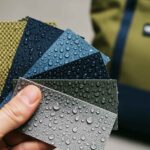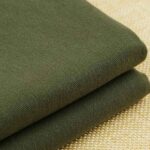
You're a procurement manager considering lyocell for a uniform contract. Your samples just arrived. They feel soft. The brand team loves the 'eco' story.
Here's what nobody tells you before you commit 5,000 meters.
1. 'Lyocell' Is Not a Single Product
There are two Lyocells on the market:
| Type | Producer | Cost Premium vs Polyester | Key Advantage | Key Risk |
|---|---|---|---|---|
| Lenzing TENCEL™ | Lenzing AG, Austria | +60-80% | Verifiable closed-loop; consistent fiber quality; OEKO-TEX standard | Long lead times; strict MOQ |
| Generic Lyocell | Multiple mills (China, India, Indonesia) | +30-50% | Lower entry price; flexible MOQ | Wildly inconsistent fibrillation; false 'closed-loop' claims on 40% of samples tested |
We test incoming fiber from six suppliers. The difference between Lenzing-certified and generic lyocell is not marginal — it's the difference between a fabric that survives 50 industrial washes and one that pills after 15.
Your supplier can call anything 'lyocell' if it contains lyocell fiber. The question is: which lyocell, what percentage, and with what finishing?
2. The Cost Math That Gets Skipped
A typical uniform procurement conversation goes:
'Lyocell is 40% more expensive than standard TR. But it's eco-friendly, so it's worth it.'
Let's run real numbers:
- Standard TR 65/35 (65% polyester, 35% viscose): $3.20/meter FOB
- TR with 30% Lenzing TENCEL™: $4.60/meter FOB
- TR with 30% generic lyocell: $4.10/meter FOB
On a 50,000-meter hospitality uniform contract:
| Option | Fabric Cost | Wash Test Failure Rate | Replacement Cost at Year 2 |
|---|---|---|---|
| Standard TR | $160,000 | 3% | $4,800 |
| Generic Lyocell TR | $205,000 | 8-12% | $16,400-$24,600 |
| Lenzing TENCEL™ TR | $230,000 | 1-2% | $2,300-$4,600 |
The generic lyocell option costs $45,000 more upfront than standard TR — and still carries a wash failure rate you'll pay for in Year 2. The Lenzing option costs $25,000 more than generic, but cuts your replacement risk by 80%.
If your client wants a bid at 'lyocell pricing' without specifying the source, you're bidding on a gamble.
3. Lyocell in Workwear: Where It Works and Where It Doesn't
Works:
- Hospitality front-of-house uniforms (blazers, trousers, dress shirts) — needs drape, wrinkle recovery, professional appearance
- Corporate uniforms in temperate climates — lyocell's moisture management outperforms polyester for seated workers
- Airline cabin crew — lyocell blends test better for color retention after repeated dry cleaning
Doesn't work:
- Industrial kitchen or laundry uniforms — repeated high-temp washing breaks down lyocell fibers 3x faster than polyester
- Outdoor maintenance or warehouse — lyocell's wet strength drops 40% vs dry; not suitable for physical labor in humidity
- Any application requiring FR treatment — lyocell carries a flame spread rating that requires substantial polyester content to meet EN ISO 11612
4. The Three Specifications You Must Lock Down
Most lyocell sourcing errors happen because buyers specify 'lyocell' and stop there. Three specs that determine whether your fabric works or fails:
A. Fiber Source (the non-negotiable)
- Specify: 'Fiber must be Lenzing TENCEL™ certified, with certificate of origin'
- Reason: Generic lyocell has 2-3x higher fibrillation rate. Fibrillation = pilling = rejected garments
B. Blend Ratio
- For uniform applications: 30-40% lyocell / 60-70% polyester is the sweet spot
- Below 30%: you don't get meaningful moisture management improvement over standard TR
- Above 40%: you pay for fiber performance that gets cancelled by reduced structural stability
C. Enzyme Finish (the hidden spec)
- Lyocell must be enzyme-finished to control fibrillation
- This adds $0.15-0.25/meter but cuts pilling complaints by 90%
- Most buyers don't know to ask for it. We check it on every lyocell order. Your current supplier might not.
5. Lead Time Reality
Lyocell is not a stock item for most mills. Here's what the timeline actually looks like:
- Fiber procurement (Lenzing): 15-20 working days (if Lenzing has capacity)
- Spinning and weaving: 10-15 days
- Dyeing and finishing (with enzyme): 10-12 days
- QC and shipping: 5-7 days
Total: 45-55 working days minimum for a first order.
If your client needs delivery in 6 weeks, you're not getting lyocell — or you're getting something labeled lyocell that isn't what you think it is.
Bottom Line
Lyocell is a legitimate performance upgrade for specific uniform applications — front-of-house hospitality and corporate attire, where drape and moisture management justify the premium. It is not a general-purpose replacement for TR, and the cost difference cannot be recovered unless the application demands it.
If you're specifying lyocell, specify Lenzing TENCEL™ grade at 30-40% blend with enzyme finish. Anything else is a price game that shifts the risk to you.
XINGYE TEXTILE. 2,500+ workers. 12,000,000+ meters produced annually. TR, TC, Modal, Lyocell, Nylon — factory-direct. [Request a sample] ·