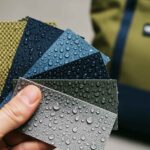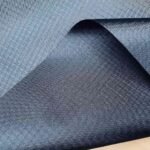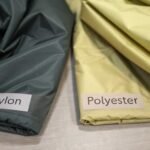
When sourcing waterproof laminate fabric, most buyers focus on the coating — TPU, PU, or DWR — and treat the base fabric as a secondary decision. This is a specification mistake. The base fabric determines the hand feel, weight, abrasion resistance, and cost of the finished laminate far more than the coating alone. Nylon and polyester are the two dominant base fabric options for waterproof laminates, and they produce fundamentally different performance profiles at equivalent denier ratings. This guide explains the real differences between nylon and polyester base fabrics in waterproof laminate construction — with specific weight data, coating compatibility, application mapping, and wholesale sourcing information for manufacturers making this decision at production scale.
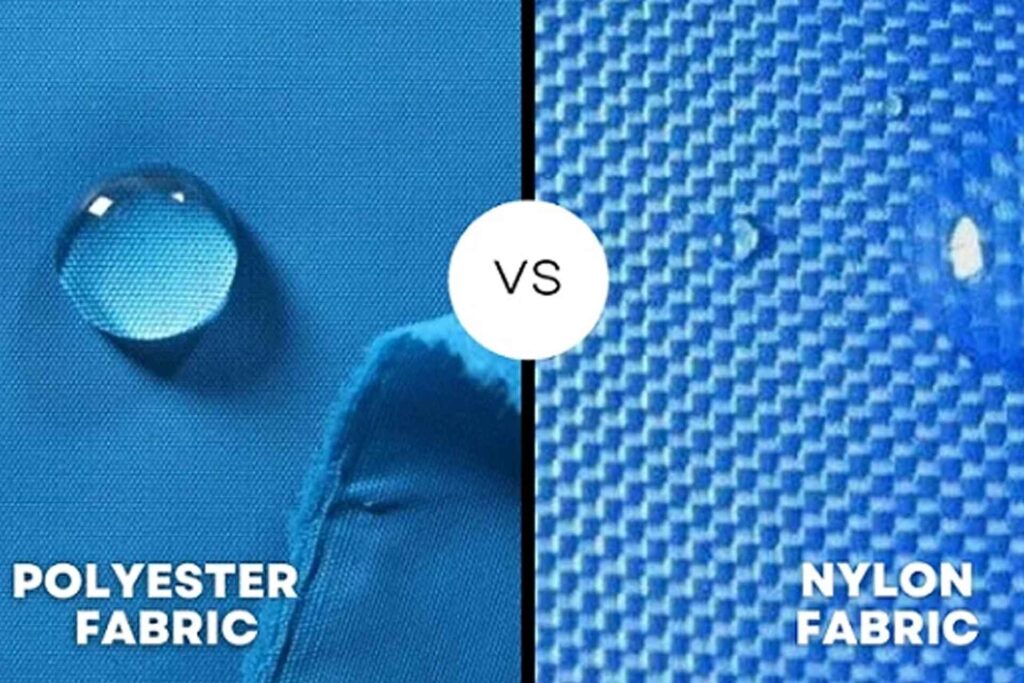
Nylon vs Polyester in Waterproof Laminates
Why the Base Fabric Choice Matters in Waterproof Laminates
A waterproof laminate fabric is a composite — base fabric plus coating or film. The waterproof performance (water pressure resistance, breathability) is primarily determined by the coating layer. But the base fabric determines:
Weight per square meter. At the same denier rating, nylon base fabric is lighter than polyester. A 420D nylon base weighs 160–180 GSM before coating; a 420D polyester base weighs 150–170 GSM. The difference compounds when coating weight is added — nylon laminates consistently produce lighter finished fabric at equivalent denier and coating specification. For weight-sensitive applications — ultralight outdoor gear, performance rain jackets — nylon base fabric is the correct choice.
Abrasion resistance. Nylon has significantly higher abrasion resistance than polyester at equivalent yarn weight. This property is what drives nylon's dominance in premium outdoor garments, technical bags, and high-wear applications where fabric surface durability is a specification requirement alongside waterproofing.
Hand feel. Nylon produces a softer, more supple hand feel than polyester at the same denier. Nylon laminates drape more naturally and feel more textile-like against the skin — a meaningful quality difference in garments worn directly against the body.
Cost. Polyester raw material costs less than nylon. At equivalent denier and coating specification, polyester base laminate fabric is 15–30% lower cost per meter than nylon base. For cost-sensitive applications where the performance advantages of nylon are not required, polyester delivers equivalent waterproofing at lower per-unit cost.
Nylon Base Fabric Specifications
We produce nylon base waterproof laminate fabric in four standard denier ratings, each suited to different application weight and durability requirements.
| Denier | Base Weight | Typical Finished Weight (with coating) | Primary Applications |
|---|---|---|---|
| 210D Nylon | 85–100 GSM | 130–160 GSM | Ultralight rain jackets, packable windbreakers, lightweight cycling gear |
| 420D Nylon | 160–180 GSM | 200–230 GSM | Standard outdoor jackets, hiking gear, premium backpacks |
| 600D Nylon | 220–250 GSM | 260–300 GSM | Heavy-duty outdoor garments, technical bags, high-wear outerwear |
| 840D Nylon | 300–330 GSM | 350–400 GSM | Military-style gear, extreme-duty bags, heavy technical outerwear |
Nylon base fabric is available with TPU laminate, PU coating, and DWR treatment. TPU laminate on nylon base is the premium specification for technical outdoor garments requiring maximum breathability and waterproof performance. Width: 144cm (57/58') standard.
Polyester Base Fabric Specifications
We produce polyester base waterproof laminate fabric in four standard denier ratings, covering lightweight to heavy-duty applications.
| Denier | Base Weight | Typical Finished Weight (with coating) | Primary Applications |
|---|---|---|---|
| 210D Polyester | 75–90 GSM | 120–150 GSM | Lightweight rain ponchos, packable covers, simple waterproof bags |
| 300D Polyester | 110–130 GSM | 160–190 GSM | Standard rain jackets, waterproof workwear shirts, light outdoor gear |
| 420D Polyester | 150–170 GSM | 190–220 GSM | Workwear, tents, mid-range outdoor jackets, waterproof storage bags |
| 600D Polyester | 200–230 GSM | 240–280 GSM | Heavy workwear, industrial covers, outdoor shelter panels, equipment bags |
Polyester base fabric is available with TPU laminate, PU coating, and DWR treatment across all denier ratings. Width: 144cm (57/58') standard.
Coating Options — TPU, PU, and DWR on Nylon and Polyester Base
The coating or laminate applied to the base fabric determines waterproof performance, breathability, and finished fabric weight. All three coating types are available on both nylon and polyester base fabrics.
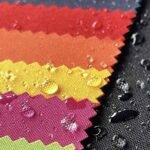
DWR (Durable Water Repellent) Surface treatment applied to the face of the base fabric. DWR causes water to bead and roll off the fabric surface without penetrating the weave. It does not create a continuous waterproof barrier — sustained rain or high water pressure will eventually penetrate the fabric. DWR is the lightest-weight waterproof treatment, adding minimal weight and maintaining maximum breathability.
- Water pressure resistance: 500–1,500 mmH₂O
- Breathability: 4,000–6,000 g/m²/24h
- Best for: light rain protection, wind-resistant outer layers, garments where breathability is the primary requirement and full waterproofing is not needed
PU Coating (Polyurethane) Liquid polyurethane coating applied to the reverse face of the base fabric, creating a continuous waterproof film. PU coating provides reliable waterproof performance at moderate cost and is the most widely used waterproof treatment in commercial garment and workwear production globally.
- Water pressure resistance: 2,000–4,000 mmH₂O
- Breathability: 2,000–3,500 g/m²/24h
- Best for: standard rain jackets, waterproof workwear, tents, outdoor equipment covers, and applications where reliable waterproofing is required at competitive cost
TPU Laminate (Thermoplastic Polyurethane) Pre-formed TPU film bonded to the base fabric using heat and pressure. TPU laminate produces higher breathability than PU coating at equivalent waterproof performance — the controlled film thickness and microporous structure of TPU film allows moisture vapor to pass through while blocking liquid water. TPU laminate is also RF-weldable, enabling seamless waterproof construction.
- Water pressure resistance: 5,000–10,000 mmH₂O
- Breathability: 3,000–8,000 g/m²/24h
- Best for: premium outdoor jackets, technical sportswear, high-performance waterproof bags, medical protective clothing, and applications requiring maximum breathability alongside high waterproof performance
Nylon vs Polyester — Direct Comparison at Equivalent Denier
| Performance Factor | Nylon Base Fabric | Polyester Base Fabric |
|---|---|---|
| Weight (420D example) | 160–180 GSM | 150–170 GSM |
| Abrasion resistance | Excellent — highest of common apparel fibers | Good — lower than nylon at same denier |
| Hand feel | Soft, supple, textile-like | Slightly stiffer, more synthetic feel |
| Drape | Better — more fluid movement | Moderate |
| UV resistance | Lower — degrades faster under UV without treatment | Higher — better long-term UV stability |
| Moisture absorption | ~4% — slightly higher than polyester | ~0.4% — virtually none |
| Drying speed | Slightly slower than polyester | Fast drying |
| Color vibrancy | Good | Excellent — higher color fastness |
| Cold weather flexibility | Excellent | Good |
| Cost per meter | 15–30% higher than polyester equivalent | Lower |
| Best application fit | Premium outdoor garments, technical bags, cycling gear | Workwear, rain gear, tents, industrial covers, cost-sensitive outdoor products |
Application-by-Application Specification Guide
Premium Outdoor Jackets and Rain Gear → Nylon base + TPU laminate
The premium outdoor jacket specification. Nylon base delivers the lightweight construction, abrasion resistance, and supple drape that performance outdoor brands require. TPU laminate provides the highest breathability and waterproof performance combination. This is the specification used in technical mountaineering, skiing, and hiking garments at mid-to-premium price points.
Recommended spec: 210D–420D nylon base, TPU laminate, 5,000–10,000 mmH₂O waterproof, 5,000+ g/m²/24h breathability.
Waterproof Workwear and Industrial Protective Clothing → Polyester base + PU coating
Workwear applications prioritize cost efficiency, durability through repeated industrial washing, and reliable waterproof performance. Polyester base with PU coating delivers all three at the most competitive per-unit cost. Breathability at 2,000–3,500 g/m²/24h is sufficient for standard workwear applications where garments are worn intermittently rather than during sustained high-intensity activity.
Recommended spec: 300D–420D polyester base, PU coating, 2,000–4,000 mmH₂O waterproof.
Performance Cycling and Outdoor Sportswear → Nylon base + TPU laminate or DWR
Cycling and outdoor sportswear require lightweight construction and high breathability to manage heat output during sustained physical activity. Nylon base at 210D with TPU laminate or DWR treatment produces the lightest possible waterproof fabric with maximum breathability. DWR-only treatment is appropriate for light rain and wind protection; TPU laminate for sustained rain exposure.
Recommended spec: 210D nylon base, DWR or TPU laminate, 130–160 GSM finished weight.
Technical and Premium Waterproof Bags → Nylon base + TPU laminate (premium) or PU coating (standard)
High-end waterproof backpacks and technical bags specify nylon base for abrasion resistance and weight reduction. TPU laminate allows RF-welded seamless construction — eliminating needle holes that are the primary leak point in sewn bag panels. Standard waterproof bags use nylon or polyester base with PU coating at lower cost.
Recommended premium spec: 420D–600D nylon base, TPU laminate, RF-weldable. Recommended standard spec: 420D–600D polyester or nylon base, PU coating.
Rain Ponchos and Lightweight Rain Covers → Polyester base + PU coating
Disposable and semi-disposable rain protection products specify polyester base for maximum cost efficiency. 210D polyester with PU coating provides sufficient waterproof performance for rain ponchos, shoe covers, and lightweight equipment covers at the lowest per-unit fabric cost.
Recommended spec: 210D polyester base, PU coating, 2,000 mmH₂O minimum.
Tents and Outdoor Shelter → Polyester base + PU coating (floor) / DWR + PU (fly)
Tent fly fabric typically uses 210D–300D polyester with DWR outer treatment and PU coating on the reverse — balancing water repellency, breathability, and waterproof performance. Tent floor fabric uses heavier 420D–600D polyester with PU coating for maximum waterproof performance and abrasion resistance against ground contact.
Key Specifications to Confirm When Sourcing
| Specification | What to Confirm | Standard |
|---|---|---|
| Base fiber | Nylon or polyester, denier rating | Per application requirement |
| Base fabric weight | GSM before coating, physical sample verified | Per spec ±5% |
| Coating type | DWR, PU coating, or TPU laminate | Per performance requirement |
| Finished weight | GSM after coating, physical sample verified | Per spec ±5% |
| Waterproof rating | mmH₂O water pressure resistance | Per application (500–10,000+) |
| Breathability | g/m²/24h moisture vapor transmission | Per application (2,000–8,000+) |
| Width | Usable width after selvage | 144cm standard |
| Color fastness — washing | Grade rating | Minimum Grade 4 |
| UV resistance | Confirm for outdoor applications | Minimum Grade 4 light |
| Certifications | OEKO-TEX, ROHS, SGS test reports | Per buyer requirement |
| MOQ | Per order type | See below |
| Lead time | Stock vs custom | Stock: 3–5 days / Custom: 7–20 days |
MOQ by Order Type:
| Order Type | MOQ |
|---|---|
| Stock waterproof fabric, standard colors | 500 meters per color |
| Custom dyeing or functional coating | 1,500–2,000 meters per color |
| Special laminate construction | 3,000 meters minimum |
Frequently Asked Questions
Is nylon waterproof fabric worth the extra cost over polyester? For performance outdoor garments, cycling gear, and premium technical bags — yes. The abrasion resistance, lighter weight, and superior hand feel of nylon base fabric at equivalent denier produce a meaningfully better finished product that justifies the 15–30% cost premium. For workwear, rain ponchos, tents, and cost-sensitive applications where the performance advantages of nylon are not required — polyester base delivers equivalent waterproof performance at lower cost.
What is the difference between PU coating and TPU laminate on the same base fabric? Applied to the same base fabric, TPU laminate produces higher breathability than PU coating at equivalent waterproof performance ratings. TPU laminate uses a pre-formed microporous film that allows moisture vapor to pass through while blocking liquid water — a more controlled process than liquid PU coating application. TPU laminate is also RF-weldable, enabling seamless bag and garment construction. PU coating is lower cost and sufficient for the majority of commercial waterproof applications.
Can nylon base fabric be used with PVC coating? PVC coating on nylon base fabric is technically possible but uncommon commercially — PVC coating is heavy, which negates nylon's weight advantage, and PVC's chemical processing can affect nylon fiber integrity. PVC coating is almost always applied to polyester base fabric in commercial production.
How do I test waterproof performance before bulk order? Request a waterproof fabric sample with SGS or Intertek hydrostatic pressure test report confirming the water column rating. For breathability, request a moisture vapor transmission rate (MVTR) test report. Both tests can be arranged through our team on request at additional cost. Physical sample testing — pouring water on the fabric face and checking for penetration — provides a basic qualitative check but does not substitute for standardized pressure testing.
What is the minimum order for nylon and polyester waterproof laminate fabric? Standard MOQ for stock waterproof fabric in regular colors is 500 meters per color. Custom dyeing and coating requires 1,500–2,000 meters minimum. Special laminate constructions start from 3,000 meters. Free A4 swatches and color cards are available — contact our team to request samples with test reports.
Source Wholesale Waterproof Laminate Fabric from XINGYE TEXTILE
XINGYE TEXTILE manufactures wholesale waterproof laminate fabric — nylon base and polyester base, with DWR, PU coating, and TPU laminate options — across 210D to 840D denier specifications, direct from our production facility in China. We supply outdoor garment manufacturers, workwear producers, bag brands, and technical fabric buyers worldwide with consistent quality, factory-direct pricing, and flexible MOQ from 500 meters.
Contact our sourcing team with your base fabric preference, denier, coating type, waterproof rating, quantity, and destination — we will provide a formal quotation and test report within 24 hours.
→ Browse Our Full Fabric Range → Browse Fabric for Workwear → Browse Oxford Fabric → Read: TPU vs PVC Waterproof Fabric → Request a Free Swatch → Get a Wholesale Quote