Waterproof fabric specifications are full of numbers — 5,000 mmH₂O, 10,000 mmH₂O, 3,000 g/m²/24h, ISO 811, AATCC 127. Suppliers quote these figures in every product sheet, but buyers frequently make purchasing decisions without fully understanding what the numbers mean in practice — what level of rain protection 5,000 mmH₂O actually provides, whether 3,000 g/m²/24h breathability is sufficient for your garment application, or how to compare test results from different labs using different standards. This guide explains every key waterproof fabric specification from first principles — what each number measures, how tests are conducted, what the results mean for real-world garment performance, and how to use this information when evaluating supplier quotations and fabric test reports.
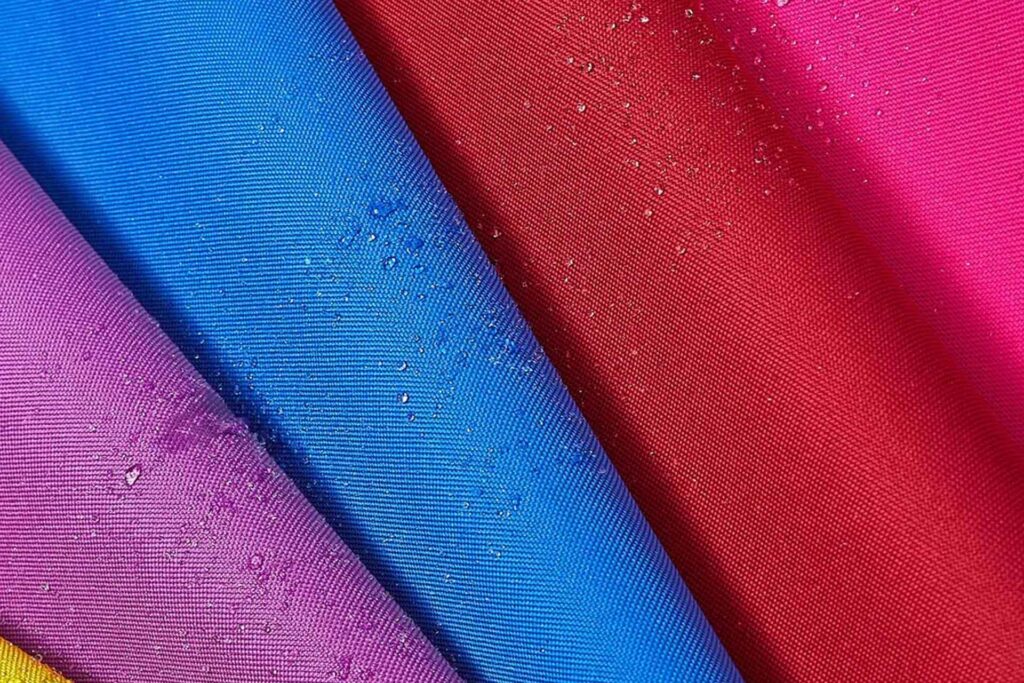
Waterproof Fabric for Clothing
Hydrostatic Pressure Rating — What mmH₂O Actually Means
The hydrostatic pressure rating — expressed in millimeters of water column (mmH₂O) — is the primary waterproof performance specification for fabric. It measures the water pressure a fabric can withstand before water begins to penetrate the fabric structure.
How the test works: A fabric sample is clamped horizontally over an opening. Water pressure is applied to the underside of the fabric and increased at a controlled rate. The test measures the pressure at which water first appears on the upper face of the fabric — three drops is the standard failure criterion under ISO 811. The result is expressed as the height of a water column in millimeters.
What the numbers mean in practice:
| Rating | What It Resists | Real-World Equivalent |
|---|---|---|
| 0–1,500 mmH₂O | Light water resistance only | Light drizzle, brief exposure — not suitable for rain garments |
| 1,500–5,000 mmH₂O | Light to moderate rain | Standard rain jacket, light outdoor use |
| 5,000–10,000 mmH₂O | Moderate to heavy rain | Active outdoor use, hiking, cycling in rain |
| 10,000–20,000 mmH₂O | Heavy sustained rain | Technical mountaineering, skiing, sustained outdoor activity |
| 20,000+ mmH₂O | Extreme conditions | Military specification, professional alpine use |
Why seam sealing matters: The hydrostatic pressure rating measures fabric performance — not garment performance. Needle holes from sewing through waterproof fabric create leak points that bypass the fabric's waterproof rating entirely. A garment made from 20,000 mmH₂O fabric with unsealed seams will leak at seam lines in moderate rain. Seam sealing — applying waterproof tape over stitched seams on the inside of the garment — is required to achieve waterproof garment performance that matches the fabric rating.
For buyers specifying waterproof garments, always specify whether seam sealing is required and at what level:
- Critically sealed seams: only high-stress seams sealed (shoulders, underarms)
- Fully seam sealed: all seams sealed — required for full waterproof garment specification
Breathability — Understanding MVTR and g/m²/24h
Breathability in waterproof fabric is measured as Moisture Vapor Transmission Rate (MVTR) — the amount of water vapor that passes through one square meter of fabric in 24 hours, expressed in grams (g/m²/24h).
Why breathability matters in waterproof garments: A waterproof but non-breathable fabric traps moisture vapor from perspiration inside the garment. During physical activity, this creates a clammy, uncomfortable environment inside the garment — sometimes called the 'boil-in-bag' effect — where the wearer gets wet from the inside despite the fabric being waterproof on the outside. Breathability allows moisture vapor to escape through the fabric while maintaining the waterproof barrier against liquid water.
How MVTR is tested: Two primary test methods are used internationally, and they produce different numbers for the same fabric — which creates confusion when comparing supplier test reports.
Method A — Upright Cup Method (ISO 15496, JIS L 1099 B-1): A cup containing water is sealed with the fabric sample and placed in a controlled humidity chamber. Water vapor passes upward through the fabric. Result measured as grams of water vapor transmitted per square meter per 24 hours.
Method B — Inverted Cup Method (ASTM E96, JIS L 1099 A-1): The cup is inverted so the fabric is in direct contact with water. This method produces higher MVTR numbers than the upright cup method for the same fabric — often 2–3 times higher. A fabric rated at 5,000 g/m²/24h under Method A might test at 10,000–15,000 g/m²/24h under Method B.
Critical buyer action: When comparing breathability specifications from different suppliers, always confirm which test method was used. Comparing Method A results with Method B results is meaningless — the numbers are not comparable.
What breathability numbers mean in practice:
| MVTR (Method A) | Performance Level | Application |
|---|---|---|
| Under 3,000 g/m²/24h | Low breathability | Light activity, short-duration wear, rain ponchos |
| 3,000–5,000 g/m²/24h | Moderate breathability | Standard outdoor jackets, workwear, light hiking |
| 5,000–10,000 g/m²/24h | Good breathability | Active outdoor use, cycling, moderate hiking |
| 10,000–15,000 g/m²/24h | High breathability | Technical outdoor garments, skiing, high-output activity |
| 15,000+ g/m²/24h | Premium breathability | Professional alpine, military, high-performance sportswear |
Our fabric breathability by coating type:
- DWR treatment: 4,000–6,000 g/m²/24h
- PU coating: 2,000–3,500 g/m²/24h
- TPU laminate: 3,000–8,000 g/m²/24h
Test Standards — ISO, AATCC, and JIS Explained
Waterproof fabric performance is tested against international standards. Different markets use different standards — and understanding which standard applies to your destination market helps buyers specify correctly and evaluate test reports accurately.
Hydrostatic Pressure Test Standards:
| Standard | Method | Market |
|---|---|---|
| ISO 811 | Water column test, 3-drop failure criterion | International — most widely referenced |
| AATCC 127 | Water column test, similar to ISO 811 | North America |
| JIS L 1092 | Japanese Industrial Standard water resistance test | Japan |
| EN 20811 | European equivalent of ISO 811 | European market |
ISO 811 and AATCC 127 produce comparable results and are both widely accepted in international trade. When a supplier quotes a waterproof rating without specifying the test standard, request clarification — results from different standards are not directly comparable.
Breathability Test Standards:
| Standard | Method | Typical Result Range |
|---|---|---|
| ISO 15496 | Upright cup method | Lower numbers — conservative |
| ASTM E96 | Inverted cup / desiccant method | Higher numbers |
| JIS L 1099 B-2 | Modified upright cup | Mid-range |
| GB/T 12704 | Chinese national standard | Comparable to ISO 15496 |
DWR (Water Repellency) Test Standards:
| Standard | Method | Rating Scale |
|---|---|---|
| ISO 4920 | Spray test — water sprayed onto fabric | 1–5 scale (5 = best) |
| AATCC 22 | Spray test — North American version | 0–100 scale |
| AATCC 193 | Aqueous liquid repellency | 1–8 scale |
A DWR rating of Grade 4 (ISO 4920) or 80 (AATCC 22) is the minimum acceptable for commercial rain garment applications. Grade 5 / 100 is full repellency with no water absorption.
How to Read a Waterproof Fabric Test Report
A standard SGS or Intertek waterproof fabric test report contains several sections. Here is what each section means and what to check.
Section 1: Sample Identification Confirms the fabric description, composition, and construction that was tested. Verify this matches the fabric specification you ordered — test reports are specific to the tested sample, not to all fabric from the same supplier.
Section 2: Hydrostatic Pressure Result States the water column result in mmH₂O and the test standard used. Check:
- Does the result meet your specification requirement?
- Which standard was used (ISO 811, AATCC 127)?
- Was the test conducted on face-up or face-down orientation? (Face-down — coating side up — is the standard for coated fabric)
Section 3: Breathability / MVTR Result States the MVTR in g/m²/24h and the test method. Check:
- Which test method was used (upright cup vs inverted cup)?
- Is the result comparable to other suppliers' quoted figures (same test method)?
Section 4: Color Fastness Results Multiple color fastness tests are typically included — washing, rubbing (dry and wet), light exposure, perspiration. Check that all results meet minimum Grade 3–4 for your application.
Section 5: Physical Properties May include tear strength, tensile strength, seam slippage, and dimensional stability (shrinkage). For waterproof garment fabric, check:
- Tear strength: minimum 15N warp and weft for standard garment applications
- Shrinkage: ≤3% after standard wash
Section 6: Chemical Safety (if included) REACH SVHC screening, ROHS compliance, formaldehyde content, pH value. For European market products, verify REACH compliance and phthalate content (relevant for PVC-coated fabric).
Waterproof Rating vs Waterproof Grade — Industry Classification
Some suppliers and buyers use grade classifications rather than raw mmH₂O numbers. The table below maps common grade terminology to hydrostatic pressure ratings.
| Grade Term | Typical mmH₂O Range | Application |
|---|---|---|
| Water resistant | 500–1,500 mmH₂O | Light drizzle protection, DWR treatment |
| Waterproof (standard) | 1,500–5,000 mmH₂O | Everyday rain protection |
| Waterproof (performance) | 5,000–10,000 mmH₂O | Active outdoor use |
| Highly waterproof | 10,000–20,000 mmH₂O | Technical outdoor, skiing |
| Extreme waterproof | 20,000+ mmH₂O | Military, professional alpine |
Important distinction: 'Water resistant' and 'waterproof' are not interchangeable terms. Water resistant fabric resists water penetration under light conditions but will eventually wet out under sustained pressure or prolonged exposure. Waterproof fabric maintains its barrier under sustained water pressure. In marketing and compliance contexts — particularly for European consumer products — using 'waterproof' to describe fabric with ratings below 1,500 mmH₂O can be considered misleading under consumer protection regulations.
Matching Waterproof Specification to Application
Using this guide's specification framework, the table below maps common garment and product applications to the correct waterproof and breathability specifications.
| Application | Waterproof Rating | Breathability | Recommended Fabric |
|---|---|---|---|
| Lightweight rain poncho | 2,000+ mmH₂O | Low — short duration wear | 210D polyester + PU coating |
| Standard workwear rain jacket | 3,000–5,000 mmH₂O | 2,000–3,500 g/m²/24h | 300D–420D polyester + PU coating |
| Active outdoor jacket | 5,000–10,000 mmH₂O | 5,000+ g/m²/24h | 210D–420D nylon + TPU laminate |
| Technical mountaineering jacket | 10,000–20,000 mmH₂O | 10,000+ g/m²/24h | 210D nylon + high-grade TPU laminate |
| Waterproof backpack | 5,000+ mmH₂O | Not applicable | 420D–600D nylon or polyester + TPU |
| Tent fly | 3,000–5,000 mmH₂O | Moderate | 210D–300D polyester + PU coating + DWR |
| Industrial waterproof apron | 5,000+ mmH₂O | Not applicable | 420D polyester + PVC or PU coating |
Common Specification Mistakes Buyers Make
Comparing breathability numbers from different test methods As explained in Section 2, Method A and Method B breathability results are not comparable. Always confirm the test method before comparing supplier specifications.
Specifying fabric waterproof rating without specifying seam sealing A 10,000 mmH₂O fabric in an unsealed-seam garment will leak at the seams in moderate rain. If waterproof garment performance is the requirement — not just waterproof fabric — specify seam sealing level in the garment production brief.
Accepting waterproof rating without specifying test standard 'Waterproof to 5,000mm' without a stated test standard is an incomplete specification. Request the test standard and test report before confirming bulk production.
Specifying breathability for non-garment applications Breathability specification is only relevant for garments worn against the body during physical activity. For bags, covers, tents, and non-garment applications, breathability is irrelevant — focus entirely on waterproof rating and durability specifications.
Not accounting for coating weight in finished fabric GSM PU coating adds 30–60 GSM to base fabric weight. TPU laminate adds 20–40 GSM. When calculating fabric consumption for a garment, use finished fabric GSM — not base fabric GSM — for accurate weight and cost calculations.
Frequently Asked Questions
Is 3,000 mmH₂O waterproof enough for a rain jacket? 3,000 mmH₂O provides reliable protection against moderate rain for a person standing or walking slowly. For active outdoor use — hiking, cycling, working in sustained rain — 5,000 mmH₂O minimum is recommended. The pressure generated by sitting on a wet surface, kneeling, or leaning against a wet object can exceed 3,000 mmH₂O at contact points, so higher ratings provide a meaningful performance margin for active garments.
What is the difference between water resistant and waterproof? Water resistant fabric repels light water contact through DWR surface treatment — effective in light drizzle but will eventually wet out under sustained rain or pressure. Waterproof fabric has a continuous coating or laminate layer that prevents liquid water penetration under sustained pressure, rated in mmH₂O. The distinction matters for both product performance and marketing compliance — 'waterproof' should only be used for fabric with a continuous barrier layer and a meaningful hydrostatic pressure rating.
Why does my waterproof jacket leak at the seams? Stitching through waterproof fabric creates needle holes that bypass the fabric's waterproof barrier. Without seam sealing — waterproof tape applied over seams on the inside of the garment — these holes allow water penetration regardless of the fabric's hydrostatic pressure rating. Fully seam-sealed construction is required for waterproof garment performance that matches the fabric specification.
How do I verify a supplier's waterproof rating claim? Request an SGS, Intertek, or Bureau Veritas test report for the specific fabric you are ordering, conducted to ISO 811 or AATCC 127. The test report should state the fabric description, test method, and result. Physical verification — pouring water on a sample and applying hand pressure — provides a basic qualitative check but does not substitute for standardized pressure testing.
What certifications should waterproof fabric have for European market products? At minimum: OEKO-TEX Standard 100 for chemical safety, and REACH compliance documentation confirming absence of restricted substances (particularly relevant for PVC-coated fabric). For branded outdoor products making specific performance claims, independent test reports from accredited labs (SGS, Intertek, Bureau Veritas) confirming hydrostatic pressure and breathability ratings are standard practice.
Source Waterproof Fabric with Verified Technical Specifications
XINGYE TEXTILE supplies wholesale waterproof fabric — nylon and polyester base, with DWR, PU coating, and TPU laminate options — with full technical documentation including SGS/Intertek test reports for hydrostatic pressure, breathability, color fastness, and chemical safety. We serve garment manufacturers, workwear producers, outdoor equipment brands, and technical fabric buyers worldwide.
Factory-direct pricing, MOQ from 500 meters for stock fabric, free swatches and technical data sheets available before bulk commitment.
→ Read: TPU vs PVC Waterproof Fabric → Read: Nylon vs Polyester in Waterproof Laminates → Browse Oxford Fabric → Browse Our Full Fabric Range → Request a Free Swatch and Test Report → Get a Wholesale Quote