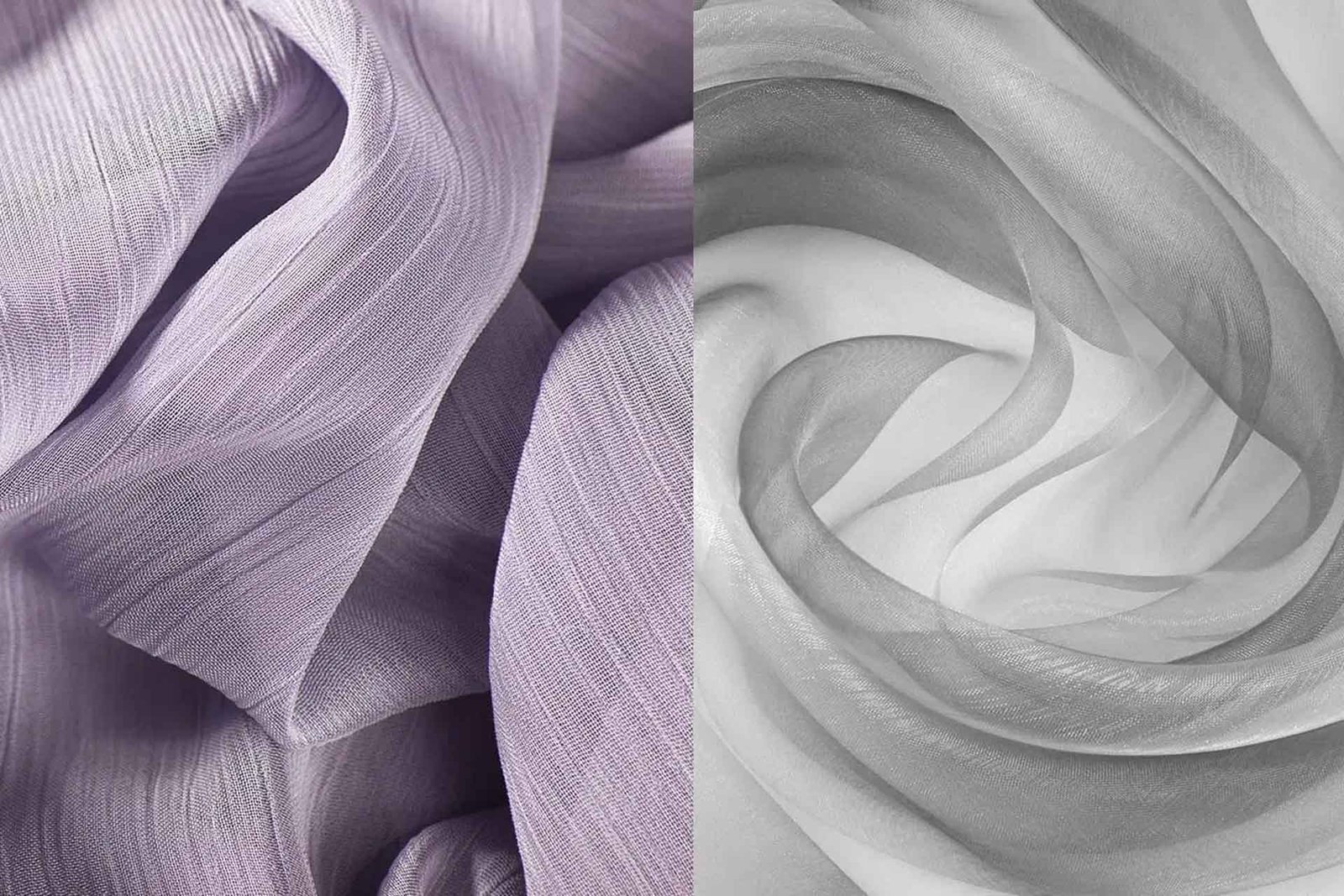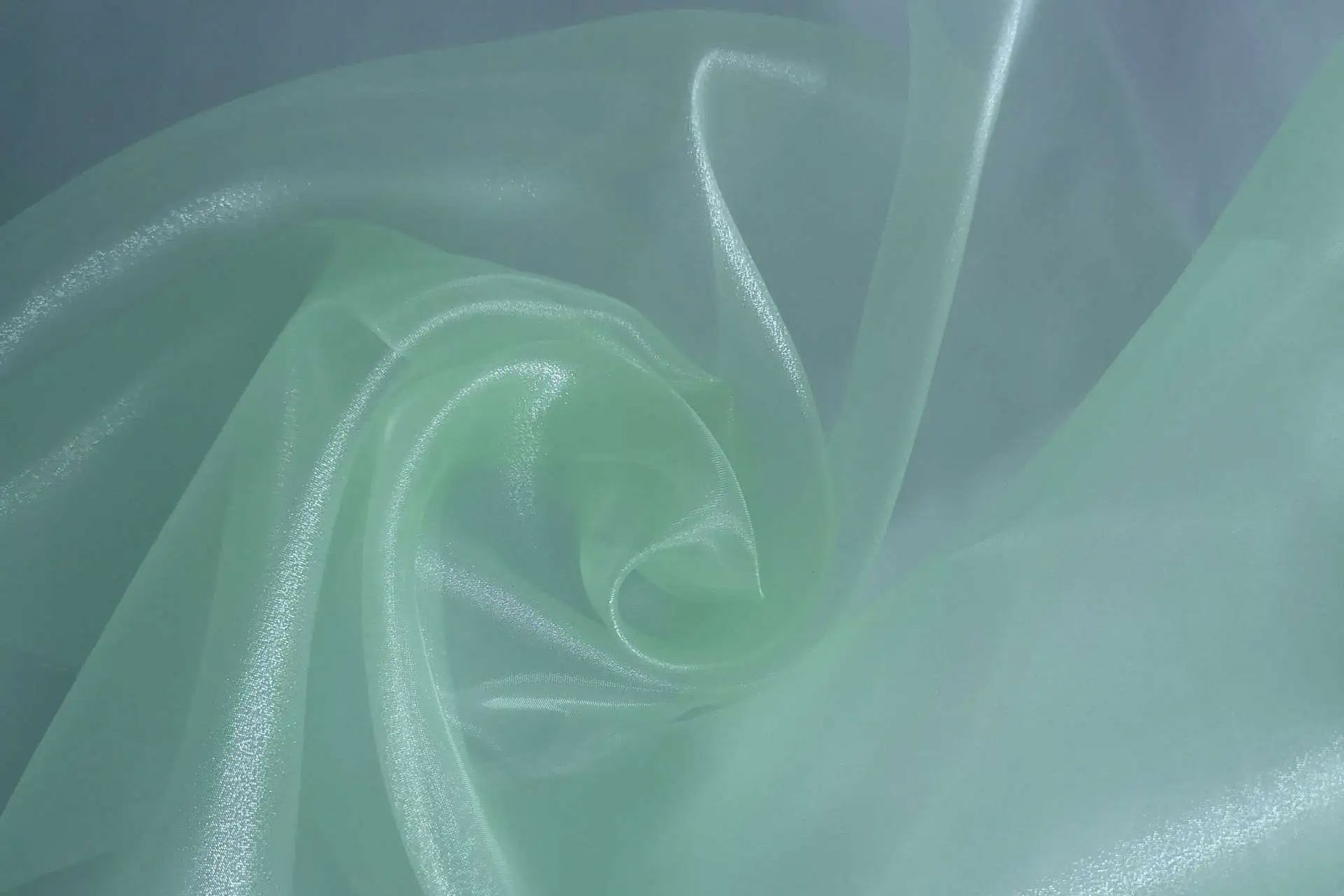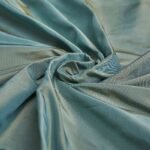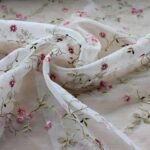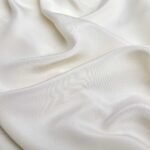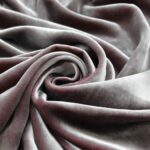
Silk organza is a sheer, crisp plain weave silk fabric with a characteristic stiff hand feel that holds its shape without lining or interfacing — the only sheer silk fabric that can stand away from the body and create sculptural volume. While silk chiffon and silk georgette are fluid and draped, silk organza is structured and architectural — it creates clean silhouette lines, holds pleats and gathers without collapsing, and produces the billowing volume of ball gown skirts and structured bridal sleeves that no other sheer fabric can replicate. This guide covers silk organza fabric types, momme specifications, production considerations, and wholesale sourcing information for garment manufacturers specifying silk organza for bridal, evening wear, and luxury garment production.
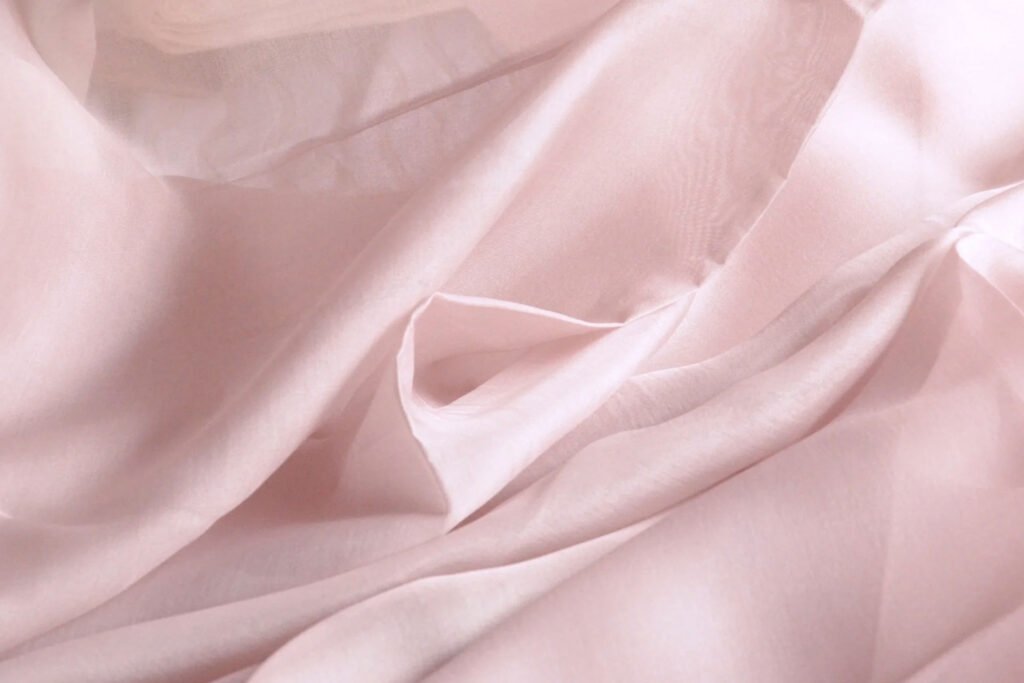
silk organza fabric
What Makes Silk Organza Different — The Construction
Silk organza is produced from highly twisted silk yarn — both warp and weft threads are twisted significantly more than in standard silk weaves. This high yarn twist is the key to organza's characteristic properties.
When silk filaments are twisted tightly before weaving, two things happen. First, the twisted yarn has a springy, resilient character — it resists compression and wants to return to its original shape. Second, the high twist creates a slight kink in the yarn structure that reduces the natural luster of the silk — organza has less luster than charmeuse or habotai because the twisted yarn surface reflects light less uniformly than untwisted filament.
The plain weave construction at high thread count produces a fabric that is simultaneously sheer — you can see through it clearly — and stiff — it holds its shape without support. This combination of sheerness and structure is unique to organza construction and is impossible to achieve with lower-twist silk constructions.
Three properties result directly:
Structural sheerness. Silk organza transmits light and is visually transparent — it is a sheer fabric — but unlike chiffon or georgette, it does not collapse under its own weight. A piece of organza held horizontally retains its shape; equivalent chiffon would drape immediately under gravity. This structural sheerness allows organza to create volume and silhouette definition simultaneously.
Crisp, papery hand feel. The highly twisted yarn produces a fabric with a distinctive crisp hand feel — slightly firm and resilient against pressure rather than soft and yielding. This crispness is what tailors and couturiers use to create precise pleating, sharp tucks, and structured ruffles that hold their shape in wear.
Sound and movement. Silk organza produces a characteristic soft rustling sound when moved — a property called 'scroop' — caused by the friction between the highly twisted silk filaments. This sound is considered part of the luxury character of silk organza garments and is absent in synthetic organza substitutes.
Types of Silk Organza
Plain Silk Organza The standard construction — uniform weave with no surface embellishment. Available from lightweight 12mm through standard 16–18mm to heavier 20mm+ constructions. Plain organza is the base fabric for the majority of bridal, evening wear, and structured garment applications.
GSM range: 52–87 GSM (12–20 momme). Best for: bridal gown overlays, structured evening wear, layered skirts, puff sleeves, structured bodices.
Printed Silk Organza Plain silk organza with surface printing — digital print or screen print — applied after weaving. Printed organza is widely used in fashion garments where the sheer quality allows the print to be layered over other fabrics, creating depth and visual complexity. Digital printing on silk organza produces vivid colors with the sheer ground showing through.
Best for: fashion overlay layers, printed evening wear, decorative garments where layered print effects are part of the design.
Embroidered Silk Organza Silk organza base with embroidery — typically floral or geometric patterns — applied by machine or hand. The sheer ground fabric allows the embroidery thread to appear as floating pattern elements when the fabric is layered over other materials. Widely used in bridal fabric and luxury occasion wear.
Best for: bridal overlays, luxury occasion wear, high-end fashion garments where embroidery detail alongside structural sheerness is required.
Two-Tone Silk Organza Produced using warp and weft threads in different colors — the high twist yarn and plain weave produce a fabric that appears to change color depending on viewing angle and light direction. Two-tone organza has a distinctive iridescent quality that plain organza and synthetic alternatives cannot replicate.
Best for: fashion evening wear, bridal accents, statement garments where color-play is part of the design brief.
Crushed Silk Organza Organza that has been mechanically or chemically treated to produce an irregular crinkled surface — permanently set wrinkles that give the fabric a textured, less formal appearance than standard crisp organza. Crushed organza has slightly reduced stiffness and more drape than standard organza.
Best for: fashion garments where a less structured, more textured organza aesthetic is preferred. Less appropriate for precision structured construction requiring clean lines.
Silk Organza Momme Guide
| Momme Range | GSM | Character | Best Applications |
|---|---|---|---|
| 12–14mm | 52–60 GSM | Lightweight, very sheer, maximum transparency | Delicate overlays, veil fabric, layered decoration |
| 14–16mm | 60–69 GSM | Standard lightweight, good structure | Standard bridal overlays, evening wear layers, structured accents |
| 16–18mm | 69–78 GSM | Mid-weight, balanced structure and drape | Structured skirts, bodices, formal garment construction |
| 18–20mm+ | 78–87 GSM+ | Heavier, maximum structure | Ball gown skirts requiring volume, structured sculptural garments |
For most bridal and evening wear applications, 14–16mm silk organza covers the standard specification range. Heavier constructions at 18–20mm+ are used where maximum structural rigidity is the design requirement — large ball gown skirts, architectural bridal pieces, sculptural fashion garments.
Silk Organza vs Polyester Organza — Key Differences
Polyester organza is widely used as a lower-cost alternative to silk organza. Understanding the real differences helps buyers make accurate specification decisions.
| Factor | Silk Organza | Polyester Organza |
|---|---|---|
| Hand feel | Crisp, slightly warm, natural | Crisp but cooler, more plastic-like |
| Luster | Soft, natural sheen | Higher, more uniform sheen |
| Scroop (sound) | Yes — characteristic rustling | No — silent |
| Breathability | Good — natural fiber | Low — synthetic |
| Drape | Structured but slightly more fluid | Stiffer, less fluid |
| Static | Low | Higher — generates static |
| Burn test | Burns, self-extinguishes, hair smell | Melts, plastic smell |
| Cost | Significantly higher | Much lower |
| Best for | Luxury bridal, couture, premium garments | Commercial bridal, costume, budget garments |
The most reliable physical distinction between silk and polyester organza for buyers receiving deliveries is the burn test — silk organza burns and self-extinguishes with a hair smell; polyester organza melts and produces black smoke with a plastic smell.
Production Considerations for Silk Organza
Cutting Silk organza shifts during cutting due to its stiff, slippery surface — use sharp rotary blades, non-slip cutting table covering, and cut single-ply where precision is critical. The crisp structure holds cut edges more cleanly than softer silk fabrics but frays readily — finish all cut edges immediately.
Sewing Use fine needles (size 9 or 11) and fine thread matching the silk fiber. Silk organza shows needle holes permanently — test needle placement on a sample before production. Reduce machine speed in areas requiring precise stitching — the stiff fabric can shift under standard presser foot pressure. Use a roller foot or Teflon foot for better feeding of the smooth organza surface.
Seam finishing French seams or narrow rolled hems are standard for silk organza — both enclose the raw edge without adding bulk visible through the sheer fabric. Avoid overlock finishing on visible seams — the overlock thread shows through sheer organza from the outside.
Pressing Press on the reverse face at maximum 140°C — silk organza can be damaged by excessive heat. The crisp structure of organza is partially heat-set — pressing at too high temperature can reduce the fabric's characteristic stiffness. Use a dry iron or minimal steam — excess moisture can temporarily soften organza's crisp character.
Layering Silk organza is almost always used in multiple layers in garment construction — single layers are too sheer and too stiff for most applications. Three to five layers of organza over an underlining fabric is standard for structured bridal skirts. Each additional layer increases both volume and stiffness — adjust layer count to achieve the desired silhouette character.
Key Specifications to Confirm When Sourcing Silk Organza
| Specification | What to Confirm | Standard |
|---|---|---|
| Fiber content | 100% mulberry silk, lab test confirmed | Per agreed spec |
| Silk grade | 5A or 6A minimum | Per application requirement |
| Momme weight | mm, physical sample weighing | Per application — see momme table |
| GSM | Physical sample weighing | ±5% tolerance |
| Width | 114cm standard | Confirm before pattern grading |
| Surface type | Plain, printed, embroidered, two-tone | Per design requirement |
| Color fastness — washing | Grade rating | Minimum Grade 3–4 |
| Color fastness — light | UV stability | Minimum Grade 3–4 |
| Stiffness | Hand feel confirmed against sample | Confirm — varies by momme and finish |
| Certifications | OEKO-TEX, Silk Mark | Per buyer requirement |
| MOQ | Per order type | See below |
| Lead time | Stock vs custom | Stock: 3–5 days / Custom: 7 days |
MOQ by Order Type:
| Order Type | MOQ |
|---|---|
| Stock silk organza, standard colors | 50–100 meters per color |
| Custom dyeing | 150–300 meters per color |
| Digital or screen print | 50–200 meters per pattern |
Frequently Asked Questions — Silk Organza
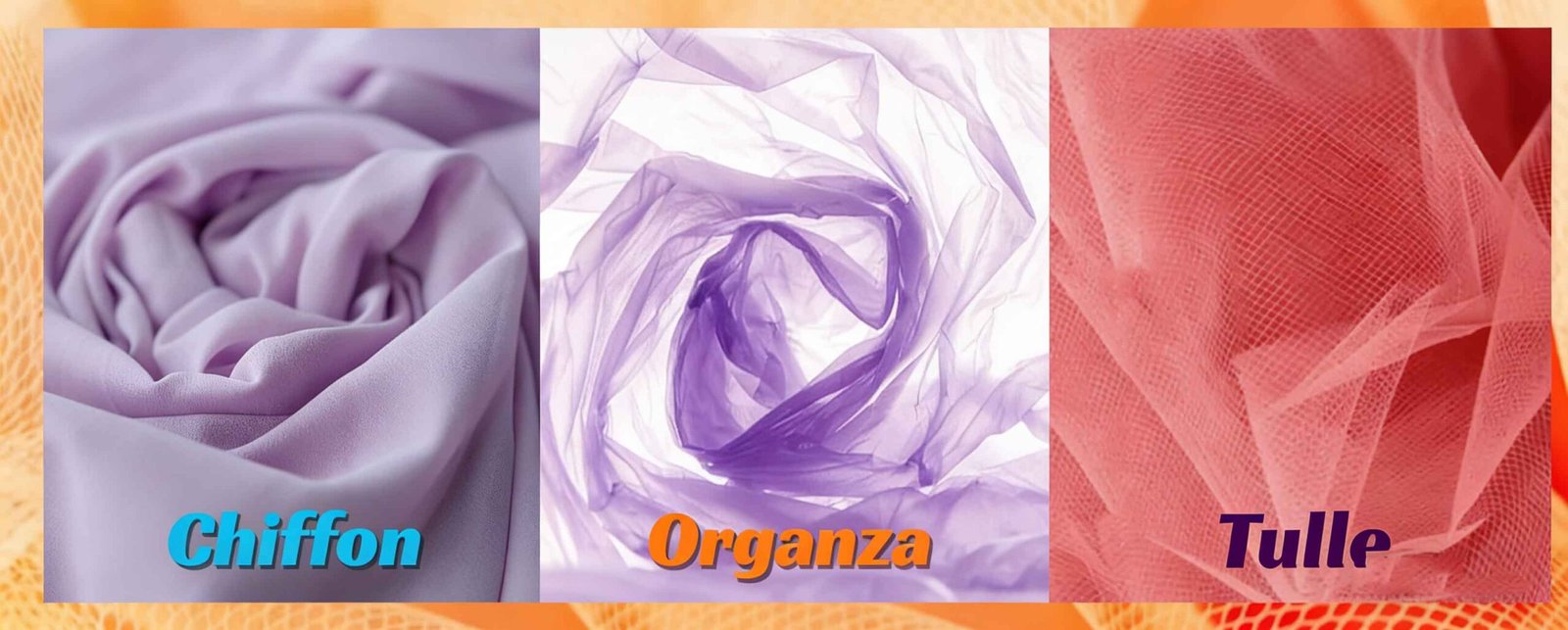
What is the difference between silk organza and silk chiffon? Both are sheer silk fabrics but with opposite structural characters. Silk chiffon is soft, fluid, and draped — it falls with gravity and moves freely with the wearer. Silk organza is stiff, crisp, and structured — it holds its shape and creates volume independent of gravity. Chiffon is specified for flowing, draped garments where fluid movement is the design intent. Organza is specified for structured garments where volume, architectural shape, and precise construction lines are required. The two fabrics serve completely different design functions and are not substitutes for each other.
Why does silk organza make a rustling sound? The rustling sound — called 'scroop' — is produced by friction between the highly twisted silk filaments when the fabric moves. The high yarn twist that gives organza its crisp structure causes the filament surfaces to rub against each other under movement, producing the characteristic soft rustling. Scroop is considered a quality indicator of genuine silk organza — polyester organza does not produce this sound because polyester filaments do not generate the same friction characteristics as silk protein fiber.
How many layers of silk organza are needed for a ball gown skirt? Typically three to six layers depending on the desired volume and silhouette. Each layer of 14–16mm organza adds approximately 60–70 GSM of fabric weight and increases the structural rigidity of the skirt. More layers create more volume but also more weight — balance layer count against the garment's structural requirements and the wearer's comfort. A full ball gown skirt with maximum volume typically uses four to six layers of 14–16mm organza over a structured underlining.
Can silk organza be dyed? Yes — silk organza accepts reactive dye and acid dye effectively, producing vivid colors with the characteristic transparency of organza maintained. Digital printing on silk organza is increasingly common for fashion applications — the sheer ground fabric creates visual layering effects when printed organza is used over other fabrics. Custom dyeing requires 150–300 meters minimum; digital print from 50 meters at premium pricing.
What is the minimum order for wholesale silk organza? Stock silk organza in standard colors: 50–100 meters per color. Custom dyeing: 150–300 meters minimum. Digital print: from 50 meters per pattern at premium pricing, standard from 100–200 meters. Sample cost $25–$80 per meter depending on momme, deductible from bulk order.
Source Wholesale Silk Organza from XINGYE TEXTILE
XINGYE TEXTILE supplies wholesale silk organza — plain, printed, embroidered, and two-tone constructions — in 5A and 6A mulberry silk, from 12 to 20+ momme, serving bridal manufacturers, evening wear brands, luxury garment producers, and wholesale silk fabric buyers worldwide. Factory-direct pricing, MOQ from 50 meters for stock colors, free swatches available before bulk commitment.
→ Browse Our Full Fabric Range → Read: Silk vs Satin → Read: Types of Silk Fabric → Read: Silk Chiffon Fabric → Read: Silk Satin Fabric → Request a Free Swatch → Get a Wholesale Quote