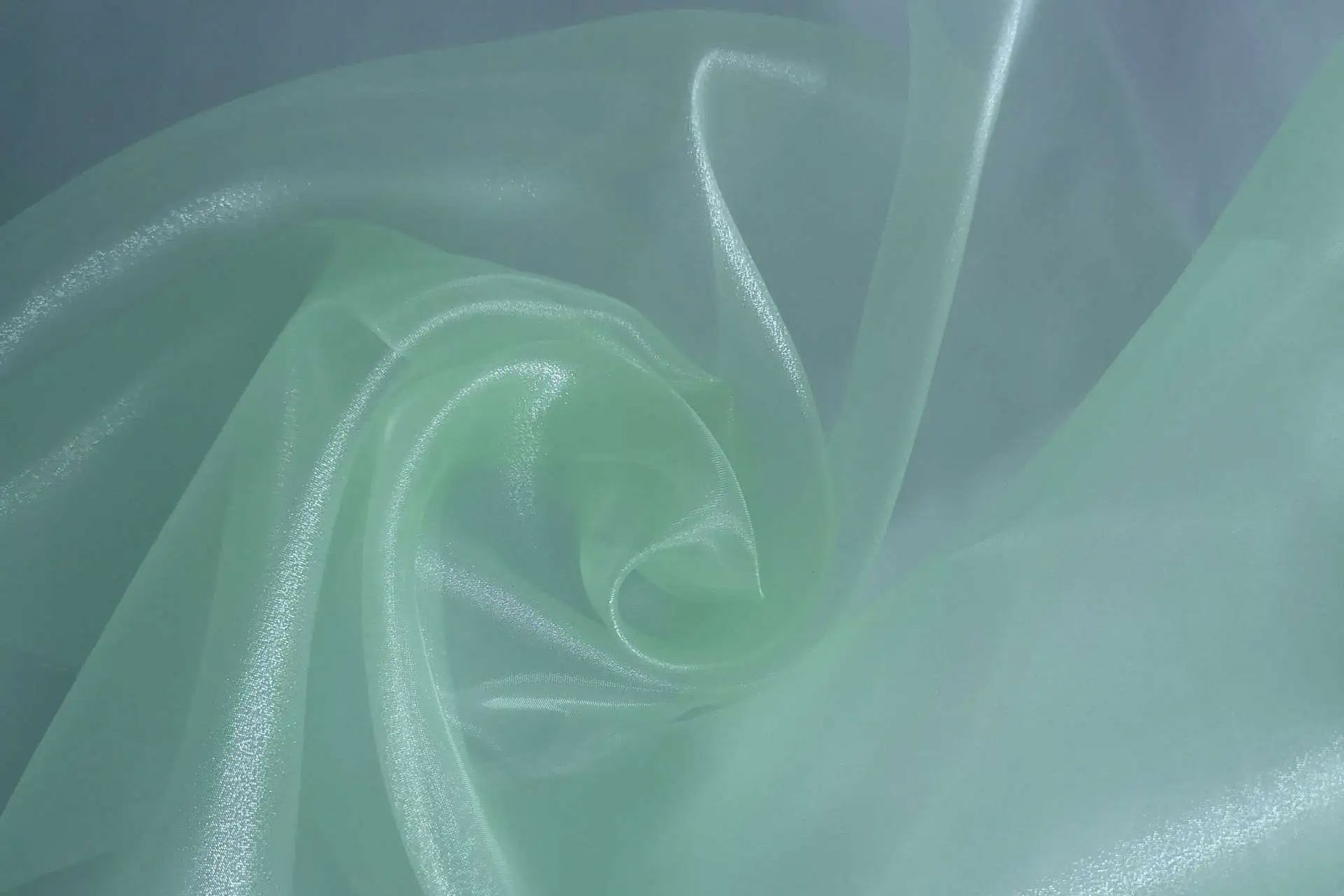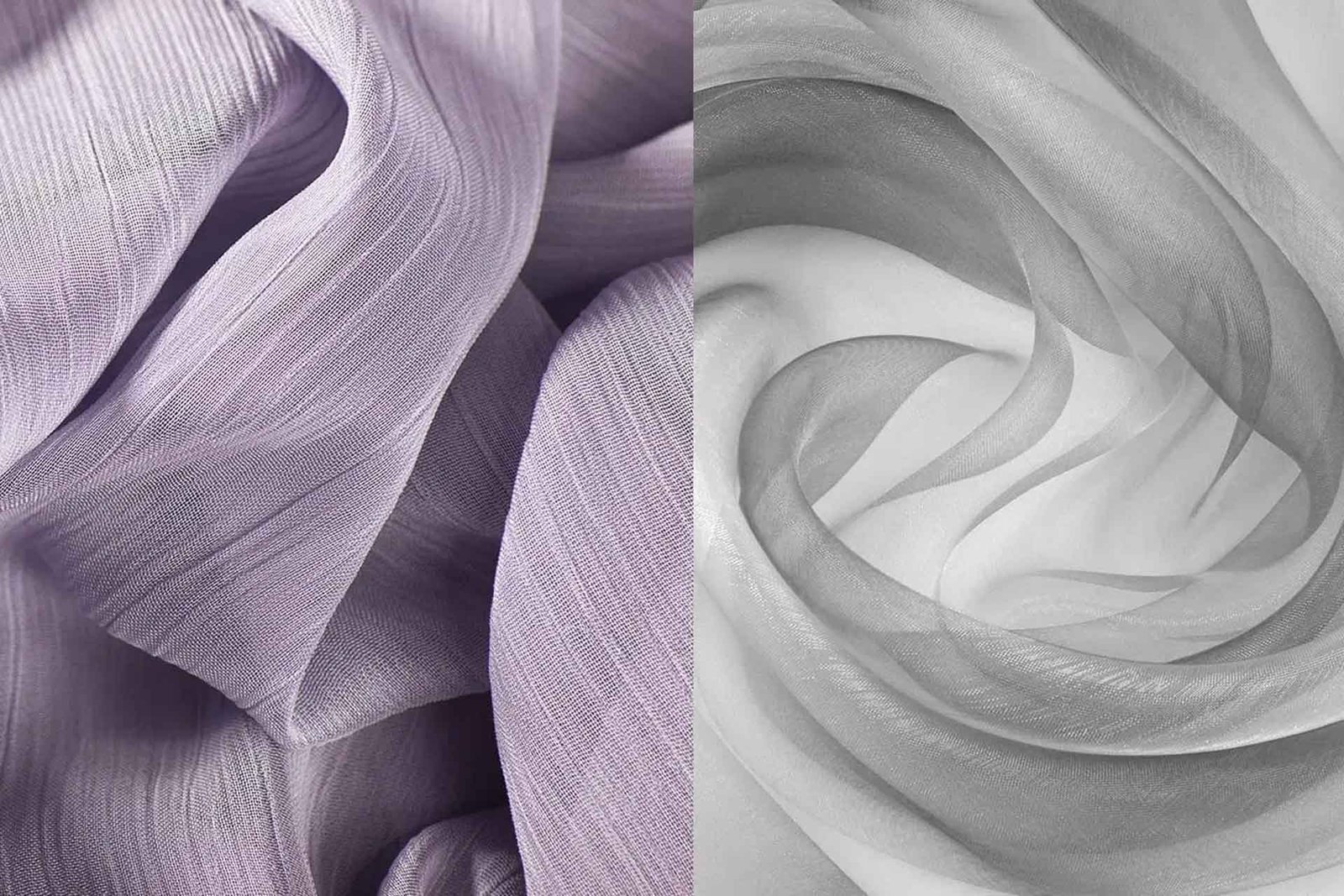
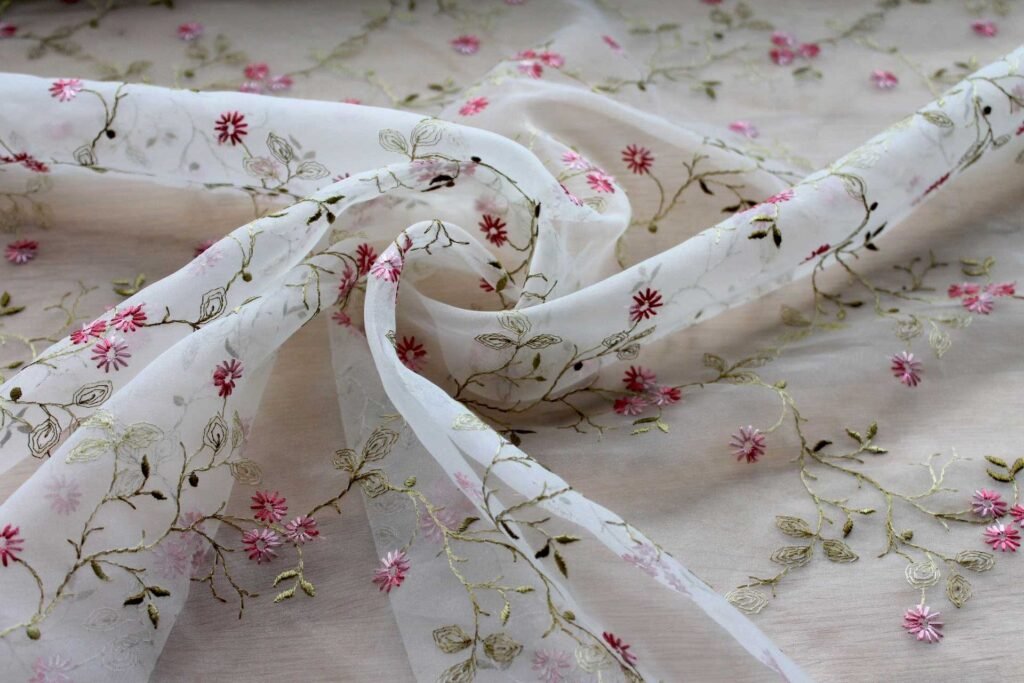
Embroidered organza combines the structural sheerness of organza base fabric with embroidery — thread, sequin, bead, or ribbon work — applied to the sheer ground to create pattern elements that appear to float in space when the fabric is used as an overlay. The transparent organza ground allows the embroidery to be seen from both sides and permits the colors of underlayer fabrics to interact with the embroidered surface, creating visual depth and complexity that opaque embroidered fabric cannot achieve. From fine machine-embroidered floral motifs on polyester organza for commercial bridal production through to hand-beaded silk organza for couture evening wear, embroidered organza spans the full quality and price spectrum of decorative fabric production. This guide covers embroidered organza types, embroidery techniques, base fabric compositions, GSM specifications, and wholesale sourcing for manufacturers buying at production scale.
What Is Embroidered Organza Fabric
How Embroidered Organza Works — Why the Sheer Base Matters
The visual properties of embroidered organza are fundamentally different from embroidered opaque fabric — and understanding why helps buyers specify correctly for their application.
On opaque fabric, embroidery sits on a solid colored ground — the pattern elements are defined against the background color of the base fabric. The design relationship is pattern against ground.
On sheer organza, embroidery appears to float — the transparent ground disappears visually, particularly when the fabric is used as an overlay, and the embroidered elements appear suspended in space against whatever fabric or surface lies behind them. The design relationship changes from pattern against ground to pattern floating in transparency.
This floating quality creates three effects that make embroidered organza unique:
Layering depth. When embroidered organza is layered over a contrasting base fabric — white embroidery over blush charmeuse, gold thread over ivory satin — the embroidered elements appear three-dimensional, hovering above the base color. This depth effect is impossible with opaque embroidered fabric.
Bilateral visibility. The sheer ground allows the embroidery to be seen from both sides of the fabric — important in garments where the interior is visible (open necklines, flowing sleeves) and in home textile applications where both faces are seen.
Color interaction. The base fabric color shows through the organza ground and interacts with the thread colors — a white embroidered organza over deep blue charmeuse produces a different visual effect than the same fabric over ivory. This color interaction allows a single embroidered organza fabric to be used in multiple colorways by changing the underlayer.
Embroidery Types — What Each Technique Produces
Machine Embroidery (Schiffli) The most widely produced embroidered organza — multi-needle Schiffli embroidery machines stitch fine thread patterns onto the organza base at high speed and consistency. Machine embroidery produces uniform, repeatable patterns across large fabric lengths with controlled thread density and pattern scale.
Available pattern types: floral (roses, peonies, lace-inspired florals, vine patterns), geometric (dots, stripes, diamond grids, star patterns), all-over even distribution, border patterns along fabric edges.
Best for: commercial bridal fabric, formal garment overlay fabric, curtain and home textile decoration where consistent pattern repetition across large quantities is required. GSM range: 40–120 GSM depending on thread density and pattern coverage.
Sequin Embroidery 3mm or 5mm sequins stitched onto the organza base — producing a fabric that combines the structural sheerness of organza with the reflective shimmer of flat sequins. Sequin embroidery produces more concentrated, directional light reflection than thread embroidery — the sequins catch and reflect light as the fabric moves, creating a dynamic visual effect under event and stage lighting.
Best for: bridal and evening wear overlays where shimmer alongside sheer transparency is required, performance costumes, event decoration panels, statement fashion garments. GSM range: 70–150 GSM including sequin weight.
Beadwork (Hand-Applied) Small beads, bugle beads, or combination bead types hand-applied to the organza base — the most labor-intensive and expensive embroidery technique. Hand beadwork produces truly three-dimensional embellishment — beads stand away from the fabric surface, creating tactile texture alongside visual decoration. Each piece is unique; production speed is very slow compared to machine techniques.
Best for: couture and high-end custom garments, luxury bridal where individually crafted detail is part of the product positioning, stage costumes for lead performers, luxury accessories. GSM range: 120–250 GSM including bead weight.
Ribbon Embroidery Narrow silk or satin ribbon stitched onto the organza base in three-dimensional floral and decorative patterns. Ribbon embroidery produces the most pronounced three-dimensional effect of common embroidery techniques — the ribbon stands away from the fabric surface creating sculptural elements. More common in home textiles and decorative applications than in garment production.
Best for: decorative home textiles, table and event decoration panels, accent elements in formal garment construction, and applications where bold three-dimensional surface texture is the design requirement. GSM range: 100–200 GSM.
Hand Embroidery Individually hand-stitched patterns — typically on silk organza base fabric. Hand embroidery produces unique, non-repeating patterns with the highest level of detail and customization. Lead times are long and unit costs are high. Used exclusively in couture, high-end custom garments, and ceremonial textiles where handcraft authenticity is a value requirement.
Best for: couture evening wear, high-end custom bridal, traditional ceremonial garments, and luxury products where handcraft is part of the product identity and pricing.
3D Appliqué Embroidery Layers of lace, net, or additional organza pieces applied onto the base organza to create raised, sculptural pattern elements. Combines embroidery stitching with fabric appliqué for maximum three-dimensional effect. Used in princess garments, theatrical costumes, and statement fashion where surface complexity is the design goal.
Best for: children's occasion wear, theatrical costumes, statement fashion garments, bridal with heavily detailed bodice or overlay panels.
Base Fabric Compositions
100% Polyester Organza Base The most widely available and cost-effective base for embroidered organza. Polyester organza provides consistent stiffness and transparency across all embroidery types and is compatible with machine embroidery, sequin, and ribbon techniques. Available in the widest color range for both base and embroidery thread.
Best for: commercial bridal, fashion garments, theatrical costumes, home textiles, and any application where cost efficiency alongside embroidered organza aesthetics is the primary driver.
Polyester-Nylon Blend Base (80–85% Polyester / 15–20% Nylon) The nylon component produces a slightly softer hand feel and better embroidery thread adhesion than pure polyester — the nylon surface grips embroidery thread more securely, reducing the risk of thread pullout in machine-embroidered constructions. Widely available in commercial embroidered organza production for bridal and formal garment applications.
Best for: bridal gown fabric, formal occasion wear overlay, and applications where slightly improved hand feel alongside good machine embroidery performance is the specification.
100% Silk Organza Base The premium base for embroidered organza — silk's natural luster enhances the visual depth of embroidered patterns, the slightly warmer surface character of silk organza gives embroidered elements a more refined appearance, and the genuine scroop of silk organza adds a sensory quality to the finished garment. Available primarily through custom production with higher MOQ and longer lead times.
Best for: luxury couture, high-end custom bridal, qipao and formal traditional garments, and any application where genuine silk quality is part of the product positioning and pricing.
Nylon Organza Base Softer than polyester with a more delicate surface character — used as base fabric for lightweight embroidered organza in children's garments, intimate apparel, and applications where a gentler hand feel is required alongside embroidered decoration.
GSM Guide for Embroidered Organza
| GSM Range | Construction | Character | Best Applications |
|---|---|---|---|
| 40–70 GSM | Light base + fine thread embroidery | Semi-transparent, delicate, floating | Bridal veils, light overlays, children's garments, sheer blouses |
| 70–120 GSM | Standard base + dense machine embroidery or light sequin | Good structure, clear pattern definition | Bridal gown panels, evening wear overlays, formal occasion fabric |
| 120–180 GSM | Sequin embroidery or dense machine embroidery | Substantial, shimmer, structured | Evening wear, performance costumes, bridal bodice panels |
| 180–250 GSM | Heavy beadwork, ribbon embroidery, or combined techniques | Heavy, three-dimensional, luxury | Couture garments, theatrical costumes, luxury event decoration |
Width: standard 130–150cm (51–59') for polyester and blend; 114cm or 140cm for silk base constructions.
Applications
Bridal Gown Overlays and Bodice Panels The primary commercial application — machine-embroidered and sequin-embroidered polyester organza as overlay fabric for bridal skirts and bodice panels. All-over floral embroidery on sheer organza layered over ivory or blush charmeuse creates the signature luxury bridal aesthetic — the embroidered elements float above the satin underlayer, creating depth and visual complexity that plain fabric cannot achieve.
Evening Wear and Formal Occasion Garments Sequin-embroidered organza is widely used in evening wear where reflective shimmer under event lighting is the design requirement. Dense sequin embroidery on organza overlay creates maximum light-catching effect while maintaining the sheer transparency of the organza base — the combination of shimmer and transparency is unique to this construction.
Theatrical and Performance Costumes Machine-embroidered and sequin organza fabrics are standard in theatrical costume production — the visual complexity of embroidered organza reads dramatically under stage lighting, the structural organza base provides garment volume, and the polyester composition withstands the handling demands of repeated performance.
Traditional and Ceremonial Garments Ethnic and classical pattern machine embroidery on silk organza — phoenix, scrolling vine, peony patterns — is widely used in qipao, traditional formal garments, and ceremonial textiles where both the embroidery motif and the silk quality are part of the cultural aesthetic.
Home Textiles and Event Decoration Ribbon-embroidered and machine-embroidered organza is used for luxury table overlays, event backdrop panels, chair sashes, and decorative home textiles where three-dimensional surface texture alongside sheer transparency creates visual richness in interior and event design applications.
Key Specifications to Confirm When Sourcing
| Specification | What to Confirm | Standard |
|---|---|---|
| Base fabric composition | Polyester, blend, or silk | Per agreed spec, lab test |
| Embroidery type | Machine, sequin, bead, ribbon, hand | Per design requirement |
| Pattern type | Floral, geometric, all-over, border | Confirm against physical sample |
| GSM total | Base fabric + embroidery weight | ±10% tolerance for heavy embroidery |
| Width | 130–150cm polyester / 114cm silk | Confirm before pattern grading |
| Color fastness — washing | Thread and sequin color stability | Minimum Grade 3–4 |
| Color fastness — rubbing | Thread color transfer | Minimum Grade 3–4 |
| Sequin adhesion | For sequin embroidery — pull test | Confirm no loss after standard wash |
| Certifications | OEKO-TEX Standard 100 | Per buyer requirement |
| MOQ | Per embroidery type and order | See below |
| Lead time | Stock vs custom | Stock: 5–7 days / Custom: 7–15 days |
MOQ by Embroidery Type:
| Embroidery Type | Stock MOQ | Custom MOQ | Sample Cost |
|---|---|---|---|
| Machine embroidery (polyester base) | 50–100m | 200–300m per pattern | $15–$35/m |
| Sequin embroidery | 100–200m | 300–500m per pattern | $35–$80/m |
| Beadwork (hand-applied) | Limited stock | 300–500m minimum | $35–$80/m |
| Silk base embroidery | Very limited stock | 500–1,000m | $80–$150/m |
All sample costs fully deductible from bulk order.
Frequently Asked Questions
Can embroidered organza be washed? Washing behavior depends on embroidery type and base composition. Polyester machine-embroidered organza can typically be hand washed gently — the polyester base and thread are wash-stable but agitation may loosen embroidery stitching over time. Sequin-embroidered organza should be dry cleaned or very gentle hand wash — sequins can be damaged by agitation or heat. Beaded organza requires dry cleaning only — bead attachment threads are vulnerable to moisture and mechanical stress. Silk base embroidered organza requires dry cleaning regardless of embroidery type. Always confirm care requirements with your supplier for the specific construction.
What is the difference between lace fabric and embroidered organza? Lace is a fabric where the pattern is created by the fabric construction itself — threads looped, twisted, or braided to form a pattern with no solid ground fabric. Embroidered organza has a complete organza base fabric with embroidery applied on top — the ground fabric is present throughout. Embroidered organza with dense all-over embroidery can visually resemble lace from a distance, but structurally they are completely different. For garment construction, embroidered organza provides more structural consistency than lace and is easier to cut and sew accurately.
What is the minimum order for wholesale embroidered organza? Stock polyester machine-embroidered organza: from 50–100 meters per color and pattern. Custom embroidery pattern development: 200–300 meters minimum for machine embroidery; 300–500 meters for sequin and bead work. Silk base embroidered organza custom production: 500–1,000 meters minimum. Small batch orders from 50 meters available at 20–40% price premium. Free swatches available before bulk commitment.
Source Wholesale Embroidered Organza from XINGYE TEXTILE
XINGYE TEXTILE supplies wholesale embroidered organza fabric — machine embroidery, sequin embroidery, and specialty constructions on polyester, polyester-nylon blend, and silk organza bases — serving bridal manufacturers, evening wear brands, theatrical costume producers, and wholesale fabric buyers worldwide. Factory-direct pricing, MOQ from 50 meters for stock embroidered organza, free swatches available before bulk commitment.
→ Browse Our Full Fabric Range → Read: What Is Organza Fabric? → Read: Silk Organza Fabric → Read: Iridescent Organza Fabric → Read: Organza vs Chiffon → Request a Free Swatch → Get a Wholesale Quote