Organza, tulle, and chiffon are the three dominant sheer fabrics in bridal and evening wear production — frequently specified for similar applications but with fundamentally different structures, drape behaviors, and construction properties. Choosing the wrong fabric for a garment design is a production mistake that cannot be corrected after cutting. This guide explains the real differences between all three, maps each to its correct applications, and provides the specification information manufacturers and buyers need to specify confidently.
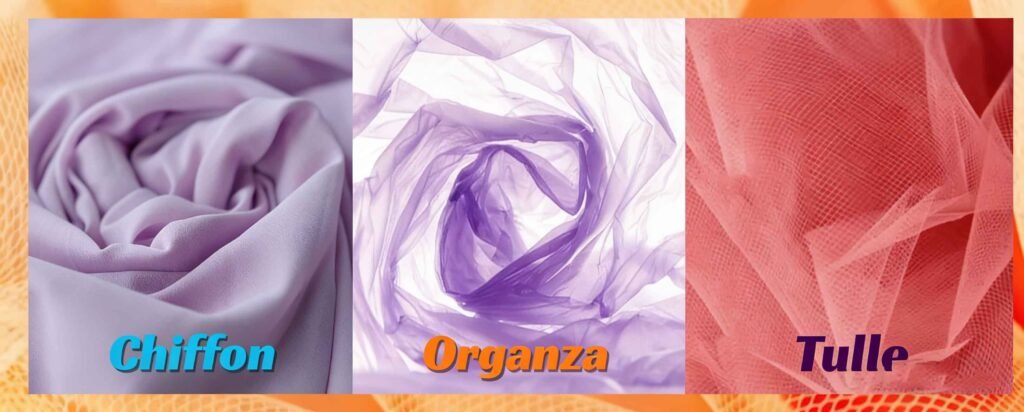
Organza vs Tulle vs Chiffon
The Three Fabrics — Fundamental Structural Differences
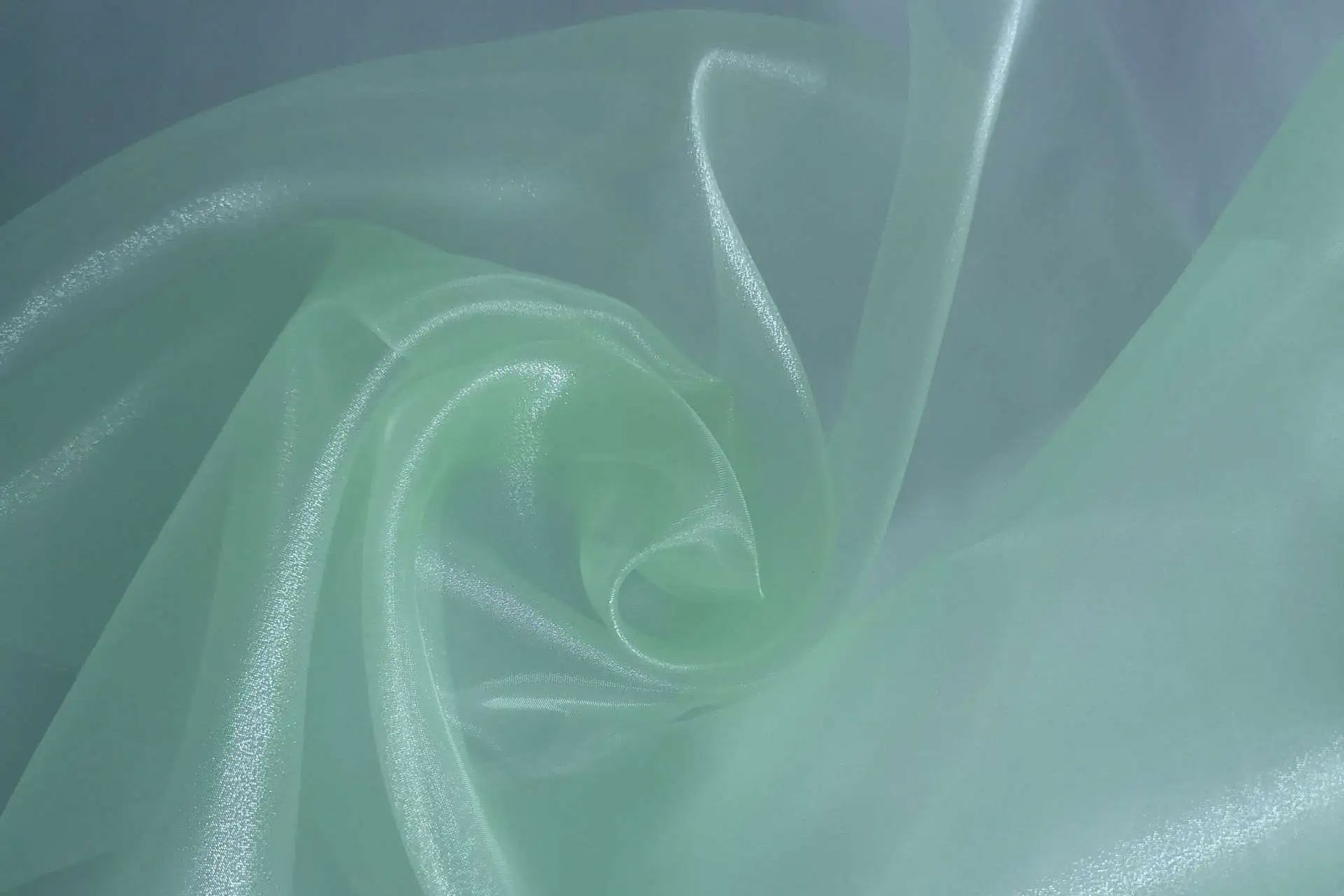
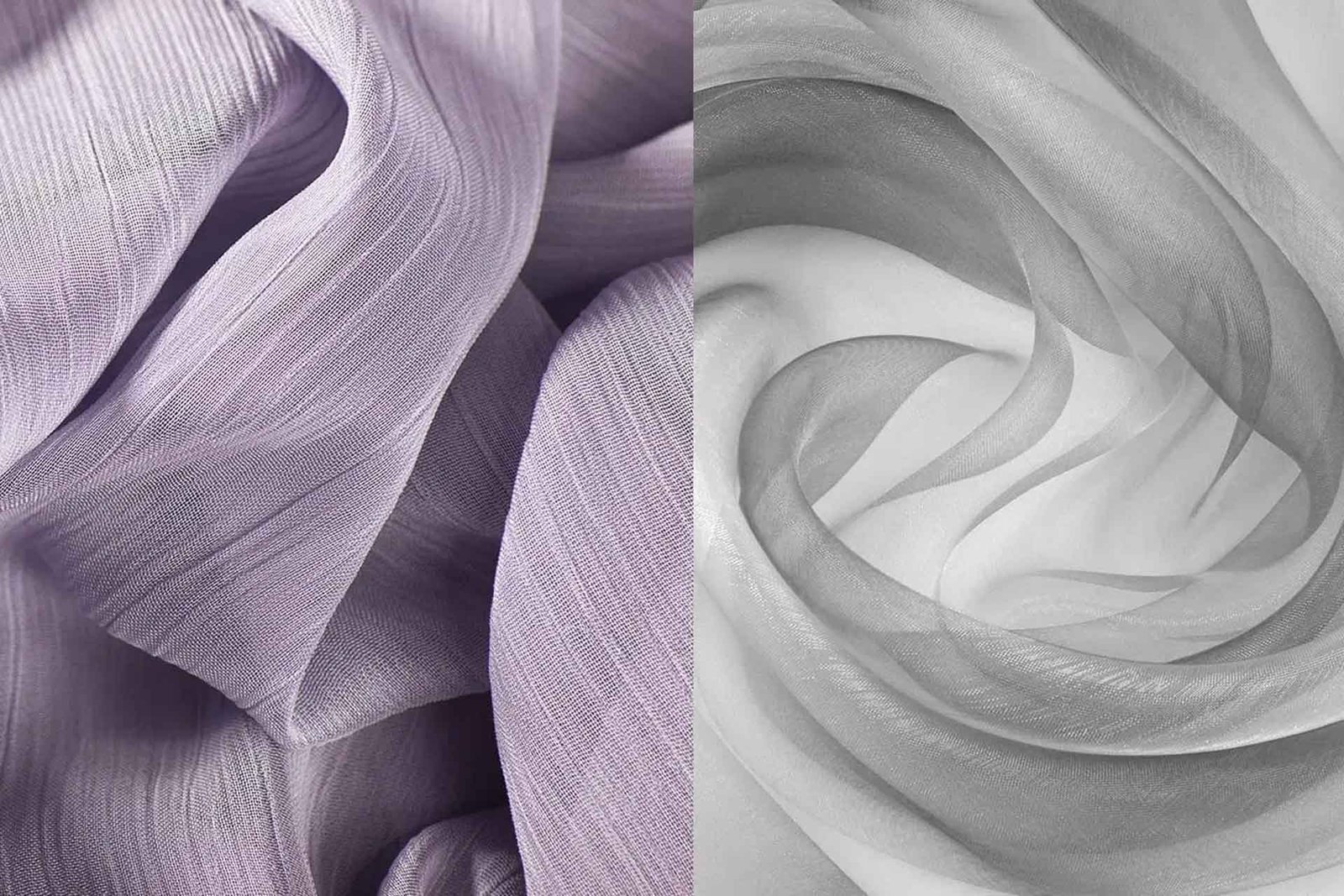
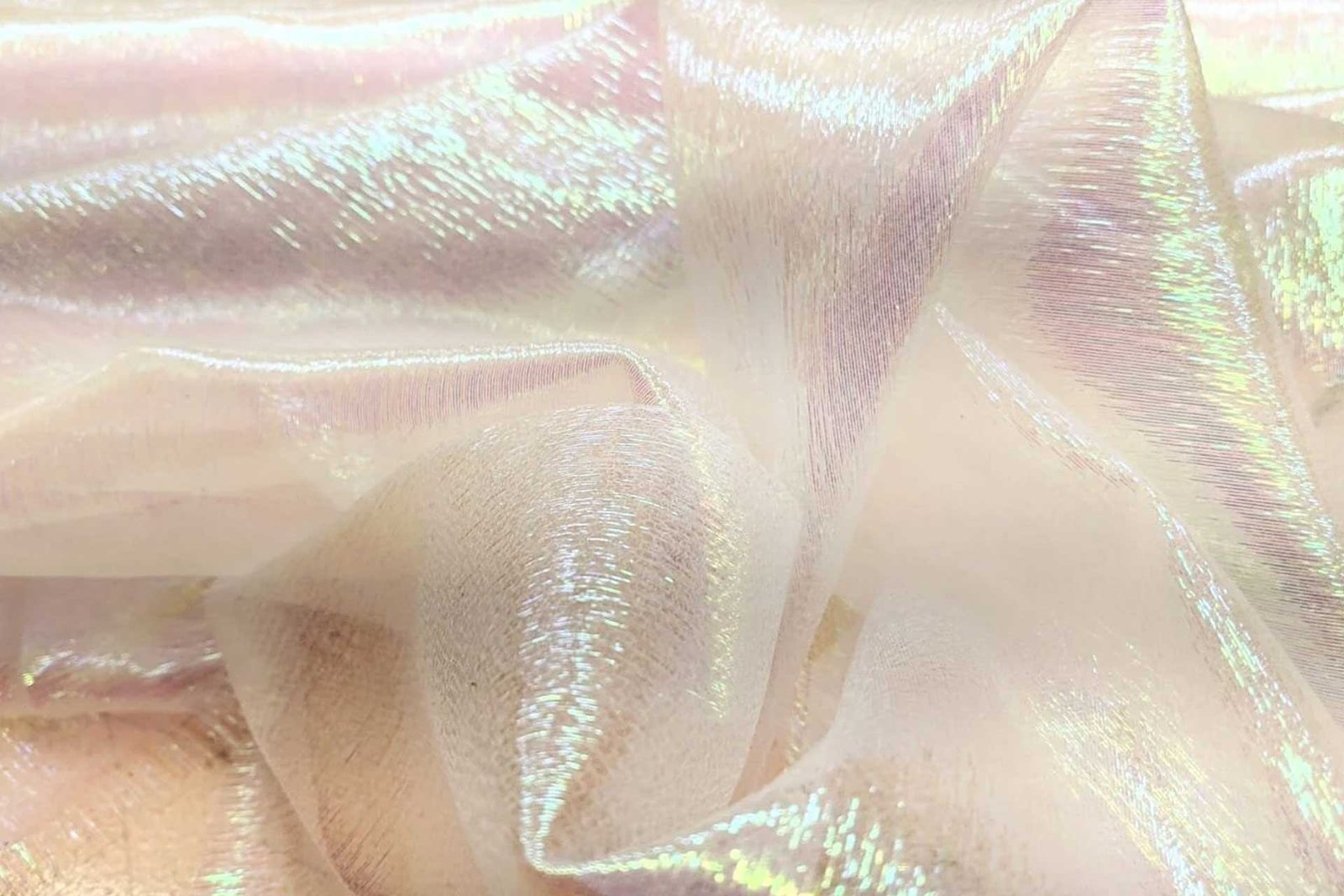
Organza Plain weave fabric from high-twist yarn — simultaneously sheer and stiff. Organza holds its shape against gravity, creates volume through structural rigidity, and produces precise, clean-edged silhouette lines. The stiffest of the three fabrics. Available in silk and polyester.
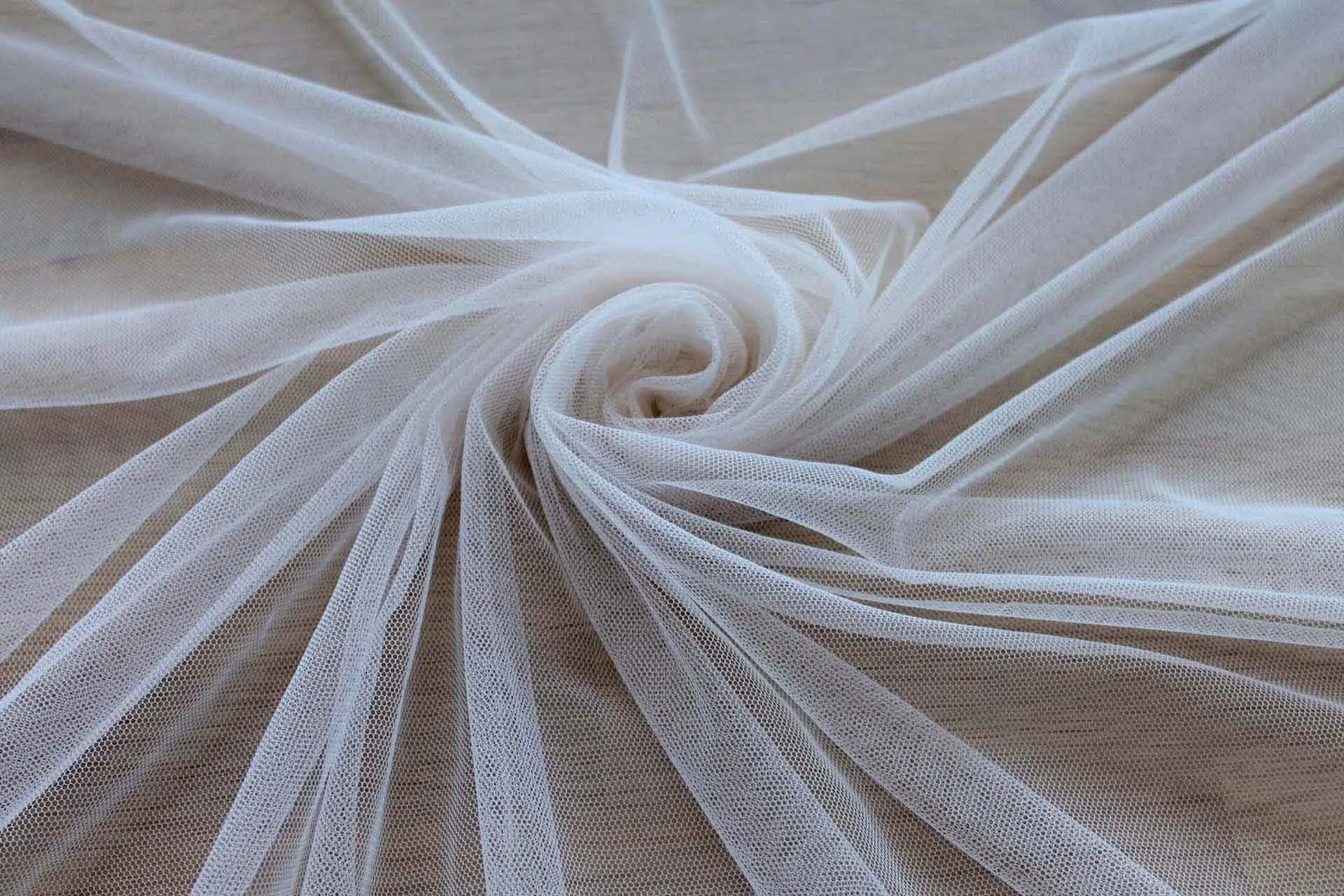
Tulle Hexagonal net construction — not a woven fabric but a net structure where threads are twisted and knotted at regular hexagonal intersections. Tulle has no structural stiffness in the way organza does — it creates soft, springy volume through its net mesh bouncing back from compression. The mesh structure is clearly visible when the fabric is examined closely. Available in silk, nylon, and polyester.
Chiffon Plain weave fabric from high-twist yarn at lower thread count than organza — sheer and completely soft. Chiffon drapes freely under gravity and floats with air movement. No structural rigidity. Creates layered transparency and fluid movement. Available in silk and polyester.
Direct Comparison — All Three Side by Side
| Factor | Organza | Tulle | Chiffon |
|---|---|---|---|
| Construction | Plain weave, high twist | Hexagonal net | Plain weave, high twist |
| Structure | Crisp, stiff — holds shape | Soft, springy — bounces back | Soft, fluid — drapes freely |
| Volume creation | Structural rigidity per layer | Springy mesh volume | Floating weight in layers |
| Edge character | Clean, precise, crisp edges | Soft, fluffy, net edges | Soft, flowing edges |
| Transparency | Sheer — smooth surface | Sheer — net pattern visible | Sheer — slightly grainy |
| Surface texture | Smooth | Hexagonal net mesh | Slightly grainy, matte |
| Scroop (silk) | Pronounced | None | Slight |
| Layer behavior | Each layer adds stiffness | Each layer adds soft volume | Each layer adds opacity |
| Weight range | 52–87 GSM | 15–40 GSM | 26–52 GSM |
| Lightest weight | Moderate — heavier than tulle | Lightest of three | Very light |
| Best silhouette | Structured, architectural | Soft, full, cloud-like | Flowing, fluid, draped |
| Washing | Dry clean (silk) / gentle (polyester) | Gentle hand wash | Dry clean (silk) / gentle (polyester) |
When to Specify Each — Application Decision Guide
Specify organza when: The design requires precise silhouette lines, structured volume that holds its shape, or clean architectural edges. Organza is the only sheer fabric that creates and maintains structural volume through its own rigidity — ball gown skirts, structured puff sleeves, precisely pleated overlays, and architectural bodice elements all require organza. Chiffon and tulle cannot hold these shapes.
Specific applications: ball gown skirt layers, structured bridal overlays, puff and bishop sleeves, formal accessories requiring shape retention, theatrical costume construction requiring precise silhouette.
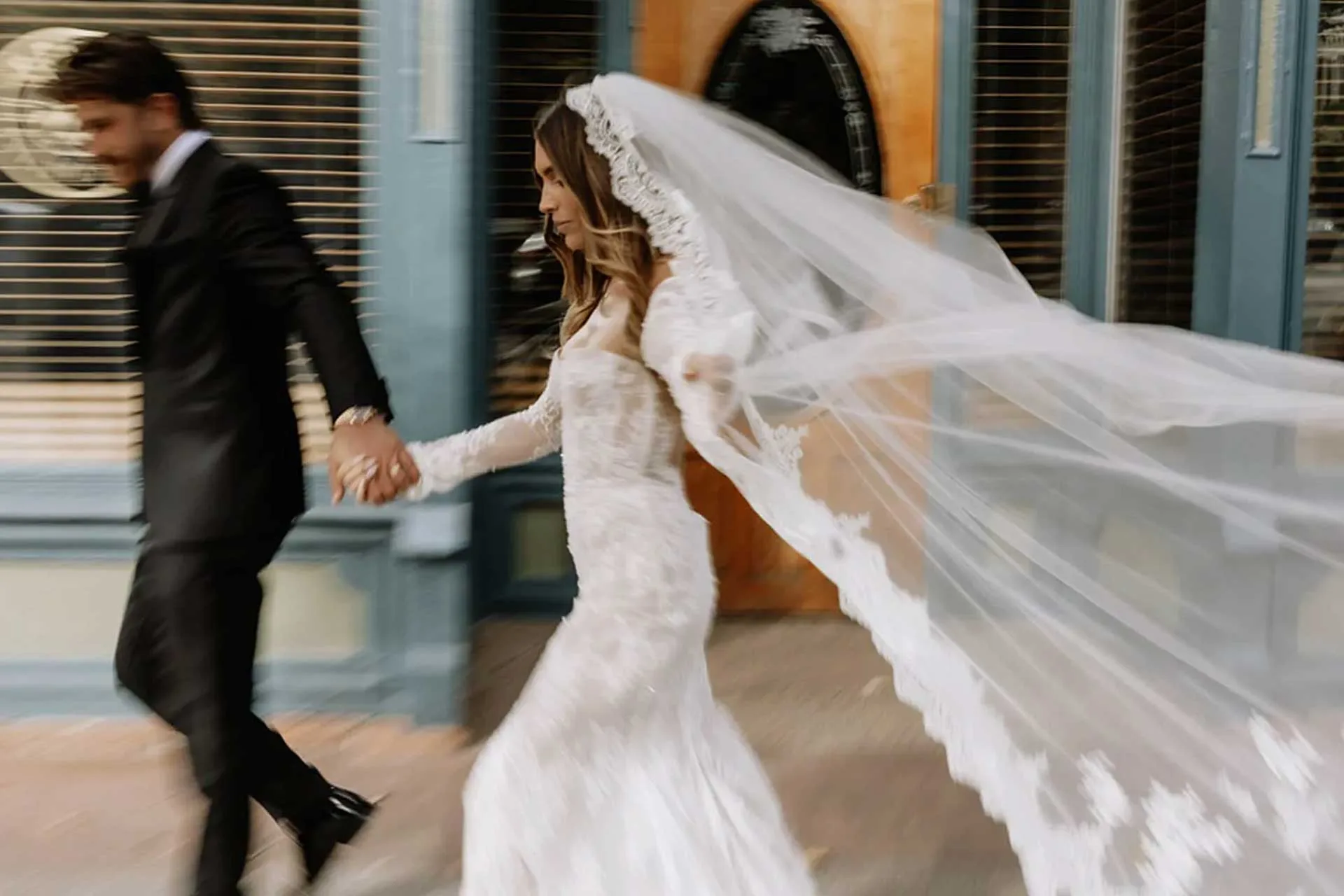
Specify tulle when: The design requires soft, full, cloud-like volume — the kind of volume that appears fluffy and soft rather than structured and crisp. Tulle's springy mesh creates maximum volume at minimum weight and creates the soft, romantic fullness associated with ballet tutus, princess skirts, and soft bridal underskirts. Tulle is also the standard fabric for bridal veils where a fine net texture is appropriate.
Specific applications: ballet and dance tutus, soft full princess skirts, bridal veils (fine tulle), underskirt volume layers beneath organza or satin overlay, soft decorative layers in children's garments, floral decoration.
Specify chiffon when: The design requires floating, fluid movement — garments where the fabric responds to body movement and air, creating the flowing, ethereal aesthetic of goddess gowns and draped formal dresses. Chiffon creates gradual opacity through layering while maintaining fluid drape. It cannot create structured volume or hold precise lines — it is the flowing fabric, not the volume fabric.
Specific applications: flowing evening gowns, bridal veils (soft chiffon), layered flowing skirts, draped formal dresses, floating sleeves, scarves and stoles, soft overlays that move with the wearer.
Combining All Three in Bridal Production
Many bridal and formal garment designs use multiple sheer fabrics simultaneously — each serving a specific structural function that the others cannot perform.
Classic combination: organza structure + tulle volume + chiffon surface
- Organza underlayers: create and hold the ball gown silhouette shape
- Tulle mid-layers: add soft, fluffy volume between the organza structure and the visible surface
- Chiffon overlay: creates a soft, floating surface finish that moves gently over the structured layers beneath
Each fabric layer contributes a specific property — structure, volume, or movement — that the others cannot provide. Understanding which fabric does which job is the foundation of multi-fabric bridal construction specification.
Key Specifications at a Glance
| Specification | Organza | Tulle | Chiffon |
|---|---|---|---|
| GSM range | 52–87 GSM | 15–40 GSM | 26–52 GSM |
| Fiber options | Silk, polyester | Silk, nylon, polyester | Silk, polyester |
| Standard width | 114cm (silk) / 150cm (polyester) | 150–300cm | 114cm (silk) / 150cm (polyester) |
| Silk MOQ | 50–100m per color | 50–100m per color | 50–100m per color |
| Polyester MOQ | 500m per color | 500m per color | 500m per color |
| Sample lead time | 3–5 days stock / 7 days custom | 3–5 days stock | 3–5 days stock / 7 days custom |
Frequently Asked Questions
Can tulle substitute for organza? No — tulle and organza create completely different types of volume. Organza creates structured, precise volume through fabric stiffness; tulle creates soft, springy volume through its mesh construction. A ball gown designed for organza layers will not hold its shape in tulle — the soft mesh will collapse rather than maintaining the structured silhouette. For soft, romantic volume without structural precision, tulle is appropriate. For architectural structured volume, only organza is correct.
Which is softest against skin? Chiffon is the softest of the three — the slightly matte, grainy surface of high-twist chiffon yarn is gentle and comfortable against skin. Organza's crisp surface can feel papery against skin — it is rarely used in direct skin contact without lining or underlayer. Tulle's net structure can feel scratchy against skin and is typically lined or worn over other fabric in skin-contact applications. For garments with direct skin contact in sheer fabric areas, chiffon is the most comfortable specification.
What is the minimum order for these fabrics wholesale? Silk versions: 50–100 meters per color for stock across all three fabric types. Polyester versions: 500 meters per color for stock. Custom dyeing requires higher MOQ — contact our team to confirm. Free swatches available before bulk commitment.
Source Wholesale Organza, Tulle, and Chiffon from XINGYE TEXTILE
XINGYE TEXTILE supplies wholesale organza, chiffon, and specialty sheer fabrics — silk and polyester constructions — serving bridal manufacturers, evening wear brands, theatrical costume producers, and wholesale fabric buyers worldwide. Factory-direct pricing, flexible MOQ, free swatches available before bulk commitment.
→ Read: What Is Organza Fabric? → Read: Organza vs Chiffon → Read: Silk Organza Fabric → Read: Silk Chiffon Fabric → Read: Types of Silk Fabric → Request a Free Swatch → Get a Wholesale Quote