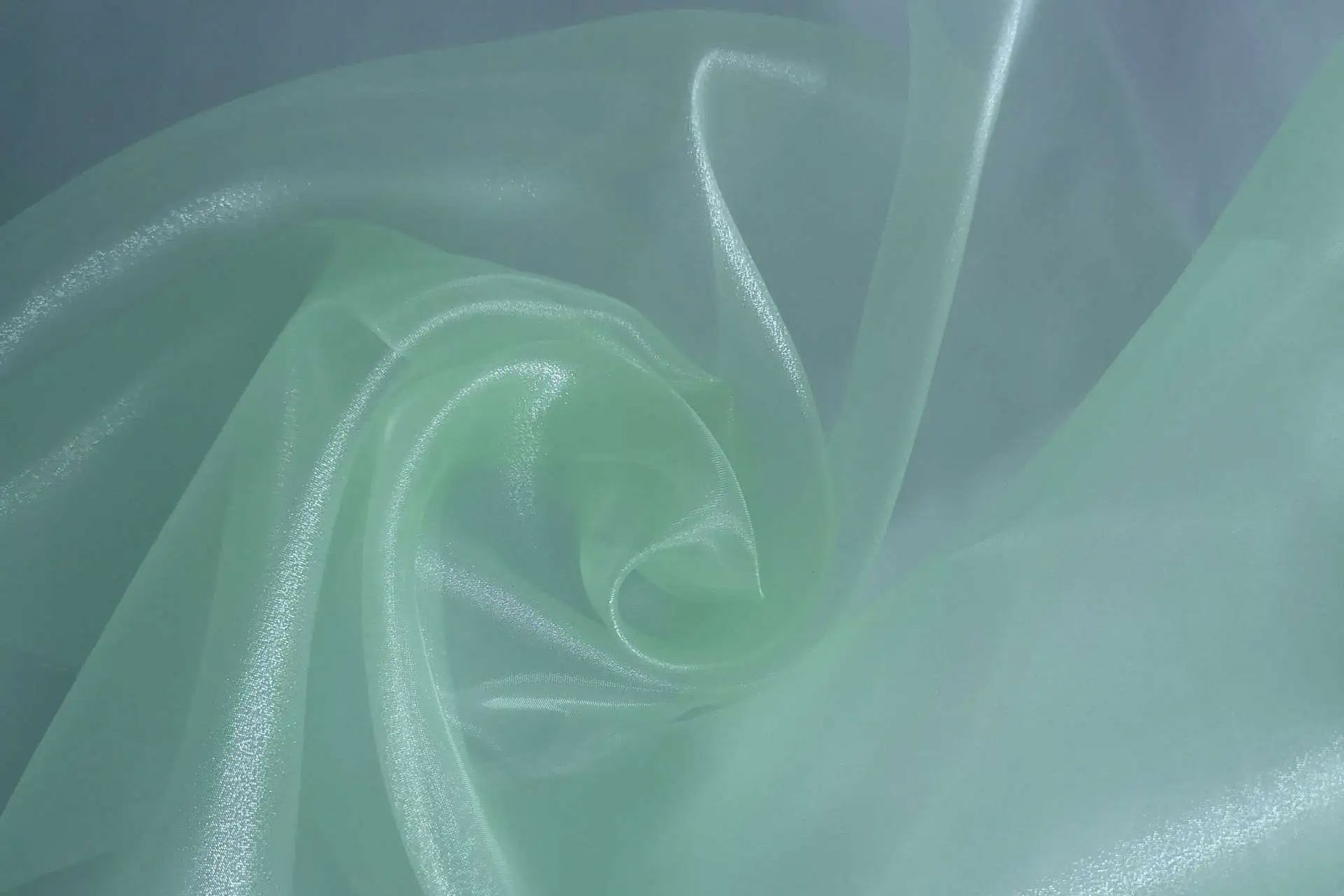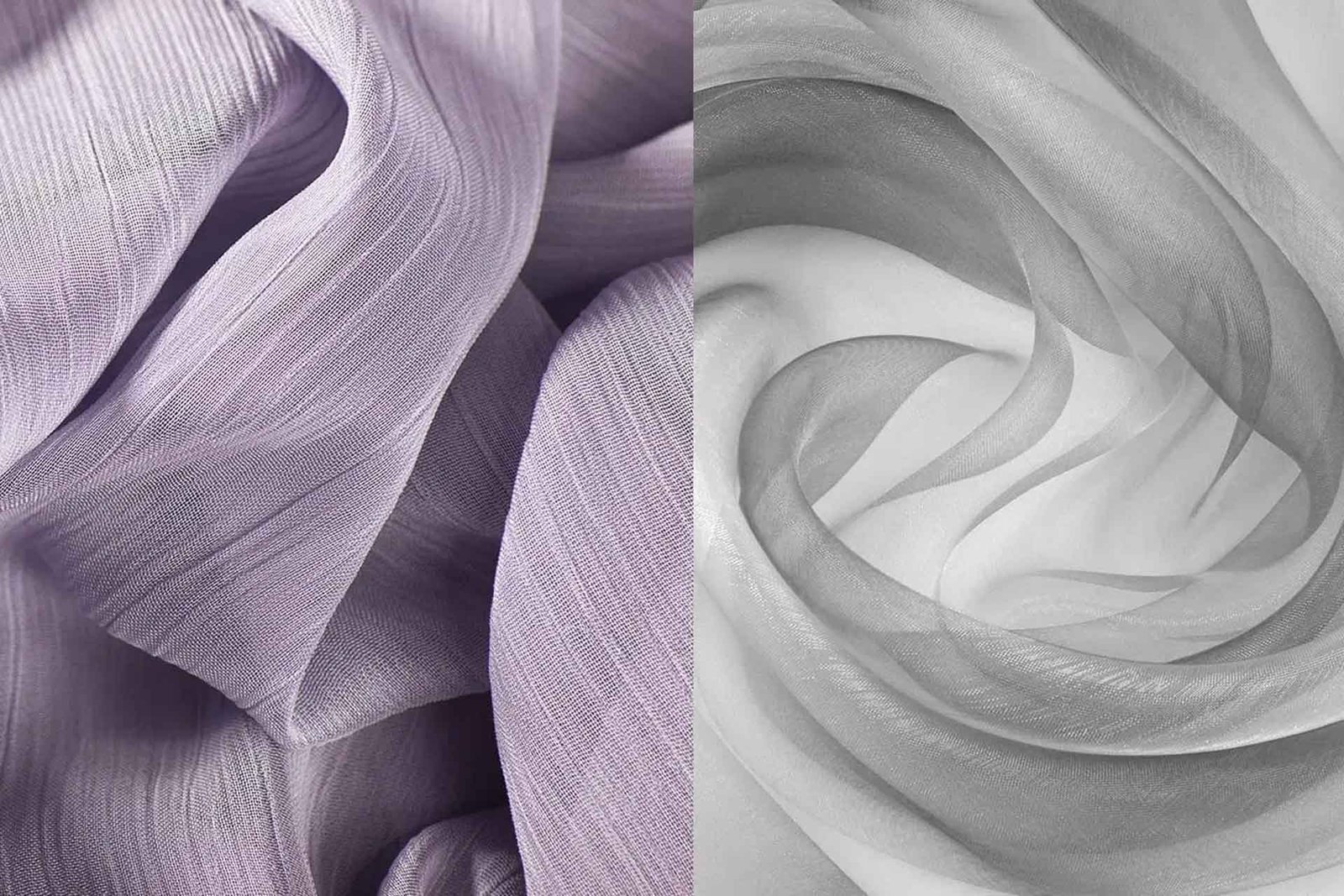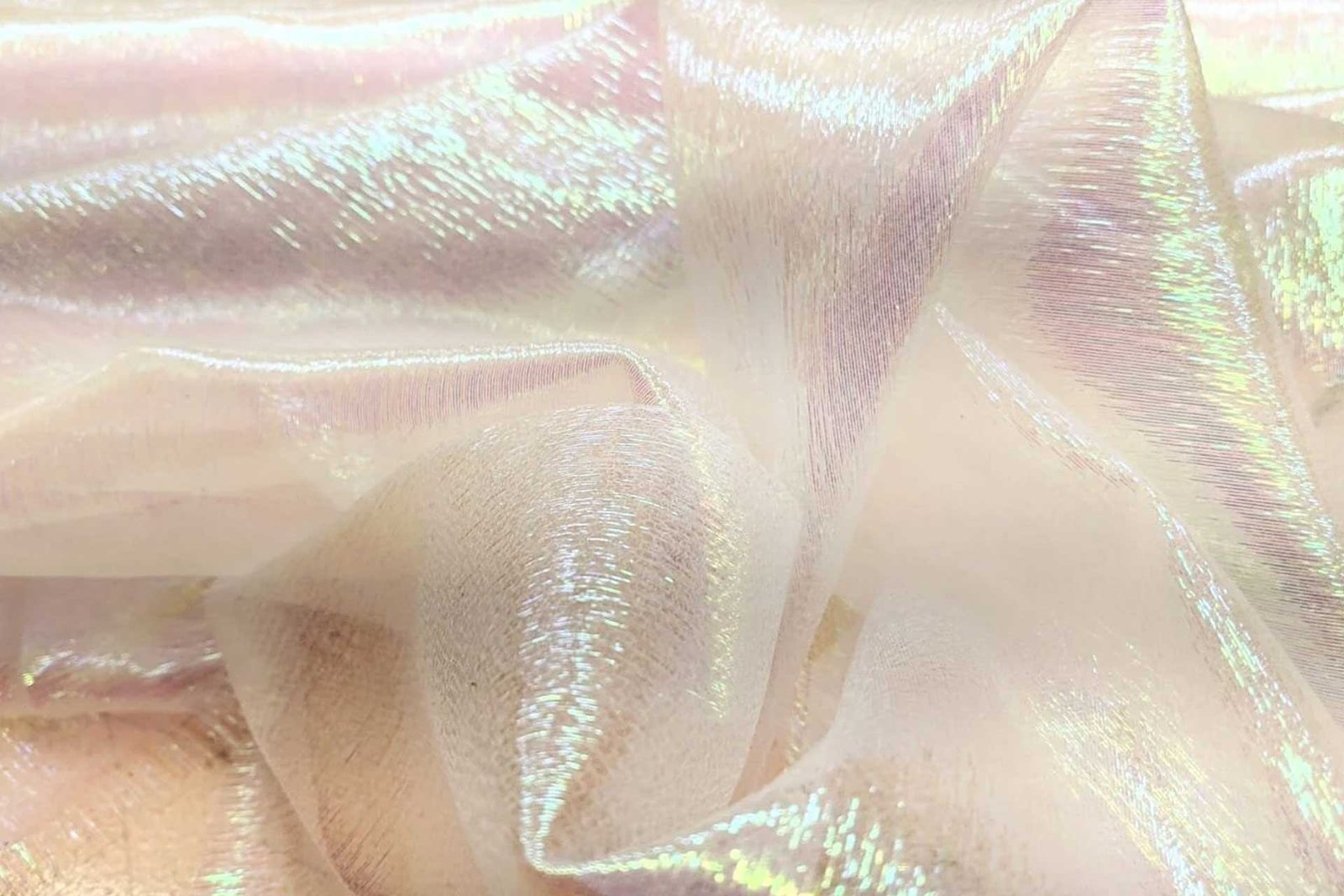
Silk chiffon is the lightest and most fluid of all silk fabric types — an ultra-sheer plain weave fabric with a soft, floating drape that moves with the slightest air current and falls in gentle waves against the body. Where silk organza is stiff and structural, silk chiffon is soft and yielding; where silk satin is smooth and lustrous, silk chiffon is matte and ethereal. Its combination of near-weightlessness, complete sheerness, and fluid movement makes silk chiffon the defining fabric for flowing evening gowns, layered bridal veils, scarves, and any garment design where the fabric's movement and transparency are central to the aesthetic. This guide covers silk chiffon fabric types, momme specifications, production considerations, and wholesale sourcing for manufacturers working with silk chiffon at production scale.
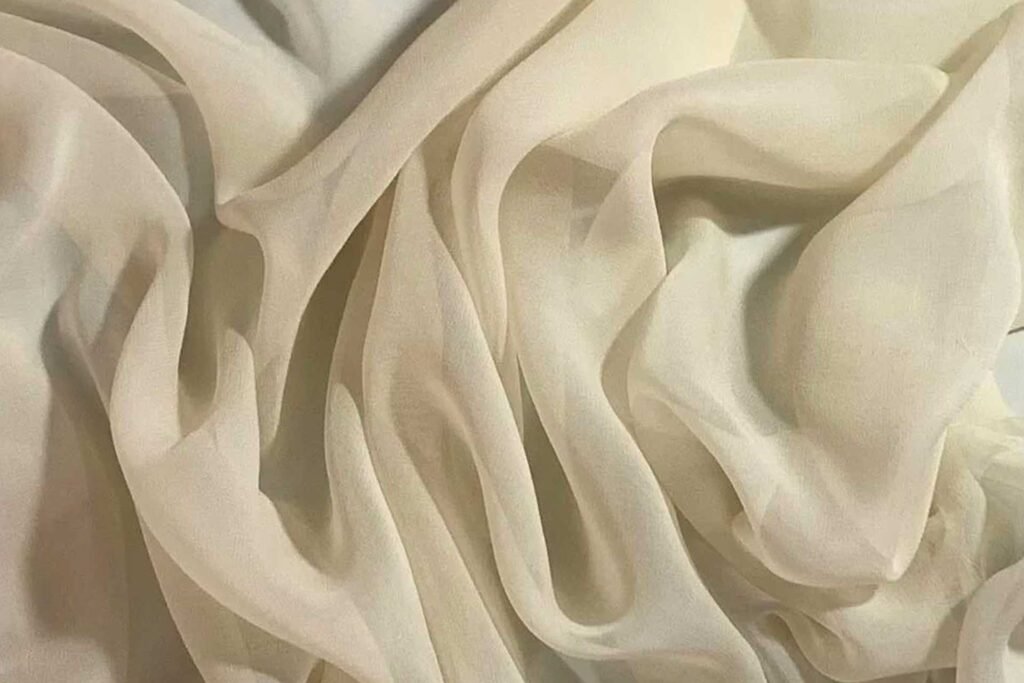
silk chiffon fabric
What Makes Silk Chiffon Unique — Construction and Properties
Silk chiffon is produced from highly twisted silk yarn — similar to organza in its high-twist construction — but woven at a lower thread count and with a looser weave structure than organza. This combination of high yarn twist and open weave produces chiffon's defining characteristics.
The high twist in the yarn creates a slight crepe-like surface texture — silk chiffon is not completely smooth like charmeuse but has a subtle grainy texture from the twisted yarns. This texture gives chiffon its characteristic matte surface and its slightly grippy quality that helps multiple layers of chiffon cling together rather than sliding apart.
The open, low-thread-count weave allows light to pass through freely — silk chiffon at 6–8 momme is almost completely transparent, transmitting light in a way that creates a luminous, glowing quality when the fabric is backlit or layered over other fabrics. This transparency is the foundation of chiffon's most common design applications — layers of chiffon over a lining create depth and dimension that a single opaque fabric cannot achieve.
Four properties define silk chiffon's performance:
Ultra-lightweight. At 6–8 momme (26–35 GSM), silk chiffon is among the lightest commercial woven fabrics available. A full-length evening gown in multiple layers of silk chiffon weighs a fraction of what equivalent satin or crepe garments would weigh — a meaningful comfort factor for garments worn for extended periods.
Floating, fluid drape. Chiffon's low weight means gravity acts on it with minimal force — the fabric responds to the slightest air movement and falls in soft, flowing curves rather than structured lines. This fluid drape is impossible to replicate in heavier fabrics and is the defining characteristic of the 'goddess gown' and floating evening wear aesthetic.
Matte, ethereal surface. Unlike charmeuse or habotai, silk chiffon has a matte surface without significant luster — the high-twist yarn structure diffuses light rather than reflecting it directionally. This matte quality gives chiffon an ethereal, soft appearance that is distinct from the glamorous sheen of silk satin.
Layering versatility. Multiple layers of silk chiffon create gradations of opacity and color depth — one layer is nearly transparent, two layers create a soft color, three or more layers approach opacity while maintaining the flowing drape of chiffon. This layering versatility allows designers to control opacity and color intensity within a single garment.
Types of Silk Chiffon
Plain Silk Chiffon The standard construction — uniform plain weave with no surface embellishment. Available from ultra-light 6mm through standard 8mm to slightly heavier 10–12mm constructions. Plain chiffon in standard and custom colors is the base specification for the majority of chiffon garment applications.
GSM range: 26–52 GSM (6–12 momme). Best for: evening gown layers, bridal overlays, scarves and shawls, lightweight blouses, layered skirts, flowing sleeves.
Printed Silk Chiffon Plain silk chiffon with digital or screen print applied after weaving. The sheer quality of chiffon allows printed designs to be seen through multiple layers — creating visual depth when layered — and allows the garment lining color to influence the appearance of the printed layer. Digital printing on silk chiffon produces extremely vivid, color-accurate designs that are a signature product in luxury fashion.
Best for: fashion blouses and dresses, printed scarves, luxury fashion garments where print design is the primary product feature.
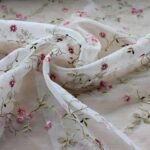
Silk Chiffon with Embroidery Chiffon base with embroidery — typically fine floral or geometric patterns in silk or metallic thread. The sheer ground allows embroidery to appear as floating pattern elements when layered. Widely used in luxury bridal overlay fabric and high-end occasion wear.
Best for: bridal gown overlays, luxury occasion wear, high-end fashion garments where embroidery detail alongside sheer transparency is required.
Crinkle Silk Chiffon Permanently crinkled through heat or chemical treatment — producing a textured surface with irregular wrinkles that are a design feature rather than a care issue. Crinkle chiffon has slightly more body than standard chiffon due to the set crinkle structure.
Best for: casual luxury garments, scarves, and fashion applications where a textured rather than smooth chiffon aesthetic is preferred.
Silk Chiffon Momme Guide
| Momme | GSM | Character | Best Applications |
|---|---|---|---|
| 6mm | 26 GSM | Ultra-sheer, maximum transparency | Delicate overlays, veil fabric, sheer decoration layers |
| 6–8mm | 26–35 GSM | Standard chiffon weight, floating drape | Evening gown layers, scarves, blouses, bridal overlays |
| 8–10mm | 35–43 GSM | Slightly heavier, more body | Structured blouses, fuller skirts, garments needing slight opacity |
| 10–12mm | 43–52 GSM | Medium-light, balanced | Draped dresses, layered garments, casual luxury wear |
For most evening wear and bridal applications, 6–8mm silk chiffon covers the standard specification range. Heavier constructions at 8–12mm are used where slightly more body is required alongside chiffon's characteristic drape — structured blouses, fuller layered skirts, and garments where the designer wants chiffon's texture without maximum transparency.
Silk Chiffon vs Polyester Chiffon — Key Differences
Polyester chiffon is the most common substitute for silk chiffon — widely available at a fraction of silk's cost. Understanding the real differences helps buyers specify and communicate accurately.
| Factor | Silk Chiffon | Polyester Chiffon |
|---|---|---|
| Weight at same momme | Slightly heavier — natural fiber density | Lighter — lower fiber density |
| Hand feel | Soft, slightly warm, natural texture | Smooth, slightly cooler, more slippery |
| Drape | Softer, more fluid movement | Good drape but slightly stiffer |
| Breathability | Good — natural protein fiber | Low — synthetic traps heat |
| Static | Low | Higher — generates static cling |
| Scroop | Slight — less than organza | None |
| Burn test | Burns, self-extinguishes, hair smell | Melts, plastic smell, hard bead |
| Care | Hand wash or dry clean | Machine washable |
| Cost | Significantly higher | Much lower |
| Best for | Luxury fashion, bridal, premium garments | Commercial fashion, costume, budget garments |
The most practical field test for confirming silk vs polyester chiffon is the burn test — burn a small piece and observe the ash and smell. Silk burns to a crushable ash with a hair smell; polyester melts to a hard plastic bead with a chemical smell.
Silk Chiffon vs Silk Georgette — Choosing Between Them
Silk chiffon and silk georgette are the two dominant lightweight silk fabrics used in similar applications — buyers frequently need to choose between them for the same garment category.
| Factor | Silk Chiffon | Silk Georgette |
|---|---|---|
| Momme range | 6–12mm | 8–12mm |
| GSM range | 26–52 GSM | 35–52 GSM |
| Surface texture | Smooth, slightly grainy | More pronounced crepe texture |
| Transparency | Higher — more sheer | Slightly less sheer |
| Drape | More fluid, floating | Slightly more body, controlled drape |
| Stiffness | Less — softer | Slightly more — better structure |
| Movement | Responds to slightest air | Moves with body, slightly less reactive |
| Best for | Maximum fluidity, layers, overlays | Structured flowing garments, blouses |
Decision rule: Specify silk chiffon when maximum fluidity and transparency are the design requirements — floating layers, bridal veils, gossamer overlays. Specify silk georgette when slightly more body and controlled drape are needed alongside the lightweight sheer character — structured blouses, fitted bodices with flowing skirts, garments requiring the chiffon aesthetic with slightly more substance.
Production Considerations for Silk Chiffon
Cutting Silk chiffon is the most difficult common silk fabric to cut accurately — its combination of slipperiness, sheerness, and light weight causes it to shift constantly during cutting. Use the following techniques: place tissue paper or stabilizer under and over the fabric layers before cutting; use sharp rotary blades with a cutting mat; cut single-ply wherever accuracy is critical; weigh down the fabric with pattern weights rather than pinning through the pattern pieces.
Handling during sewing Chiffon shifts under presser foot pressure — use a roller foot or walking foot for straight seams. Reduce machine speed significantly. Use size 9 fine needles and fine silk thread matching the fabric. French seams are standard for visible seams — they enclose the raw edge without bulk showing through the sheer fabric.
Seam allowances Standard seam allowances are too wide for chiffon — the excess fabric shows through the sheer ground as a visible shadow. Use narrow seam allowances (6mm) finished as French seams or rolled hems for all visible seam lines.
Hemming Rolled hems — either machine-rolled or hand-rolled — are standard for chiffon hems. A machine-rolled hem on silk chiffon using a narrow rolled hem foot produces a fine, lightweight hem appropriate for the fabric's delicacy. Hand-rolled hems take significantly longer but produce a finer finish for couture and high-end applications.
Pressing Press at maximum 140°C on the reverse face with minimal steam — excessive heat damages silk fiber and can cause permanent shine marks on the matte chiffon surface. Press lightly — chiffon does not require the firm pressing that heavier fabrics need and can be distorted by heavy pressing.
Key Specifications to Confirm When Sourcing Silk Chiffon
| Specification | What to Confirm | Standard |
|---|---|---|
| Fiber content | 100% mulberry silk, lab test confirmed | Per agreed spec |
| Silk grade | 5A or 6A minimum | Per application requirement |
| Momme weight | mm, physical sample weighing | Per application — see momme table |
| GSM | Physical sample weighing | ±5% tolerance |
| Width | 114cm standard | Confirm before pattern grading |
| Surface type | Plain, printed, embroidered, crinkle | Per design requirement |
| Color fastness — washing | Grade rating | Minimum Grade 3–4 |
| Color fastness — light | UV stability | Minimum Grade 3–4 |
| Transparency | Confirm against physical sample | Per design requirement |
| Certifications | OEKO-TEX, Silk Mark | Per buyer requirement |
| MOQ | Per order type | See below |
| Lead time | Stock vs custom | Stock: 3–5 days / Custom: 7 days |
MOQ by Order Type:
| Order Type | MOQ |
|---|---|
| Stock silk chiffon, standard colors | 50–100 meters per color |
| Custom dyeing | 150–300 meters per color |
| Digital or screen print | 50–200 meters per pattern |
Frequently Asked Questions — Silk Chiffon
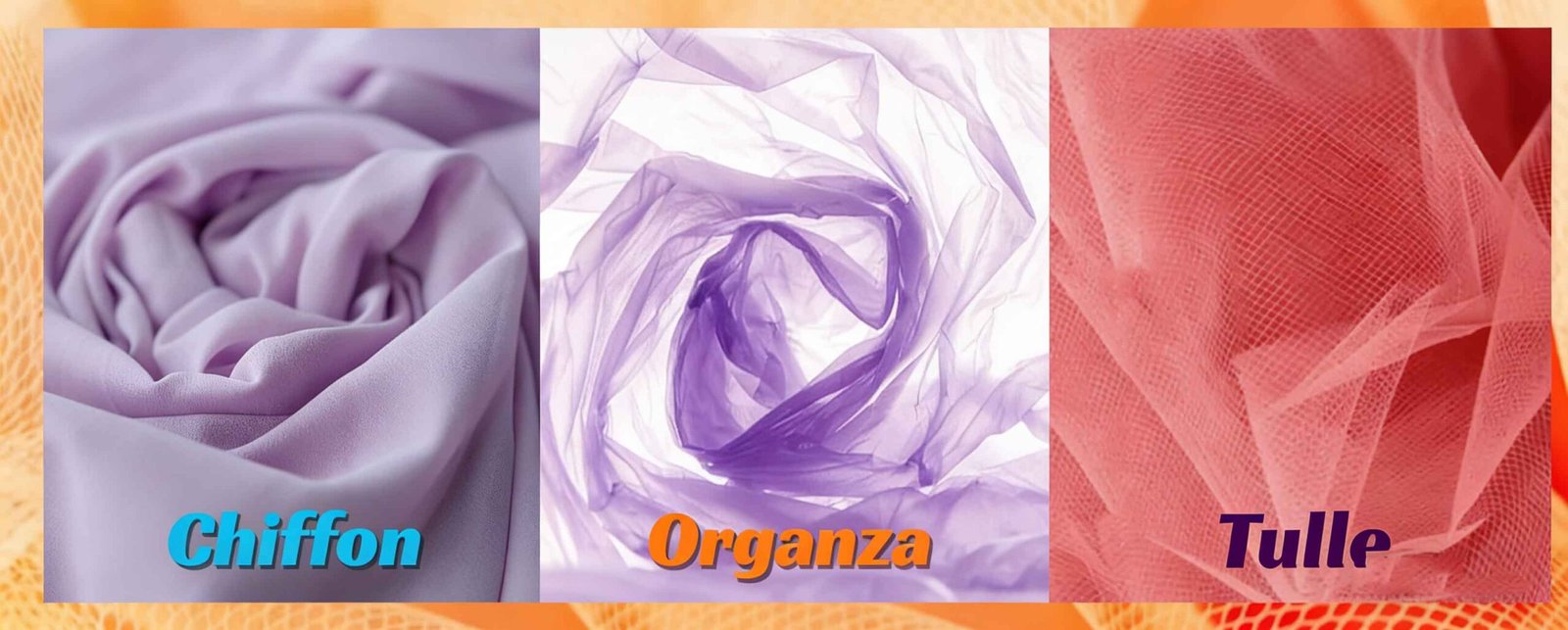
What is the difference between silk chiffon and silk organza? Both are sheer silk fabrics but with opposite structural characters. Silk chiffon is soft, fluid, and draped — it falls with gravity and moves freely. Silk organza is stiff, crisp, and structured — it holds shape and creates volume. Chiffon is specified for flowing garments where fluid movement defines the aesthetic. Organza is specified for structured garments where volume and architectural shape are required. The choice is determined by whether the design requires movement or structure.
How many layers of silk chiffon are needed for opacity? At 6–8mm momme, three to four layers of silk chiffon approach near-opacity while maintaining the characteristic floating drape. Two layers create a soft, slightly translucent effect. Five or more layers are essentially opaque while retaining chiffon's movement. Most evening gown applications use two to four layers of chiffon over a lining — the lining provides opacity while the chiffon layers add visual depth, movement, and the floating quality that defines the chiffon gown aesthetic.
Can silk chiffon be machine washed? Standard silk chiffon should be hand washed in cool water with silk detergent or dry cleaned. Machine washing risks permanent damage — the delicate open weave structure and light weight of chiffon make it highly susceptible to mechanical damage from machine agitation. Some pre-treated silk chiffon fabrics offer improved washability — confirm care specifications with your supplier.
Is 6mm or 8mm silk chiffon better for evening gowns? For most evening gown applications, 8mm silk chiffon provides the balance of sheerness, drape, and slight body that works well in multi-layer construction. 6mm is more transparent and even lighter — appropriate for maximum ethereal effect in overlay layers and veil applications, but may feel too insubstantial as the primary fabric in a garment without additional layers. The choice depends on how many layers the design uses and how much opacity is required.
What is the minimum order for wholesale silk chiffon? Stock silk chiffon in standard colors: 50–100 meters per color. Custom dyeing: 150–300 meters minimum. Digital print: from 50 meters per pattern at premium pricing, standard from 100–200 meters. Sample cost $25–$80 per meter depending on momme, deductible from bulk order.
Source Wholesale Silk Chiffon from XINGYE TEXTILE
XINGYE TEXTILE supplies wholesale silk chiffon — plain, printed, embroidered, and crinkle constructions — in 5A and 6A mulberry silk, from 6 to 12 momme, serving evening wear brands, bridal manufacturers, luxury fashion producers, and wholesale silk fabric buyers worldwide. Factory-direct pricing, MOQ from 50 meters for stock colors, free swatches available before bulk commitment.
→ Browse Our Full Fabric Range → Read: Silk vs Satin → Read: Silk Organza Fabric → Read: Types of Silk Fabric → Read: Silk Satin Fabric → Request a Free Swatch → Get a Wholesale Quote