Nylon spandex fabric — polyamide elastane blend — is the premium stretch fabric for swimwear, high-performance activewear, yoga wear, and fitted sportswear globally. The combination of nylon's superior abrasion resistance, soft hand feel, and chlorine resistance with spandex's elastic recovery produces a fabric that outperforms polyester spandex in every dimension that matters for performance apparel — at a cost premium that is consistently justified in premium and technical product categories. This guide covers nylon spandex fabric properties, composition ratios, GSM specifications, production considerations, and wholesale sourcing information for manufacturers and buyers specifying nylon spandex for production.
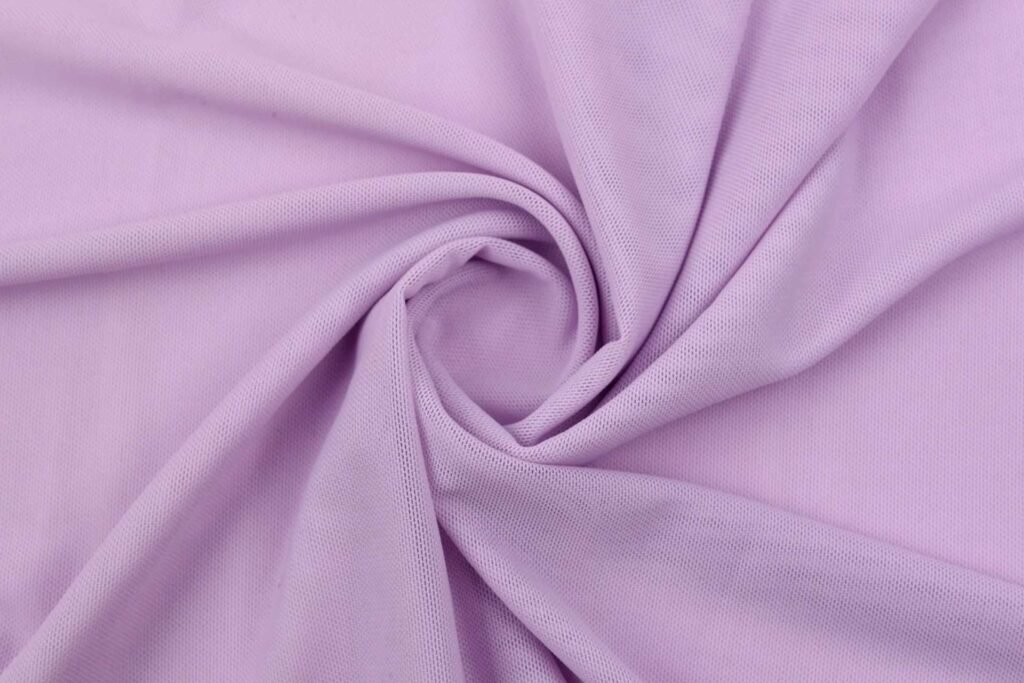
nylon spandex fabric
Why Nylon Spandex Outperforms Polyester Spandex
Nylon spandex and polyester spandex are both stretch fabrics used in activewear and swimwear — but they are not interchangeable. Understanding the specific advantages of nylon spandex over polyester spandex helps buyers justify the cost premium and specify correctly for their application.
Superior abrasion resistance Nylon has the highest abrasion resistance of any common apparel fiber — significantly higher than polyester at equivalent denier and construction. In activewear applications where fabric contacts skin, equipment, or surfaces repeatedly — yoga mats, gym equipment, seating surfaces, straps and buckles — nylon spandex fabric maintains its surface appearance significantly longer than polyester spandex. Premium activewear brands specify nylon spandex specifically because the fabric still looks new after 100+ wears where equivalent polyester spandex would show surface degradation.
Better stretch recovery over time Nylon fiber's molecular flexibility gives nylon spandex superior stretch recovery compared to polyester spandex — particularly after repeated washing and extended use. Nylon spandex garments maintain their close fit and shape retention through a garment's full service life; polyester spandex garments may gradually lose their shape-hugging fit as the polyester component's dimensional stability resists recovery from the spandex's elastic pull.
Chlorine resistance for swimwear This is nylon spandex's most decisive advantage in swimwear applications. Chlorinated pool water degrades polyester fiber significantly faster than nylon — polyester swimwear loses its stretch recovery, shape, and surface appearance measurably faster than nylon swimwear under equivalent pool use. For competitive and recreational swimwear worn in chlorinated water, nylon spandex is the correct specification. Polyester spandex swimwear is a cost-driven compromise that measurably underperforms nylon spandex in service life.
Softer, more luxurious hand feel Nylon fiber produces a noticeably softer, smoother, more skin-friendly surface than polyester at equivalent construction. This tactile quality is part of the value proposition of premium activewear and swimwear — consumers perceive nylon spandex garments as higher quality through direct skin contact, which supports premium pricing.
Nylon Spandex Composition Ratios — What the Numbers Mean
The ratio of nylon to spandex in the fabric blend determines stretch level, recovery strength, and cost. Standard commercial ratios serve different application requirements.
90% Nylon / 10% Spandex The most widely specified nylon spandex ratio globally — the industry standard for swimwear and premium activewear. 10% spandex provides significant 4-way stretch with excellent recovery while the high nylon content (90%) maximizes abrasion resistance, chlorine resistance, and surface durability. This ratio produces a fabric that stretches comfortably in all directions and recovers fully after each use.
Best for: competitive and recreational swimwear, yoga wear, fitted activewear, dance wear, performance leggings.
80% Nylon / 20% Spandex Higher spandex content for maximum stretch and compression performance. 20% spandex produces a fabric with significantly higher stretch percentage and compression force than 90/10 — used in compression garments, competitive swimwear requiring maximum hydrodynamic fit, and performance sportswear where body-hugging compression is a specification requirement.
Best for: compression shorts and tights, competitive swimwear, performance base layers, body-shaping garments.
85% Nylon / 15% Spandex Mid-point between 90/10 and 80/20 — balancing comfort stretch with moderate compression. Used in performance activewear where more stretch than standard 90/10 is required without the full compression of 80/20.
Best for: performance yoga wear, fitted athletic tops, mid-compression leggings.
95% Nylon / 5% Spandex Lower spandex content for applications requiring comfort stretch without significant compression force. The fabric has noticeable stretch and recovery but feels less compressive against the body — appropriate for fitted casual garments and activewear where comfort and ease of movement are prioritized over compression.
Best for: casual activewear, fitted leisure wear, light performance garments, swim cover-ups.
GSM Guide for Nylon Spandex Fabric
| GSM Range | Fabric Character | Best Applications |
|---|---|---|
| 80–120 GSM | Very lightweight, sheer, maximum stretch | Competitive swimwear, lightweight base layers, sheer activewear |
| 130–170 GSM | Lightweight, good stretch and recovery | Standard swimwear, yoga wear, fitted activewear tops |
| 180–220 GSM | Mid-weight, balanced compression and comfort | Performance leggings, fitted sports shorts, activewear bottoms |
| 230–280 GSM | Substantial, moderate compression | Compression tights, performance base layers, heavy activewear |
| 290–350 GSM | Heavy, high compression | Compression shorts, medical compression garments, heavy performance wear |
For swimwear production, 130–180 GSM is the most widely specified range — light enough for hydrodynamic performance without excess fabric weight in water. For activewear leggings, 180–220 GSM is the standard range — sufficient fabric weight for opacity and compression alongside comfortable stretch performance.
Knit Construction — Understanding Nylon Spandex Fabric Structure
Nylon spandex fabric is almost always produced as a knit construction — the looped yarn structure of knit fabric provides inherent multi-directional stretch that woven construction cannot match at equivalent spandex percentages.
Single jersey knit The basic knit construction for nylon spandex — one layer of looped yarn producing a lightweight fabric with good stretch in both directions. Single jersey nylon spandex is used in lightweight swimwear, activewear tops, and fitted casual garments. The fabric has a distinct face (smooth) and reverse (looped) side — garments are constructed with the face side out.
Double knit Two layers of interlocked knit construction producing a heavier, more structured fabric with better dimensional stability than single jersey. Double knit nylon spandex is used in performance leggings, compression garments, and heavier activewear where fabric weight and body are required alongside stretch performance.
Warp knit (Tricot) A specialized knit construction where yarns run lengthwise — producing a fabric with less stretch in the length direction than standard weft knit but excellent recovery and resistance to runs or laddering. Warp knit nylon spandex is widely used in swimwear and lingerie where fabric stability alongside stretch is required.
Jacquard knit Knit construction with woven-in patterns created through the knit structure itself — producing textured surface patterns in nylon spandex fabric for fashion activewear and premium swimwear where visual differentiation alongside performance is required.
Functional Finishes for Nylon Spandex Fabric
Standard nylon spandex fabric can be enhanced with functional finishes for specific performance requirements.
Moisture-wicking Draws perspiration from skin to fabric surface for evaporation — essential for activewear worn during sustained physical activity. Moisture-wicking finish on nylon spandex significantly improves wearer comfort in high-intensity activity compared to untreated fabric. Verify performance against AATCC 195 test standard.
UPF (Ultraviolet Protection Factor) Applied to nylon spandex swimwear and outdoor activewear to block UV radiation. UPF 50+ rating blocks 98%+ of UV — required for swimwear positioned as sun-protective and for outdoor activewear in high-UV exposure markets. Note that wet nylon spandex fabric has lower UPF than dry fabric — confirm wet UPF rating for swimwear applications.
Chlorine-resistant treatment Additional chlorine resistance treatment applied to standard nylon spandex for enhanced durability in pool environments. While nylon has inherently better chlorine resistance than polyester, additional treatment further extends swimwear service life for competitive and frequent recreational pool use.
Anti-bacterial / Anti-odor Applied to nylon spandex activewear to inhibit bacterial growth and associated odor from perspiration. Increasingly specified in premium activewear where odor management is a product selling point. Confirm durability through washing cycles before bulk production.
Printed nylon spandex Sublimation printing on nylon spandex fabric produces vivid, color-accurate prints with excellent wash durability — the print is absorbed into the fiber rather than sitting on the surface. Widely used in fashion swimwear, cycling wear, and performance activewear where custom print designs are part of the product identity.
Production Considerations for Nylon Spandex Fabric
Seam construction All seams in nylon spandex garments must use stretch-capable stitching — standard lock-stitch seams will break when the fabric stretches in wear. Flatlock seaming is the standard for activewear and swimwear — it produces a flat, comfortable seam without raised edges that could cause skin irritation during physical activity. Cover stitch is used for waistbands and hem finishing. Overlock seaming is appropriate for less critical seams.
Cutting Nylon spandex knit fabric curls at cut edges — allow fabric to relax flat on a non-slip cutting surface before cutting. Do not cut fabric under tension — stretched fabric will recover after cutting, producing pieces smaller than the pattern. Use sharp rotary cutters or die cutters for precise, clean cuts without edge distortion.
Pattern grading for stretch Build stretch allowance into pattern grading based on the fabric's specific stretch percentage. Higher spandex content requires more stretch allowance compensation. Test garment fit on a physical sample at the target GSM and spandex ratio before finalizing pattern grades.
Heat sensitivity Spandex fiber degrades under excessive heat — high-temperature pressing permanently damages elastane and causes the fabric to lose stretch recovery. Use low-temperature steam pressing only. Direct contact with a hot iron will melt or permanently distort nylon spandex fabric.
Sublimation printing Nylon spandex fabric requires specific sublimation printing parameters — lower temperature and pressure than polyester spandex to avoid heat damage to the spandex component. Confirm printing temperature specifications with your printing supplier before production runs on nylon spandex substrate.
Key Specifications to Confirm When Sourcing Nylon Spandex Fabric
| Specification | What to Confirm | Standard |
|---|---|---|
| Nylon / spandex ratio | Exact percentages, lab test confirmed | Per agreed spec |
| Knit construction | Single jersey, double knit, warp knit | Per application requirement |
| GSM | Physical sample weighing | ±5% tolerance |
| Stretch % — width | Extension under standard load | Per application requirement |
| Stretch % — length | Extension under standard load | Per application requirement |
| Stretch recovery | % recovery after extension | Minimum 90% |
| Chlorine resistance | For swimwear applications | Confirm test result |
| UPF rating | For sun-protective applications | UPF 50+ for maximum protection |
| Color fastness — washing | Grade rating | Minimum Grade 4 |
| Color fastness — light | UV stability | Minimum Grade 4 |
| Color fastness — chlorine | For swimwear | Minimum Grade 3–4 |
| Width | Usable width | Standard 150–160cm for knit |
| Functional finish | Moisture-wicking, anti-bacterial, UPF | Per application requirement |
| Certifications | OEKO-TEX Standard 100 | Per buyer requirement |
| MOQ | Per order type | 500m stock / 1,200m custom |
| Lead time | Stock vs custom | Stock: 3–5 days / Custom: 7–20 days |
Nylon Spandex vs Polyester Spandex — Direct Comparison
| Factor | Nylon Spandex | Polyester Spandex |
|---|---|---|
| Abrasion resistance | Excellent | Good |
| Stretch recovery over time | Excellent | Good — may degrade |
| Chlorine resistance | Good — swimwear suitable | Poor — degrades faster |
| Hand feel | Soft, smooth, premium | Good — varies by construction |
| Color fastness | Good | Excellent |
| UV resistance | Lower — needs treatment | Better — naturally UV stable |
| Drying speed | Medium | Fast |
| Cost | 15–30% higher | Lower |
| Sublimation printing | Compatible — lower temp required | Excellent — standard process |
| Best for | Swimwear, premium activewear, yoga | Standard activewear, budget sportswear |
Frequently Asked Questions — Nylon Spandex Fabric
Is nylon spandex better than polyester spandex for leggings? For premium leggings where abrasion resistance, long-term shape retention, and a luxurious hand feel are part of the product value proposition — yes, nylon spandex is better. For everyday and budget leggings where cost efficiency and color vibrancy are the primary drivers — polyester spandex delivers adequate performance at lower cost. The right choice depends on your product positioning and target price point.
What ratio of nylon to spandex is best for swimwear? 90% nylon / 10% spandex is the industry standard for competitive and recreational swimwear — providing the balance of stretch performance, chlorine resistance, and fabric durability that swimwear requires. For competitive swimwear requiring maximum compression and hydrodynamic fit, 80% nylon / 20% spandex increases compression force at the cost of slightly reduced fabric durability.
Can nylon spandex fabric be sublimation printed? Yes — nylon spandex accepts sublimation printing, but at lower temperature and pressure than polyester spandex to protect the spandex component from heat damage. Confirm printing parameters with your supplier before production. Print color vibrancy on nylon is slightly lower than on polyester at standard sublimation conditions — conduct print tests on the specific fabric before committing to bulk printed production.
How do I care for nylon spandex garments to maximize service life? Wash in cold water with mild detergent — avoid hot water which degrades spandex. Do not use bleach or fabric softener — bleach damages both nylon and spandex; fabric softener coats the fiber and reduces moisture-wicking performance. Air dry or tumble dry on low heat — high heat permanently damages spandex. For swimwear, rinse immediately after pool use to remove chlorine before it degrades the fiber.
What is the minimum order for wholesale nylon spandex fabric? Standard MOQ for stock nylon spandex fabric in regular colors is 500 meters per color. Custom color or pattern development requires 1,200 meters minimum. Free swatches available before bulk commitment — contact our team to confirm availability for your specific composition and GSM requirement.
Source Wholesale Nylon Spandex Fabric from XINGYE TEXTILE
XINGYE TEXTILE supplies wholesale nylon spandex fabric — 90/10, 85/15, 80/20, and 95/5 nylon-to-spandex ratios — in weights from 80 to 350 GSM, serving swimwear manufacturers, activewear brands, yoga wear producers, and performance sportswear buyers worldwide. Factory-direct pricing, MOQ from 500 meters for stock colors, free swatches available before bulk commitment.
Contact our sourcing team with your composition ratio, GSM, functional finish requirements, quantity, and destination for a formal quotation within 24 hours.
→ Browse Fabric for Activewear → Browse Fabric for Swimwear → Browse Nylon / Polyamide Fabric → Read: Nylon vs Polyester Fabric → Read: Elastane vs Spandex vs Lycra → Read: Is Spandex Stretchable? → Request a Free Swatch → Get a Wholesale Quote