Gabardine is the fabric that defined the modern trench coat — and understanding why requires looking at both the structural properties of the fabric and the specific performance demands of outerwear production. Invented by Thomas Burberry in 1879 and patented in 1888, gabardine was engineered from the start as a solution to a specific problem: creating a fabric that was simultaneously weatherproof, lightweight, breathable, and tailored enough for formal wear. Over 140 years later, gabardine remains the benchmark fabric for trench coats, structured outerwear, and formal overcoats — used in both its original wool form and in modern polyester, TR, and TC blend constructions that replicate its performance at accessible price points. This guide explains the structural reasons gabardine works so well for outerwear, how different fiber compositions affect performance, and what garment manufacturers need to specify when sourcing gabardine fabric for production.
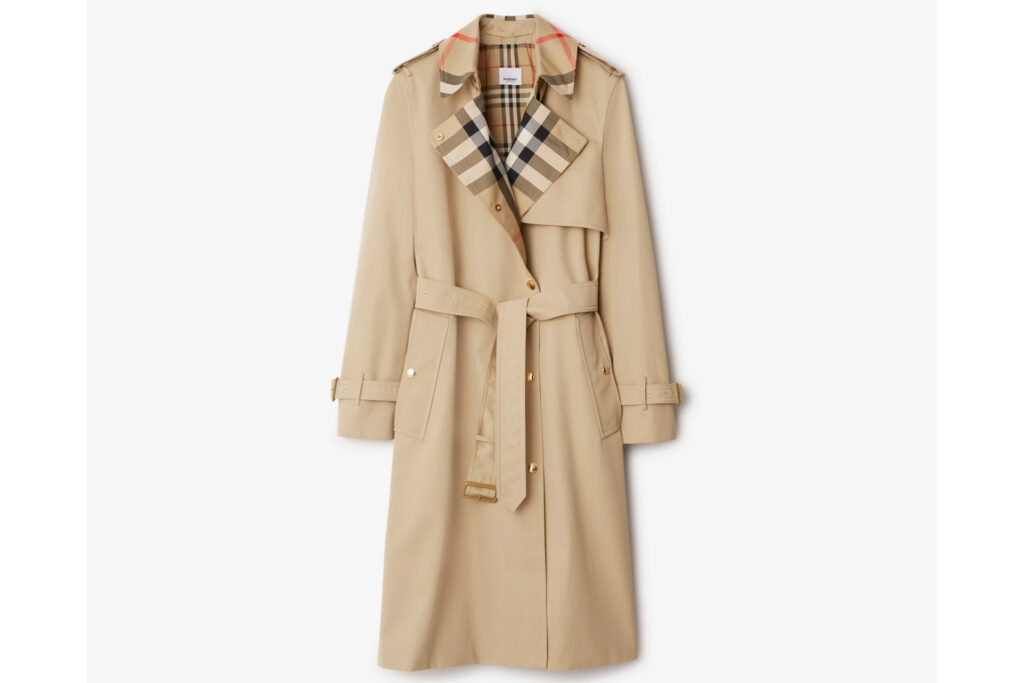
gabardine trenchcoat
What Is Gabardine Fabric?
Gabardine is a tightly woven twill fabric with a smooth, hard-finished surface and a characteristic fine diagonal rib on the face. It is defined by its construction rather than its fiber content — the same gabardine weave structure can be produced in wool, polyester, polyester-viscose blend, polyester-cotton blend, or synthetic-wool blends, each producing different performance profiles while sharing the same fundamental fabric character.
The defining construction characteristics of gabardine are:
Tight, high-thread-count weave. Gabardine is woven at significantly higher thread counts than standard twill fabrics at the same weight. This dense thread packing is what gives gabardine its characteristically smooth, hard surface — threads are packed so closely that the fabric surface feels almost polished compared to standard twill.
Fine diagonal rib — typically 2/2 or 3/1 twill. The twill weave produces a fine diagonal line on the face of the fabric, but gabardine's high thread count compresses this diagonal so it appears finer and more subtle than in standard twill. The diagonal angle in gabardine is typically steeper than standard twill — closer to 63 degrees — which contributes to the fabric's characteristic surface texture.
Hard, smooth face finish. After weaving, gabardine is finished under heat and pressure to produce a smooth, slightly sheen surface on the face side. This finish compresses the surface threads further, enhancing the fabric's natural water resistance and producing the polished appearance that distinguishes gabardine from standard dress wool or polyester twill.
Significant weight differential between face and reverse. The tight face construction makes gabardine's face side smooth and firm while the reverse is softer and slightly looser — a distinctive characteristic that aids in tailoring and allows the fabric to hold a clean pressed edge.
Why Gabardine Works for Trench Coats — The Structural Reasons
The trench coat has six specific performance requirements that no other fabric combination meets as effectively as gabardine. Understanding each requirement explains why gabardine has remained the definitive trench coat fabric for over a century.
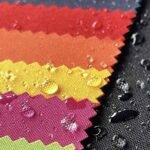
Water resistance without coating The tight weave of gabardine — with threads packed more densely than virtually any other woven fabric — creates a physical barrier against light rain that requires no waterproof coating. When water hits the face of a quality gabardine fabric, the surface tension of water combined with the tight thread packing causes it to bead and run off rather than penetrating the weave. This inherent water resistance — without the weight or stiffness of a coated fabric — was Burberry's original innovation and remains gabardine's most important outerwear property.
Structured drape for tailored silhouette Trench coats require a fabric that holds a structured, tailored silhouette — the characteristic shoulder line, belt, and collar that define the garment. Gabardine's high thread count and hard finish give it significantly more body and structure than equivalent weight dress fabrics, allowing tailors to create and maintain precise shapes without heavy interfacing. The fabric holds a pressed crease cleanly and returns to shape after movement — essential for a garment worn open and belted.
Breathability for active wear The original gabardine trench coat was designed for military use — worn during sustained physical activity in wet conditions. Unlike rubberized or waxed cotton outerwear of the same era, gabardine remained breathable because it relied on tight weave construction rather than impermeable coating for water resistance. Moisture vapor from perspiration could still escape through the fabric, preventing the internal condensation that made other waterproof outerwear of the period uncomfortable.
Lightweight relative to warmth and protection Gabardine delivers its weather protection at significantly lower weight than the wool overcoat or rubberized rainwear it replaced. A quality gabardine trench coat in 280–320 GSM is substantially lighter than an equivalent warm wool overcoat — a critical advantage for a coat intended for travel and active use.
Smooth surface for rain runoff The smooth, hard-finished face of gabardine causes rain to run off the surface rather than being absorbed by fiber — unlike matte-finish wools or cotton canvas that absorb moisture and become heavy when wet. This surface property works in combination with the tight weave to produce effective rain resistance without coating.
Durability and shape retention through extended wear Trench coats are long-term investment garments. Gabardine's tight construction resists snagging, pilling, and surface wear significantly better than looser woven fabrics at the same weight. The hard finish maintains the fabric's appearance through years of wear, cleaning, and exposure to weather — which is why original Burberry gabardine trench coats from decades ago can still be found in wearable condition.
Gabardine Fabric by Fiber Composition — Performance Comparison
Modern gabardine fabric is produced in four main fiber compositions, each suited to different performance requirements, price points, and end markets.
100% Polyester Gabardine The most widely produced gabardine composition for volume outerwear and uniform production. Pure polyester gabardine delivers excellent dimensional stability, wrinkle resistance, color retention, and wash durability at the lowest cost per meter of the four options. The hard finish and tight weave of polyester gabardine replicates the surface character of wool gabardine effectively — the smooth face, fine diagonal rib, and structured drape are all present in quality polyester gabardine constructions.
Trade-offs versus wool: lower breathability than natural fiber gabardine, slightly more synthetic hand feel, and no natural temperature regulation. For volume outerwear production — uniform trench coats, corporate outerwear programs, institutional overcoats — polyester gabardine delivers the necessary performance at commercial price points.
Best for: uniform trench coats, institutional outerwear, volume corporate wear, cost-sensitive commercial production. GSM range: 180–380 GSM.
TR Gabardine (Polyester-Viscose Blend) TR gabardine — typically 65/35 or 80/20 polyester-to-viscose — combines the dimensional stability of polyester with the soft drape and surface sheen of viscose. The viscose component gives TR gabardine a noticeably more luxurious hand feel and fluid drape than pure polyester, producing a fabric that more closely approximates the quality feel of wool gabardine without the cost. TR gabardine is the standard specification for mid-market trench coats, structured blazers, and outerwear where quality appearance and comfortable wear are both required.
Best for: mid-market trench coats, structured outerwear, commercial blazers, formal uniform overcoats. GSM range: 200–320 GSM.
TC Gabardine (Polyester-Cotton Blend) TC gabardine blends polyester and cotton — typically 65/35 — to add breathability and natural fiber comfort to the gabardine construction. TC gabardine is more breathable than pure polyester or TR, with better moisture absorption for comfortable extended wear. The trade-off is slightly less smooth surface finish than TR gabardine and lower wrinkle recovery than pure polyester.
Best for: casual outerwear, workwear jackets, transitional season coats, applications where breathability and natural fiber content are priorities alongside structured appearance. GSM range: 200–300 GSM.
Wool Blend Gabardine The premium end of the gabardine spectrum. Wool-polyester blend gabardine — typically 55/45 or 60/40 wool-to-polyester — delivers natural temperature regulation, a distinctive hand feel, and the prestige of natural fiber content alongside improved dimensional stability over pure wool. True wool gabardine (80%+ wool content) is the original and most premium construction — used in luxury trench coats, high-end outerwear collections, and premium uniform programs where natural fiber credentials and superior hand feel justify the cost premium.
Best for: premium trench coat collections, luxury outerwear, high-end corporate uniform overcoats, fashion outerwear where natural fiber positioning is part of the product identity. GSM range: 240–380 GSM. MOQ: 2,000 meters minimum for wool blend constructions.
Gabardine Fabric GSM Guide for Outerwear Production
GSM selection for gabardine outerwear fabric determines drape, structure, warmth, and tailoring behavior. The wrong GSM produces a garment that either lacks structure (too light) or becomes uncomfortable and difficult to tailor (too heavy).
| GSM Range | Fabric Character | Best Outerwear Applications |
|---|---|---|
| 180–230 GSM | Lightweight, fluid drape | Lightweight summer trench coats, transitional season jackets, warm-climate outerwear |
| 240–290 GSM | Mid-weight, balanced structure | Standard trench coats, year-round structured outerwear, formal overcoats |
| 300–380 GSM | Heavyweight, maximum structure | Winter trench coats, heavy formal overcoats, cold-climate outerwear |
For the majority of commercial trench coat and structured outerwear production, 240–290 GSM gabardine covers the standard specification range. Lighter weights for warm-climate and transitional season markets; heavier weights for winter and cold-climate programs.
Always verify GSM on a physical sample before bulk order confirmation — supplier tolerance is typically ±5%.
Gabardine Beyond Trench Coats — Full Application Range
While the trench coat is gabardine's most famous application, the fabric's structural properties make it appropriate across a broader range of formal and structured garment categories.
Suits and Formal Trousers Gabardine's smooth surface, structured drape, and wrinkle resistance make it well-suited to suit jacket and formal trouser production. Gabardine suits have a clean, polished appearance — the smooth face reflects light differently from textured twills, giving gabardine suiting a distinctive formal character. TR and wool blend gabardine at 220–280 GSM are the most common specifications for suiting applications.
Uniform Overcoats and Formal Uniform Jackets Military, security, diplomatic, and institutional uniform programs frequently specify gabardine for formal overcoats and dress uniform jackets — the fabric's structured drape, durability, and formal appearance make it appropriate for ceremonial and high-visibility uniform applications. Polyester and TR gabardine at 260–320 GSM are standard for institutional uniform overcoat programs.
Corporate and Workwear Outerwear Corporate uniform programs requiring a professional overcoat or structured jacket for client-facing staff specify TR or polyester gabardine for its combination of professional appearance, easy care, and competitive pricing for volume orders.
Casual Outerwear and Fashion Jackets Lighter weight gabardine at 180–230 GSM is increasingly specified in fashion outerwear and casual structured jacket production — the clean surface and subtle texture of gabardine offer a distinctive aesthetic compared to standard twill or plain weave outerwear fabrics.
Key Specifications to Confirm When Sourcing Gabardine Fabric
| Specification | What to Confirm | Typical Standard |
|---|---|---|
| Fiber composition | Exact percentages, confirmed by lab test | Per agreed spec |
| Twill construction | 2/2 or 3/1 twill, diagonal angle | Per design requirement |
| GSM | Physical sample weighing | ±5% tolerance |
| Width | Usable width after selvage | 57–59' from 60' roll |
| Surface finish | Hard finish, degree of sheen | Confirm against approved sample |
| Color fastness — washing | Grade rating | Minimum Grade 4 |
| Color fastness — rubbing | Dry and wet rub | Minimum Grade 3–4 |
| Shrinkage | Warp and weft after standard wash | ≤3% for synthetic blends |
| Wrinkle recovery | For TR and polyester gabardine | Confirm against test report |
| Certifications | OEKO-TEX, GRS, GOTS where required | Per buyer requirement |
| MOQ | Per composition and order type | See below |
| Lead time | Stock vs custom | Stock: 3–5 days / Custom: 20–30 days |
MOQ by Order Type:
| Order Type | MOQ |
|---|---|
| Stock gabardine, standard colors | 500 meters per color |
| Custom color development | 1,200–2,000 meters per color |
| Wool blend gabardine | 2,000 meters minimum |
Frequently Asked Questions — Gabardine Fabric
Is gabardine naturally waterproof? Gabardine is naturally water resistant — not waterproof in the technical sense. The tight weave construction causes water to bead and run off the surface under light rain conditions without penetrating the fabric. Under sustained heavy rain or direct water pressure, gabardine will eventually wet through — it relies on weave tightness rather than a continuous coating barrier for water resistance. For outerwear requiring full waterproof performance in heavy rain, a DWR finish applied to gabardine significantly enhances its rain resistance without adding weight or stiffness.
What is the difference between gabardine and regular twill? Both are twill weave constructions, but gabardine is distinguished by its significantly higher thread count, harder surface finish, and finer diagonal rib. Standard twill fabric has visible diagonal lines and a softer, more textured surface. Gabardine has a compressed, almost smooth surface where the diagonal is subtle — produced by the higher thread density and finishing process. At equivalent fiber composition and weight, gabardine has more body, better water resistance, and a more formal appearance than standard twill.
Is polyester gabardine as good as wool gabardine? For practical performance in commercial outerwear production — wrinkle resistance, dimensional stability, wash durability, and cost efficiency — polyester and TR gabardine outperform wool gabardine. For hand feel, breathability, natural temperature regulation, and premium positioning, wool gabardine is superior. The right choice depends on your end market, price point, and whether natural fiber credentials are part of your product positioning. Most commercial and uniform outerwear production specifies polyester or TR gabardine; premium fashion and luxury uniform programs specify wool or wool-blend gabardine.
What GSM is standard for a trench coat? 240–290 GSM is the standard range for year-round trench coat production. Lightweight trench coats for warm climates or transitional season use specify 180–230 GSM. Winter-weight trench coats and heavy formal overcoats use 300–380 GSM. Always verify GSM on a physical sample — the structured drape and hand feel of gabardine at 240 GSM versus 280 GSM is a meaningful quality difference that a spec sheet alone cannot communicate.
Can gabardine fabric be custom dyed? Yes. We support custom color development for polyester, TR, and TC gabardine with lab dip approval before bulk production. Custom color development requires 1,200–2,000 meters minimum order depending on composition. Stock colors are available from 500 meters per color with 3–5 day sample lead time. Wool blend gabardine custom development requires 2,000 meters minimum.
What is the minimum order for wholesale gabardine fabric? Standard MOQ for stock gabardine in regular colors is 500 meters per color. Custom color development: 1,200–2,000 meters per color depending on composition. Wool blend gabardine: 2,000 meters minimum. Free swatches and color cards are available — contact our team to request samples before bulk commitment.
Source Wholesale Gabardine Fabric from XINGYE TEXTILE
XINGYE TEXTILE supplies wholesale gabardine fabric — 100% polyester, TR (polyester-viscose), TC (polyester-cotton), and wool blend compositions — in weights from 180 to 380 GSM, serving trench coat manufacturers, outerwear brands, uniform contractors, and wholesale fabric buyers worldwide. Factory-direct pricing, MOQ from 500 meters for stock colors, free swatches available before bulk commitment.
Contact our sourcing team with your composition requirement, GSM, quantity, and destination — we will provide a formal quotation and physical sample within 24 hours.
→ Browse Our Full Fabric Range → Browse Fabric for Suits → Browse TR Fabric — Polyester Viscose → Browse Fabric for Uniforms → Read: What Is a Twill Suit? → Read: What Type of Fabric Is Twill? → Request a Free Swatch → Get a Wholesale Quote