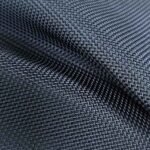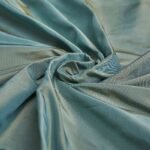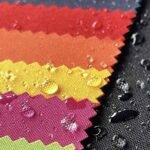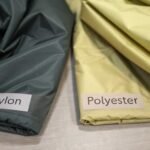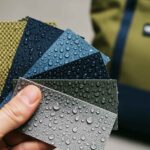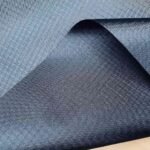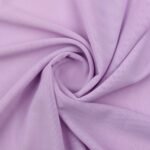
Nylon fabric is not a single material — it is a broad category of woven and knit textiles produced from polyamide fiber across dozens of constructions, weights, finishes, and blend compositions. A 150D nylon taffeta down jacket shell and a 1680D ballistic nylon tactical bag panel are both 'nylon fabric' — but they share almost no practical specifications in common. Choosing the right type of nylon fabric for your application requires understanding which construction, denier, and finish combination matches your product's performance requirements, production process, and price point. This guide covers every major nylon fabric type available for commercial garment and product manufacturing — with specifications, applications, and links to detailed sourcing guides for each category.
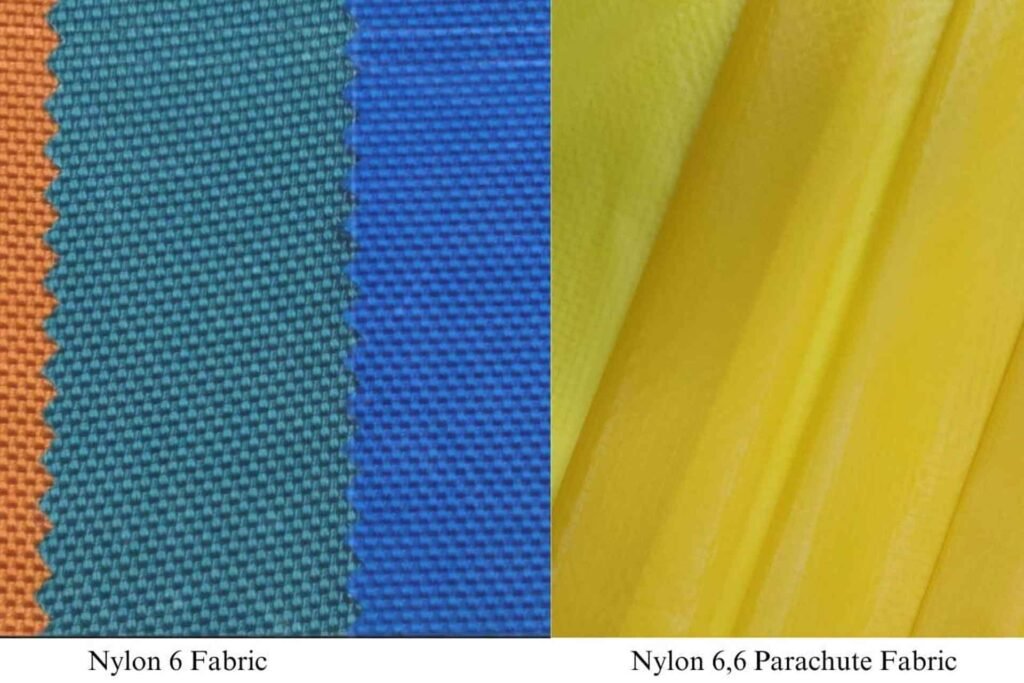
Types of Nylon Fabric
Nylon Taffeta — Lightweight Shell and Lining Fabric
Nylon taffeta is a lightweight plain weave fabric with a smooth, slightly crisp surface and characteristic subtle sheen. It is the standard shell fabric for down jackets, sleeping bags, rainwear, umbrellas, and packable outdoor equipment — combining low weight (40–85 GSM across 150D–210D denier range) with smooth surface finish and full compatibility with DWR, PU coating, and TPU laminate waterproof finishing.
Key specifications:
- Denier range: 150D, 170D, 190D, 210D
- GSM range: 40–85 GSM
- Available finishes: DWR, PU coating, TPU laminate, calendar, down-proof, anti-static
- Waterproof rating: 500–8,000 mmH₂O depending on finish
Primary applications: Down jackets and padded outerwear, sleeping bags, rain jackets, umbrellas, jacket lining, packable bags and stuff sacks, tent lining.
Why specify nylon taffeta over polyester taffeta: Better abrasion resistance, softer hand feel, and superior mechanical durability at equivalent weight. For down jacket shells and premium outerwear, nylon taffeta is the industry standard specification.
→ Full Guide: Nylon Taffeta Fabric
Nylon Oxford — Structured Bag and Outerwear Fabric
Nylon Oxford fabric uses the basket weave construction — multiple warp and weft threads interlacing as paired units — to produce a structured, durable fabric with the characteristic crosshatch surface texture of Oxford weave. Nylon Oxford is the premium base fabric for bags, backpacks, and outdoor equipment where abrasion resistance and structural rigidity are the primary specification requirements alongside waterproof coating compatibility.
Key specifications:
- Denier range: 210D, 420D, 600D, 840D
- GSM range: 85–330 GSM
- Available coatings: DWR, PU coating, TPU laminate
- Waterproof rating: 500–10,000 mmH₂O depending on coating
Primary applications: Premium backpacks and everyday bags, technical outdoor packs, waterproof laptop bags, tactical bags, outdoor garment shells, workwear.
Why specify nylon Oxford over polyester Oxford: At equivalent denier, nylon Oxford delivers better abrasion resistance, lighter finished weight, and a softer surface texture — the reasons premium bag brands specify nylon Oxford at a 15–30% cost premium over polyester equivalents.
→ Full Guide: Waterproof Nylon Fabric → Full Guide: Best Waterproof Fabric for Bags
Nylon Spandex — Stretch Fabric for Activewear and Swimwear
Nylon spandex fabric blends nylon fiber with elastane (spandex) — typically at 90/10, 85/15, or 80/20 nylon-to-spandex ratios — to produce a knit stretch fabric combining nylon's abrasion resistance and hand feel with spandex's elastic recovery. Nylon spandex is the premium stretch fabric for swimwear, yoga wear, fitted activewear, and performance sportswear.
Key specifications:
- Composition: 90/10, 85/15, 80/20, 95/5 nylon-to-spandex
- GSM range: 80–350 GSM
- Construction: single jersey, double knit, warp knit
- Stretch: 4-way stretch, 90%+ recovery
Primary applications: Competitive and recreational swimwear, yoga wear, performance leggings, fitted activewear tops, dance wear, compression garments.
Why specify nylon spandex over polyester spandex: Nylon spandex delivers superior abrasion resistance, better long-term stretch recovery, significantly better chlorine resistance for swimwear, and a softer, more premium hand feel. For swimwear and premium activewear, nylon spandex is the correct specification. For everyday activewear at lower cost, polyester spandex is the alternative.
→ Full Guide: Nylon Spandex Fabric
Ballistic Nylon — Maximum Durability Fabric
Ballistic nylon is a heavy-duty, high-denier nylon fabric woven in a 2×2 basket weave construction — originally developed for military fragmentation protection, now specified in premium bags, tactical equipment, motorcycle protective clothing, and industrial applications where the absolute limits of fabric abrasion resistance and tensile strength are required.
Key specifications:
- Denier range: 840D, 1050D, 1260D, 1680D
- GSM range: 220–450 GSM
- Base polymer: Nylon 6 (commercial) or Nylon 66 (military grade)
- Tensile strength: 3,000–4,500N warp and weft
- Tear strength: 80–150N
- Available coatings: PU, TPU, PVC, FR
Primary applications: Tactical backpacks and military bags, premium laptop and professional bags, motorcycle protective clothing, heavy-duty outdoor gear, industrial equipment covers, chainsaw protective trousers.
Why specify ballistic nylon: No other commercial fabric construction delivers equivalent tensile strength, tear strength, and abrasion resistance at any price point. For applications where maximum fabric mechanical performance is a non-negotiable specification requirement, ballistic nylon is the only correct choice.
→ Full Guide: Ballistic Nylon Fabric
Waterproof Nylon Fabric — Coated and Laminated Constructions
Waterproof nylon fabric covers a range of constructions — taffeta, Oxford, ripstop, and plain weave nylon base fabrics with DWR treatment, PU coating, or TPU laminate applied for waterproof performance. The base construction determines weight, drape, and abrasion resistance; the coating determines waterproof performance level and breathability.
Key specifications:
- Base denier: 210D–840D depending on application
- Coating: DWR (500–1,200 mmH₂O), PU (2,000–5,000 mmH₂O), TPU (5,000–10,000 mmH₂O)
- Breathability: 2,000–8,000 g/m²/24h depending on coating type
- GSM range: 85–400 GSM finished weight
Primary applications: Outdoor shell jackets, rain jackets, workwear, technical bags, tent fly fabric, dry bags, medical protective clothing.
Why specify waterproof nylon over waterproof polyester: Better abrasion resistance, softer hand feel, lighter finished weight at equivalent denier, and better cold-weather flexibility. For premium outdoor garments and technical bags, nylon base waterproof fabric consistently outperforms polyester equivalents in service life and performance.
→ Full Guide: Waterproof Nylon Fabric → Full Guide: What Is Waterproof Fabric?
Nylon vs Polyester — Choosing the Right Base Fiber
Many buyers approach nylon fabric selection by first asking whether nylon or polyester is the right base fiber for their application. The answer is application-specific — nylon and polyester are not interchangeable, and each has specific advantages that make it the correct choice for different product categories.
Choose nylon when:
- Abrasion resistance is a primary specification requirement (bags, outdoor garments, activewear)
- Chlorine resistance is required (swimwear)
- Soft, premium hand feel is part of the product value proposition (premium activewear, technical outerwear)
- Lightweight construction at functional strength is critical (down jackets, packable gear)
- Cold-weather flexibility is required (winter outdoor garments)
Choose polyester when:
- UV resistance is the primary requirement (outdoor furniture, curtains, UV-exposed applications)
- Color fastness through repeated washing is critical (workwear, uniforms)
- Cost efficiency is the primary driver (standard commercial applications)
- Sublimation printing is required (printed sportswear, promotional products)
- Dimensional stability through washing is the priority (uniforms, formal garments)
→ Full Comparison: Nylon vs Polyester Fabric
Nylon Fabric Functional Finishes — What's Available
Beyond the base construction, nylon fabric can be enhanced with a range of functional finishes that expand its application range. Most finishes are applied at fabric production stage — they cannot be added effectively after garment manufacturing.
| Finish | What It Does | Applications |
|---|---|---|
| DWR | Water beading surface treatment | Down jackets, rain protection, packable gear |
| PU Coating | Continuous waterproof barrier | Rain jackets, bags, tents, outdoor equipment |
| TPU Laminate | High-performance waterproof + breathable | Premium outdoor jackets, dry bags, medical |
| Down-proof | Closes weave gaps to prevent feather migration | All down jacket and sleeping bag shells |
| Calendar | Ultra-smooth surface finish | Umbrella fabric, lining, fashion outerwear |
| Anti-static | Prevents electrostatic buildup | Lining fabric, cleanroom, electronics workwear |
| FR (Flame Retardant) | Fire resistance | Military, industrial, safety applications |
| Moisture-wicking | Moves sweat from skin to fabric surface | Activewear, performance sportswear |
| UPF | UV radiation blocking | Swimwear, outdoor sun-protection garments |
| Antimicrobial | Inhibits bacterial growth and odor | Activewear, medical, hospitality |
Nylon Fabric Selection Guide — Application to Specification
| Application | Recommended Nylon Type | Denier | Finish | GSM |
|---|---|---|---|---|
| Down jacket shell | Nylon taffeta | 190D–210D | Down-proof + DWR | 60–85 GSM |
| Ultralight down jacket | Nylon taffeta | 150D–170D | Down-proof + DWR | 40–65 GSM |
| Rain jacket | Nylon taffeta / Oxford | 190D–420D | PU or TPU | 130–230 GSM |
| Everyday backpack | Nylon Oxford | 420D–600D | PU coating | 200–280 GSM |
| Technical outdoor pack | Nylon Oxford | 420D | TPU laminate | 200–230 GSM |
| Premium laptop bag | Ballistic / Oxford nylon | 840D–1050D | PU or TPU | 280–380 GSM |
| Tactical bag | Ballistic nylon | 1050D–1680D | PU or TPU | 320–450 GSM |
| Swimwear | Nylon spandex | 90/10 ratio | None / UPF | 130–180 GSM |
| Yoga wear / leggings | Nylon spandex | 90/10–85/15 | Moisture-wicking | 180–250 GSM |
| Jacket lining | Nylon taffeta | 150D–190D | Anti-static | 40–75 GSM |
| Umbrella | Nylon taffeta | 190D–210D | Calendar + DWR | 70–85 GSM |
| Motorcycle protection | Ballistic nylon | 1050D–1680D | PU or uncoated | 300–450 GSM |
Wholesale Nylon Fabric — MOQ and Sample Policy
Standard MOQ by Fabric Type:
| Nylon Fabric Type | Stock Colors MOQ | Custom Dyeing MOQ |
|---|---|---|
| Nylon taffeta | 500m per color | 1,200–1,800m per color |
| Nylon Oxford (waterproof) | 500m per color | 1,500–2,000m per color |
| Nylon spandex | 500m per color | 1,200m per color |
| Ballistic nylon | 1,000m per color | 1,500–2,000m per color |
Sample policy: Free A4 swatches and color cards for all nylon fabric types, courier at buyer's expense. Cut yard samples available with nominal charge, fully deductible from bulk order. Standard sample lead time 3–5 business days; custom finish or dyeing 6–10 business days.
Frequently Asked Questions — Types of Nylon Fabric
What is the most durable type of nylon fabric? Ballistic nylon at 1050D–1680D is the most mechanically durable commercial nylon fabric — with tensile strength of 3,000–4,500N and tear strength of 80–150N. For bag and tactical equipment applications where maximum durability is the specification requirement, ballistic nylon has no commercial equivalent. For garment applications where extreme abrasion resistance is needed without ballistic nylon's weight and rigidity, 420D–600D nylon Oxford with PU coating is the most durable practical specification.
What type of nylon fabric is used for activewear? Nylon spandex knit fabric — typically 90% nylon / 10% spandex — is the standard for premium activewear and swimwear. The knit construction provides inherent multi-directional stretch; the spandex component adds elastic recovery. For standard activewear at lower cost, polyester spandex is the alternative — but for swimwear, premium yoga wear, and fitted performance garments, nylon spandex consistently outperforms polyester spandex in abrasion resistance, stretch recovery, and chlorine resistance.
What type of nylon fabric is best for bags? 420D nylon Oxford with PU coating is the most widely specified nylon fabric for everyday backpacks and travel bags. For premium and technical outdoor packs, 420D nylon with TPU laminate provides higher waterproof performance and enables seamless RF-welded construction. For maximum durability in tactical and heavy-duty bag applications, 1050D or 1680D ballistic nylon is the correct specification. The right choice depends on the bag's intended use, durability requirement, and price point.
Is nylon or polyester better for outdoor fabric? For outdoor garments where abrasion resistance, soft hand feel, and lightweight construction are priorities — nylon is better. For outdoor applications with sustained UV exposure — outdoor furniture, UV-protection garments, items stored in sunlight — polyester is better due to its superior UV stability. For waterproof outdoor fabric, nylon base constructions outperform polyester in abrasion resistance and cold-weather flexibility; polyester base is the cost-effective alternative for standard commercial outdoor applications.
What is the minimum order for wholesale nylon fabric? MOQ varies by nylon fabric type — 500 meters per color for stock nylon taffeta, Oxford, and spandex fabrics; 1,000 meters for ballistic nylon. Custom dyeing and functional finishing requires higher MOQ depending on fabric type. Free swatches available for all types — contact our team to confirm availability and pricing for your specific requirement.
Source Wholesale Nylon Fabric from XINGYE TEXTILE
XINGYE TEXTILE supplies wholesale nylon fabric across all major types and constructions — nylon taffeta, nylon Oxford, nylon spandex, ballistic nylon, and waterproof nylon laminates — serving down jacket manufacturers, activewear brands, bag producers, outdoor equipment buyers, and tactical gear manufacturers worldwide. Factory-direct pricing, flexible MOQ from 500 meters, free swatches available before bulk commitment.
Contact our sourcing team with your application, fabric type requirement, denier, finish specification, quantity, and destination for a formal quotation within 24 hours.
→ Browse Nylon / Polyamide Fabric → Browse Fabric for Activewear → Browse Fabric for Swimwear → Browse Fabric for Bags → Read: Nylon vs Polyester Fabric → Read: Is Nylon Fabric Breathable? → Request a Free Swatch → Get a Wholesale Quote