The Honest Answer: It's Better Than Virgin Polyester, But It's Not the Solution You Think It Is
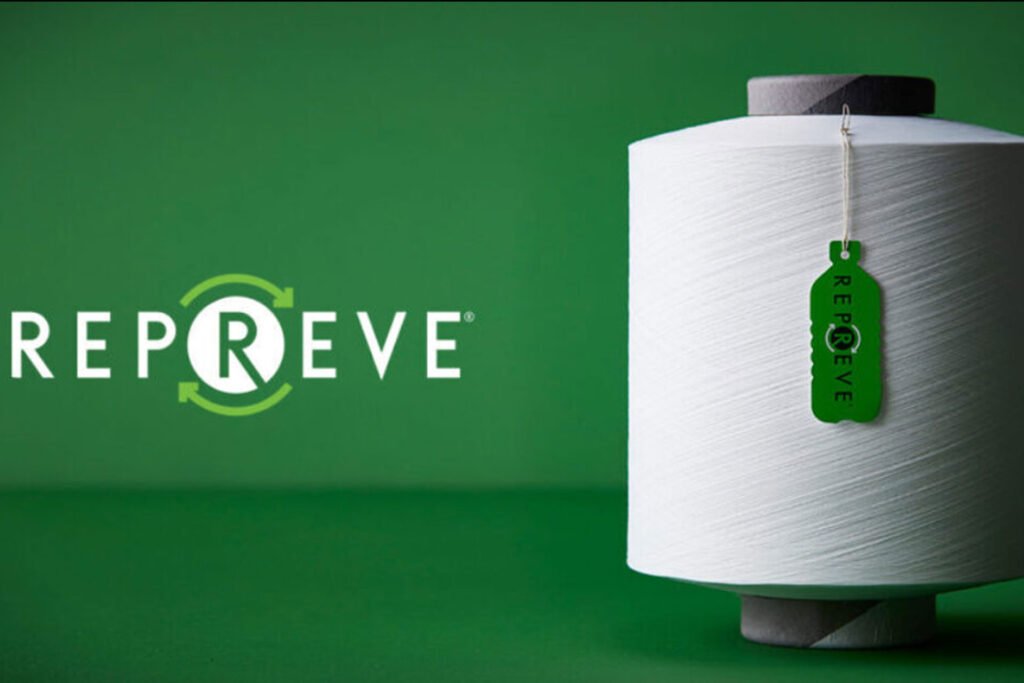
Recycled polyester sounds like a perfect solution. Take plastic bottles that would otherwise sit in a landfill, turn them into fabric, and suddenly your uniform or jacket has a sustainability story. Brands love it. Consumers feel good about it. Repreve alone has diverted 35 billion bottles from waste streams.
But there's a gap between the marketing story and the material reality. Recycled polyester does reduce carbon footprint. It does keep plastic out of the ocean. It also still sheds microplastics, still has a finite recycling lifespan, and — in its current form — does not solve the end-of-life problem for synthetic garments.
This article is not a takedown of recycled polyester. We manufacture recycled-content fabrics ourselves. But the question 'Is it actually sustainable?' deserves an honest answer, not a brochure.
Short answer: Recycled polyester is the least-bad option for synthetic fabric today. Whether that qualifies as 'sustainable' depends on what you're comparing it to.
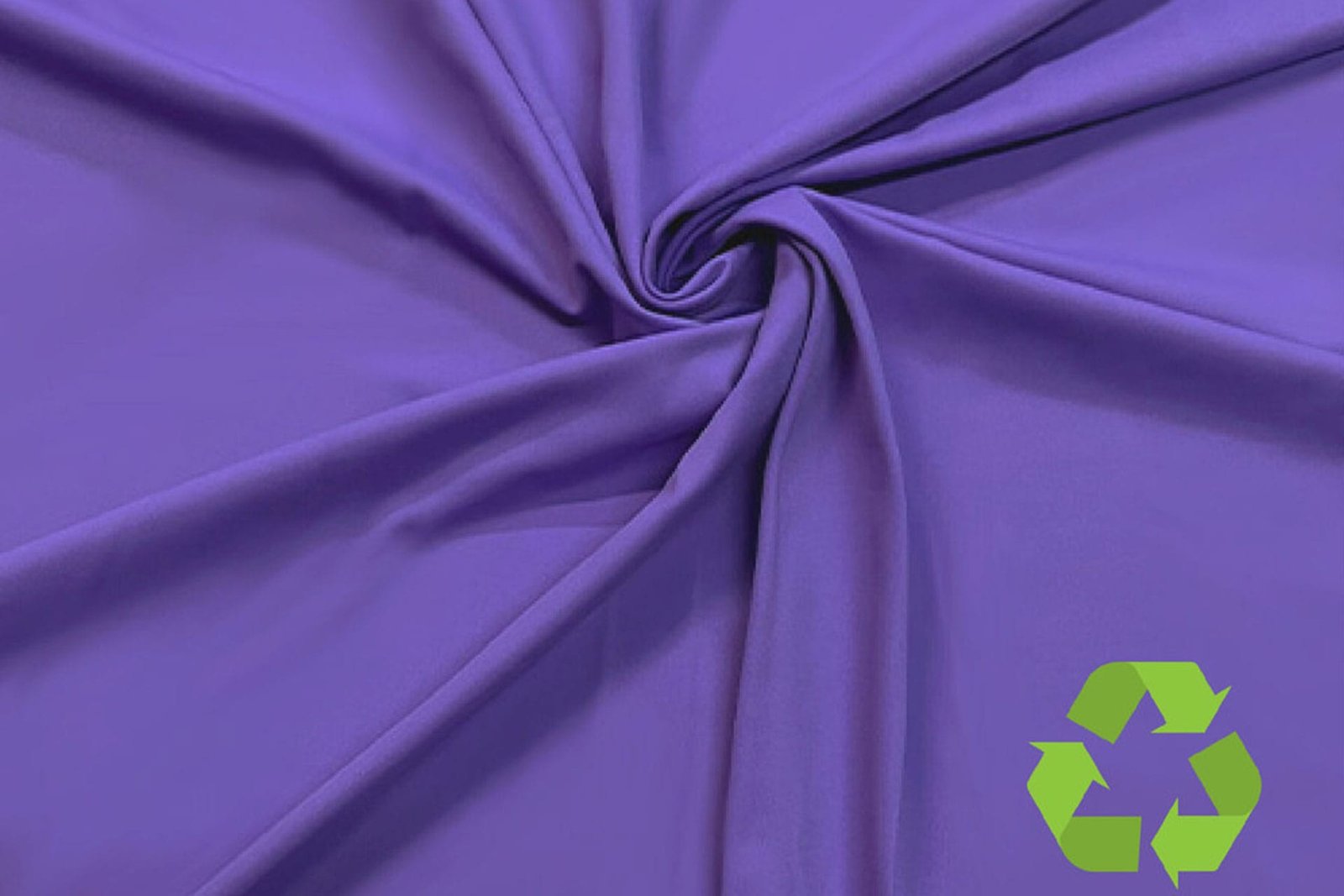
is recycled polyester sustainable
What Recycled Polyester Actually Is
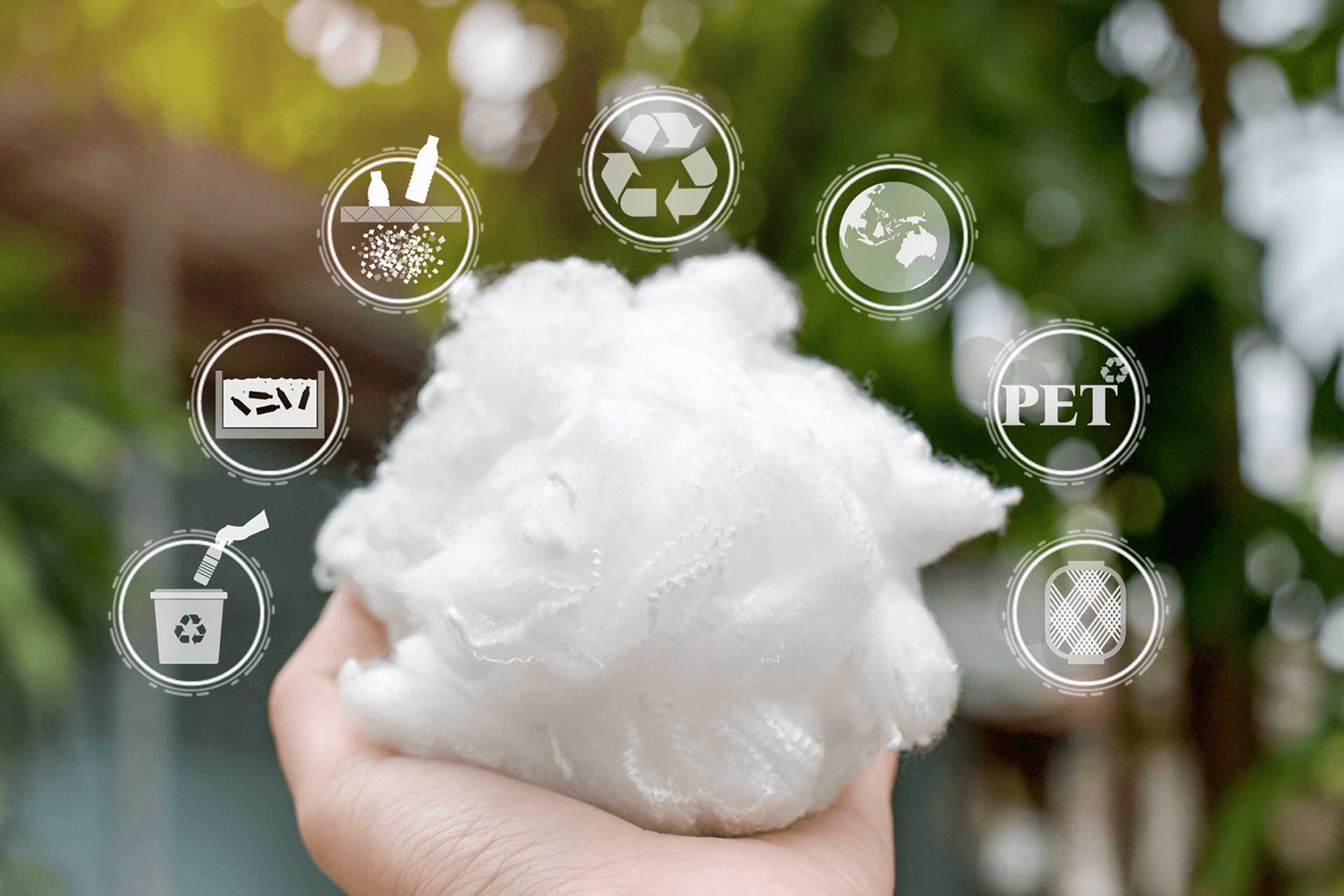
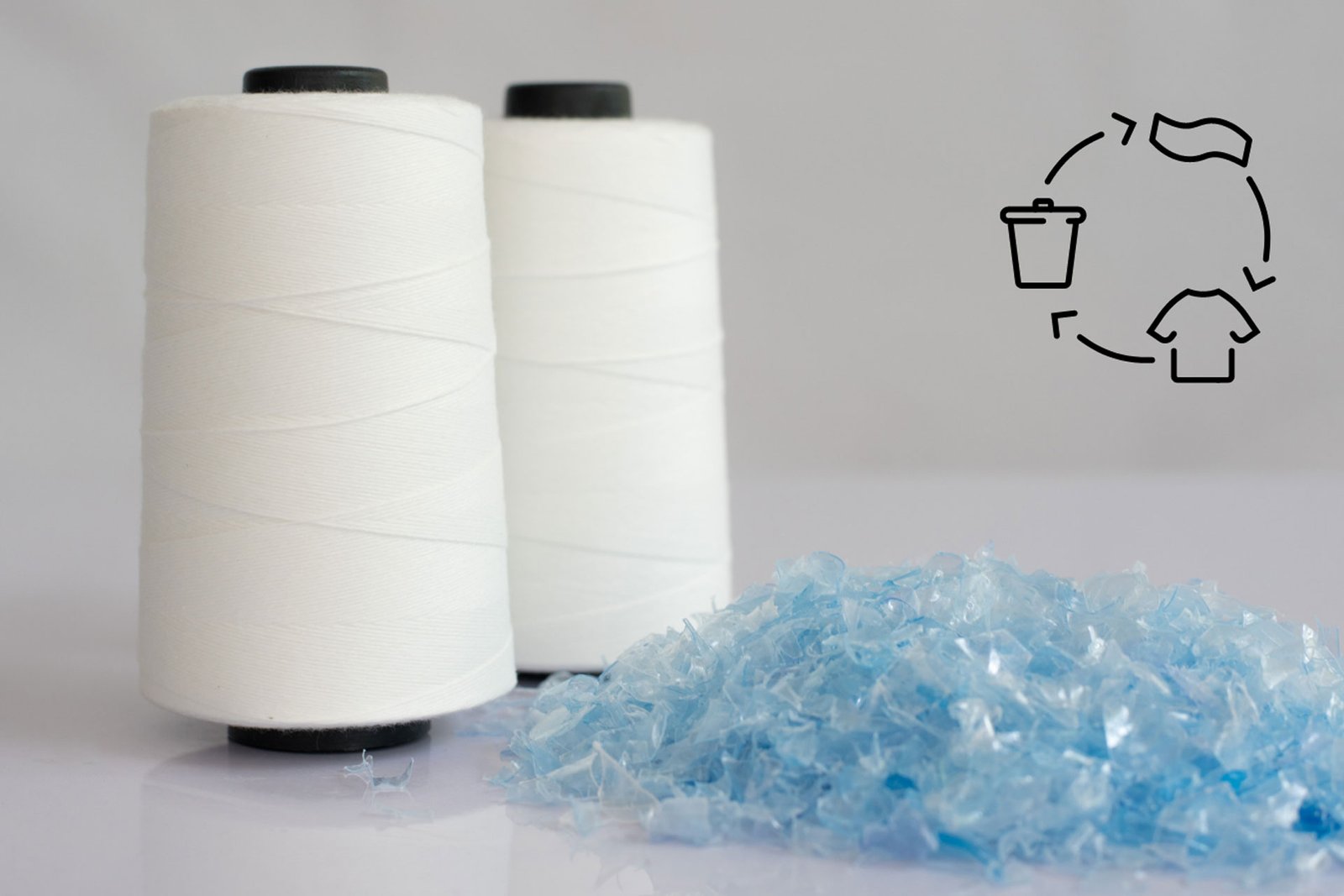
Recycled polyester (rPET) is made from existing plastic — typically PET bottles — rather than virgin petroleum. The most common process is mechanical recycling:
- Collection — PET bottles are gathered, sorted, and cleaned
- Shredding — Bottles are crushed into flakes
- Melting and pelletizing — Flakes are melted and extruded into small pellets
- Fiber spinning — Pellets are melted again and spun into polyester filament or staple fiber
The result is a fiber that is chemically identical to virgin polyester. The same polymer. The same performance characteristics. The same durability, wrinkle resistance, and wash performance.
The difference is in the starting point. Virgin polyester starts with crude oil. rPET starts with a bottle that already exists.
The Case for Recycled Polyester
Energy and CO₂ — Genuinely Better
Life-cycle assessments are consistent across multiple studies. Compared to virgin polyester:
| Metric | Virgin Polyester | Recycled Polyester (rPET) |
|---|---|---|
| Energy consumption | Baseline | 30-50% less |
| CO₂ emissions | Baseline | Up to 55% less |
| Water usage | Baseline | Significantly less |
| Raw material | Petroleum (crude oil) | Post-consumer PET bottles |
This is not disputed. If you replace virgin polyester with rPET in a garment, you reduce its carbon footprint by roughly half, and you keep plastic bottles out of landfills.
For a 250g polyester garment, switching from virgin to recycled saves approximately 2-3 kg of CO₂ equivalent. Across a production run of 10,000 units, that's 20-30 tons of CO₂.
Bottle Diversion — Real Impact
Repreve claims 35 billion bottles diverted. That number is credible based on their production volume. Each kilogram of rPET fiber uses approximately 10-12 plastic bottles. The bottles are real, and they are being removed from waste streams.
Performance — Identical to Virgin
There is no performance penalty for using recycled polyester. The fiber strength, dyeability, wash durability, and appearance are indistinguishable from virgin polyester in properly manufactured rPET. This matters because many 'sustainable' materials (organic cotton, hemp, Tencel) have different hand feel or performance characteristics that require design adjustments. rPET does not.
The Case Against Recycled Polyester
Microplastic Shedding — Not Solved
Recycled polyester is still polyester. When you wash an rPET garment, it sheds the same microplastic fibers as virgin polyester — because it is the same material.
Estimates vary, but a single wash of a polyester garment releases 500,000 to 6 million microfibers. These microplastics pass through water treatment plants and end up in oceans, where they enter the food chain.
Recycled polyester does not reduce microplastic shedding. Some manufacturers claim smoother fiber surfaces reduce shedding, but the improvement is marginal. The fundamental problem — synthetic fibers breaking off during washing — remains unsolved.
Fiber-to-Fiber Recycling Is Still a Lab Project
The current 'bottle-to-fiber' model has a built-in limitation: you're using a bottle once and turning it into a garment that may never be recycled again.
The next step is 'fiber-to-fiber' recycling — taking an old polyester garment, breaking it back down to polymer, and spinning new fiber. This exists at pilot scale but is not commercially viable at volume. Current chemical recycling technologies cost 3-5x more than virgin polyester production, and the yield loss (fiber that degrades in the process and can't be reused) is still too high for industrial economics.
The honest timeline: fiber-to-fiber recycling at scale is 10-15 years away, assuming continued investment.
Recycled Polyester Can Only Be Recycled So Many Times
Mechanical recycling (the current standard) degrades the polymer chain length with each cycle. After 3-5 recycling loops, the fiber quality drops below usable thresholds for apparel. At that point, the material is downcycled to carpet fiber, industrial fill, or landfill.
This means rPET is a one-cycle delay on the inevitable, not a closed loop. A recycled polyester garment will still end up in a landfill — just 5-10 years later than the bottle would have.
Quality Variance — Not All rPET Is Equal
The recycled polyester market has a quality problem. rPET from well-controlled post-industrial waste is excellent. rPET from poorly sorted post-consumer bottles can contain contamination — different polymer grades, dyes, adhesives from bottle labels — that cause inconsistent dye uptake, lower tenacity, or spinning defects.
A buyer paying for 'recycled polyester' may receive fiber that looks recycled (has visual specks or inconsistent color) or fiber that doesn't, depending on the supplier's feedstock quality.
How to spot it: Low-quality rPET fabric often has a slightly uneven dye appearance, lower tear strength, and higher pilling tendency. Premium rPET (from controlled feedstocks) is visually and mechanically identical to virgin.
The Verdict: Is Recycled Polyester Actually Sustainable?
Against virgin polyester: Yes, it's better.
- 30-55% lower carbon footprint
- No additional petroleum extraction
- Genuine bottle diversion
Against natural fibers: No, it's not comparable.
- Same microplastic problem as virgin poly
- Still a synthetic fiber at end of life
- Natural fibers (cotton, wool, linen) biodegrade
Against 'sustainable' in the absolute sense: No.
- Not a closed loop — mostly bottle-to-fiber, not fiber-to-fiber
- Limited recycling cycles before downcycling
- Microplastic shedding unsolved
| Comparison | rPET Wins | rPET Loses | Draw |
|---|---|---|---|
| rPET vs Virgin Polyester | Carbon footprint, bottle diversion | — | Performance identical |
| rPET vs Organic Cotton | Water usage, durability, wrinkle resistance | Breathability, microplastics, end-of-life biodegradation | Different applications |
| rPET vs Tencel/Lyocell | Cost, durability, performance | Carbon footprint (Tencel is lower), biodegradability | Different price points |
| rPET vs Hemp | Cost, availability, color range | Breathability, biodegradability | Hemp has limited color options |
When Should You Specify Recycled Polyester?
Choose recycled polyester when:
- You're already using polyester and want to reduce carbon footprint without changing fabric performance
- Your brand has a sustainability commitment that requires recycled content
- You're manufacturing for a market where recycled content is a procurement requirement (EU corporate uniforms, some US state contracts)
- The garment's end-of-life is managed through take-back programs or controlled recycling
Don't choose recycled polyester when:
- Your real concern is microplastic pollution (rPET doesn't help)
- You need biodegradability at end of life (choose natural fibers or Tencel)
- Your budget is tight and your supplier can't guarantee consistent rPET quality
- You're looking for a marketing label rather than real environmental impact — buyers can smell greenwashing
How to Buy Recycled Polyester Fabric: What to Verify
If you're sourcing rPET fabric for a uniform or apparel program, ask your supplier for:
- Feedstock source — Post-consumer bottles, post-industrial waste, or pre-consumer fiber waste? Post-industrial is most consistent. Post-consumer requires more quality control.
- Recycled content percentage — 100% rPET, or a blend with virgin? Some 'recycled polyester' fabrics contain 30-50% recycled content with virgin fill. Know what you're paying for.
- Certification — GRS (Global Recycled Standard) or RCS (Recycled Claim Standard). Third-party verification, not self-declared.
- Dye consistency report — Delta E across production runs. rPET from mixed feedstocks can have dye variation issues.
- Tensile strength and pilling test results — Low-quality rPET can be weaker than virgin poly. Verify the numbers.
- Price premium — rPET typically costs 10-25% more than virgin polyester. If the price is the same, verify the recycled content claim.
The Real Future: What Comes After Recycled Polyester
The industry is moving in three directions simultaneously. Which one wins will determine whether recycled polyester was a bridge or a dead end.
1. Chemical recycling (fiber-to-fiber) Breaks polyester down to monomer level and rebuilds it. Infinite cycles. Virgin-quality output. Currently expensive but scaling. If chemical recycling reaches cost parity with mechanical recycling in 10 years, the 'downcycling' problem is solved.
2. Biodegradable polyester additives Products like CiCLO® add a cellulose-based trigger to polyester that allows microbes to digest the fiber in landfill or marine environments. Additives do not degrade during garment use or washing. They activate only in biologically active environments (landfill, compost, ocean sediment).
Problem: CiCLO-treated polyester still sheds microplastics during washing. The additive only helps at end of life, not during use.
3. Alternative biobased synthetics PLA (polylactic acid) from corn starch. PHA (polyhydroxyalkanoate) from bacterial fermentation. Both are biobased and biodegradable. Neither matches polyester's durability, heat resistance, or wash performance for uniform applications yet. PLA is too heat-sensitive for ironing and industrial laundry. PHA is 3-5x more expensive than PET.
Our assessment: Chemical recycling is the most promising long-term solution. Biodegradable additives are a partial fix. Biobased synthetics need another 5-10 years of development for uniform-grade performance.
What This Means for Uniform Buyers
If you're buying uniform fabric today and want to reduce environmental impact, here's the honest priority list:
- Choose fabric that lasts longer — A TR uniform that survives 100 washes has half the per-wear environmental impact of a cotton uniform that survives 30 washes. Durability is sustainability.
- Choose rPET over virgin — If your uniform spec requires polyester, specify recycled. The carbon reduction is real.
- Choose natural or cellulosic fibers where they make sense — For shirts and summer wear, Tencel or organic cotton outperform rPET on end-of-life and breathability.
- Don't overpay for 'sustainable' labels — GRS certification costs money. Make sure you're getting verified recycled content, not a marketing markup.
Get a Quote — Recycled Polyester and Sustainable Fabric Options
XINGYE TEXTILE manufactures recycled-content fabrics for uniform and apparel programs. GRS-certified rPET available in various weaves and weights. Custom blend options — rPET with viscose, rPET with organic cotton, and recycled-content TR equivalents.
We don't upcharge for sustainability labeling. We charge for the material. If recycled polyester is the right spec for your program, we'll tell you. If it's not, we'll tell you that too.