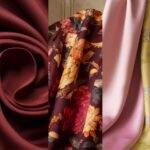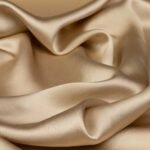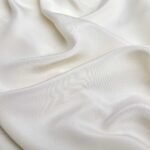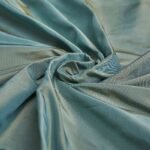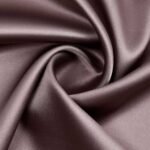
Silk satin fabric is produced by weaving silk fiber in a satin weave — a construction where warp threads pass over four or more weft threads before going under one, creating long surface floats that reflect light uniformly and produce the characteristic smooth, lustrous face that defines satin fabric. When silk fiber's natural triangular cross-section combines with satin weave's surface float structure, the result is a fabric with a depth of luster, softness, and drape that polyester satin cannot replicate. This guide covers the main types of silk satin fabric, how momme weight affects performance and application suitability, production considerations for garment manufacturers working with silk satin, and wholesale sourcing specifications for buyers ordering at production scale.
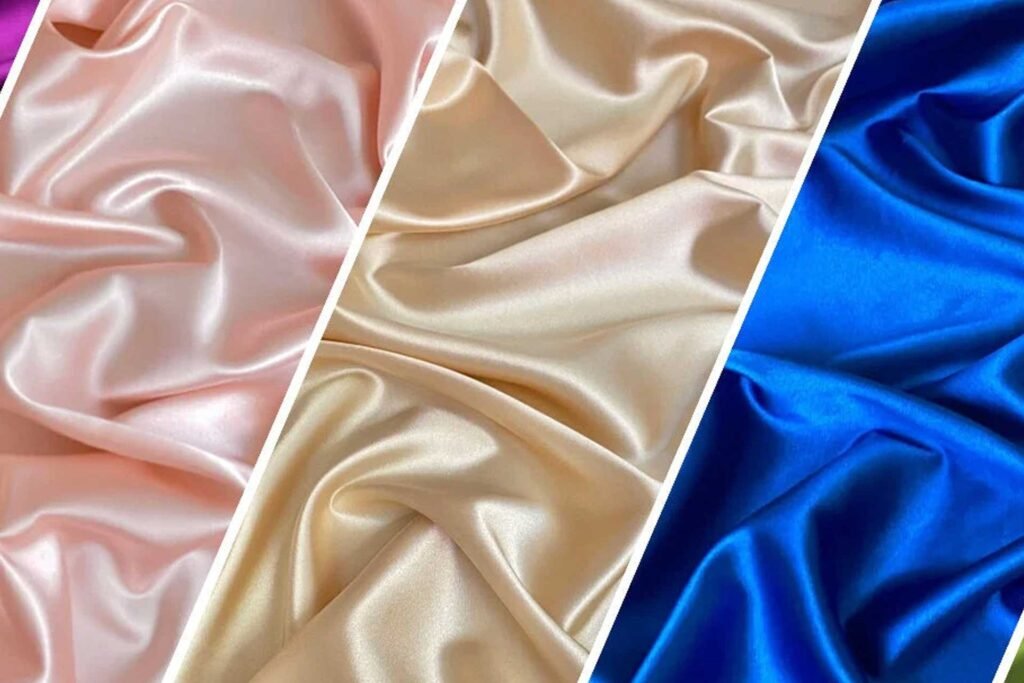
silk satin fabric
How Silk Satin Is Made — Construction and Properties
Satin weave is defined by its float structure — warp threads pass over multiple weft threads before interlacing, creating a smooth face with minimal thread crossings. The specific satin construction used for silk satin fabric is typically a 4/1 or 5/1 satin — each warp thread passes over four or five weft threads before going under one.
This float structure produces four properties that define silk satin's performance:
Maximum surface smoothness. With fewer interlacing points per unit area than plain or twill weave, the satin face has an almost uninterrupted surface of parallel silk filaments. The smoothness is structural — not a finishing treatment — and is permanent throughout the fabric's service life.
Directional luster. The parallel surface floats reflect light in the same direction simultaneously, producing the concentrated, directional luster characteristic of satin. Silk fiber's triangular cross-section amplifies this effect — each filament acts as a miniature prism, refracting light into the subtle color variations that give silk satin its distinctive visual depth.
Fluid drape. The reduced interlacing points of satin weave give the fabric more freedom to move with gravity — silk satin drapes in smooth, continuous curves without the structural stiffness of plain weave. This drape is why silk satin is the dominant fabric for bias-cut garments, draped evening wear, and fluid silhouettes where the fabric's movement is central to the design.
Face and reverse distinction. Satin weave produces a clear face (smooth, lustrous) and reverse (matte, slightly textured). In garment construction, this distinction allows designers to use either face for different visual effects — some designs deliberately use the reverse face for a matte contrast against lustrous elements.
Types of Silk Satin Fabric
Silk satin is not a single fabric — several distinct constructions fall within the silk satin category, each with different weight, surface character, and application suitability.
Charmeuse The standard silk satin construction — the fabric most buyers mean when they specify 'silk satin.' Charmeuse uses a 4/1 satin weave to produce a smooth, lustrous face and a slightly creped, matte reverse. The creped reverse is produced by using twisted yarn in the weft direction — this twisting creates the subtle texture on the reverse while the warp floats maintain the smooth satin face.
Charmeuse is available across a wide momme range — from lightweight 16mm charmeuse for blouses and scarves through to heavy 30mm+ charmeuse for luxury pajamas and premium bedding. It is the most versatile silk satin construction and the correct specification for the majority of silk satin garment applications.
GSM range: 69–130 GSM (16–30 momme). Best for: evening gowns, formal blouses, luxury pajamas and sleepwear, premium bedding, bias-cut dresses, wedding garments.
Heavy Satin / Heavy Crepe Satin High momme silk satin at 30–40+ momme (130–175+ GSM) — substantially heavier than standard charmeuse, with more body, better wrinkle resistance, and a more structured drape. Heavy satin holds its shape through extended wearing and drapes in fuller, more voluminous curves than lightweight charmeuse.
GSM range: 130–175+ GSM (30–40+ momme). Best for: luxury evening gowns requiring volume and structure, premium pajama sets, high-end bedding, formal ceremonial garments, silk upholstery.
Silk Crepe Satin A reversible construction — one face is smooth satin weave; the other is crepe texture. Both faces are usable, giving designers the option to use either the lustrous satin face or the matte crepe face within the same garment. Silk crepe satin has better drape than standard charmeuse due to the crepe construction balancing the satin float structure.
GSM range: 95–130 GSM (22–30 momme). Best for: high-end garments where both satin and matte surfaces are used in the same piece, reversible garments, formal dresses requiring maximum drape.
Stretch Silk Satin Standard silk satin with 2–5% spandex added to the weft — producing a fabric with comfort stretch alongside the silk satin surface properties. Stretch silk satin is used in fitted garments where the structured drape of silk satin is required alongside ease of movement.
Best for: fitted evening wear, structured bodices, garments requiring close fit without restriction.
Momme Weight Guide — Choosing the Right Weight for Your Application
Momme (mm) is the silk-specific weight measurement — one momme equals approximately 4.3 GSM. Momme weight directly determines the fabric's body, drape character, opacity, and durability. Specifying the wrong momme produces garments that look thin and cheap (too light) or heavy and stiff (too heavy) relative to the design intent.
| Momme Range | GSM Equivalent | Fabric Character | Best Applications |
|---|---|---|---|
| 16–19mm | 69–82 GSM | Lightweight, ultra-fluid drape, semi-sheer | Lightweight blouses, scarves, lining, light dresses |
| 19–22mm | 82–95 GSM | Standard weight, balanced drape and opacity | Standard dresses, formal blouses, casual evening wear |
| 22–25mm | 95–108 GSM | Mid-weight, good body, full opacity | Formal dresses, structured garments, tailored pieces |
| 25–30mm | 108–130 GSM | Substantial, excellent drape and body | Premium garments, luxury pajamas, premium bedding covers |
| 30–35mm | 130–150 GSM | Heavy, structured, excellent wrinkle resistance | Luxury evening gowns, high-end bedding, silk upholstery |
| 35–40mm+ | 150–175 GSM+ | Very heavy, maximum body and drape | Statement garments, luxury bedding sets, ceremonial wear |
Practical guidance for buyers: For everyday luxury garments — dresses, blouses, pajamas — 19–22mm covers most applications. For garments where the fabric's weight and drape are the primary design statement — bias-cut evening gowns, luxury sleepwear sets — 25–30mm delivers the body and movement that lighter weights cannot. For bedding, 25mm minimum is the standard for luxury positioning; below 19mm for bedding is considered too light for premium market.
Silk Grade — What 6A and 5A Mean for Buyers
Silk fabric quality is determined significantly by the grade of silk used in production — two fabrics at the same momme weight from different silk grades will perform and appear very differently.
Chinese silk is graded on a 6A to 1A scale based on filament uniformity, defect frequency, luster consistency, and fiber length:
6A Grade: The highest commercial grade — near-perfect filament uniformity, maximum luster, minimum defect rate. Produces the most lustrous, consistent, and visually flawless silk satin. Specified for luxury brand production and high-end retail.
5A Grade: Premium quality — excellent uniformity and luster with a slightly higher acceptable defect rate than 6A. The practical standard for quality commercial silk satin production — delivering premium appearance at lower cost than 6A.
4A and below: Commercial and budget grades — increasing defect rates and luster inconsistency. Acceptable for applications where cost is the primary driver and premium appearance is not the specification requirement.
Buyer recommendation: Specify minimum 5A grade for all garment production where silk satin quality is a product selling point. Request the silk grade certification from your supplier — not just momme weight — before confirming bulk orders.
Mulberry Silk vs Tussah Silk Satin
Two silk fiber types are used in silk satin production with significantly different visual and performance characteristics.
Mulberry Silk Satin Produced from Bombyx mori silkworms fed exclusively on mulberry leaves. Mulberry silk filaments are white, highly uniform, and produce the smooth, bright, high-luster surface that defines premium silk satin. The vast majority of commercial silk satin — charmeuse, crepe satin, and heavy satin — is produced from mulberry silk.
Best for: luxury garments, bridal fabric, premium bedding, and any application where maximum luster and white or bright color are specification requirements.
Tussah Silk Satin Produced from wild silkworms feeding on oak and other leaves. Tussah silk has a natural off-white to tan color that cannot be fully bleached to white — it retains a warm, ivory character. Tussah filaments are less uniform than mulberry silk, producing a slightly textured surface with a more matte luster than mulberry satin.
Best for: natural aesthetic garments where the warm ivory character and slightly textured surface are design features rather than defects. Not a substitute for mulberry silk satin in applications requiring white or bright colors and maximum luster.
Production Considerations for Silk Satin
Silk satin is one of the most technically demanding fabrics in garment production. Manufacturers new to silk satin need to account for these specific requirements before committing to bulk production.
Cutting Silk satin slips on cutting tables due to its smooth surface — use non-slip cutting table covering, sharp rotary blades, and cut in single or low-ply layers. Pin through seam allowances only — pins through the garment area leave permanent holes in silk satin.
Needle marks Silk satin shows needle holes permanently — pins, basting stitches, and even machine needles leave visible marks if placed incorrectly. Test needle size and stitch length on a sample before production — size 9 or 11 fine needles are standard for silk satin to minimize hole size.
Pressing Press on the reverse face only — direct pressing on the satin face causes permanent shine marks (iron scorch on the float surface). Use a pressing cloth on the face if pressing must be done from the front. Temperature: maximum 140°C for mulberry silk — confirm with supplier for specific fabric.
Seam finishing Silk satin frays readily at cut edges — all seam allowances must be finished immediately after cutting. French seams or narrow rolled hems are standard for silk satin garments — they enclose the raw edge without bulk.
Washing and shrinkage Pre-wash all silk satin before cutting if the finished garment will be hand washed — silk can shrink 3–5% in the first wash. For dry-clean-only garments, pre-washing is not required but confirm care requirement with your supplier.
Key Specifications to Confirm When Sourcing Silk Satin
| Specification | What to Confirm | Standard |
|---|---|---|
| Silk type | Mulberry or tussah | Per application requirement |
| Silk grade | 6A, 5A, or lower | Minimum 5A for premium garments |
| Construction | Charmeuse, crepe satin, heavy satin | Per design requirement |
| Momme weight | mm, confirmed by weighing | Per application — see GSM table |
| GSM | Physical sample weighing | ±5% tolerance |
| Width | 114cm (44') or 140cm (55') | Confirm before pattern grading |
| Color fastness — washing | Grade rating | Minimum Grade 3–4 |
| Color fastness — light | UV stability | Minimum Grade 3–4 |
| Shrinkage | After hand wash | ≤5% acceptable |
| Spandex content | For stretch silk satin | 2–5% confirmed by lab test |
| Certifications | OEKO-TEX, Silk Mark | Per buyer requirement |
| MOQ | Per order type | See below |
| Lead time | Stock vs custom | Stock: 3–5 days / Custom: 3–7 days |
MOQ by Order Type:
| Order Type | MOQ |
|---|---|
| Stock silk satin, standard colors | 50–100 meters per color |
| Custom dyeing | 150–300 meters per color |
| Digital print | 50–200 meters per pattern |
Frequently Asked Questions — Silk Satin Fabric
What is the difference between charmeuse and silk satin? Charmeuse is a specific type of silk satin — the terms are used interchangeably in trade. Charmeuse describes silk woven in a 4/1 satin weave with a creped reverse produced by twisted weft yarn. When buyers specify 'silk satin' for garment production, they are almost always referring to charmeuse construction. Other silk satin variants — crepe satin, heavy satin — are specified by name when their specific properties are required.
What momme silk satin is best for evening gowns? For standard evening gowns, 22–25mm charmeuse provides the balance of drape, body, and opacity appropriate for most formal garment applications. For bias-cut gowns requiring maximum fluid movement, 19–22mm delivers better drape at the cost of slightly less body. For statement gowns where fabric weight and volume are central to the design, 25–30mm+ heavy satin provides the structural drape that lighter weights cannot achieve.
Can silk satin be machine washed? Standard silk satin should be hand washed in cool water with silk detergent or dry cleaned. Machine washing risks permanent damage — silk loses tensile strength when wet and agitation causes fiber breakage and surface damage. Some pre-treated silk satin fabrics are machine washable — confirm care specifications with your supplier for the specific fabric before advising end customers.
Why does silk satin snag easily? The long surface floats of satin weave — which produce its luster and smoothness — are inherently more susceptible to snagging than plain or twill weave constructions where threads are more tightly interlaced. A rough surface, fingernail, or sharp object that contacts the satin face can catch a float and pull it out of the weave structure, creating a snag. This is a structural characteristic of all satin weave fabrics — silk or synthetic — and is managed in production and care by avoiding contact with rough surfaces.
What is the minimum order for wholesale silk satin fabric? Stock silk satin in standard colors: 50–100 meters per color. Custom dyeing: 150–300 meters minimum. Digital print development from 50 meters per pattern at premium pricing, standard from 100–200 meters. Sample cost $25–$80 per meter depending on momme, deductible from bulk order.
Source Wholesale Silk Satin Fabric from XINGYE TEXTILE
XINGYE TEXTILE supplies wholesale silk satin fabric — mulberry silk charmeuse, crepe satin, and heavy satin — in 5A and 6A grade, from 16 to 40+ momme, in 114cm and 140cm widths. We serve luxury garment brands, bridal manufacturers, evening wear producers, premium bedding buyers, and wholesale silk fabric sourcing managers worldwide with factory-direct pricing and MOQ from 50 meters for stock colors.
→ Browse Our Full Fabric Range → Read: Silk vs Satin — What's the Difference? → Read: Types of Silk Fabric → Read: Mulberry Silk Fabric → Read: Charmeuse Fabric Guide → Request a Free Swatch → Get a Wholesale Quote