Colorfastness Tests for Fabric
What is Colorfastness?
Key Colorfastness Tests for Fabric
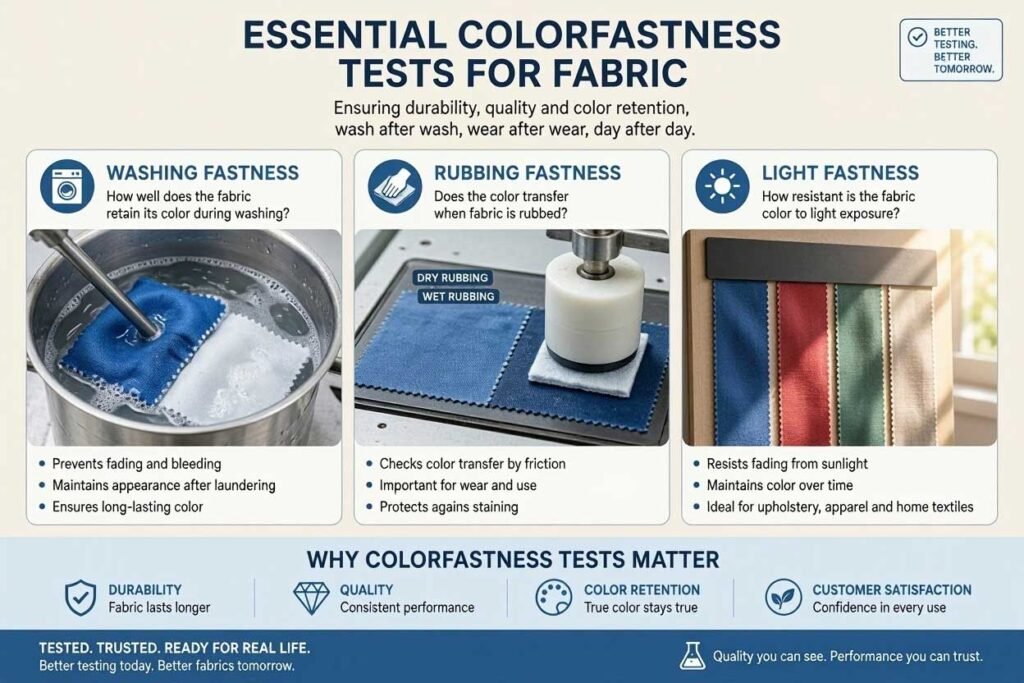
1. Colorfastness to Washing
-
Standard: ISO 105-C06, AATCC 61
-
Procedure:
A 10 x 4 cm swatch of dyed fabric is sewn between two adjacent fabrics and washed together in a soap solution at a specified temperature (usually between 40°C to 60°C). The liquor ratio is maintained at 1:50 to simulate real washing conditions. After washing, the fabric is rinsed, air-dried below 60°C, and assessed for color change and staining.
-
Evaluation:
The color change and staining are rated using the grey scale from 1 (poor) to 5 (excellent). Fabrics with a rating below 3 are considered to have poor wash fastness and may cause customer complaints.
-
Importance:
Washing fastness ensures that the fabric retains its color after multiple washes and does not stain other garments, which is crucial for everyday wear textiles.
2. Colorfastness to Rubbing (Crocking)
-
Standard: ISO 105-X12, AATCC 8
-
Types:
- Dry rubbing
- Wet rubbing (simulates contact with sweat or moisture)
-
Procedure:
A crockmeter clamps a standard white cotton cloth and rubs it against the test fabric under a fixed pressure (9 N) for a set number of strokes (usually 10). For wet rubbing, the cotton cloth is moistened to a precise moisture content.
-
Evaluation:
The degree of staining on the white cloth is assessed visually against a grey scale rating from 1 (severe staining) to 5 (no staining). Wet rubbing ratings are typically lower due to increased dye migration in moisture.
-
Significance:
Rubbing fastness is essential to prevent color transfer during wear, handling, or laundering, especially for garments exposed to frequent friction.
3. Colorfastness to Light
-
Standard: ISO 105-B02, AATCC 16
-
Procedure:
Samples are exposed alongside blue wool standards (grades 1 to 8, with 8 being the most resistant) inside a xenon arc lamp chamber that simulates the full solar spectrum, including UV, visible, and infrared light. Exposure typically lasts from 36 to 72 hours.
-
Evaluation:
After exposure, color fading is compared to the blue wool standards, and a grade is assigned from 1 (poor) to 8 (excellent).
-
Key Equipment:
- Xenon arc lamp chamber (Xenotester) with precise spectral calibration and temperature control.
-
Importance:
Light fastness testing ensures that textiles maintain their color vibrancy during prolonged exposure to sunlight, preventing premature fading.
Additional Colorfastness Tests Worth Mentioning
-
Colorfastness to Perspiration:
Simulates the effect of acidic and alkaline sweat on fabric color stability. Samples are treated with artificial sweat solutions at 37°C for 4 hours under pressure, then evaluated for color change and staining.
-
Colorfastness to Chlorinated Water/Seawater:
Important for swimwear and beachwear, this test evaluates the fabric’s resistance to color change after exposure to chlorinated pools or saltwater.
-
Colorfastness to Dry Cleaning:
Assesses color retention after solvent-based cleaning processes, critical for delicate and formal wear.
Why Are These Tests Important?
-
Consumer Satisfaction:
Fabrics that maintain their color after washing, rubbing, and light exposure enhance customer satisfaction and reduce returns.
-
Brand Reputation:
High colorfastness reflects quality and reliability, strengthening brand trust.
-
Regulatory Compliance:
Many countries require textile products to meet standardized fastness levels for import/export.
-
Health and Environmental Safety:
Poor colorfastness can lead to dye bleeding, which may cause skin irritation or environmental pollution.
Insights from Industry Research
- Studies show that reactive dyes generally offer superior washing fastness compared to natural dyes, which may fade faster and transfer color more readily.
- Direct dyes perform better in light fastness tests but may require after-treatments to improve wash fastness.
- The ISO 105 series remains the global benchmark for colorfastness testing, providing comprehensive and standardized methods across all fastness parameters.
- Advanced instruments like the xenon arc chamber, crockmeter, wash wheel, and perspirometer are critical for precise and repeatable testing.
Best Practices for Ensuring Colorfastness
- Select dyes compatible with the fiber type to improve bonding and fastness.
- Use mordants or after-treatments to enhance dye fixation.
- Calibrate testing instruments regularly to maintain accuracy.
- Perform multidimensional testing (washing, rubbing, light, perspiration) for a holistic evaluation.
- Educate consumers on proper care to maintain fabric color.