What Is Fabric Tear Strength and Why Does It Matter
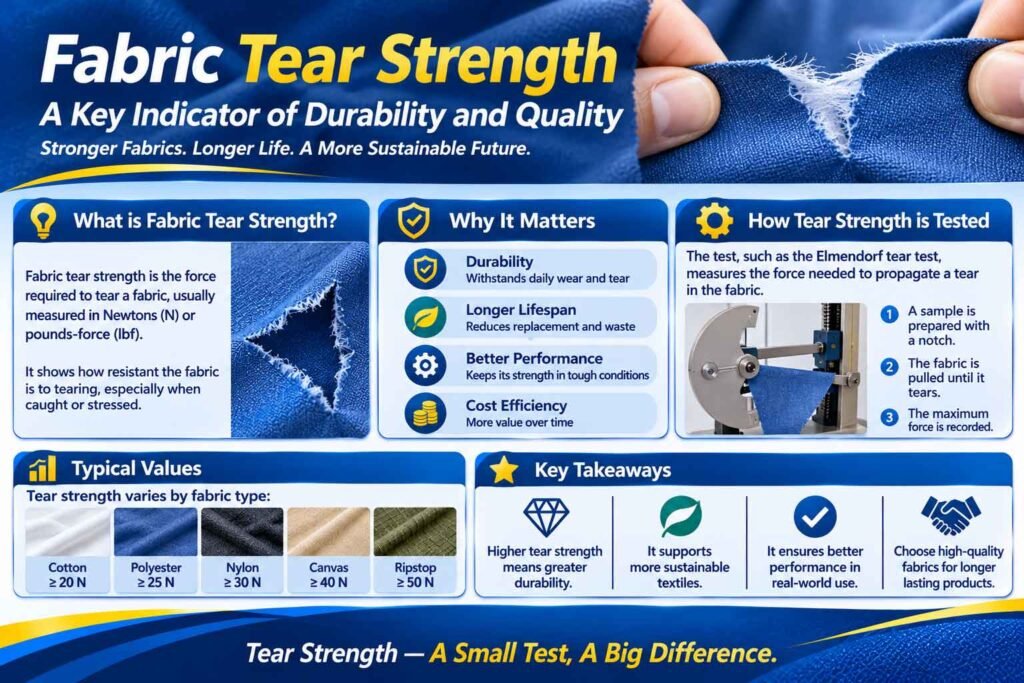
Understanding Fabric Tear Strength
Why Does Fabric Tear Strength Matter?
-
Durability and Longevity
Tear strength directly impacts the lifespan of textile products. Fabrics with high tear strength can endure more stress and are less likely to fail prematurely, meaning clothes, upholstery, and industrial textiles last longer.
-
Consumer Satisfaction and Safety
Low tear strength leads to fabric failures that frustrate users and can pose safety risks, especially in protective clothing, outdoor gear, and technical textiles. For instance, firefighters’ suits or military uniforms require high tear strength to ensure protection under harsh conditions.
-
Sustainability and Environmental Impact
Increasing fabric durability reduces the frequency with which consumers discard textiles, helping to minimize waste and the environmental footprint of the fashion and textile industries. The European Union’s recent regulations emphasize durability, including tear strength, as part of sustainable product design.
-
Product Functionality
In applications like tents, airbags, or industrial filters, fabric tear strength is a key functional requirement. Failure in these products can lead to dangerous situations or costly downtime.
How Is Fabric Tear Strength Measured?
1. Pendulum (Elmendorf) Method
- How it works: A pendulum swings to tear a pre-cut notch in the fabric. The energy absorbed by the fabric during tearing is measured.
- Standards: ISO 13937-1, ASTM D1424.
- Applications: Woven, nonwoven, laminated, and some knitted fabrics.
- Advantages: Fast testing, simulates sudden impact tearing; widely used for quality control.
2. Trouser (Single Seam) Method
- How it works: The fabric is cut into a “trouser leg” shape, and the two legs are pulled apart at a constant speed to propagate the tear.
- Standards: ISO 13937-2.
- Applications: Woven fabrics, especially apparel fabrics.
- Advantages: Simulates slow, uniform tearing during wear.
3. Tongue (Double Slit) Method
- How it works: Two parallel slits create a tongue-shaped specimen, which is pulled apart to test bidirectional tear strength.
- Standards: ISO 13937-4.
- Applications: Apparel and home textiles.
- Advantages: Reflects complex tear forces in multiple directions.
4. Trapezoidal Method
- How it works: The fabric is cut into a trapezoid with a notch, and the non-parallel sides are pulled to propagate the tear.
- Standards: ASTM D5587.
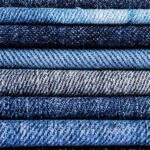
- Applications: Thick, strong fabrics like denim, industrial textiles.
- Advantages: Tests multi-yarn synergistic tearing, suitable for heavy-duty fabrics.
5. Wing Method
- How it works: Similar to trapezoidal but uses a wing-shaped specimen with varying clamping angles.
- Applications: Decorative, industrial fabrics, tents, workwear.
Factors Influencing Fabric Tear Strength
- Fiber Type: Synthetic fibers like polyester and nylon generally have higher tear strength than natural fibers such as cotton or wool.
- Yarn Structure: Filament yarns (continuous fibers) offer better tear resistance than staple yarns (short fibers). Yarn twist and ply also affect strength.
- Fabric Construction:
- Weave type influences tear strength; satin weaves tend to have higher tear strength than twill, which in turn is stronger than plain weaves.
- Fabric density has a complex effect: moderate density improves tear resistance, but very dense fabrics restrict yarn mobility, reducing tear strength.
- Finishing Processes:
- Resin and coating finishes can reduce tear strength by restricting yarn movement.
- Softening finishes like silicone oils may increase tear strength by reducing friction between yarns.
- Fabric Thickness and Weight: Heavier fabrics often have higher tear resistance but may sacrifice flexibility.
Tear Strength vs. Tensile Strength: What’s the Difference?
- Tensile Strength: The force required to break fabric by pulling it apart uniformly.
- Tear Strength: The force required to propagate an existing tear or cut.
Industry Standards and Regulations
- ISO Standards: ISO 13937 series govern tear strength testing methods.
- ASTM Standards: ASTM D1424, D5587, and others provide widely accepted test procedures.
- EU Ecodesign Regulation: The European Commission’s strategy for sustainable textiles includes binding requirements on durability, highlighting tear strength as a key parameter to reduce premature textile discard and environmental impact.
- Product-Specific Standards: Protective clothing, industrial textiles, and outdoor gear often have minimum tear strength requirements to ensure safety and functionality.
Enhancing Fabric Tear Strength: Best Practices
- Using high-performance fibers and filament yarns.
- Optimizing weave structures to balance yarn mobility and density.
- Applying finishing treatments that enhance yarn lubrication without compromising fabric integrity.
- Increasing warp and weft density moderately to involve more yarns in resisting tear forces.
- Incorporating ripstop weaving techniques, which integrate reinforcing yarns to prevent tear propagation.