Fabric shrinkage is a common yet frustrating issue that affects both consumers and manufacturers alike. Imagine purchasing your favorite cotton shirt or wool sweater only to find it fitting much smaller after the first wash. This dimensional change not only impacts garment fit but also influences customer satisfaction and business profitability. Understanding fabric shrinkage: what causes it and how to prevent it is essential for anyone involved in textile production or garment care. This article explores the science behind shrinkage, key factors influencing it, and practical strategies to minimize this problem.
Fabric Shrinkage
What Is Fabric Shrinkage?
Fabric shrinkage refers to the reduction in the dimensions of textile materials after washing, drying, or finishing processes. It is typically expressed as a percentage decrease in length and width compared to the original fabric size. Shrinkage can occur during:
- Washing (washing shrinkage)
- Drying or finishing processes (processing shrinkage)
- Relaxation of fibers after tension release (relaxation shrinkage)
While some shrinkage is natural due to fiber properties, excessive shrinkage can distort garment shape, cause fit issues, and lead to product returns.
Causes of Fabric Shrinkage
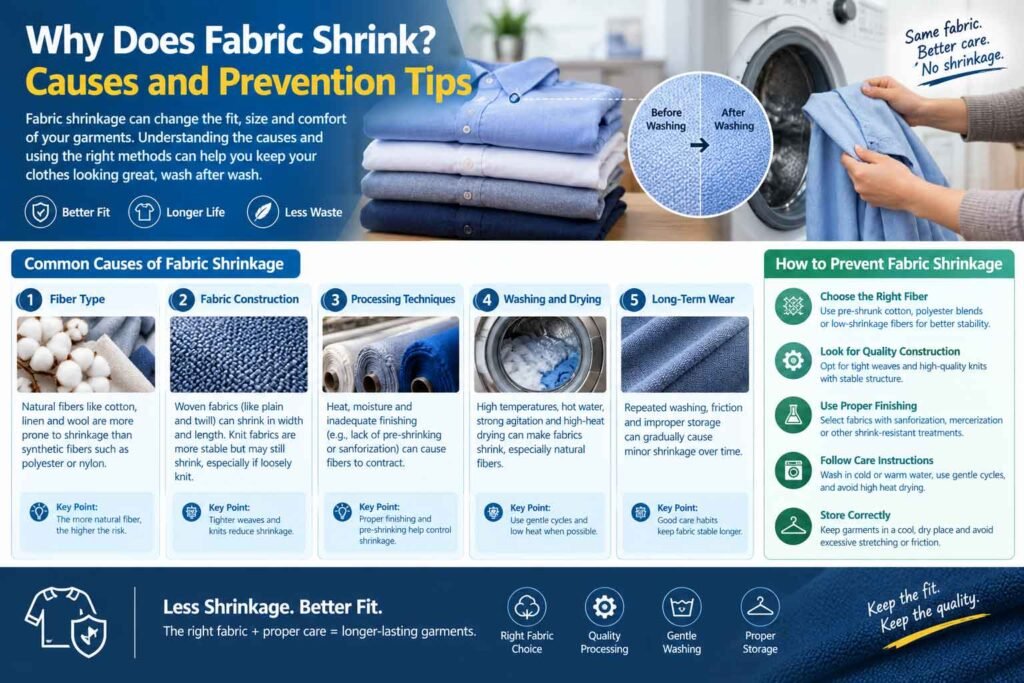
Shrinkage is influenced by a combination of fiber characteristics, fabric construction, processing methods, and usage conditions.
1. Fiber Type
- Cotton: A natural hydrophilic fiber that swells when wet, causing 2-5% shrinkage typically. Cotton fibers absorb water, swell, and relax from the tension during manufacturing.
- Wool: Highly sensitive to heat and agitation, wool can shrink 10-20% due to felting, where fibers interlock irreversibly under warm water and friction.
- Silk: Sensitive to hot water and mechanical stress, silk may shrink or lose shape if improperly washed.
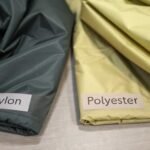
- Synthetic Fibers (Polyester, Nylon): These thermoplastic fibers have low water absorption and maintain shape under heat, resulting in minimal shrinkage (usually less than 1-2%).
- Blended Fabrics: Shrinkage varies depending on the dominant fiber; for example, cotton-polyester blends shrink less than pure cotton but more than pure polyester.
2. Fabric Construction
- Weave and Knit Density: Loosely woven or knitted fabrics shrink more due to greater yarn movement. Tight weaves and dense knits restrict shrinkage.
- Fabric Weight: Lightweight fabrics tend to shrink faster than heavier ones.
- Blends with Elastic Fibers: Fabrics containing spandex or elastane exhibit less shrinkage after stretching.
3. Processing and Finishing
- Heat and Steam: High temperatures during drying or finishing can cause fiber contraction and shrinkage.
- Chemical Treatments: Resin finishing or sanforization (mechanical pre-shrinking) reduce shrinkage by stabilizing fibers.
- Mechanical Stress: Tension during weaving, dyeing, or finishing can introduce internal stresses that release during washing, causing shrinkage.
4. Usage and Care Practices
- Washing Temperature: Hot water accelerates fiber swelling and relaxation, increasing shrinkage.
- Drying Methods: Tumble drying with high heat causes maximum shrinkage, especially in natural fibers.
- Mechanical Agitation: High spin speeds and friction during washing can distort fibers.
- Incorrect Care: Ignoring care labels or using harsh detergents exacerbates shrinkage.
Types of Fabric Shrinkage
Understanding the types of shrinkage helps in choosing prevention strategies.
- Relaxation Shrinkage: Occurs when internal stresses from fiber stretching during manufacturing are released during washing. Most common in cotton.
- Felting Shrinkage: Unique to wool, caused by fiber scales locking together under heat and agitation, leading to irreversible shrinkage.
- Progressive Shrinkage: Happens over multiple wash cycles due to repeated fiber stress.
- Consolidation Shrinkage: Compression of fabric loops in knitted textiles leading to dimensional changes.
How to Measure Fabric Shrinkage
Shrinkage is calculated separately for warp (lengthwise) and weft (widthwise) directions using the formula:
Shrinkage (%)=Original DimensionOriginal Dimension−Finished Dimension×100
For example, a cotton shirt measuring 100 cm before washing and 97 cm after washing has a shrinkage of 3%.
Acceptable Shrinkage Limits:
| Fabric Type | Lengthwise Shrinkage | Widthwise Shrinkage |
|---|---|---|
| Cotton | ≤ 3% | ≤ 3% |
| Wool | ≤ 5% | ≤ 5% |
| Polyester | ≤ 1% | ≤ 1% |
| Blended Fabrics | 2-3% | 2-3% |
Shrinkage beyond these limits can cause garment fit problems and quality control failures.
Effective Methods to Prevent Fabric Shrinkage
1. Industrial Pre-Treatment Techniques
- Sanforization: A mechanical pre-shrinking process for cotton fabrics that reduces shrinkage to less than 2%.
- Heat Setting: Stabilizes synthetic fibers like polyester and nylon by applying controlled heat to lock in shape.
- Resin Finishing: Chemical treatment for cotton and wool to make fibers shrink-proof.
- Felting Control: Specialized treatments for wool to prevent felting shrinkage.
- Mechanical Relaxation: Relieves tension in yarns and fabric to minimize relaxation shrinkage.
2. Proper Washing and Care Instructions
- Use cold or lukewarm water to reduce fiber swelling.
- Avoid high-temperature washing and tumble drying; prefer air drying or hanging garments.
- Use gentle cycles and detergents formulated for sensitive fabrics.
- Turn garments inside out to reduce surface abrasion.
- Follow manufacturer’s care labels strictly.
- For wool and delicate fabrics, hand wash and dry flat to maintain shape.
3. Consumer Education
Clear labeling and educating customers about proper washing and drying methods significantly reduce shrinkage complaints and extend garment life.
Case Studies Highlighting Shrinkage Control
- Cotton T-Shirts: A manufacturer reduced shrinkage from 4% to below 2% by applying sanforization and resin finishing combined with cold wash and hang dry instructions, resulting in higher customer satisfaction.
- Wool Sweaters: Shrinkage was reduced from 20% to 8% by recommending hand washing in cold water, felting control treatments, and flat drying.
- Polyester-Cotton Blends: Heat setting minimized shrinkage to about 1%, ensuring dimensional stability even after multiple washes.
Common Myths About Fabric Shrinkage Debunked
- Myth 1: Cold water prevents all shrinkage.
Fact: Cold water reduces but does not eliminate shrinkage, especially if mechanical agitation is high.
- Myth 2: Only cotton shrinks.
Fact: Wool, silk, and rayon also shrink, sometimes more dramatically than cotton.
- Myth 3: Pre-shrunk means no shrinkage.
Fact: Pre-shrunk fabrics can still shrink under extreme conditions like hot water or high heat drying.
- Myth 4: Dry cleaning prevents all shrinkage.
Fact: Dry cleaning reduces water-related shrinkage but does not prevent heat or mechanical damage.
Conclusion
Fabric shrinkage is a natural but manageable phenomenon influenced by fiber type, fabric construction, processing, and care methods. By understanding fabric shrinkage: what causes it and how to prevent it, manufacturers can apply effective pre-treatment techniques such as sanforization, heat setting, and resin finishing to reduce shrinkage within acceptable limits. Consumers can protect their garments by following proper washing and drying instructions tailored to fabric types.
Preventing shrinkage not only ensures garment fit and appearance but also enhances customer satisfaction and reduces financial losses due to returns and reprocessing. Stay informed, choose the right fabrics, and care for your clothes wisely to keep your wardrobe looking its best.
Take Action!
- If you’re a manufacturer, invest in pre-shrinking technologies and accurate shrinkage testing to meet quality standards.
- As a consumer, always check care labels and follow recommended washing instructions to minimize shrinkage.
- Share this article to help others understand and prevent fabric shrinkage!