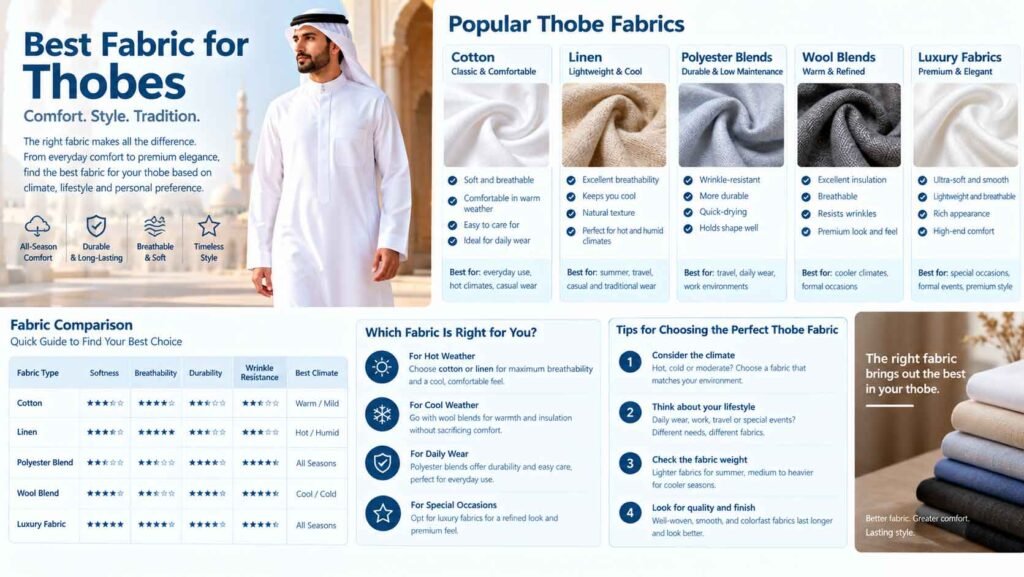
Best Fabric for Thobes
Why Fabric Choice Matters for Thobes
Key Considerations:
- Climate: Hot and humid regions benefit from breathable, lightweight fabrics.
- Occasion: Formal events may require luxurious or embellished fabrics.
- Maintenance: Some fabrics demand delicate care, while others are machine washable.
- Longevity: Quality fabrics with reinforced stitching last longer.
Top Fabrics for Thobes: Pros and Cons
1. Cotton: The Classic Choice
- Pros:
- Highly breathable and moisture-absorbent.
- Soft and gentle on sensitive skin.
- Easy to wash and maintain.
- Affordable and widely available.
- Cons:
- Prone to wrinkles and slight shrinkage.
- Light colors can stain easily (e.g., turmeric, coffee).
2. Linen: Lightweight and Cool
- Pros:
- Excellent airflow and moisture-wicking.
- Naturally cool and comfortable.
- Durable fibers with a distinctive texture.
- Cons:
- Wrinkles easily and requires ironing.
- Slightly more expensive and delicate care needed.
3. Cotton-Linen Blends: Best of Both Worlds
- Pros:
- Cooler than pure cotton.
- Less prone to creasing than 100% linen.
- Suitable for daily wear in warm climates.
- Cons:
- Requires gentle washing (avoid tumble drying).
- Slightly higher price point.
4. Polyester-Cotton Blends: Practical and Durable
- Pros:
- Wrinkle-resistant and quick-drying.
- Maintains shape and color over time.
- Budget-friendly.
- Cons:
- Less breathable; can trap heat and moisture.
- Not ideal for very hot or humid climates.
- May cause skin irritation for sensitive users.
5. Wool and Wool Blends: For Cooler Weather
- Pros:
- Provides insulation while allowing moisture escape.
- Naturally odor-resistant.
- Durable and warm.
- Cons:
- Requires more care.
- Not suitable for hot climates.
6. Luxury Fabrics: Silk and Cashmere
- Pros:
- Luxurious drape and feel.
- Excellent for special events.
- Cons:
- Expensive.
- Requires professional cleaning.
- Less durable for everyday wear.
Regional Fabric Preferences and Styles
| Region | Style Characteristics | Recommended Fabric | Typical Use Cases |
|---|---|---|---|
| Saudi | Minimalist, straight-cut, fitted | 100% cotton, medium weight | Daily wear, prayers, formal wear |
| Emirati | Collarless, loose fit, tassels | Lightweight cotton, polyester blends | Casual, Eid, smart casual |
| Omani | Embroidery, structured collar | Cotton-linen blends, cotton | Formal events, weddings |
| Moroccan | Ornate embroidery, bold colors | Cotton, silk blends | Ceremonial, cultural expression |
How to Choose the Best Fabric for Your Thobe: A Step-by-Step Guide
-
Identify Your Primary Use Case
- Daily wear? Opt for breathable, durable cotton.
- Formal events? Consider silk blends or embroidered cotton.
- Travel? Choose wrinkle-resistant polyester blends or cotton-linen hybrids.
-
Consider Your Climate
- Hot and humid: Lightweight cotton or linen.
- Temperate: Cotton blends or tropical wool.
- Cold: Wool or cashmere.
-
Check Fabric Weight and Weave
- Ideal gsm for summer: 120–140 gsm.
- For winter: 180+ gsm wool blends.
- Tighter weave = less transparency and longer durability.
-
Measure Carefully
- Use your best-fitting shirt for shoulder, chest, and sleeve length.
- Thobes should fit comfortably without being too loose or tight.
-
Read Customer Reviews and Fabric Specs
- Look for verified reviews mentioning shrinkage, breathability, and durability.
- Avoid sellers with vague “premium fabric” claims without fiber content or gsm details.
-
Factor in Maintenance
- Cotton and blends: Machine washable, line dry.
- Linen: Gentle wash, iron while damp.
- Wool and silk: Dry clean preferred.
Fabric Care Tips for Longevity
- Washing: Cold water, mild detergent, gentle cycle.
- Drying: Air dry in shade; avoid tumble dryers.
- Ironing: Use appropriate heat settings; iron cotton while damp.
- Storage: Hang on padded hangers; avoid plastic bags to prevent moisture buildup.
Common Mistakes to Avoid
- Buying thobes with heavy synthetic blends in hot climates.
- Ignoring size charts and not measuring accurately.
- Prioritizing embroidery or collar style over fabric quality.
- Purchasing from sellers without clear return policies or fabric details.
Conclusion: Finding the Best Fabric for Thobes That Suits You
Frequently Asked Questions (FAQs)
Q1: What is the best fabric for thobes in hot climates?
A: Lightweight 100% cotton or cotton-linen blends are best for hot and humid weather due to their breathability and moisture-wicking properties.
Q2: Can I wear polyester blend thobes daily?
A: Polyester blends are durable and wrinkle-resistant but may trap heat and moisture, so they’re better suited for travel or cooler climates rather than daily wear in hot weather.
Q3: How do I prevent shrinkage in cotton thobes?
A: Choose pre-shrunk cotton, wash in cold water, avoid tumble drying, and air dry in the shade.
Q4: Are embroidered thobes suitable for everyday use?
A: Embroidered thobes are usually reserved for formal occasions due to their delicate detailing and care requirements.