In today’s textile industry, fabric certifications have become essential markers of quality, safety, and sustainability. Whether you’re a manufacturer, retailer, or conscious consumer, understanding these certifications can guide you toward better purchasing decisions and foster trust in the products you choose. Among the myriad certifications available, GOTS (Global Organic Textile Standard), OEKO-TEX Standard 100, and GRS (Global Recycled Standard) stand out as some of the most recognized and impactful. This article will dive deep into these certifications, explaining what they mean, how they differ, and why they matter.
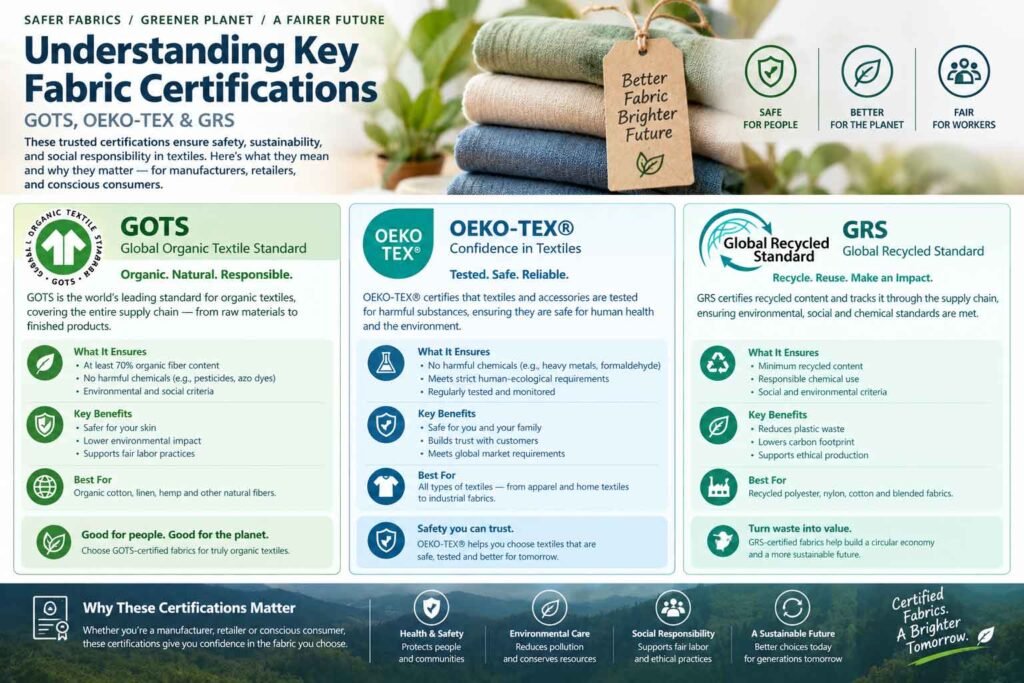
Understanding Fabric Certifications
What Are Fabric Certifications and Why Do They Matter?
Fabric certifications are third-party verifications that confirm textiles meet specific standards related to environmental impact, chemical safety, social responsibility, and material content. They offer transparency in a complex supply chain, helping buyers identify products that are safe, sustainable, and ethically produced.
Key benefits of fabric certifications include:
- Consumer safety assurance: Verifying textiles are free from harmful chemicals.
- Environmental sustainability: Ensuring eco-friendly farming and manufacturing practices.
- Social responsibility: Guaranteeing fair labor practices and safe working conditions.
- Material traceability: Confirming the origin and content of fibers, including organic or recycled materials.
Overview of Key Fabric Certifications: GOTS, OEKO-TEX, and GRS
1. Global Organic Textile Standard (GOTS)
GOTS is widely regarded as the gold standard for organic textiles worldwide. It covers the entire textile supply chain—from the harvesting of raw organic fibers to environmentally and socially responsible manufacturing.
Key Features:
- Organic fiber content: Products must contain at least 70% certified organic fibers to be labeled “made with organic materials,” and 95% or more for the “organic” label.
- Environmental criteria: Restricts the use of toxic chemicals, mandates wastewater treatment, and enforces sustainable processing methods.
- Social criteria: Based on International Labour Organization (ILO) standards, GOTS prohibits child labor, forced labor, and ensures decent working conditions.
- Certification scope: Full supply chain traceability, including farms, processors, and manufacturers.
Why GOTS Matters:
GOTS certification assures consumers that the fabric is truly organic and produced with high environmental and social standards. This makes it a preferred choice for premium sustainable fashion brands and eco-conscious consumers.
2. OEKO-TEX Standard 100
OEKO-TEX Standard 100 is a globally recognized certification focusing primarily on consumer safety by testing textiles for harmful substances.
Key Features:
- Chemical testing: Screens for over 1,000 harmful substances, including heavy metals, pesticides, formaldehyde, and banned azo dyes.
- Product classes: Divided into four classes based on skin contact, with Class I being the strictest (for baby products) and Class IV for decorative materials.
- Testing scope: Applies to every component of the final product—from fabric to buttons and threads.
- Annual renewal: Certification must be renewed yearly, ensuring ongoing compliance.
Why OEKO-TEX Matters:
OEKO-TEX Standard 100 guarantees that textiles are safe for consumers, making it essential for apparel, bedding, and children’s products. While it does not certify organic content or social criteria, it is a critical baseline for chemical safety compliance, especially for markets in the EU and North America.
3. Global Recycled Standard (GRS)
The Global Recycled Standard (GRS) addresses the growing demand for sustainable production by verifying the recycled content in textiles and ensuring responsible manufacturing practices.
Key Features:
- Recycled content verification: Products must contain at least 20% recycled material for certification; a minimum of 50% recycled content is required to display the GRS logo.
- Chain of custody: Ensures traceability of recycled materials throughout the supply chain.
- Environmental and social criteria: Includes restrictions on chemicals and adherence to fair labor practices.
- Third-party audits: Regular inspections confirm compliance at every stage.
Why GRS Matters:
GRS certification supports the circular economy by validating recycled content claims and encouraging manufacturers to reduce environmental impact. It is ideal for brands marketing recycled polyester, nylon, or blended fabrics.
Comparing GOTS, OEKO-TEX, and GRS: What’s the Difference?
| Certification | Focus Area | Material Content | Environmental Standards | Social Responsibility | Testing Scope | Typical Use Cases |
|---|---|---|---|---|---|---|
| GOTS | Organic & sustainable production | ≥70% organic fibers | Strict chemical restrictions, wastewater treatment | Yes, ILO-based labor standards | Entire supply chain | Organic apparel, baby products, eco-friendly brands |
| OEKO-TEX | Chemical safety | Any fibers | Limits harmful substances | No | Final product and components | Apparel, bedding, home textiles, children’s products |
| GRS | Recycled content & sustainability | ≥20% recycled fibers | Chemical restrictions, environmental management | Yes | Entire supply chain | Recycled fiber products, circular economy initiatives |
Insights from Industry Research and Market Trends
Recent data from leading textile industry sources highlight the growing importance of these certifications:
- The viscose staple fiber market is projected to grow from USD 28.92 billion in 2026 to USD 44.95 billion by 2034, with sustainability certifications playing a key role in market access.
- OEKO-TEX Standard 100 is the most requested certification globally for chemical safety, especially in the EU and North America, with updated regulations coming into effect in June 2026 to tighten chemical limits and introduce digital traceability.
- GOTS certification is favored by premium brands for its comprehensive coverage of organic content, environmental, and social criteria, despite higher costs and stricter audit requirements.
- GRS is gaining traction as brands respond to consumer demand for recycled content and circular economy solutions.
How to Choose the Right Fabric Certification for Your Business
Selecting the appropriate certification depends on your product type, target market, and business goals.
Consider the following:
- Target Market Requirements: EU buyers often require OEKO-TEX and GOTS for organic claims; US buyers focus on OEKO-TEX and CPSIA compliance for children’s products.
- Product Category: Baby apparel benefits from OEKO-TEX Class I and GOTS certification; recycled fiber products should pursue GRS.
- Cost and Complexity: OEKO-TEX is relatively affordable and quick to obtain; GOTS and GRS involve higher costs and ongoing audits.
- Brand Positioning: Premium eco-conscious brands gain value from GOTS and GRS; mainstream products may start with OEKO-TEX.
Tips for Verifying and Maintaining Fabric Certifications
- Always verify certificates through official databases:
- Ensure certificates match your products in terms of scope, fiber content, and manufacturing sites.
- Renew certifications promptly to avoid lapses that can damage credibility.
- Display certificates transparently in product listings and marketing materials to build buyer trust.
Conclusion: Embrace Fabric Certifications for a Sustainable Future
Understanding fabric certifications like GOTS, OEKO-TEX, and GRS is crucial for anyone involved in the textile industry today. These certifications not only ensure product safety and environmental responsibility but also open doors to premium markets and discerning consumers.
By choosing the right certifications aligned with your business goals and market demands, you can:
- Enhance brand reputation and consumer trust.
- Comply with evolving regulations and buyer expectations.
- Contribute to a more sustainable and ethical textile industry.
Take action today: Evaluate your current fabric certifications, identify gaps, and invest strategically in those that will best support your growth and sustainability journey.