In the textile industry, fabric abrasion resistance is a crucial quality parameter that determines how well a fabric withstands wear and tear caused by friction. Abrasion resistance directly impacts the longevity, appearance, and performance of textiles used in apparel, upholstery, technical fabrics, and more. But how exactly is this property tested? Understanding the testing methods provides valuable insight into fabric durability and helps manufacturers deliver products that meet consumer expectations. This article explores the most common testing techniques for fabric abrasion resistance, the factors influencing test results, and the significance of these tests in quality control.
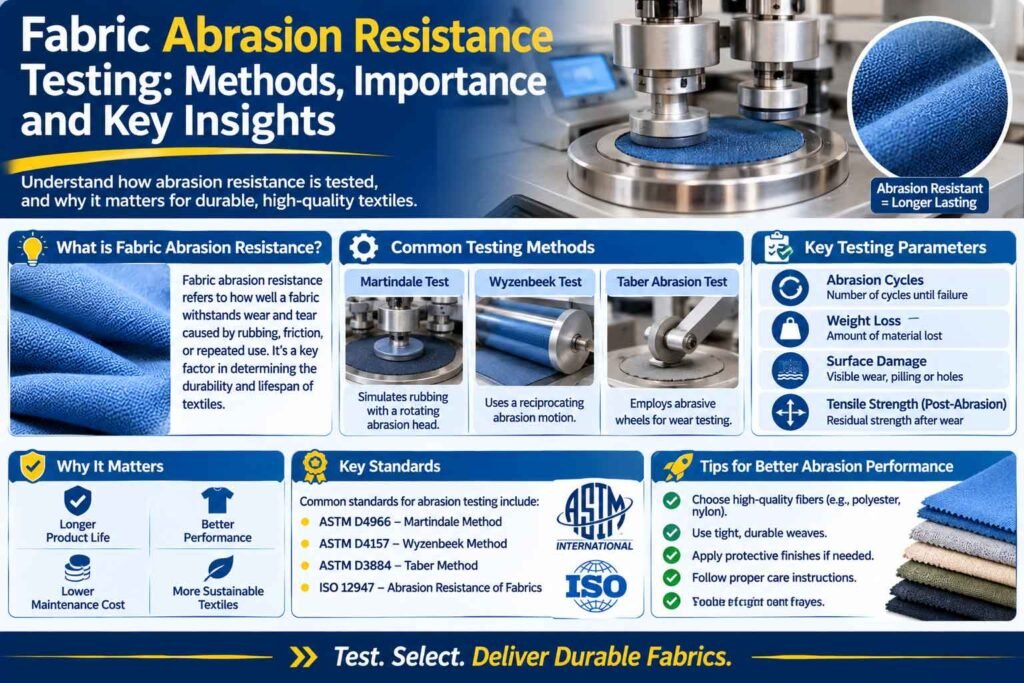
Fabric Abrasion Resistance
What Is Fabric Abrasion Resistance?
Fabric abrasion resistance refers to a fabric's ability to resist surface wear caused by repeated rubbing or friction against other materials. This wear can lead to fiber breakage, pilling, thinning, or even holes, which degrade the fabric's aesthetic and functional qualities.
Key aspects of abrasion resistance include:
- Surface wear and fiber breakage: Continuous friction causes fibers to break or pull out.
- Pilling: Formation of small fiber balls on the fabric surface due to fiber migration and entanglement.
- Loss of appearance: Changes in color, texture, or surface smoothness.
- Durability: The fabric's capacity to maintain its integrity during use.
Why Is Abrasion Resistance Testing Important?
- Quality assurance: Ensures fabrics meet durability standards for their intended use.
- Product development: Helps textile engineers optimize fabric construction and finishing.
- Consumer satisfaction: Provides garments and textiles that maintain appearance and performance over time.
- Compliance: Meets industry and international standards for textile performance.
Common Methods for Testing Fabric Abrasion Resistance
Several standardized methods exist to evaluate fabric abrasion resistance, each simulating different types of wear and suited to various fabric types and end uses.
1. Martindale Abrasion Test
Overview:
The Martindale test is the most widely used method for abrasion resistance testing. It simulates natural wear by rubbing a fabric sample against a standard abrasive surface, typically wool felt, under a specific pressure. The motion follows a Lissajous curve, which ensures multi-directional rubbing to mimic real-life fabric use.
Procedure:
- Circular fabric specimens (typically 38-40 mm diameter) are mounted on holders.
- A standard abrasive fabric is pressed onto the sample with a fixed pressure (usually 9-12 kPa).
- The sample is rubbed in a controlled, repetitive motion for a set number of cycles.
- The test continues until a predefined endpoint, such as the appearance of two broken yarns or a visible hole.
Assessment:
- Visual inspection for fiber breakage, holes, or thinning.
- Measurement of weight loss or change in fabric thickness.
- Pilling evaluation using standardized rating scales (1 to 5).
Standards:
- ISO 12947 series
- ASTM D4966
- EN ISO 12947
Advantages:
- Mimics real fabric use with multi-directional rubbing.
- Suitable for woven, knitted, and coated fabrics.
- Provides reproducible and comparable results.
2. Schopper Abrasion Test
Overview:
This method uses sandpaper as the abrasive surface, making it more aggressive than Martindale. It is commonly used for fabrics subject to harsh wear, such as automotive upholstery.
Procedure:
- The fabric is rubbed against a sandpaper surface under a specific load.
- The number of cycles to failure or visible damage is recorded.
Significance:
- Simulates abrasive wear involving hard particles.
- Useful for assessing abrasion resistance in heavy-duty fabrics.
3. Taber Abrasion Test
Overview:
The Taber test applies abrasive wheels to the fabric surface, rotating under a fixed load. It is often used for coated textiles and industrial fabrics.
Procedure:
- The fabric sample is mounted on a rotating platform.
- Abrading wheels apply pressure and rotate over the fabric.
- Abrasion is measured by weight loss or visual damage after a set number of cycles.
Factors Affecting Abrasion Resistance Testing
Understanding the variables that influence abrasion resistance is essential for interpreting test results accurately.
- Type of fabric: Woven fabrics generally have higher abrasion resistance than knits due to tighter construction.
- Fiber composition: Synthetic fibers like polyester and nylon tend to have higher abrasion resistance than natural fibers such as cotton or wool.
- Yarn structure: High twist yarns and compact spinning reduce hairiness, improving abrasion resistance.
- Fabric thickness and density: Thicker and denser fabrics distribute abrasion forces better.
- Finishing treatments: Protective coatings, resin finishes, or softeners can enhance or sometimes reduce abrasion resistance.
- Test parameters: Pressure applied, abrasive type, rubbing speed, and sample tension can affect results.
Understanding the End Point Criteria in Abrasion Tests
The endpoint of an abrasion resistance test is critical for determining fabric durability. Common criteria include:
- Specimen breakage: For woven fabrics, the test ends when two or more yarns break. For knitted fabrics, the appearance of a hole caused by yarn breakage signifies failure.
- Quality loss: Measured by weight loss or change in fabric thickness.
- Appearance changes: Visual deterioration, such as pilling or color fading, may also define the endpoint.
Advances in Abrasion Resistance Testing: Instrumental Methods
Traditional abrasion resistance tests rely heavily on visual inspection, which can be subjective and time-consuming. Recent research has introduced instrumental methods using image analysis to improve accuracy and efficiency.
- Image analysis techniques analyze brightness profiles from scanned fabric images to detect broken threads and surface changes.
- These methods reduce labor, decrease reliance on operator experience, and enable real-time assessment during testing.
- The instrumental approach aligns with ISO 12947-2 standards and supports digital transformation in textile testing labs.
Complementary Tests: Pilling and Bursting Strength
Abrasion resistance testing is often conducted alongside other durability tests to provide a comprehensive fabric performance profile.
- Pilling Test: Evaluates the formation of fiber balls on the fabric surface due to abrasion. The Martindale pilling test uses tumbling motion to simulate wear and rates pilling severity on a scale of 1 to 5.
- Bursting Strength Test: Measures fabric resistance to multidirectional forces, especially important for knitted and nonwoven fabrics. Hydraulic or pneumatic pressure is applied until the fabric bursts, indicating its strength.
Practical Tips for Accurate Abrasion Resistance Testing
- Sample preparation: Ensure specimens are representative, free from wrinkles, and properly conditioned (typically 20 ± 2°C and 65 ± 4% relative humidity).
- Instrument maintenance: Regular calibration and cleaning of abrasion testers are crucial.
- Consistent test parameters: Maintain standard pressure, cycle counts, and abrasive materials.
- Multiple specimens: Testing several samples improves result reliability and statistical accuracy.
- Operator training: Skilled personnel reduce errors in visual assessment and sample handling.
Conclusion
Fabric abrasion resistance is a vital indicator of textile durability, affecting product lifespan, appearance, and consumer satisfaction. Testing methods such as the Martindale abrasion test, Schopper test, and Taber test provide standardized ways to evaluate this property under controlled conditions. Advances in instrumental analysis promise to make these tests more objective and efficient. By understanding how fabric abrasion resistance is tested, manufacturers, designers, and quality control professionals can better select and develop textiles that meet rigorous performance standards.
Ready to enhance your textile products’ durability? Explore advanced abrasion resistance testing solutions and ensure your fabrics stand the test of time.