In the fast-paced hospitality industry, uniforms are more than just clothing—they are a vital part of brand identity, staff comfort, and operational efficiency. Choosing the best fabric for hospitality uniforms is a critical decision that impacts employee satisfaction, guest impressions, and the longevity of your investment. With a myriad of fabric options available, understanding which materials offer the perfect blend of durability, comfort, and style is essential for hospitality managers and procurement teams alike.
This article explores the top fabric choices for hospitality uniforms, backed by industry insights and expert recommendations, to help you make an informed decision that elevates your brand and supports your staff.
Best Fabric for Hospitality Uniforms
Why Fabric Choice Matters in Hospitality Uniforms
Hospitality uniforms must endure rigorous daily use, frequent laundering, and diverse working conditions—from front desk interactions to housekeeping and kitchen duties. The right fabric ensures:
- Comfort: Prolonged wear during long shifts demands breathable, flexible materials.
- Durability: Resistance to wear, tear, and industrial laundering extends uniform lifespan.
- Appearance: Fabrics that maintain color, shape, and wrinkle resistance uphold a professional image.
- Functionality: Specialized finishes like moisture-wicking, stain resistance, and antimicrobial properties enhance staff performance.
Top Fabrics for Hospitality Uniforms
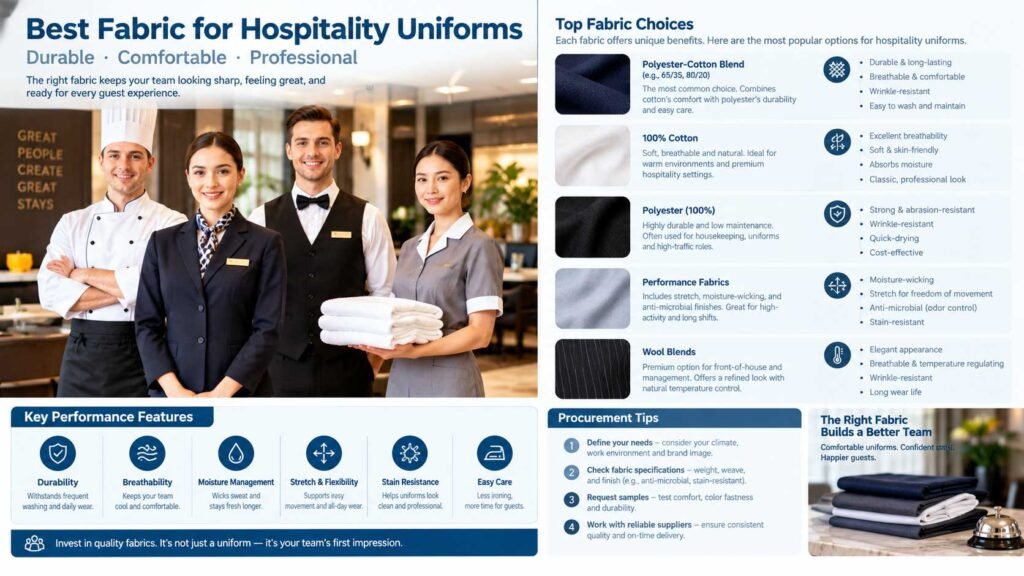
1. Polyester-Cotton Blends
Polyester-cotton blends, especially in ratios like 65/35 or 70/30, are the industry standard for hospitality uniforms. They combine the best of both fibers:
- Durability: Polyester adds strength and shape retention.
- Breathability: Cotton ensures comfort and moisture absorption.
- Easy Care: These blends resist wrinkles, shrinkage, and color fading, making them ideal for industrial laundering.
Use Cases: Front desk staff, housekeeping, and general service uniforms.
Insights: According to Galaxy Hotel Supplies, polyester-viscose blends hold shape well, resist creasing, and are cost-effective for large teams, making them perfect for front office uniforms.
2. Cotton-Rich Fabrics
Uniforms requiring higher breathability and heat resistance, such as kitchen and chef uniforms, benefit from cotton-rich fabrics (70-100% cotton):
- Heat Resistance: Cotton tolerates high temperatures and is safe near open flames.
- Comfort: Soft and breathable for hot kitchen environments.
- Durability: High-quality cotton twills sustain frequent washing.
Use Cases: Chef jackets, kitchen staff, and back-of-house uniforms.
Expert Tip: Flame-resistant cotton fabrics with durable FR treatments are essential for safety compliance in kitchens, as highlighted in hospitality procurement guides.
3. Performance Knits and Moisture-Wicking Fabrics
For high-activity roles like servers and bartenders, performance knits with moisture-wicking properties reduce heat stress and increase comfort.
- Stretch and Flexibility: Elastomeric fibers like spandex provide mobility.
- Moisture Management: Fabrics like Coolmax wick sweat away to keep staff dry.
- Durability: Designed to withstand industrial laundering with minimal degradation.
Use Cases: Food and beverage staff, event setup crews.
Industry Insight: Gjergjihtextil emphasizes specifying elastomeric content with lab-tested wash recovery to ensure stretch retention after multiple industrial cycles.
4. Wool-Polyester Blends
For luxury hospitality settings, wool-polyester blends offer:
- Premium Appearance: Natural wool fibers provide a tailored, elegant look.
- Breathability: Wool regulates temperature well.
- Durability: Polyester enhances shape retention and reduces care demands.
Use Cases: Front office, concierge, and managerial uniforms in upscale hotels.
Specialized Fabrics for Hospitality Uniforms
- Ripstop Polyester-Cotton: Ideal for maintenance and security uniforms due to high abrasion and tear resistance.
- Tencel/Lyocell Blends: Soft, breathable, and antimicrobial, perfect for spa and wellness uniforms.
- Antimicrobial and Stain-Release Finishes: Enhance hygiene and appearance, especially in housekeeping and food service.
Key Fabric Performance Standards to Specify
When selecting the best fabric for hospitality uniforms, ensure suppliers provide test data on:
| Performance Test | Importance |
|---|---|
| Color Fastness to Washing | Prevents fading and color transfer during laundering |
| Color Fastness to Light | Maintains color in lobby and outdoor environments |
| Shrinkage (Dimensional Stability) | Ensures consistent sizing after repeated industrial washes |
| Tear and Abrasion Resistance | Guarantees fabric durability under physical stress |
| Pilling Resistance | Maintains professional appearance over time |
| Flame Resistance (for kitchen) | Compliance with safety standards (NFPA 2112, EN ISO 15025) |
Pro Tip: Request third-party lab test reports specific to the fabric batch you will order, not generic data.
Construction and Finishing Considerations
High-quality fabric alone doesn’t guarantee uniform longevity. Pay attention to:
- Seams & Stitching: Use flat-felled or double-stitched seams with reinforced bar tacking on stress points.
- Buttons & Zippers: Heat-set buttons and rust-resistant zippers (e.g., YKK) withstand industrial laundering.
- Logo Application: Prefer embroidery over heat-transfer prints for durability.
- Pocket Placement: Functional pockets with reinforced corners improve utility for housekeeping and maintenance staff.
Sustainability and Certifications
Eco-conscious hospitality brands should prioritize fabrics with certifications such as:
- OEKO-TEX Standard 100: Ensures textiles are free from harmful substances.
- GOTS (Global Organic Textile Standard): Verifies organic fiber content.
- Global Recycled Standard (GRS): Confirms recycled fiber use and chain of custody.
Sustainable fabrics often provide additional benefits like reduced skin irritation and better fabric longevity.
Practical Tips for Hospitality Uniform Procurement
- Define Department Needs: Identify fabric requirements by role—front desk, kitchen, housekeeping, spa, etc.
- Request Fabric Swatches and Test Reports: Validate fabric performance before bulk orders.
- Conduct Fit Trials: Ensure sizing and comfort meet staff needs across all body types.
- Confirm Laundry Compatibility: Verify fabric withstands your industrial wash protocols, including temperature and chemical exposure.
- Pilot Orders: Start with smaller quantities to test real-world durability and appearance retention.
- Supplier Evaluation: Choose vendors specializing in hospitality uniforms with transparent supply chains and reliable lead times.
Conclusion
Selecting the best fabric for hospitality uniforms is a strategic investment that affects your brand image, staff comfort, and operational costs. Polyester-cotton blends remain the versatile backbone of hospitality uniforms, while specialized fabrics like moisture-wicking knits and flame-resistant cotton serve critical roles in high-performance environments. Always prioritize fabric durability, laundry compatibility, and functional finishes backed by credible certifications and lab testing.
By following a thorough procurement process—defining departmental needs, validating fabric performance, and partnering with trusted suppliers—you can ensure your hospitality uniforms not only look exceptional but also stand up to the demands of daily wear and industrial laundering.
Ready to elevate your hospitality uniforms? Explore fabric samples, request lab test reports, and consult with expert suppliers today to create a uniform program that supports your brand and your team for years to come.