The 'Plastic vs Natural' Debate Isn't as Simple as You Think
Microfiber and cotton are polar opposites in almost every way. One is an ultra-fine engineered synthetic. The other is a natural plant fiber with 5,000 years of history. Most people assume cotton is 'better' because it's natural, and microfiber is 'worse' because it's plastic.
The truth is more complicated. Microfiber outperforms cotton in strength, drying speed, water resistance, and durability — sometimes by 10x. Cotton outperforms microfiber in breathability, comfort, moisture absorption, and environmental footprint. The right choice depends entirely on what you're making and how it will be used.
This guide covers the real differences between microfiber and cotton, application by application, so you can choose with data instead of assumptions.
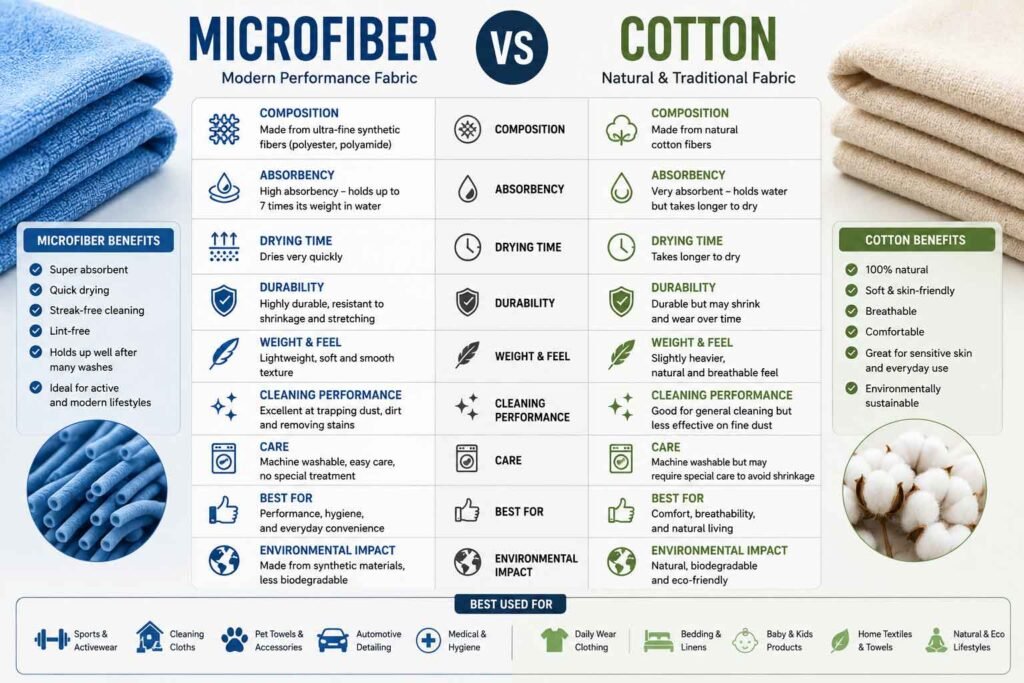
Microfiber vs Cotton
What We're Comparing
| Factor | Microfiber | Cotton |
|---|---|---|
| Fiber type | Synthetic (polyester or polyamide, <1 denier) | Natural (cellulose from cotton plant) |
| Fiber diameter | 0.5-10 microns | 15-20 microns |
| Source | Petroleum (or recycled PET) | Renewable plant fiber |
| Invented | 1950s (commercialized 1970s) | Used for 5,000+ years |
| Price range | $$ (varies by denier and quality) | $ - $$$$ (varies hugely by quality) |
Quick Comparison Table
| Property | Microfiber | Cotton | Winner |
|---|---|---|---|
| Softness | ★★★★★ — exceptionally soft | ★★★★☆ — soft, familiar | Microfiber |
| Strength | ★★★★★ — very strong | ★★★☆☆ — moderate | Microfiber |
| Abrasion resistance | ★★★★★ — up to 10x cotton | ★★☆☆☆ | Microfiber |
| Tear resistance | ★★★★★ — ripstop constructions | ★★★☆☆ | Microfiber |
| Durability (wash cycles) | 300-500 (cleaning cloths) / 100+ (apparel) | 20-50 (apparel) | Microfiber |
| Breathability | ★★☆☆☆ — poor in dense weaves | ★★★★★ — excellent | Cotton |
| Moisture absorption | ★★★☆☆ — low absorption, high wicking | ★★★★★ — absorbs 25x own weight | Cotton |
| Drying speed | ★★★★★ — dries in minutes | ★★☆☆☆ — hours | Microfiber |
| Wrinkle resistance | ★★★★★ | ★★☆☆☆ | Microfiber |
| Water resistance | ★★★★☆ — dense weaves shed water | ★★☆☆☆ — absorbs water | Microfiber |
| UV resistance | ★★★☆☆ (degrades in sun) | ★★★☆☆ (fades in sun) | Tie |
| Static buildup | ★★☆☆☆ — static cling | ★★★★★ — no static | Cotton |
| Comfort next to skin | ★★★☆☆ (less breathable) | ★★★★★ | Cotton |
| Hypoallergenic | ★★★★☆ — does not trap allergens | ★★★★☆ — natural, but traps dust mites | Tie |
| Biodegradability | ★☆☆☆☆ — decades to decompose | ★★★★★ — months | Cotton |
| Microplastic shedding | Yes — sheds during washing | No | Cotton |
| Cost | $$ - $$$ | $ - $$$$$ | Cotton (cheaper baseline) |
Detailed Comparison
1. Softness
Microfiber is objectively softer than cotton. Because microfiber filaments are 1/20th to 1/40th the diameter of cotton fibers, they flex more easily and create a finer, smoother surface. Microfiber suede feels like the softest suede. Microfiber knit feels like a luxury base layer.
Cotton softness varies wildly — from rough low-quality cotton to silky long-staple Egyptian cotton. Premium cotton approaches microfiber's softness, but standard cotton does not.
| Fabric | Softness |
|---|---|
| Microfiber (MicroModal-type knit) | ★★★★★ |
| Microfiber suede | ★★★★★ |
| Egyptian / Supima cotton | ★★★★★ |
| Standard cotton (60s) | ★★★★☆ |
| Budget cotton (40s) | ★★★☆☆ |
Winner: Microfiber — with premium cotton close behind.
2. Breathability
This is cotton's strongest advantage.
Cotton fibers are hollow and allow air to pass through freely. Cotton absorbs sweat and releases it through evaporation. A cotton shirt keeps you cool in hot weather.
Microfiber fibers are solid synthetic filaments that do not absorb moisture. Dense microfiber weaves (like microfiber suede) trap heat. Knitted microfiber is better, but still less breathable than cotton.
| Condition | Cotton | Microfiber |
|---|---|---|
| Hot weather | Excellent — breathes | Poor to fair — can feel clammy |
| Active use | Good — absorbs sweat | Fair — wicks but doesn't absorb |
| Cold weather | Moderate | Good — dense weave blocks wind |
Winner: Cotton — by a clear margin for warm weather.
3. Strength and Durability
Microfiber is dramatically stronger than cotton. The long continuous filaments and aligned polymer structure give microfiber 5-10x cotton's tear strength and abrasion resistance at the same weight.
| Test | Cotton | Microfiber |
|---|---|---|
| Abrasion (Martindale rubs) | 10,000-20,000 | 100,000+ (microfiber suede) |
| Tear strength | Moderate | Excellent — ripstop adds more |
| Wash cycles (apparel) | 20-50 | 100+ |
| Wash cycles (cleaning cloths) | 50-100 | 300-500 |
A microfiber garment lasts 2-5x longer than a cotton equivalent. A microfiber cleaning cloth lasts 4-6x longer than cotton cloth.
Winner: Microfiber — by a wide margin.
4. Moisture and Drying
Cotton absorbs moisture — up to 25x its own weight. This makes cotton excellent for sweat absorption and towels, but terrible for drying speed. A wet cotton shirt takes hours to dry.
Microfiber absorbs very little moisture but wicks it — pulling moisture along the fiber surface through capillary action and spreading it for quick evaporation. Microfiber dries 3-5x faster than cotton.
| Scenario | Cotton | Microfiber |
|---|---|---|
| Sweat absorption | Excellent — holds moisture | Low absorption, high wicking |
| Drying time | 2-4 hours | 20-60 minutes |
| Feeling when wet | Heavy, cold, clammy | Light, dries fast |
| Towel absorbency | Excellent — classic towel fabric | Excellent — holds 7-8x own weight |
Winner: Cotton for absorption. Microfiber for speed and wicking.
5. Water Resistance
Cotton absorbs water. That's the end of the story. A cotton jacket in rain becomes heavy, cold, and useless.
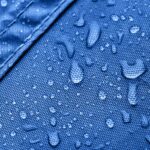
Microfiber's dense weave and low absorbency make it naturally water-resistant. Coated or laminated microfiber is waterproof. This is why microfiber dominates outerwear while cotton does not.
Winner: Microfiber — the only choice for weather protection.
6. Comfort and Feel Against Skin
Cotton is the comfort benchmark. It's soft, breathable, absorbs moisture, and does not generate static. Most people prefer cotton next to their skin for daily wear.
Microfiber is smooth and soft, but less breathable. In warm conditions, microfiber apparel can feel clammy. Microfiber also generates static electricity, which can be annoying.
| Scenario | Cotton | Microfiber |
|---|---|---|
| Daily t-shirt | ★★★★★ — comfortable all day | ★★★☆☆ — smooth but less breathable |
| Hot weather | ★★★★★ | ★★☆☆☆ |
| Activewear | ★★★☆☆ — heavy when sweaty | ★★★★☆ — wicks, dries fast |
| Underwear / base layer | ★★★★★ | ★★★★☆ (MicroModal-type) |
Winner: Cotton for daily comfort. Microfiber for activity.
7. Environmental Impact
| Factor | Cotton | Microfiber |
|---|---|---|
| Raw material | Renewable plant | Petroleum (or recycled PET) |
| Water usage | Very high (10,000+ L/kg) | Low |
| Pesticides | High (unless organic) | None |
| Biodegradability | Months | Decades |
| Microplastic shedding | None | Yes — sheds microfibers when washed |
| Recyclability | Yes (limited) | Yes (mechanical recycling, Econyl) |
| Durability offset | Short life = more replacements | Long life = fewer replacements |
The environmental picture is mixed:
- Cotton has high production impact (water, pesticides) but biodegrades and doesn't shed microplastics
- Microfiber has low production impact but doesn't biodegrade and sheds microplastics in every wash
Winner: No clear winner — depends on which environmental metric matters most to you.
Application-by-Application Recommendations
| Application | Better Choice | Why |
|---|---|---|
| T-shirts, daily wear | Cotton | Breathable, comfortable, familiar |
| Activewear / base layers | Microfiber | Wicks moisture, dries fast, stretch-friendly |
| Outerwear / rain jackets | Microfiber | Water-resistant, windproof, durable |
| Underwear | Cotton or MicroModal | Cotton for natural feel; microfiber for durability |
| Towels | Cotton | Maximum absorbency, soft, familiar |
| Cleaning cloths | Microfiber | 10x better at trapping dust and bacteria |
| Uniforms (hotel, corporate) | TC blend (cotton-poly) | Best of both — breathability + durability |
| Sportswear | Microfiber | Lightweight, quick-dry, durable |
| Bedsheets | Cotton or cotton-modal blend | Breathable, comfortable for sleep |
| Shoes and footwear lining | Microfiber | Durable, quick-drying, abrasion-resistant |
| Bags and luggage | Microfiber | Strong, water-resistant, lightweight |
| Baby clothing | Cotton | Natural, breathable, gentle on skin |
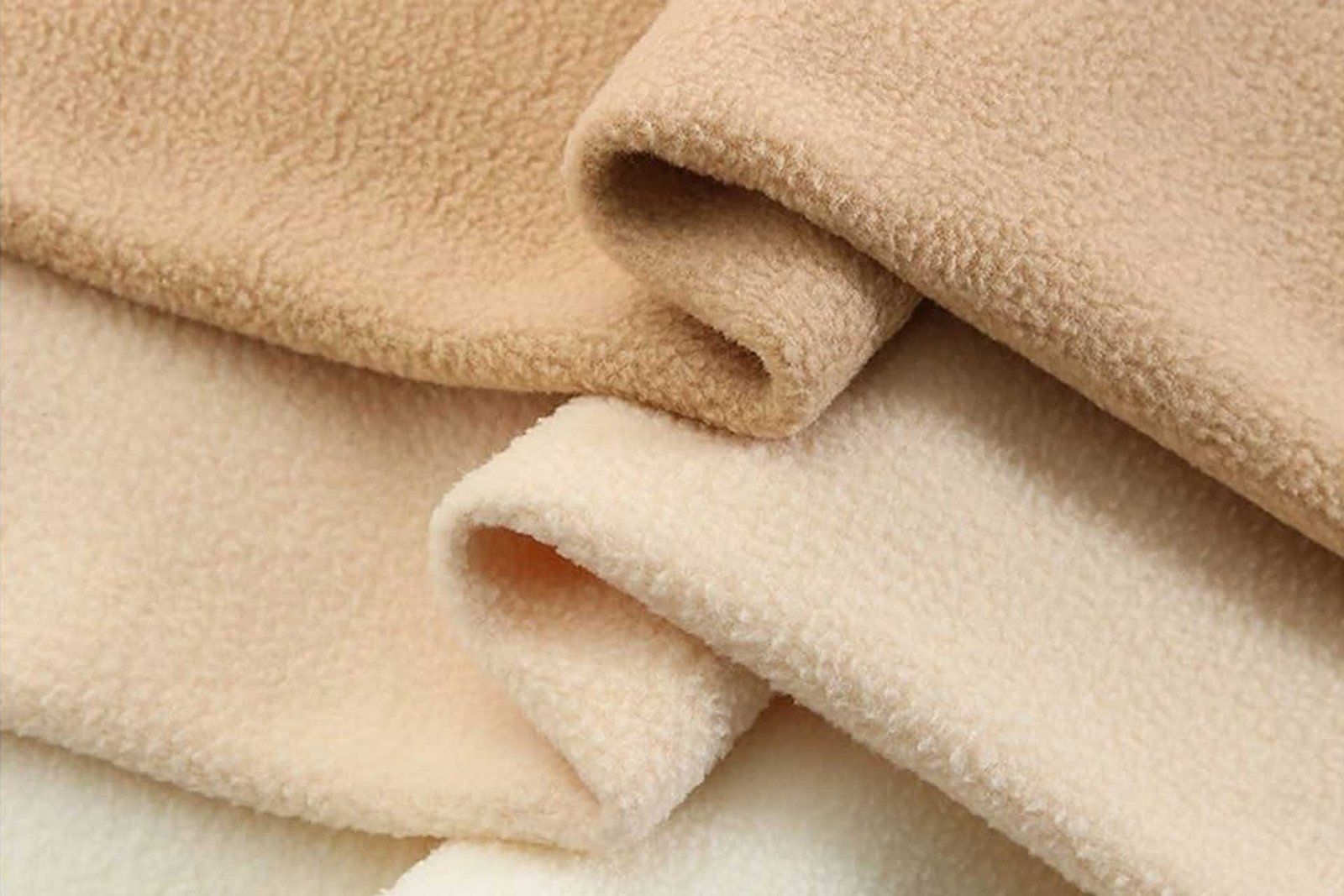
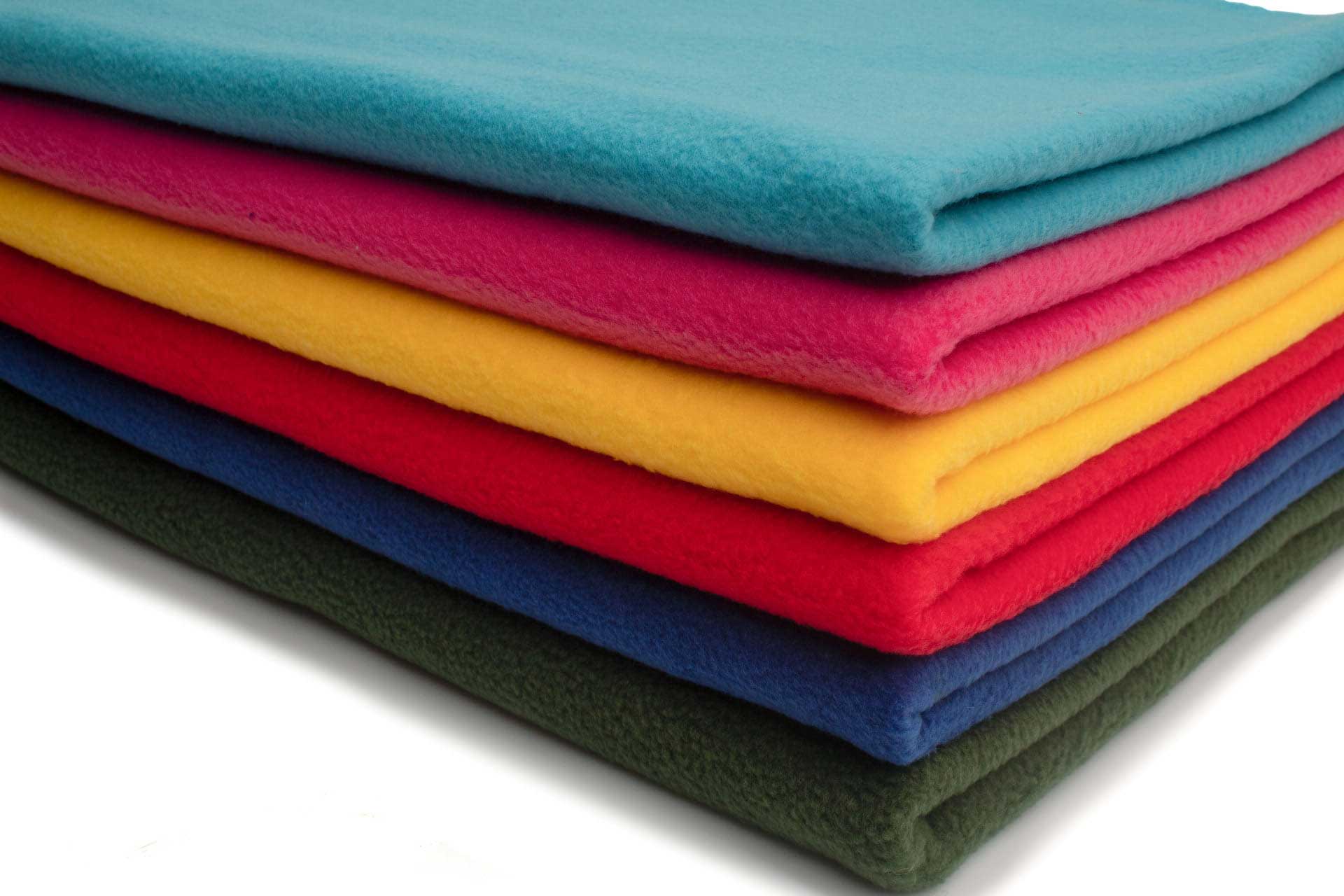
| Winter base layers | Microfiber fleece | Lightweight warmth, wicking |
| Scarves and dress blouses | Microfiber or viscose | Smooth drape, vibrant colors |
The Middle Ground: Blends and Combinations
You don't have to choose only one. The textile industry frequently combines cotton and synthetic fibers to get the best of both.
| Blend | Composition | What It Delivers |
|---|---|---|
| TC (poly-cotton) | 65/35 polyester-cotton | Cotton's breathability + polyester's durability. The uniform standard |
| CVC (cotton-rich) | 60/40 cotton-polyester | More cotton feel, still durable. Premium uniform shirts |
| Cotton-microfiber knit | Varies | Softness of microfiber + cotton's absorbency for activewear |
| Microfiber with cotton backing | Laminated | Microfiber surface + cotton comfort layer |
How to Decide — A Simple Framework
Ask yourself three questions:
1. Will it be washed frequently and need to last? → Microfiber or a cotton-poly blend. Cotton wears out in 20-50 washes.
2. Will it be worn in hot conditions or against skin all day? → Cotton. Breathability and comfort matter more than durability.
3. Does it need to resist water, wind, or abrasion? → Microfiber. Cotton cannot compete in these categories.
| Your Answer | Choose |
|---|---|
| Durability is the priority | Microfiber or TC blend |
| Comfort in heat is the priority | Cotton |
| Weather protection is the priority | Microfiber |
| Natural fabric is a requirement | Cotton |
| Cleaning performance is the priority | Microfiber |
| Best value per wear | TC blend (or microfiber for long life) |
Frequently Asked Questions
Q: Is microfiber better than cotton for cleaning? A: Yes — dramatically. Microfiber traps 99% of particles down to 0.1 microns (cotton traps 30-40% of visible particles), holds 7-8x its own weight in water (cotton 3-4x), and lasts 300-500 washes (cotton 50-100). Microfiber also cleans without chemicals.
Q: Is microfiber good for skin? A: Microfiber is smooth and non-irritating, but less breathable than cotton. For sensitive skin, cotton is generally preferred. For durability and moisture-wicking during activity, microfiber is fine.
Q: Can microfiber be used for towels? A: Yes — microfiber towels are excellent: highly absorbent, quick-drying, and lightweight. They're the standard for travel and sports towels. Cotton towels remain the classic for home bath towels because of their softness and absorbency.
Q: Is microfiber fabric hot? A: Dense microfiber weaves (suede, coated) trap heat. Knitted microfiber is more breathable. For warm weather, cotton is the cooler choice. For cold weather, microfiber provides better insulation and wind protection.
Q: Which lasts longer, microfiber or cotton? A: Microfiber lasts 2-5x longer in most applications. A microfiber jacket can last 5-10 years. A cotton jacket lasts 1-3 years. Microfiber cleaning cloths last 300-500 washes vs 50-100 for cotton.
Q: Is microfiber bad for the environment? A: It depends on the metric. Microfiber uses far less water and no pesticides to produce, but it's petroleum-based, non-biodegradable, and sheds microplastics when washed. Recycled microfiber (rPET) reduces the petroleum impact. Cotton is renewable and biodegradable but water-intensive to grow.
Get a Quote — Microfiber and Cotton Fabric
XINGYE TEXTILE manufactures both microfiber fabric and 100% cotton fabric in a range of weights, weaves, and finishes. Microfiber in suede, woven, knit, and performance constructions. Cotton in poplin, twill, sateen, canvas, and jersey. Custom colors, custom finishes, OEKO-TEX certified. We'll help you choose the right fabric for your application.
Minimum order: 300 meters per color. Sample-first ordering.