Fabric tensile strength is a critical parameter that determines how much pulling force a fabric can withstand before breaking. Whether you’re a textile manufacturer, quality control specialist, designer, or researcher, understanding how to test fabric tensile strength is essential to ensure product durability, performance, and customer satisfaction. This article delves into the fundamental principles, testing methods, standards, and equipment involved in fabric tensile strength testing, providing you with a comprehensive guide to mastering this important textile property.
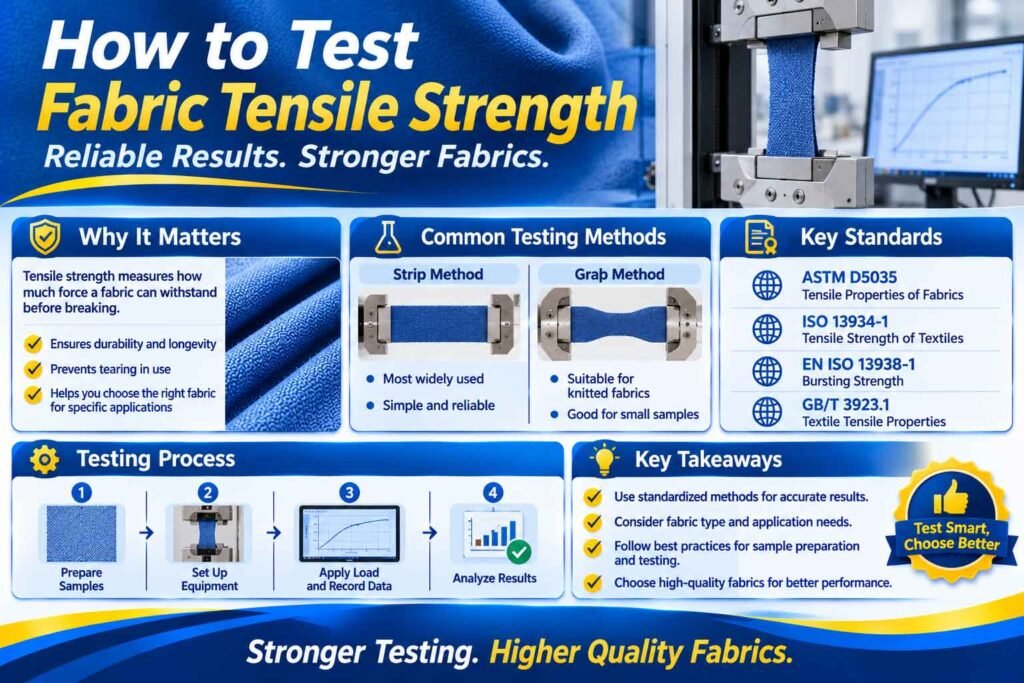
How to Test Fabric Tensile Strength
What is Fabric Tensile Strength?
Fabric tensile strength refers to the maximum force a fabric can endure when subjected to tension before it ruptures. It is a direct indicator of the fabric's durability and suitability for its intended application, such as apparel, upholstery, industrial textiles, or technical fabrics.
High tensile strength fabrics resist tearing and deformation, making them ideal for demanding uses, while low tensile strength fabrics may fail prematurely under stress.
Why Test Fabric Tensile Strength?
- Quality Assurance: Ensures fabrics meet product specifications and customer expectations.
- Product Development: Helps in selecting appropriate materials for specific applications.
- Compliance: Meets industry and international standards such as ASTM, ISO, and GB/T.
- Performance Evaluation: Assesses fabric behavior under stress for durability predictions.
Key Testing Standards for Fabric Tensile Strength
Testing fabric tensile strength follows internationally recognized standards to guarantee consistency and reliability:
- ASTM D5035: Standard Test Method for Breaking Force and Elongation of Textile Fabrics (Strip and Grab Methods).
- ISO 13934-1 and ISO 13934-2: Textiles — Tensile Properties of Fabrics — Determination of Breaking Force and Elongation.
- GB/T 3923.1 & GB/T 3923.2: Chinese national standards for tensile properties using strip and grab methods.
These standards specify specimen preparation, testing speed, environmental conditions, and data reporting.
How to Test Fabric Tensile Strength: Step-by-Step
1. Specimen Preparation
- Sampling Location: Cut specimens at least 150 mm away from fabric edges to avoid inconsistent results.
- Specimen Types: Prepare specimens along both the warp (longitudinal) and weft (transverse) directions to assess anisotropic fabric behavior.
- Dimensions:
- Strip Test: Narrow strips, typically 50 mm wide and 200 mm long.
- Grab Test: Wider specimens, usually 100 mm wide, with the central area gripped.
2. Choose the Testing Method
Two primary tensile testing methods are used:
- Strip Test: The full width of the specimen is gripped, and tension is applied until rupture. This method provides precise measurement of breaking force and elongation.
- Grab Test: Only the central portion of the specimen width is gripped, minimizing edge effects and simulating real-world stress conditions better.
3. Equipment Setup
- Use a Universal Testing Machine (UTM) equipped with tensile grips.
- Set the gauge length (distance between grips) according to the standard, commonly 100 mm or 200 mm.
- Adjust the crosshead speed based on fabric elongation properties (e.g., 20 mm/min for less elastic fabrics, up to 100 mm/min for more elastic ones).
- Condition the fabric specimens at standard temperature (20 ± 2°C) and relative humidity (65 ± 2%) for at least 4 hours before testing.
4. Conduct the Test
- Fix the specimen securely in the grips, ensuring it is centered and free of wrinkles or slack.
- Start the test, applying tensile force steadily until the fabric breaks.
- Record the maximum force at rupture (breaking force) and elongation at break (percentage elongation).
5. Analyze Results
- Calculate the average breaking force and elongation from multiple specimens (minimum five per direction).
- Compare results against product specifications or industry benchmarks.
- Consider variations between warp and weft directions to understand fabric anisotropy.
Additional Fabric Strength Testing Methods
Besides tensile strength, other mechanical properties contribute to fabric performance:
- Tear Strength: Measures resistance to propagation of a tear; common methods include the tongue tear and trapezoidal tear tests (ASTM D2261, ASTM D5587).
- Seam Strength: Evaluates the strength of fabric seams using strip or grab methods (ASTM D4884, GB/T 13773).
- Burst Strength: Assesses the fabric’s resistance to pressure applied perpendicularly, using hydraulic or pneumatic diaphragm methods (ASTM D3786, ISO 13938).
- Puncture Resistance: Determines the force required to penetrate the fabric with a sharp object, simulating real-world puncture scenarios.
Equipment for Fabric Tensile Strength Testing
Modern textile laboratories use advanced equipment such as:
- Universal Testing Machines (UTM): Versatile devices capable of tension, compression, bending, tearing, and other tests.
- Smart Pull Textile Tensile Tester: Offers single or dual-column models for comprehensive textile testing.
- Elmendorf Tear Tester: Specialized for tear strength measurement.
- Bursting Strength Testers: Hydraulic and pneumatic testers for expansion and bursting force evaluation.
Choosing the right equipment depends on the fabric type, testing standards, and required accuracy.
Best Practices and Tips for Accurate Testing
- Preconditioning: Always condition fabric specimens to standard temperature and humidity to ensure consistent moisture content.
- Sampling: Use the step sampling method to avoid repeating the same warp or weft yarns in specimens.
- Avoid Edge Effects: Cut specimens away from selvage edges and avoid folds or creases.
- Repeat Tests: Conduct sufficient replicates (at least 5) to obtain statistically valid results.
- Calibration: Regularly calibrate testing machines to maintain measurement accuracy.
- Record Observations: Note any unusual breaks (e.g., near grips) and exclude invalid data as per standards.
Practical Applications of Fabric Tensile Strength Testing
- Apparel Industry: Ensures garments withstand everyday wear and tear.
- Technical Textiles: Validates materials used in airbags, geotextiles, and protective clothing.
- Home Textiles: Confirms durability of upholstery, curtains, and bedding.
- Recycling and Sustainability: Assesses fabric performance for reuse or upcycling initiatives.
Conclusion
Understanding how to test fabric tensile strength is fundamental for anyone involved in textile production, quality control, or research. By following standardized methods like the strip and grab tests, using proper equipment, and adhering to best practices, you can accurately assess fabric durability and performance. This not only guarantees product quality but also supports innovation and sustainability in the textile industry.
Ready to enhance your fabric testing capabilities? Explore certified testing equipment and standards today to ensure your textiles meet the highest quality benchmarks.