Damask, jacquard, and brocade are three of the most frequently confused terms in fabric sourcing — and the confusion is understandable, because all three are produced on jacquard looms and all three feature woven patterns rather than printed or embroidered decoration. But they are not interchangeable. Damask, jacquard, and brocade differ in pattern structure, color range, surface texture, reversibility, weight, cost, and application suitability in ways that directly affect specification decisions for garment manufacturers, furniture producers, and home textile buyers. This guide explains the real differences — from construction mechanics through to practical sourcing implications — so buyers can specify the correct fabric for their application with confidence.
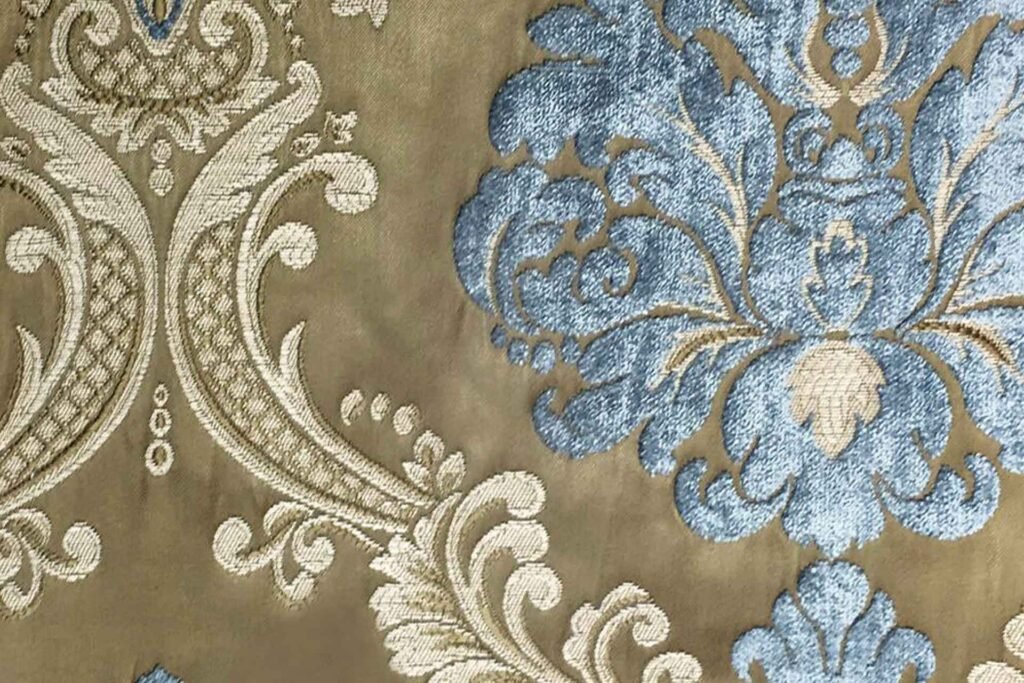
brocade damask fabric
The Common Ground — Why All Three Use Jacquard Looms
Before explaining the differences, understanding what all three fabrics share helps clarify why the confusion exists.
All three — damask, jacquard pattern fabric, and brocade — are produced on a jacquard loom. The jacquard loom, invented by Joseph Marie Jacquard in 1804, uses a mechanism that controls individual warp threads independently rather than in groups. This independent thread control allows the loom to produce virtually unlimited pattern complexity — shapes, curves, figurative designs, and multi-element compositions that standard plain weave, twill, or dobby looms cannot achieve.
The jacquard loom is therefore not a fabric type — it is a production technology. Saying a fabric is 'jacquard' tells you it was produced on a jacquard loom, but nothing specific about its structure, pattern, or performance. Damask and brocade are both jacquard fabrics — they are specific constructions produced on jacquard looms with defined structural characteristics that distinguish them from each other and from other jacquard-produced fabrics.
Damask — Self-Colored, Reversible, Structural Pattern
Damask is the most structurally specific of the three categories — it has a precise definition based on how its pattern is created.
How damask pattern is created: Damask uses two different weave structures within the same single-color yarn — typically satin weave for the pattern motif and plain or twill weave for the ground fabric, or vice versa. Because satin weave and plain weave reflect light differently, the pattern appears as a contrast of light and shadow on the fabric surface — without any color difference in the yarn. One yarn color, two weave structures, one pattern.
Defining characteristics:
- Single yarn color — the pattern is created by light-shadow contrast, not color contrast
- Reversible — the pattern appears on both faces, with figure and ground swapped
- Flat surface — no raised pile, no supplementary threads, no surface texture beyond the weave
- Pattern is structural and permanent — cannot fade, wash out, or wear away
Where damask is the correct specification: Applications requiring pattern permanence and formal elegance without color complexity — hotel table linen, formal upholstery, curtains and drapes, evening wear, and any application where the fabric will be seen from both sides or where long-term pattern integrity through repeated cleaning is essential.
Jacquard — The Broad Category
'Jacquard fabric' as a product description is the broadest of the three terms — it covers any figured woven fabric produced on a jacquard loom that does not fit the specific definitions of damask or brocade.
How jacquard pattern is created: Jacquard fabric can use any combination of weave structures, yarn colors, and thread counts to create its pattern. Unlike damask (which is limited to two weave structures and one color) or brocade (which adds supplementary threads), standard jacquard fabric uses the full flexibility of the jacquard loom to create patterns in whatever combination of colors and weave structures the designer specifies.
Defining characteristics:
- Can be single-color or multi-color depending on yarn used
- Not necessarily reversible — depends on specific construction
- Flat or textured surface depending on weave combination
- Covers an enormous range of fabric weights, constructions, and applications
- Damask and brocade are both technically jacquard fabrics — but the term 'jacquard' used commercially typically refers to figured fabrics that are neither damask nor brocade
Where jacquard is the correct specification: Fashion fabric requiring complex figurative or multi-color woven patterns — floral designs, geometric compositions, pictorial motifs — where the design complexity exceeds what dobby construction can achieve but the raised surface texture of brocade is not required. Also widely used in home textiles, ties, and ribbon where pattern complexity is the primary design requirement.
Brocade — Supplementary Threads, Raised Surface, Multi-Color
Brocade is the most visually distinctive of the three categories — its defining characteristic is the use of supplementary weft threads that create raised pattern elements on the fabric surface.
How brocade pattern is created: Brocade weaves supplementary weft threads — in addition to the ground weft threads — into the fabric at specific points to create raised, three-dimensional pattern elements. These supplementary threads are typically in different colors from the ground fabric, creating multi-color pattern compositions with visible surface relief. The supplementary threads appear on the fabric face where the pattern is active and float on the reverse where they are not — which is why brocade is not reversible and the reverse shows loose floating threads.
Defining characteristics:
- Multi-color — supplementary threads add color beyond the ground yarn
- Not reversible — floating supplementary threads visible on reverse face
- Raised surface texture — supplementary threads create three-dimensional relief
- More complex and expensive production than damask at equivalent pattern scale
- Heavier than equivalent damask — supplementary threads add weight
Where brocade is the correct specification: Formal garments requiring rich, multi-color woven pattern with visible surface texture — traditional ceremonial garments, wedding fabric, formal occasion wear, luxury upholstery for statement furniture pieces. Brocade's raised surface and color richness make it more visually dramatic than damask — appropriate for applications where maximum visual impact is the priority.
Direct Comparison — Damask vs Jacquard vs Brocade
| Factor | Damask | Jacquard (general) | Brocade |
|---|---|---|---|
| Loom type | Jacquard loom | Jacquard loom | Jacquard loom |
| Pattern method | Two weave structures, one color | Any weave and color combination | Ground weave + supplementary weft threads |
| Color range | Single color — self-colored | Single or multi-color | Multi-color — supplementary threads |
| Reversibility | Yes — pattern reverses on back | Not necessarily | No — floating threads on reverse |
| Surface texture | Flat — subtle light-shadow relief | Varies by construction | Raised — three-dimensional relief |
| Pattern permanence | Permanent — structural | Permanent — structural | Permanent — structural |
| Weight | Light to heavy | Light to heavy | Medium to heavy — extra threads add weight |
| Production complexity | Medium | Medium to high | High — supplementary thread management |
| Cost vs plain weave | Moderate premium | Moderate to high premium | High premium |
| Cleaning/maintenance | Easy — flat surface | Depends on construction | More care needed — raised surface |
| Best applications | Table linen, upholstery, curtains, formal garments | Fashion, home textiles, varied | Formal garments, ceremonial, luxury upholstery |
How to Choose Between the Three — Application Decision Guide
Choose damask when:
- Pattern permanence through repeated washing or cleaning is essential
- The fabric will be used from both sides or reversibility adds value
- A formal, elegant aesthetic is required without color complexity
- Easy cleaning and maintenance are specification requirements
- Applications: hotel table linen, formal upholstery, curtains, evening wear, bedding
Choose jacquard (general figured) when:
- Multi-color woven pattern is required without raised surface texture
- Complex figurative or geometric pattern design is needed
- The application is fashion or decorative textile where pattern variety is the primary driver
- Applications: fashion garments, ties, ribbons, decorative home textiles, fashion upholstery
Choose brocade when:
- Maximum visual impact with raised, multi-color surface pattern is the design brief
- Traditional or ceremonial aesthetic is appropriate for the application
- The fabric will be seen and not touched repeatedly — display or occasional use
- Applications: wedding and bridal fabric, ceremonial garments, statement upholstery, luxury accessories
Cost Comparison — What Drives the Price Difference
Understanding what drives cost differences between these three fabric categories helps buyers evaluate supplier quotations accurately.
Damask cost drivers:
- Jacquard loom setup cost for pattern programming
- Yarn cost — single yarn color, cost determined by fiber type and denier
- Thread count — higher thread count increases production time and yarn consumption
- Fiber composition — silk damask significantly more expensive than polyester damask
Jacquard cost drivers:
- Loom setup cost — complex patterns with many color changes increase setup time
- Yarn cost — multi-color designs use multiple yarn types, each with separate setup
- Pattern complexity — figurative and large-scale patterns require more loom programming time
Brocade cost drivers:
- All jacquard cost factors plus supplementary thread costs
- Supplementary thread management during weaving — more complex than standard jacquard
- Higher yarn consumption — supplementary threads add material cost
- Float management on reverse — floating threads require careful tension control
Practical implication: At equivalent pattern scale and fiber composition, brocade is typically the most expensive, damask the most cost-effective, and standard jacquard sits between the two depending on pattern complexity and color count. For buyers specifying figured fabric on a budget, damask delivers the most formal aesthetic per dollar of fabric cost.
Production Considerations — What Manufacturers Need to Know
Cutting and pattern matching All three fabric types require careful pattern matching during cutting — the woven pattern must align at seams, particularly in upholstery and formal garment applications. Pattern repeat dimensions (warp repeat and weft repeat in centimeters) must be factored into fabric consumption calculations. Larger pattern repeats increase fabric consumption per garment or furniture piece — request pattern repeat dimensions from your supplier before calculating order quantities.
Pressing and finishing Damask and standard jacquard fabrics can be pressed with standard industrial pressing equipment — confirm maximum temperature for the specific fiber composition. Brocade requires more careful pressing due to the raised supplementary threads — excessive heat or pressure can flatten the raised surface relief, permanently damaging the fabric's visual character. Press brocade face-down on a needle board or padded pressing surface.
Sewing behavior All three fabric types can be sewn with standard industrial sewing equipment. For brocade, use sharp needles and reduce sewing speed in areas of high supplementary thread density — needle penetration through multiple thread layers in raised pattern areas requires more force than plain ground fabric areas.
Fraying All three figured woven fabrics fray at cut edges — allow adequate seam allowances and finish all cut edges before assembly. Higher thread count fabrics (typical of quality damask and brocade) fray less readily than lower thread count constructions.
Frequently Asked Questions
Is all damask jacquard? Yes — damask is a specific type of jacquard fabric. All damask is produced on a jacquard loom and is therefore technically jacquard. But not all jacquard is damask — jacquard covers any figured fabric produced on a jacquard loom, including multi-color figured fabrics, brocade, and other constructions that do not meet the specific definition of damask (self-colored, reversible, two-weave-structure pattern).
Can brocade be washed? Brocade washing behavior depends on fiber composition. Polyester brocade can typically be gently machine washed. Silk and viscose brocade require dry cleaning — wet cleaning risks damage to both the ground fiber and the supplementary thread integrity. Cotton brocade can be hand washed with care. Always confirm washing instructions with your supplier for the specific brocade composition before advising end customers on care.
What is the difference between damask and jacquard in upholstery? In upholstery applications, damask provides a formal, self-colored pattern with a flat cleanable surface — appropriate for traditional and luxury formal furniture. Standard multi-color jacquard provides pattern variety and color options for more contemporary or decorative furniture applications. Both are woven patterns with good permanence for upholstery use. The choice depends on the design brief — damask for formal traditional aesthetics; multi-color jacquard for contemporary or colorful interior design directions.
Is brocade suitable for everyday upholstery? Standard brocade is not ideal for high-traffic everyday upholstery — the raised supplementary threads are more susceptible to snagging, catching, and abrasion than the flat surface of damask. For occasional seating, decorative chairs, and statement furniture pieces with light use, brocade delivers maximum visual impact. For everyday high-traffic seating, damask or plain jacquard with confirmed Martindale abrasion ratings is the more practical specification.
What is the minimum order for wholesale damask, jacquard, and brocade fabric? At XINGYE TEXTILE, standard MOQ for stock damask and jacquard fabric is 500–1,000 meters per color. Brocade and complex custom pattern development typically requires 1,000–2,000 meters minimum. Contact our team to confirm MOQ for your specific pattern and composition requirement.
Source Wholesale Damask, Jacquard & Brocade Fabric from XINGYE TEXTILE
XINGYE TEXTILE supplies wholesale figured woven fabric — damask, jacquard pattern fabric, and brocade — in polyester, cotton, viscose, silk, and blend compositions, serving furniture manufacturers, garment producers, home textile brands, and wholesale fabric buyers worldwide. Factory-direct pricing, MOQ from 500 meters for stock fabric, free swatches available before bulk commitment.
→ Browse Our Full Fabric Range → Browse Upholstery Fabric → Read: What Is Damask Fabric? → Read: Damask Upholstery Fabric → Read: What Is Dobby Fabric? → Request a Free Swatch → Get a Wholesale Quote