For anyone shopping for clothing or textiles, the terms rayon and viscose can be confusing. They are often used interchangeably, but is there a difference? Understanding what these fabrics are, how they’re made, and how they perform can help you make smarter purchasing decisions.
1. What Is Rayon?
Rayon is a semi-synthetic fiber made from natural cellulose, usually sourced from wood pulp or bamboo. Although it originates from a natural material, it undergoes chemical processing to create a versatile textile.
Key Features of Rayon:
-
Soft and smooth feel, often compared to silk
-
Lightweight and breathable
-
Drapes well, making it ideal for dresses, blouses, and scarves
-
Absorbs dye easily, resulting in vibrant colors
Because it is semi-synthetic, rayon is considered a regenerated cellulose fiber, falling between natural fibers like cotton and fully synthetic fibers like polyester.
2. What Is Viscose?
Viscose is technically a type of rayon. The term “viscose” usually refers to the most common manufacturing method: the viscose process, in which cellulose is treated with chemicals to form a viscous solution that is then spun into fibers.
Key Features of Viscose:
-
Smooth, soft, and silky texture
-
Breathable and lightweight
-
Drapes beautifully, making it ideal for flowy garments
-
Prone to shrinking or stretching if not handled properly
Viscose is widely used in apparel, home textiles, and linings.
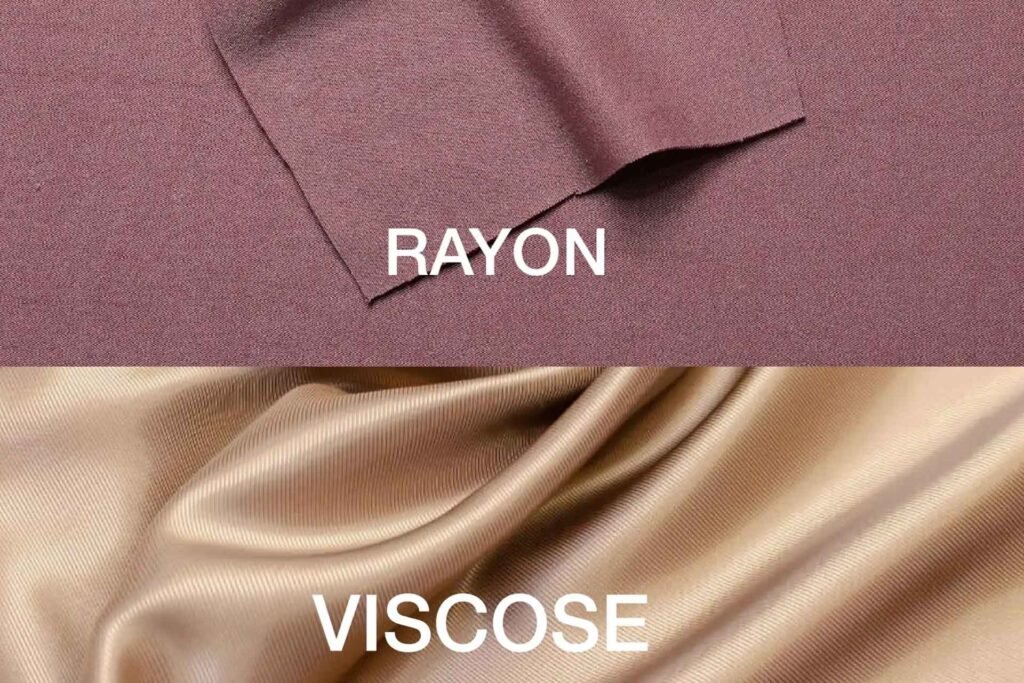
rayon vs viscose
3. Rayon vs Viscose: The Real Difference
| Feature | Rayon | Viscose |
|---|---|---|
| Origin | Made from regenerated cellulose | Type of rayon made using the viscose process |
| Texture | Soft, silky, versatile | Silky, smooth, breathable, slightly more delicate |
| Use | Clothing, upholstery, home textiles | Apparel, linings, dresses, scarves |
| Names | Can be labeled rayon, rayon viscose | Often labeled viscose, rayon viscose |
| Durability | Medium; prone to wrinkling and shrinkage | Slightly weaker when wet; careful washing required |
Summary: All viscose is rayon, but not all rayon is viscose. The difference mainly lies in the production method rather than the final fiber’s appearance.
4. Care Tips for Both Fabrics
Both rayon and viscose are delicate and require gentle handling:
-
Washing: Prefer hand wash or cold machine wash on gentle cycle
-
Drying: Air dry; avoid high heat as it may shrink fibers
-
Ironing: Use low heat with a pressing cloth to prevent damage
-
Storage: Store folded rather than hanging to prevent stretching
Following proper care ensures your garments retain their softness, shape, and vibrant colors.
5. Which Should You Choose?
-
For Everyday Wear: Rayon offers durability and a variety of textures for casual and formal garments.
-
For Flowing Dresses & Silky Drapes: Viscose provides superior drape, softness, and vibrant color absorption.
-
For Sustainable Considerations: Both are semi-synthetic; check for eco-friendly viscose or rayon made from FSC-certified wood pulp.
Final Thoughts
Rayon and viscose are closely related, and in many cases, the terms can be used interchangeably. Understanding their subtle differences—mainly in production method—helps you choose the right fabric for your clothing, home textiles, or DIY projects.
When shopping, focus on texture, drape, and care requirements, and you’ll get a garment that looks great and lasts longer.