Fabric Inspection: How the 4-Point System Works
What Is Fabric Inspection?
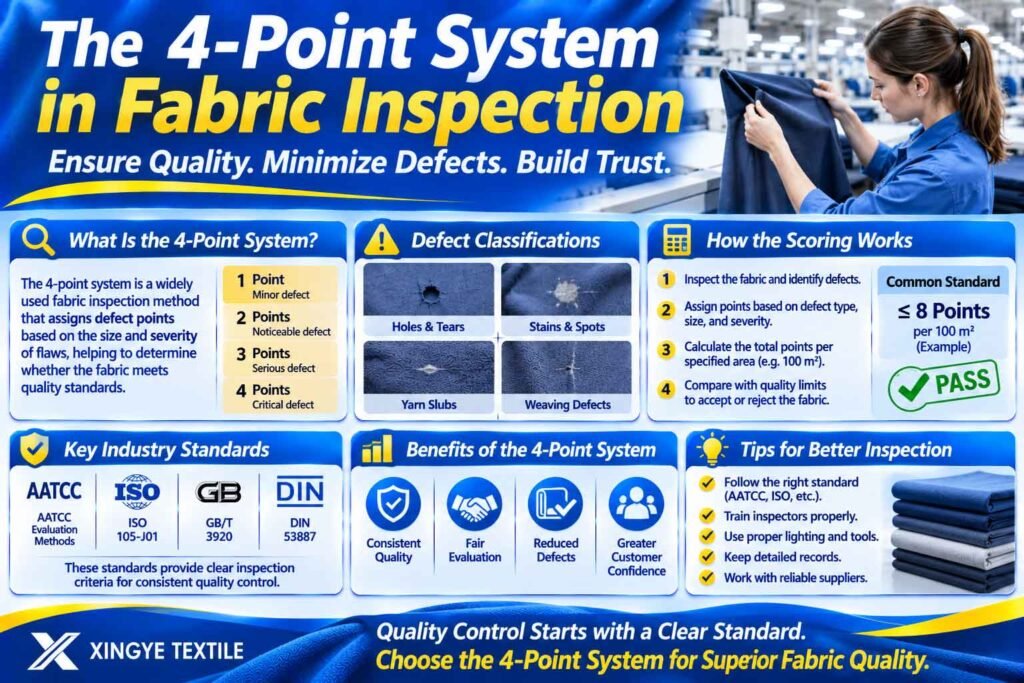
The Importance of the 4-Point System in Fabric Inspection
How the 4-Point System Works: Defect Length and Scoring
| Defect Length | Points Assigned | Typical Examples |
|---|---|---|
| 0 to 3 inches (0 - 7.6 cm) | 1 point | Minor slubs, small spots, tiny snags |
| Over 3 to 6 inches (7.6 - 15.2 cm) | 2 points | Thicker slubs, small holes, stains |
| Over 6 to 9 inches (15.2 - 22.9 cm) | 3 points | Shade bars, continuous thick weft |
| Over 9 inches (22.9 cm and above) | 4 points | Large holes, full-width defects, long stains |
Defect Classification: Major vs. Minor
-
Major Defects: These are severe enough to render the fabric or garment unusable in first-quality products. Examples include large holes, continuous dye streaks, or significant color mismatches. Major defects typically carry higher penalty points.
-
Minor Defects: These are small imperfections that may not affect the fabric’s usability or appearance significantly. Examples include tiny slubs or slight shade variations in non-visible areas. Minor defects usually carry fewer points or may be acceptable depending on the fabric’s end use.
Step-by-Step Fabric Inspection Using the 4-Point System
-
Preparation:
The fabric roll is unrolled on an inspection table with proper lighting (typically D65 daylight lamps at 1000-1200 lux). The fabric is inspected full width at a controlled speed (15-20 yards per minute).
-
Defect Identification:
Inspectors scan the fabric visually, noting defects on one side (or both sides if agreed upon). Each defect is measured and assigned points based on length.
-
Scoring:
Points are assigned per defect according to the length-based scale above. Multiple defects within a yard are capped at 4 points.
-
Calculation:
The total points are converted to a standardized score per 100 square yards using this formula:
Points per 100 sq yards=Yards inspected×Fabric width in inchesTotal points×3600 -
Acceptance Criteria:
A fabric roll is typically accepted if the score is 40 points or less per 100 square yards. Premium fabrics may require stricter limits (e.g., 15-25 points). If the score exceeds the threshold or if continuous defects are found, the roll may be rejected or downgraded.
Sampling and Bulk Inspection
- Shipments under 1,000 yards: 100% inspection.
- Shipments over 1,000 yards: Sample 10-15% of rolls randomly.
- If more than 15-20% of sampled rolls fail, the entire shipment may be inspected.
Common Defects Detected in the 4-Point System
- Holes and Tears: Always penalized heavily; holes over 1 inch are 4 points.
- Shade Variation: Color mismatches beyond grade 4 on the AATCC gray scale are major defects.
- Oil Stains and Dirt Marks: Large or persistent stains score 4 points.
- Broken Yarns (Warp/Weft): Depending on size, can range from 1 to 4 points.
- Printing Errors: Misregistration or ghosting exceeding tolerance is penalized.
- Full-Width Defects: Such as weft bars or continuous streaks, are automatically 4 points per yard.
Advantages of the 4-Point System
- Simplicity: Easy to understand and implement.
- Objectivity: Provides a numerical basis for acceptance or rejection.
- Industry Standard: Widely recognized globally, facilitating supplier-buyer agreements.
- Flexibility: Can be adapted to various fabric types and inspection conditions.
Comparison with the 10-Point System
Best Practices for Effective Fabric Inspection
- Set Clear Standards: Define acceptable AQL levels and defect lists in purchase agreements.
- Use Proper Lighting: Consistent D65 lighting ensures accurate defect detection.
- Maintain Inspection Speed: Avoid rushing to minimize missed defects.
- Document Defects: Provide detailed reports with defect locations for informed decision-making.
- Train Inspectors: Skilled inspectors reduce subjective errors and improve consistency.
- Communicate with Suppliers: Share inspection results to improve upstream quality.