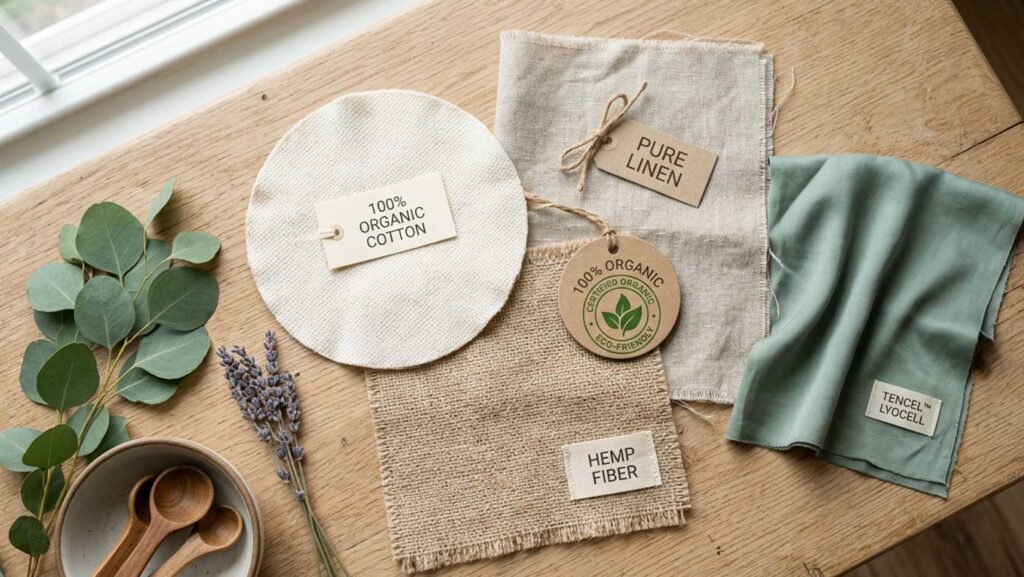
what is the safest fabric to wear
Why Fabric Safety Matters
- Health Risks: Skin irritation, allergic contact dermatitis, respiratory issues, and long-term exposure risks.
- Environmental Impact: Toxic runoff and microplastic pollution from synthetic fibers like polyester.
- Vulnerable Groups: Infants, children, pregnant women, and people with sensitive skin or chemical sensitivities face higher risks.
What Is the Safest Fabric to Wear? Top Natural and Semi-Synthetic Choices
1. Organic Cotton
- Why It’s Safe: Grown without synthetic pesticides or herbicides, organic cotton reduces chemical residues. When certified by GOTS (Global Organic Textile Standard), it ensures low-toxicity processing.
- Benefits: Breathable, hypoallergenic, soft, and biodegradable.
- Best For: Everyday basics, underwear, activewear, denim.
- Considerations: Slightly higher cost; look for GOTS certification to guarantee safety.
2. Linen
- Why It’s Safe: Made from flax, linen requires less water and fewer pesticides than cotton. It is naturally breathable, moisture-wicking, and antimicrobial.
- Benefits: Thermoregulating, durable, and softens with wear.
- Best For: Summer clothing—pants, shirts, dresses.
- Considerations: Wrinkles easily, which adds natural texture.
3. Hemp
- Why It’s Safe: Hemp is a sustainable, strong fiber that grows quickly with minimal water and no pesticides. It’s naturally antimicrobial and UV-resistant.
- Benefits: Durable, breathable, hypoallergenic, and carbon-negative in production.
- Best For: Outerwear, workwear, structured garments.
- Considerations: Can feel coarse initially but softens with washing.
4. Tencel™ (Lyocell) and Modal
- Why It’s Safe: Semi-synthetic fibers made from sustainably sourced wood pulp (usually eucalyptus or beechwood) in closed-loop systems that recycle water and solvents, reducing environmental impact.
- Benefits: Exceptionally soft, breathable, moisture-wicking, odor-resistant, and biodegradable.
- Best For: Everyday wear, activewear, sleepwear, denim blends.
- Considerations: Requires gentle washing; choose Lenzing-branded Tencel™ or Modal for better sustainability.
5. Silk
- Why It’s Safe: Natural protein fiber from silkworms, biodegradable and non-toxic in raw form.
- Benefits: Smooth, breathable, naturally infection-resistant.
- Best For: Dresses, nightwear, linings.
- Considerations: Animal welfare concerns; opt for 'peace silk' or 'Ahimsa silk' to support ethical production.
6. Wool (Merino, Alpaca)
- Why It’s Safe: Natural animal fiber with thermoregulating and water-resistant properties.
- Benefits: Warm, breathable, biodegradable, and supports circular fashion.
- Best For: Cold-weather layering, sweaters, socks.
- Considerations: Look for mulesing-free and ethically sourced wool.
Fabrics to Approach with Caution
Polyester, Nylon, Acrylic, and Other Synthetics
- Concerns: Made from fossil fuels, these fabrics shed microplastics that pollute the environment and may carry residual chemicals causing skin irritation.
- Health Risks: Disperse dyes in polyester are known allergens; synthetic fibers lack breathability, promoting bacterial growth.
- When to Use: Limited use in activewear for stretch; opt for blends with higher natural or semi-synthetic fiber content.
Rayon, Viscose, Bamboo (Non-Lyocell)
- Concerns: Chemically intensive manufacturing processes involving toxic solvents like carbon disulfide.
- Health Risks: Environmental pollution and potential harm to factory workers.
- Better Alternative: Choose lyocell or Tencel™ versions made in closed-loop systems.
Treated Fabrics (Wrinkle-Free, Stain-Resistant, Antimicrobial)
- Concerns: Often treated with formaldehyde, PFAS, or antimicrobial chemicals that can irritate skin or disrupt microbiomes.
- Tip: Avoid garments with “easy care,” “wrinkle-resistant,” or “stain-proof” labels unless the manufacturer discloses non-toxic treatments.
How to Identify Safe and Non-Toxic Fabrics
-
Certification Labels to Look For:
- GOTS (Global Organic Textile Standard): Covers organic fiber content and chemical use in processing.
- OEKO-TEX® Standard 100: Tests finished textiles for over 350 harmful substances.
- Bluesign®: Ensures environmental and consumer safety throughout the supply chain.
-
Read Fiber Content Labels Carefully: Beware of blends that may dilute the benefits of natural fibers.
-
Ask About Finishes and Dyes: Look for natural or low-impact dyes and undisclosed chemical treatments.
-
Choose Simple, Untreated Fabrics: Avoid “performance” or “functional” coatings unless fully transparent.
Practical Tips for Building a Safer Wardrobe
- Start Small: Replace base layers like underwear, t-shirts, and sleepwear with certified organic cotton or Tencel™.
- Wash New Clothes Before Wearing: Removes residual chemicals and reduces irritation.
- Use Fragrance-Free, Dye-Free Detergents: Avoid adding irritants during laundry.
- Avoid Fabric Softeners: They can leave residues that irritate sensitive skin.
- Consider Secondhand Shopping: Older garments often have fewer chemical finishes.
- Rotate Your Wardrobe: Allow clothes to rest and air out to reduce chemical buildup.
- Support Transparent Brands: Choose companies that disclose their materials, certifications, and production methods.
The Future of Safe Fabrics: Innovations on the Horizon
Conclusion
Frequently Asked Questions (FAQs)
Q1: What is the least toxic fabric for sensitive skin?
A: GOTS-certified organic cotton is often the safest choice, along with untreated linen, hemp, and Tencel™ lyocell.
Q2: Is polyester a toxic fabric?
A: Polyester is synthetic and can shed microplastics. It often contains chemical dyes and finishes that may irritate sensitive skin, so it’s best avoided for close-to-skin wear.
Q3: Are bamboo fabrics safe?
A: Most bamboo fabrics are viscose or rayon made with toxic chemicals. Look for bamboo lyocell or mechanically processed bamboo linen as safer alternatives.
Q4: How can I reduce chemical exposure from my clothes?
A: Wash new clothes before wearing, use fragrance-free detergents, avoid fabric softeners, and choose certified organic or OEKO-TEX® labeled fabrics.