Rayon Is Not Synthetic. It's Not Fully Natural. It's the Original Semi-Synthetic Textile.
Rayon occupies a strange place in most people's understanding of textiles. It feels like cotton but shinier. It drapes like silk but costs less. It comes from wood pulp — a natural material — but is processed with chemicals in a factory. Is it natural? Is it synthetic? The answer is neither, and both.
Rayon (also called viscose) is the first man-made cellulosic fiber. It was invented in the 1880s as an affordable alternative to silk, and it has been one of the most widely used textile fibers ever since. It is made from natural cellulose (wood pulp) that is dissolved, extruded, and regenerated into fiber form — making it a 'semi-synthetic' or 'regenerated' fiber.
The term 'rayon' is used primarily in the United States, while 'viscose' is the preferred term in Europe and Asia. They refer to the same fiber: regenerated cellulose from wood pulp, processed through the viscose process.
This guide covers what rayon/viscose fabric is, how it's made, the different types of rayon, its properties, how it compares to cotton and polyester, and how to source quality viscose fabric.
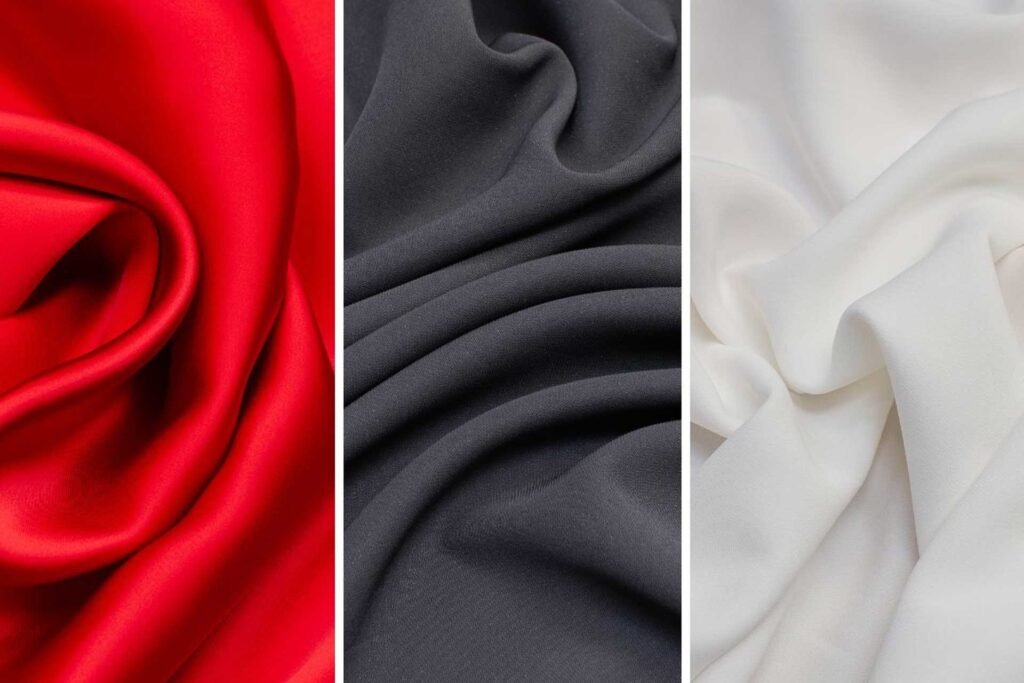
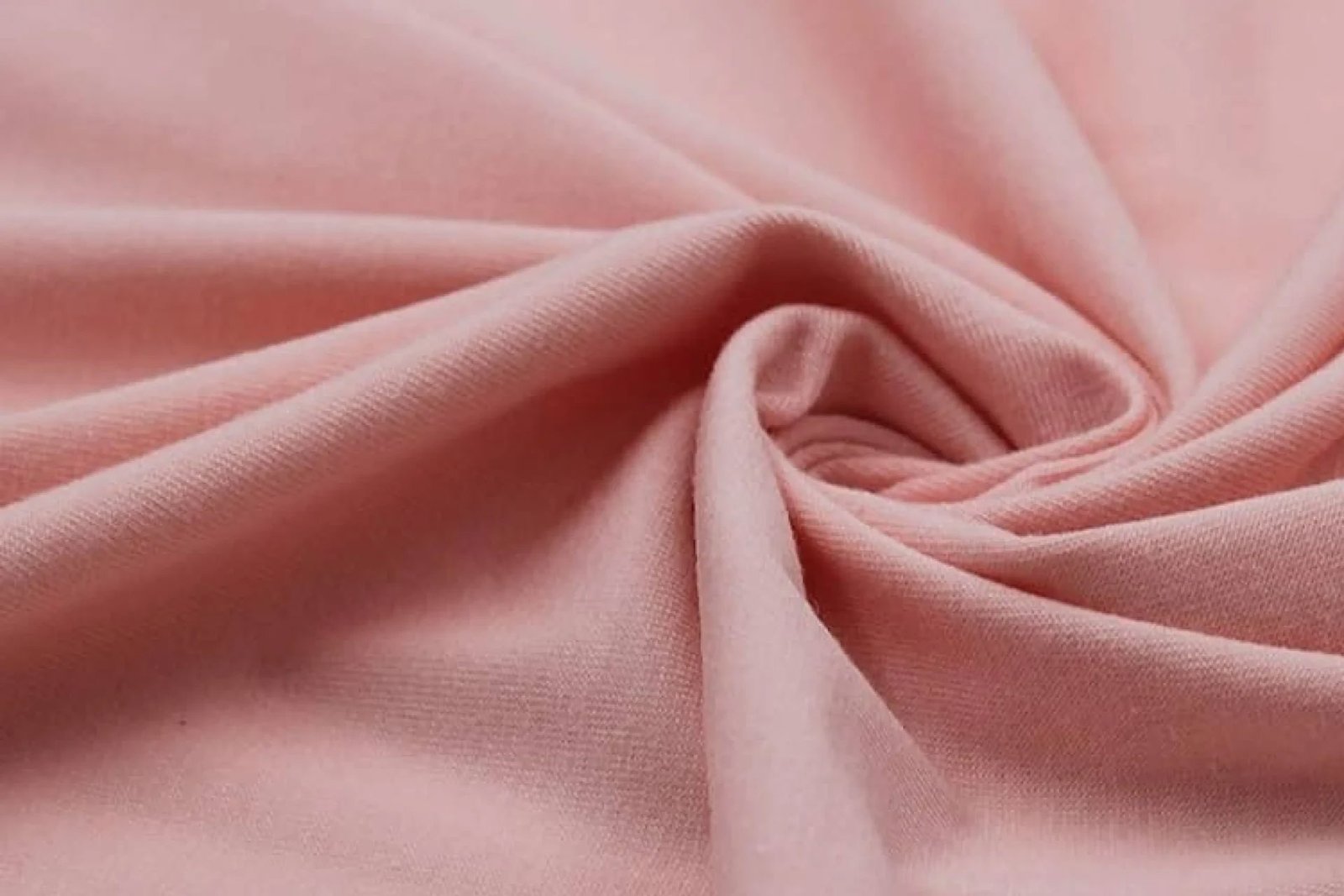
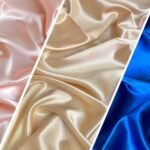
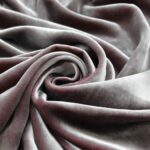
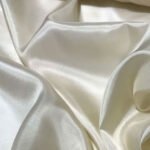
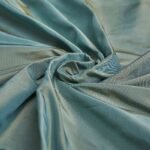
viscose rayon fabric
What Is Rayon / Viscose Fabric?
Rayon and viscose are the same fiber. The difference is regional terminology.
| Term | Region | Meaning |
|---|---|---|
| Rayon | United States | Generic term for all regenerated cellulosic fibers |
| Viscose | Europe, Asia, global | Named after the viscous (thick liquid) solution used in manufacturing |
| Viscose rayon | Technical usage | Precise term that describes the fiber type and process |
The fiber:
- Made from cellulose (wood pulp) — a natural, renewable raw material
- Processed chemically to dissolve and re-form the cellulose into fibers
- Classified as a 'regenerated cellulosic fiber' or 'semi-synthetic'
- Not synthetic — the final fiber is still cellulose, not plastic
- Not fully natural — the cellulose is dissolved and re-extruded through human technology
| Fact | Rayon / Viscose |
|---|---|
| Fiber source | Wood pulp (pine, spruce, beech, eucalyptus, bamboo) |
| Fiber type | Regenerated cellulosic (semi-synthetic) |
| Invented | 1884 by Hilaire de Chardonnet (France) |
| Commercialized | 1890s — the first man-made fiber in commercial production |
| Original purpose | Affordable imitation silk — called 'artificial silk' |
| Global production | ~6 million tons annually — the third most produced textile fiber after polyester and cotton |
| Biodegradability | Yes — fully biodegradable |
How Is Viscose Rayon Made?
The viscose process has changed surprisingly little since its invention in the 1890s. Modern production has improved chemical recovery and environmental controls, but the basic chemistry remains the same.
| Stage | Process | What Happens |
|---|---|---|
| 1. Pulping | Wood logs are stripped, chipped, and dissolved in a chemical solution | Cellulose is separated from lignin and hemicellulose. The result is a purified cellulose pulp |
| 2. Steeping | Cellulose pulp is soaked in sodium hydroxide (caustic soda) | Swells the cellulose and converts it to alkali cellulose |
| 3. Shredding | The alkali cellulose is shredded into crumbs | Increases surface area for the next chemical reaction |
| 4. Aging | The crumbs are exposed to oxygen for controlled time | Reduces the cellulose chain length to the correct viscosity |
| 5. Xanthation | Carbon disulfide is added to the aged crumbs | Converts cellulose into sodium cellulose xanthate — a bright orange, crumbly solid |
| 6. Dissolving | The xanthate is dissolved in dilute sodium hydroxide | Produces a thick, viscous orange solution — this is where 'viscose' gets its name |
| 7. Filtration and deaeration | The viscose solution is filtered and air bubbles are removed | Ensures consistent fiber quality |
| 8. Extrusion | The solution is forced through spinnerets into a sulfuric acid bath | The acid neutralizes the xanthate and regenerates pure cellulose in fiber form |
| 9. Drawing and stretching | Fibers are stretched while still wet | Aligns the cellulose molecules for strength |
| 10. Washing and finishing | Fibers are washed, bleached (if needed), and dried | Removes chemicals. Fibers may be cut into staple lengths or left as filament |
Environmental concern: The traditional viscose process uses carbon disulfide and releases byproducts that can be harmful if not properly managed. Modern production facilities use closed-loop systems that capture and reuse chemicals. Always verify that your viscose supplier uses proper chemical recovery systems.
Types of Rayon / Viscose Fiber
Rayon is not one fiber — there are several types, each with different properties and manufacturing processes.
| Type | Manufacturing Process | Characteristics | Best For |
|---|---|---|---|
| Viscose rayon (standard) | Classic viscose process (CS₂ + NaOH) | Soft, drapes well, moderate strength. The most common type | Blouses, dresses, lining, curtains |
| High-wet-modulus (HWM) rayon | Modified viscose with stronger stretching during production | Stronger when wet than standard viscose. Modal is in this category | T-shirts, underwear, activewear |
| Modal | Modified viscose with higher polymerization | Exceptionally soft, stronger than viscose, low shrinkage | Premium t-shirts, underwear, loungewear |
| Lyocell (Tencel) | Direct solvent spinning (amine oxide) — no carbon disulfide | Very strong wet and dry, environmentally cleaner process | Premium apparel, denim, workwear |
| Cupro (cuprammonium rayon) | Dissolved in cuprammonium solution | Extremely fine, smooth, silk-like. Rare today | Luxury lining, premium garments |
| Bamboo viscose | Standard viscose process using bamboo pulp | Same as standard viscose. Marketing claims of 'natural bamboo' properties are overstated | Budget-friendly 'eco' apparel |
Important distinction:
- Standard viscose — loses 40-60% of its strength when wet
- HWM rayon / Modal — retains 60-80% of strength when wet
- Lyocell / Tencel — retains 85%+ of strength when wet
If you're making garments that will be washed frequently or worn in active conditions, choose HWM rayon, modal, or lyocell over standard viscose.
Rayon / Viscose Fabric Properties
| Property | Rating | Explanation |
|---|---|---|
| Softness | ★★★★☆ | Very soft — smoother than cotton, less soft than modal. The fiber surface is smooth and regular |
| Drape | ★★★★★ | Excellent drape — flows and falls gracefully. One of the best drape fibers, comparable to silk |
| Breathability | ★★★★☆ | Good breathability — better than polyester, comparable to cotton. Comfortable for all-day wear |
| Moisture absorption | ★★★★☆ | Absorbs moisture well — better than cotton. Good for hot weather |
| Strength (dry) | ★★★☆☆ | Moderate — sufficient for most apparel applications |
| Strength (wet) | ★★☆☆☆ | Poor — loses 40-60% of strength when wet. Standard viscose is weakest when wet |
| Shrinkage | ★★☆☆☆ | High — can shrink 5-10% if not pre-shrunk. Pre-washing is essential before cutting |
| Color retention | ★★★★☆ | Good dye uptake — colors are vibrant. Can fade over repeated hot washes |
| Pilling resistance | ★★★☆☆ | Moderate — short fibers can surface with friction. Higher-quality viscose resists pilling better |
| Wrinkle resistance | ★★☆☆☆ | Poor — wrinkles easily, similar to cotton |
| Static resistance | ★★★★☆ | Low static buildup — better than polyester |
| Biodegradability | ★★★★★ | 100% biodegradable in soil or water. Returns to nature |
| Cost | $$ (low to mid) | One of the most affordable semi-synthetic fibers |
Rayon / Viscose vs Cotton
| Factor | Viscose Rayon | Cotton |
|---|---|---|
| Fiber source | Wood pulp | Cotton plant |
| Softness | ★★★★☆ — smoother | ★★★☆☆ — varies by quality |
| Drape | ★★★★★ — fluid, elegant | ★★★☆☆ — stiffer |
| Breathability | ★★★★☆ — good | ★★★★★ — excellent |
| Moisture absorption | Good — better than cotton | Excellent |
| Strength (dry) | Moderate | Good |
| Strength (wet) | Poor — loses 40-60% | Stronger when wet |
| Shrinkage | 5-10% | 3-8% |
| Wrinkle resistance | Poor | Poor |
| Cost | $ - $$ | $ - $$$ |
| Eco-friendly | Dependent on chemical recovery | Natural but water-intensive |
Rayon / Viscose vs Polyester
| Factor | Viscose Rayon | Polyester |
|---|---|---|
| Fiber source | Wood pulp (renewable) | Petroleum (non-renewable) |
| Softness | ★★★★☆ | ★★☆☆☆ (standard) |
| Breathability | ★★★★☆ | ★★☆☆☆ |
| Wrinkle resistance | ★★☆☆☆ | ★★★★★ |
| Strength | Moderate | High |
| Moisture absorption | Good | Very poor |
| Biodegradability | Yes — 100% | No — 200+ years |
| Static buildup | Low | High |
| Cost | $ - $$ | $ - $$ |
Common Uses of Viscose Rayon Fabric
| Application | Why Viscose | Typical Weight |
|---|---|---|
| Blouses and shirts | Soft, fluid drape, affordable silk-like appearance | 100-160 GSM |
| Dresses and skirts | Excellent drape, comfortable, vibrant colors | 120-220 GSM |
| Lining fabric | Smooth, lightweight, affordable. The most common lining fabric worldwide | 80-120 GSM |
| Scarves and accessories | Soft, drapes beautifully, takes vibrant prints | 80-140 GSM |
| Curtains and drapes | Drapes well, soft, affordable, takes color well | 160-280 GSM |
| Home textiles (bedding) | Soft, breathable, affordable alternative to cotton sheets | 120-180 GSM |
| T-shirts (HWM viscose) | Soft, drapes better than cotton t-shirts | 150-200 GSM |
| Activewear (blended) | Viscose-spandex blends for stretch, softness, breathability | 180-260 GSM |
| TR suiting (poly-viscose blend) | Viscose adds softness and drape to polyester's structure | 240-320 GSM |
Viscose Rayon Care
Viscose requires more careful handling than cotton or polyester — particularly when wet.
| Care Instruction | Why |
|---|---|
| Machine wash cold (30°C) or hand wash | Hot water accelerates shrinkage. Cold water is safer |
| Gentle cycle, low spin | Wet viscose is at its weakest. High-spin speeds can distort or tear the fabric |
| Mild detergent | Harsh detergents can damage the fiber surface. No bleach |
| Do not wring or twist | Wringing wet viscose can break fibers permanently |
| Do not soak for extended periods | Prolonged soaking weakens the fiber |
| Dry flat or hang dry — do not tumble dry | Tumble drying causes significant shrinkage and distortion |
| Iron on medium heat while slightly damp | Viscose irons well. Use a pressing cloth to avoid shine |
| Dry clean — the safest option for structured garments | For rayon dresses, blazers, and lined garments, dry cleaning is recommended |
Pre-washing is essential: Always pre-wash viscose fabric before cutting and sewing. Viscose can shrink 5-10% on the first wash. Cutting before washing results in garments that no longer fit after the first laundry cycle.
The Environmental Impact of Viscose Rayon
| Factor | Standard Viscose | Modern Production (Closed-Loop) |
|---|---|---|
| Raw material | Wood pulp — renewable, but source matters (old-growth vs managed forestry) | Same, but prefers FSC/PEFC certified sources |
| Chemical usage | High — carbon disulfide, caustic soda. Can be harmful if released | 95-99% of chemicals recovered and reused |
| Water usage | Moderate — less than cotton | Moderate |
| Wastewater | Potentially toxic if untreated | Treated and recycled |
| Biodegradability | 100% | 100% |
| Microplastics | None — cellulosic fiber biodegrades | None |
| Certifications | OEKO-TEX is essential to verify | EU Ecolabel, OEKO-TEX, FSC |
The reputation problem: Standard viscose production has a poor environmental reputation because some factories — particularly older ones in Asia — do not properly manage chemical waste. Closed-loop production solves most of these issues. Always verify your supplier's environmental certifications.
Viscose vs Modal vs Lyocell — The Comparison
| Factor | Viscose (Standard) | Modal (HWM) | Lyocell (Tencel) |
|---|---|---|---|
| Invented | 1890s | 1950s | 1990s |
| Process | Viscose (xanthation) | Modified viscose | Direct solvent (amine oxide) |
| Softness | ★★★★☆ | ★★★★★ | ★★★★★ |
| Wet strength | ★★☆☆☆ | ★★★★☆ | ★★★★★ |
| Shrinkage | 5-10% | <3% | <3% |
| Environmental rating | Poor to fair (varies by mill) | Good | Excellent |
| Cost | $ (low) | $$ (mid) | $$$ (mid-high) |
| Best use | Budget-friendly apparel, lining | Premium t-shirts, underwear | High-end apparel, denim, technical |
How to Buy Viscose Rayon Fabric — What to Specify
| Spec Element | What to Ask |
|---|---|
| Standard viscose or HWM? | HWM (modal-type) is preferred for washable garments |
| GSM | 80-120 for lining, 120-180 for blouses, 180-260 for dresses and pants |
| Weave | Plain, twill, satin, crepe, or jersey knit |
| Finish | Pre-shrunk (essential), anti-pill treatment (recommended) |
| Color | Custom dye or stock color |
| Width | Standard 140-150 cm |
| Certification | OEKO-TEX minimum. Closed-loop production preferred |
| Pre-shrunk? | Always ask. Unshrunk viscose can shrink 10%+ in the first wash |
Frequently Asked Questions
Q: Is rayon the same as viscose? A: Yes. Rayon is the US term. Viscose is the European and Asian term. They refer to the same fiber made through the same process.
Q: Is rayon fabric breathable? A: Yes — rayon is breathable, similar to cotton but slightly less so. It is significantly more breathable than polyester.
Q: Does rayon shrink? A: Yes — standard viscose rayon can shrink 5-10% on the first wash. Pre-shrunk rayon shrinks less. HWM rayon (modal) shrinks 2-3%. Always pre-wash rayon fabric before cutting.
Q: Is rayon bad for the environment? A: It depends on the production process. Traditional viscose production can be environmentally harmful if chemical recovery is not used. Closed-loop production is much cleaner. Lyocell (Tencel) is the cleanest option. Always buy from suppliers with verifiable environmental certifications.
Q: Is rayon stronger than cotton? A: Dry rayon and cotton have comparable strength. Wet rayon is significantly weaker — losing 40-60% of its strength. Cotton is stronger when wet.
Q: Can rayon be bleached? A: Yes, but carefully. Chlorine bleach can damage rayon fibers. Oxygen bleach is gentler and preferred.
Q: Is rayon good for summer? A: Yes — rayon is breathable, absorbent, and comfortable in warm weather. It is a good choice for summer dresses, blouses, and shirts.
Q: Is rayon biodegradable? A: Yes — 100%. Rayon is made from cellulose and will biodegrade in soil or water within months to a few years, unlike polyester which takes centuries.
Get a Quote — Viscose Rayon Fabric
XINGYE TEXTILE manufactures viscose rayon fabric in standard viscose and HWM (high-wet-modulus) quality. Available in 100% viscose and viscose blends (TR poly-viscose, viscose-spandex). GSM range 80-320. Weaves: plain, twill, satin, crepe. Custom colors, custom finishing. OEKO-TEX certified.
Applications: Blouses, dresses, lining, home textiles, TR suiting.
Minimum order: 300 meters per color. Sample-first ordering.