Spoiler: It's Usually Not What You Think
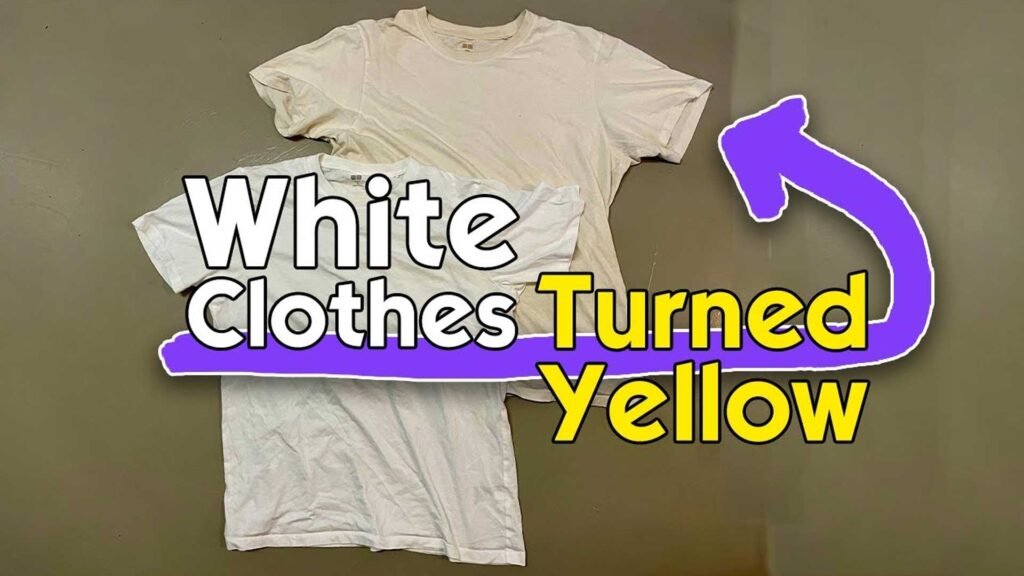
White fabric is the hardest color in the textile industry. Not because it's difficult to produce — it's actually one of the cheapest — but because every imperfection shows, and every chemical reaction that happens over the life of the garment changes the color from 'white' to 'warm white' to 'yellow' in a way that customers read as a quality defect.
Most people assume their white shirts turned yellow because the fabric was cheap or because they did something wrong in the wash. The reality is more complex. There are five distinct chemical and physical processes that make white fabric yellow, and they have very different causes — and very different solutions.
As a textile manufacturer that produces white fabric (thobe fabric, uniform shirting, and performance whites), we deal with this question every day. Here's what actually happens to white fabric, and what you can do about each cause.
Why Do White Clothes Turn Yellow
The 5 Real Causes of Yellowing in White Clothes
Not all yellowing is the same. The cause determines the fix.
| Cause | Source | Can It Be Reversed? | How to Prevent |
|---|---|---|---|
| Oxidative yellowing | Oxygen + heat + time | Partially (optical brightener) | Wash less hot, avoid chlorine bleach |
| OBA depletion | Optical brightening agents wash out | Yes (re-brighten) | Use non-chlorine brightener detergent |
| Deodorant / antiperspirant buildup | Aluminum compounds react with sweat | Yes (removal treatment) | Switch to aluminum-free deodorant |
| Plastic storage off-gassing | Phenolic antioxidants in plastic bins | Sometimes (vinegar wash) | Store in cotton bags or open air |
| Detergent residue buildup | Over-dosing detergent in hard water | Yes (hot water strip wash) | Use proper detergent dosage |
Cause 1: Oxidative Yellowing — The Most Common, Least Understood
Oxidative yellowing is a chemical reaction between the fabric and oxygen, accelerated by heat and UV light. It happens to every white fabric eventually — the only variable is how fast.
The chemistry: Most white fabrics contain fluorescent whitening agents (also called optical brighteners or OBAs). These are chemical compounds that absorb UV light and re-emit it as blue-violet visible light, making the fabric appear whiter than it actually is. Over time, these compounds degrade through oxidation — particularly when exposed to high heat (industrial laundry at 75°C+), chlorine bleach, or prolonged UV exposure.
When the OBA degrades, the underlying fabric color is revealed. And that underlying color — in most polyester, cotton, and poly-cotton blends — has a natural yellowish or grayish cast. That's the 'yellow' you see.
| Fabric | Natural Color Without OBA | How Fast OBA Degrades |
|---|---|---|
| 100% Cotton | Warm off-white (cream) | Fast — 10-20 hot washes |
| TC 65/35 | Grayish-white | Moderate — 20-30 hot washes |
| TR 65/35 | Grayish-white | Moderate — 20-30 hot washes |
| 100% Polyester | Bright white | Slow — 40+ hot washes |
The fix: Oxidative yellowing is partially reversible. Re-washing with a detergent containing optical brighteners can temporarily restore the blue-violet compensation. But once the OBA has fully degraded, no wash will fix it — the fabric is simply no longer white.
The manufacturer's perspective: This is not a fabric defect. It is a chemical property of all optical brighteners. If a supplier tells you their fabric 'will never yellow,' they are either lying or they haven't tested it beyond 10 washes. What matters is how fast the yellowing occurs — and that depends on the base fabric quality and the initial OBA loading.
Cause 2: OBA Depletion — When the Brightener Simply Washes Out
This is different from oxidative degradation. OBA depletion happens when the brightener is physically removed from the fabric by washing, rather than chemically broken down.
Low-quality white fabric may have OBA applied only as a surface finish. After 5-10 washes, the brightener is gone and the fabric looks dingy. Higher-quality white fabric has OBA integrated into the fiber during spinning or applied with a fixation agent that survives more wash cycles.
| OBA Application Method | Wash Cycles OBA Survives |
|---|---|
| Surface spray finish | 5-10 washes |
| Pad-dry-cure application | 15-25 washes |
| Fiber-integrated (dope-dyed or spun-in) | 40-60 washes |
What this means for uniform buyers: If you're purchasing white uniforms, ask your supplier how the OBA is applied. Surface-applied brighteners may look great on a sample shirt that hasn't been washed, but they won't survive the first month of industrial laundry. Fiber-integrated brighteners cost more but last the life of the garment.
Cause 3: Deodorant and Antiperspirant — The Underarm Yellow Stain
This is the yellowing that people notice most because it's the most visible: dark yellow or brownish stains concentrated at the underarm of white shirts.
What actually happens:
Two ingredients in most deodorants and antiperspirants react with sweat to create yellow stains:
-
Aluminum compounds (antiperspirants) — Aluminum salts temporarily block sweat ducts. When they mix with the proteins and salts in sweat, and are exposed to the heat of a wash cycle, a yellow chemical compound (a type of metal-protein complex) forms that bonds to the fabric fibers.
-
Parfum/fragrance compounds — Some fragrance ingredients react with ozone in the air or UV light and yellow over time. This is why some deodorants cause yellowing while others don't, even at the same aluminum concentration.
Temperature makes it permanent: If a deodorant-yellowed shirt is washed in hot water (60°C+) or dried in high heat, the protein-metal bond sets permanently. Cold water washing prevents this bond from forming permanently, but cannot break it once set.
The fix for current stains: Soak in a solution of oxygen bleach (hydrogen peroxide or sodium percarbonate) and cold water for 4-6 hours, then wash cold. Do not use chlorine bleach — it reacts with the aluminum compounds and makes the yellowing darker and more permanent.
The long-term fix: Switch to aluminum-free deodorant for white shirts, or wear an undershirt as a barrier.
Cause 4: Plastic Storage and Off-Gassing — The Closet Yellow
This one surprises most people. You put a perfectly white shirt in a plastic garment bag or sealed storage bin, take it out 6 months later, and it has yellow patches or an overall yellow cast. The shirt was clean when you stored it.
The chemistry: Many plastic storage products — polyethylene bins, PVC garment bags, even some dry-cleaning bags — contain phenolic antioxidants. These compounds prevent the plastic from degrading. But they also volatilize (off-gas) over time, especially in warm or humid conditions. The gas reacts with the OBA on the fabric and neutralizes it, causing localized yellowing exactly where the gas contacted the fabric.
The yellowing is not from dirt, not from residue, and not from mold. It's a chemical reaction between the plastic's preservative and your fabric's brightener.
| Storage Material | Risk Level | Safer Alternative |
|---|---|---|
| PVC garment bag | High — constant off-gassing | Cotton garment bag or breathable hanging storage |
| Polyethylene storage bin | Moderate — depends on temperature | Cardboard box or fabric bin |
| Dry-cleaning plastic bags | Moderate — gas buildup in closed bag | Remove plastic immediately at home |
| Cotton muslin bag | Safe | Any breathable fabric bag |
| Cardboard box with acid-free tissue | Safe | Archival-grade storage |
The fix: Wash the yellowed garment with a detergent containing enzymes or oxygen bleach. The yellowing is usually on the surface and can be removed in one or two washes if it was caused by off-gassing rather than heat oxidation.
Cause 5: Detergent Residue Build-Up — The Overdosing Problem
This is common in both home laundry and industrial laundry, and it creates a uniform yellow-gray cast across the entire garment rather than localized spots.
The mechanism: Most laundry detergents contain surfactants, builders, and optical brighteners. When too much detergent is used, or when water is too hard, the surfactants and brighteners don't fully rinse out. They remain trapped in the fabric fibers. Over time — 20, 30, 50 washes — this residual buildup accumulates and creates a visible yellow-gray layer on the fabric surface.
The irony: you're overdosing detergent to make your whites 'cleaner,' and the excess detergent is what makes them yellow.
How to tell it's detergent residue:
- The yellowing is even across the whole garment (not underarm-only or patchy)
- The fabric feels slightly stiff or waxy
- Washing with no detergent (a 'strip wash') removes 50-70% of the yellowing in one cycle
- The yellowing returns faster after each wash cycle
The fix:
- Strip wash — hot water (60°C), no detergent, 1 cup white vinegar in the rinse cycle
- Reduce detergent dosage by half for subsequent washes
- If you have hard water, add a water softener or use detergent formulated for hard water
Which Fabrics Stay White the Longest?
If you're buying white uniforms, white t-shirts, or white thobes — and you want them to stay white longer — the fabric choice matters.
| Fabric | Yellowing Resistance | Why |
|---|---|---|
| 100% Polyester | Excellent | Naturally white base, OBA lasts longer, low moisture absorption — fewer chemical reactions |
| 65/35 TR (poly-viscose) | Good | Polyester content helps, viscose is more stable than cotton with OBA |
| 65/35 TC (poly-cotton) | Good | Polyester helps. Cotton absorbs more sweat and detergent residue |
| 100% Cotton — mercerized | Fair | Mercerization improves dye/OBA uptake, but cotton's natural yellowness shows faster |
| 100% Cotton — untreated | Poor | OBA degrades fast, cotton naturally yellows with heat and UV |
| TC with chlorine-resistant finish | Very Good | Specially treated for industrial laundry — survives bleach exposure |
From the manufacturer's perspective: If you want white uniforms that stay white through 50+ industrial wash cycles, specify TC 65/35 with fiber-integrated OBA and a chlorine-resistant finish. It costs more upfront. It also costs less per wear, because the uniforms don't look 'old' at 6 months.
What to Look for When Buying White Uniforms — A Checklist
If you're sourcing white shirts, white thobes, or white uniforms professionally, ask your supplier these questions:
- OBA application method — Surface or fiber-integrated? Get the wash test result.
- OBA survival rate — How many washes until the white drops below an acceptable L-value?
- Base fabric whiteness — What is the fabric's natural color without OBA? L* value of 93+ is excellent
- Chlorine bleach tolerance — Can the fabric handle periodic bleach without accelerating yellowing?
- Shrinkage after 50 washes — ≤2% is standard for quality white uniform fabric
- Pilling resistance — Pilled white fabric looks yellow because shadows collect in the pills
- Wash test report — Ask for actual photos of the fabric at 0, 10, 20, 30, 50 washes
Get a Quote — White Fabric for Uniforms
XINGYE TEXTILE manufactures white fabrics engineered to stay white longer. TC 65/35 and TR 65/35 with fiber-integrated optical brighteners, chlorine-resistant finishes, and ≤2% shrinkage. Available in twill, poplin, plain weave, and gabardine. Ideal for thobes, uniform shirts, medical scrubs, and hospitality whites.
We don't guarantee 'never yellow.' That's not a real guarantee. We guarantee predictable, measurable whiteness retention backed by wash test data.