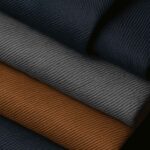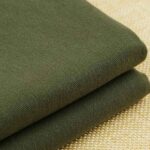
TR Stands for Terylene-Rayed (Polyester-Viscose). Here's What That Means for Your Garments.
If you've ever bought uniform fabric, suit fabric, or workwear fabric and seen 'TR' on a spec sheet, you've probably wondered what it actually means. Is it polyester? Is it rayon? Is it cotton? Which one is it supposed to replace?
The short answer: TR fabric is a polyester-viscose blend. Standard is 65% polyester and 35% viscose (rayon). It's designed to bridge the gap between polyester's durability and cotton's comfort — and it does that job better than either fiber alone for most uniform and suiting applications.
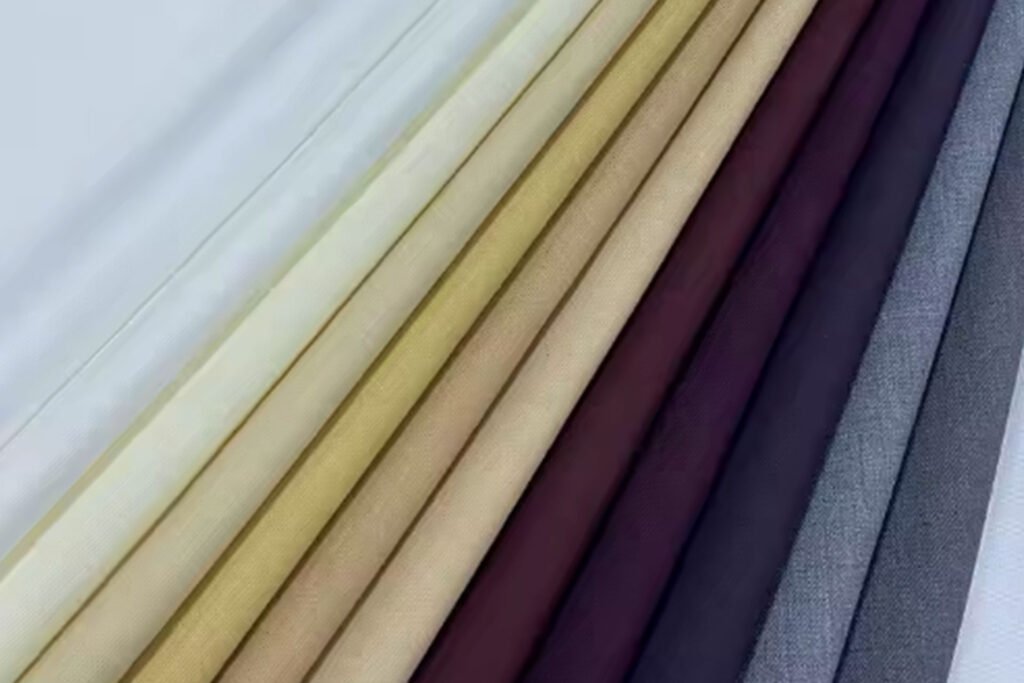
TR is not a brand name. It's not a weave. It's a fiber composition shorthand used across the textile industry — T for Terylene (polyester) and R for Rayon (viscose). If you're sourcing fabric for uniforms, suits, school blazers, or thobes, TR is likely the most common spec you'll encounter.
This guide covers what TR fabric is, how it's made, how it performs, and when you should choose it over cotton, polyester, or TC (polyester-cotton).
What Is TR Fabric
What Does 'TR' Stand For?
| Letter | Stands For | Also Known As | What It Is |
|---|---|---|---|
| T | Terylene | Polyester, PET | Synthetic fiber — strong, elastic, wrinkle-resistant |
| R | Rayon | Viscose, Artificial Silk | Semi-synthetic fiber from wood pulp — soft, breathable, absorbent |
The 'T' originally comes from the trademark name Terylene, the first polyester fiber commercialized in the UK. In China and most manufacturing markets, 'TR' is still the standard abbreviation for any polyester-viscose blend, regardless of brand.
Don't confuse TR with TC. TC is Terylene-Cotton (polyester-cotton). The difference matters — and we cover it in detail below.
What Is the Standard TR Fabric Composition?
The industry standard is 65% polyester / 35% viscose (65/35).
This ratio is not random. It was developed over decades of uniform and suiting manufacturing because it hits the optimal balance between:
| Property | Why 65/35 Works |
|---|---|
| Wrinkle resistance | 65% polyester is enough to make the fabric naturally wrinkle-resistant. No ironing needed for most garments |
| Breathability | 35% viscose adds enough natural fiber to let air pass through. Better than pure polyester |
| Hand feel / drape | Viscose softens the synthetic hand feel of polyester. TR drapes closer to wool suiting than to a poly shirt |
| Moisture absorption | Viscose absorbs moisture better than polyester, reducing static cling and sweat buildup |
| Durability | Polyester provides the tensile strength. Standard TR outlasts cotton suiting 3:1 in industrial laundry |
| Cost | TR is cheaper than wool, cheaper than high-end cotton, and comparable to mid-range TC |
Other blend ratios you'll encounter:
| Ratio | Use Case |
|---|---|
| 80/20 (poly/viscose) | Lighter weight shirting, budget uniforms. More durable, faster drying, but less soft |
| 50/50 (poly/viscose) | More breathable, softer hand feel. Less wrinkle-resistant. Used in casual suiting and schoolwear |
| TR with spandex (TRS) | 62/33/5 or similar — adds 3-7% spandex for stretch. Used for slim-fit uniforms and active workwear |
| TR with wool (TRW) | Blends wool into the viscose portion. Premium suiting with wool's hand feel at lower cost than pure wool |
How Is TR Fabric Made?
TR fabric production follows the same basic steps as most woven textiles, with specific adjustments for the polyester-viscose blend:
- Yarn spinning — Polyester and viscose staple fibers are blended and spun together into a single yarn. This is critical: the blend happens at the fiber level, not the weave level. Every thread contains both fibers.
- Weaving or knitting — The TR yarn is woven (most common for suiting and uniforms) or knitted (for more casual applications). Common weaves: twill (most common for suiting), plain weave (for lightweight shirts), gabardine (for structured uniforms), herringbone (for blazers).
- Dyeing — TR fabric takes dye well because both polyester and viscose accept color, though they require different dye types. Disperse dyes for polyester, reactive or direct dyes for viscose. A good TR manufacturer uses a two-bath dye process for color consistency.
- Finishing — Anti-pilling treatment (singeing + shearing), heat-setting for shrinkage control, and optional functional finishes (anti-static, moisture-wicking, stain-resistant, etc.).
TR Fabric Properties: What You Actually Get
Wrinkle Resistance
TR fabric is naturally wrinkle-resistant because polyester has elastic recovery memory. A TR suit hung overnight will release most wrinkles without ironing. In industrial uniform programs, TR shirts and pants come out of the dryer ready to wear with minimal touch-up.
- Rating: 4/5 (better than cotton or viscose, slightly less than pure polyester)
- Best for: Travel suiting, daily uniforms, school blazers
Breathability
This is TR's biggest advantage over pure polyester. The 35% viscose content allows air circulation through the fabric. It won't breathe as well as 100% cotton or linen, but it's significantly more comfortable than polyester for full-day wear.
- Rating: 3.5/5 (better than polyester, not as good as cotton)
- Best for: Year-round uniforms, office suiting, moderate climates
Hand Feel and Drape
TR fabric feels closer to wool suiting than to cotton or polyester shirting. It has a smooth, slightly crisp hand feel with good body — it holds a crease well and drapes cleanly. The surface can be finished to various textures: brushed (wool-like), calendered (smooth and slightly shiny), or peached (softened).
- Rating: 4/5 (superior to polyester, comparable to mid-weight wool)
- Best for: Formal uniforms, executive suiting, blazers
Durability
Polyester makes TR fabric strong. Standard TR (65/35) tested in industrial laundry conditions lasts 80-100+ wash cycles before showing significant wear. Compare to 20-30 cycles for cotton suiting.
- Rating: 4.5/5 (much better than cotton, slightly less than pure polyester)
- Best for: High-frequency industrial and hospitality uniforms
Shrinkage
Properly manufactured TR fabric should shrink ≤2% after multiple industrial washes. The polyester component provides dimensional stability, while heat-setting during finishing locks the fabric in place.
- Rating: 4.5/5 (very stable, consistent across production runs)
- Best for: Programs requiring uniform fit consistency over time
Pilling Resistance
Standard untreated TR fabric has moderate pilling risk — the polyester fibers can ball up on the surface with friction. Quality TR fabric uses anti-pilling technology (Siro-spinning + singeing + shearing) to achieve a Level 4.0+ pilling rating, which means minimal surface change after extended wear.
- Rating: 3.5/5 (4.0+ with anti-pill treatment, 2.5-3.0 without)
- Best for: Specify 'anti-pill' treatment when ordering for high-friction applications
Performance Comparison: TR vs. Other Common Fabrics
| Property | TR (65/35) | Cotton (100%) | Polyester (100%) | TC (65/35 poly-cotton) |
|---|---|---|---|---|
| Wrinkle resistance | ★★★★☆ | ★★☆☆☆ | ★★★★★ | ★★★★☆ |
| Breathability | ★★★☆☆ | ★★★★★ | ★★☆☆☆ | ★★★★☆ |
| Hand feel / softness | ★★★★☆ | ★★★★★ | ★★☆☆☆ | ★★★☆☆ |
| Durability (wash cycles) | 80-100 | 20-30 | 100+ | 60-80 |
| Shrinkage | ≤2% | 3-8% | <1% | 2-4% |
| Pilling resistance | ★★★☆☆ (4.0+ treated) | ★★★★☆ | ★★☆☆☆ | ★★★☆☆ |
| Moisture absorption | ★★★☆☆ | ★★★★★ | ★☆☆☆☆ | ★★★★☆ |
| Static cling | ★★★☆☆ | ★★★★★ | ★☆☆☆☆ | ★★★☆☆ |
| Cost | $$ | $$-$$$ | $ | $$ |
Key takeaway: TR is the best all-around choice for structured uniforms and suiting — it beats polyester on comfort, beats cotton on durability, and beats TC on hand feel and drape. The only area where it clearly loses is breathability to cotton.
Common Weaves and Weights for TR Fabric
| Weave | Typical GSM | Best For |
|---|---|---|
| Twill | 240-320 GSM | Suits, blazers, trousers — most common TR weave |
| Plain Weave | 180-240 GSM | Lightweight shirts, summer suiting, linings |
| Gabardine | 260-350 GSM | Structured uniforms, military-style, high-wear areas |
| Herringbone | 280-360 GSM | Blazers, luxury suiting, visual texture |
| Dobby | 200-280 GSM | Decorative uniform details, schoolwear |
What Is TR Fabric Best Used For?
Uniforms and Workwear (the #1 application) TR is the default fabric for hospitality uniforms, corporate workwear, school uniforms, and military/service uniforms worldwide. It holds creases, survives industrial laundry, and drapes professionally.
Suiting and Blazers TR suiting is the go-to alternative for budget-to-mid-range suits where wool is too expensive but pure polyester looks cheap. It provides the structure and drape that polyester alone can't match.
Thobes and Traditional Garments TR is widely used for thobe fabric because it combines white stability (doesn't yellow easily), wrinkle resistance for long wearing days, and a smooth hand feel against the skin.
School Uniforms School blazers, trousers, and skirts are often made from TR for the same reason hotels use it: it survives repeated washing with consistent appearance.
How to Buy TR Fabric: What to Ask Your Supplier
When you're sourcing TR fabric, don't just say 'I need TR.' Tell your supplier:
- Blend ratio — 65/35 is standard. Specify if you need 80/20, 50/50, or TRS/TRW.
- GSM range — What weight do you need? 180-220 for lightweight shirts, 240-320 for suiting, 320+ for heavy uniforms.
- Weave — Twill, plain, gabardine, herringbone, or dobby?
- Anti-pilling treatment — Yes or no. If you're making uniforms for high-friction use (military, hospitality), specify Level 4.0+ anti-pill.
- Shrinkage guarantee — ≤2% is the benchmark.
- Color fastness — Industrial wash rating or standard? Specify your wash conditions.
- Finish — Brushed, calendered, peached, or untreated?
Frequently Asked Questions
Q: Is TR fabric the same as polyester? A: No. TR is a blend of polyester and viscose (rayon). Pure polyester is 100% synthetic. TR combines synthetic (polyester) and semi-synthetic (viscose) fibers for a better balance of durability and comfort.
Q: Is TR fabric breathable? A: More breathable than polyester, less breathable than cotton. The 35% viscose content provides meaningful air circulation. It's comfortable for full-day wear in moderate climates and air-conditioned environments.
Q: Does TR fabric shrink? A: Quality TR fabric with proper heat-setting shrinks ≤2%. This is significantly better than cotton (3-8%) and comparable to TC. Always confirm shrinkage specs with your supplier before bulk ordering.
Q: Is TR fabric good for summer? A: In lightweight weaves (plain weave, 180-220 GSM), TR works for summer wear. It breathes better than polyester. For hot humid climates, consider cotton or tri-blend fabrics instead. For moderate summers with air conditioning, TR is fine.
Q: Can TR fabric be ironed? A: Yes — but it rarely needs it. TR is naturally wrinkle-resistant. When pressing is needed, use medium heat (wool setting). High heat can melt the polyester content.
Q: TR vs TC — which is better? A: TR has better hand feel and drape (closer to wool). TC has better breathability and is more absorbent. Choose TR for suiting, blazers, and structured uniforms. Choose TC for shirts, summer wear, and applications where breathability matters more than drape.
Q: Is TR fabric cheap? A: TR is mid-range. It costs more than pure polyester but less than cotton suiting or wool. For the performance you get (durability + appearance + comfort), TR offers the best value in the uniform and suiting market.
Get a Quote — TR Fabric Wholesale
XINGYE TEXTILE manufactures TR fabric from fiber to finished roll. Standard 65/35 polyester-viscose blends, custom ratios, anti-pilling treated, ≤2% shrinkage guaranteed. Available in twill, plain, gabardine, herringbone, and dobby weaves. GSM range 180-350. Custom colors and functional finishes supported.
Minimum order: 300 meters per color. Sample-first ordering available.
Premium TR Fabric Manufacturer | Polyester-Viscose Blends for Suiting