Nylon is the premium base fiber for bag fabric — delivering better abrasion resistance, lighter weight at equivalent denier, and softer surface texture than polyester at a 15–30% cost premium that is consistently justified in premium and technical bag applications. But 'nylon fabric for bags' is not a single material — it covers four distinct fabric constructions, each with different denier ranges, surface characteristics, mechanical properties, and application suitability. Oxford weave, ripstop, ballistic nylon, and nylon taffeta are all nylon fabrics used in bag manufacturing, but they serve fundamentally different product categories and performance requirements. This guide maps each nylon fabric construction to the bag applications it serves, with specific denier, coating, and GSM recommendations for each category.
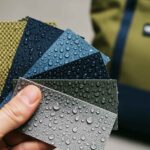
nylon bag material
The Four Nylon Fabric Constructions Used in Bag Manufacturing
Before selecting a specific nylon fabric for a bag application, understanding the four main construction types and what distinguishes them is essential.
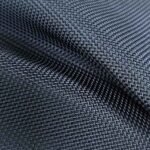
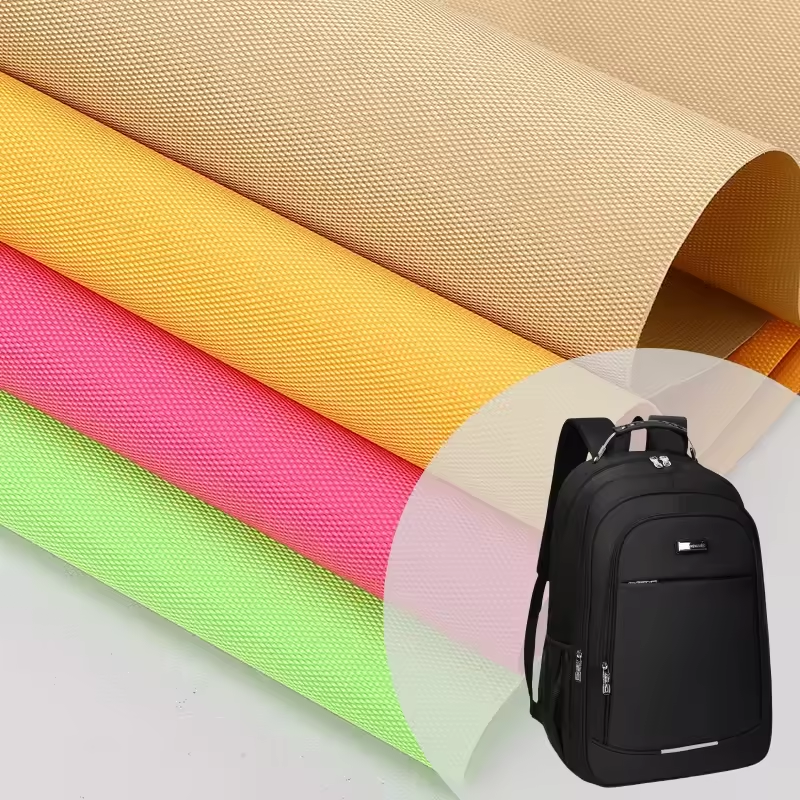
Nylon Oxford Basket weave construction — multiple warp and weft threads interlacing as paired units — producing the characteristic crosshatch surface texture of Oxford fabric. Nylon Oxford is the most widely used nylon bag fabric globally, balancing abrasion resistance, structural rigidity, and coating compatibility across 210D–840D denier range.
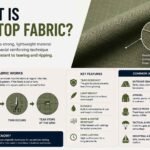
Ripstop Nylon Plain weave base construction with thicker reinforcement threads woven at regular intervals — typically every 5–8mm — creating a grid pattern that arrests tear propagation. If the fabric is punctured or cut, the reinforcement grid prevents the tear from spreading beyond the nearest reinforcement thread. Ripstop nylon is lighter than Oxford at equivalent denier, with better tear resistance relative to weight — making it the specification for weight-sensitive outdoor packs, lightweight bags, and equipment where puncture resistance is a real use condition.
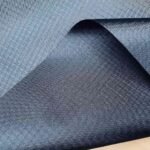
Ballistic Nylon 2×2 basket weave construction using very high denier yarn (840D–1680D) at maximum thread density — producing the heaviest, most abrasion-resistant, and structurally rigid nylon fabric available commercially. Ballistic nylon is used in premium and tactical bags where absolute mechanical durability is the specification requirement regardless of weight.
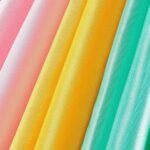
Nylon Taffeta Lightweight plain weave with smooth surface finish — the lightest nylon construction available (40–85 GSM across 150D–210D). Used in bag lining applications, lightweight stuff sacks, packable shopping bags, and any bag application where minimum weight is the primary specification.
Nylon Oxford — The Standard for Commercial Bag Production
Nylon Oxford is the default specification for the majority of commercial bag production — from everyday backpacks through travel luggage to professional equipment bags. Its combination of abrasion resistance, structural rigidity, color vibrancy, and coating compatibility at competitive pricing makes it the most versatile nylon bag fabric across all price points.
Denier and application mapping:
| Denier | GSM | Character | Best Bag Applications |
|---|---|---|---|
| 210D Nylon Oxford | 75–90 GSM | Lightweight, flexible | Lightweight daypacks, promotional bags, simple pouches |
| 420D Nylon Oxford | 150–180 GSM | Mid-weight, balanced | Everyday backpacks, travel bags, outdoor daypacks |
| 600D Nylon Oxford | 210–250 GSM | Heavy-duty, structured | Rolling luggage, hard-use backpacks, professional bags |
| 840D Nylon Oxford | 300–330 GSM | Maximum durability | Heavy tactical bags, extreme-duty outdoor gear |
Coating options for nylon Oxford bags:
- DWR: basic water repellency for everyday bags not requiring full waterproofing
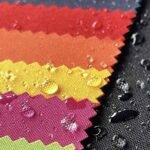
- PU coating: standard waterproof specification for outdoor bags (2,000–4,000 mmH₂O)
- TPU laminate: premium waterproof with RF-weldable seamless construction (5,000–10,000 mmH₂O)
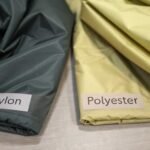
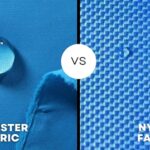
Why nylon Oxford over polyester Oxford: At equivalent denier, nylon Oxford delivers better abrasion resistance and a softer surface texture than polyester at 15–30% higher cost. For premium backpacks, technical outdoor packs, and laptop bags where fabric service life and surface quality are product differentiators, nylon Oxford is the correct specification. For everyday backpacks, school bags, and promotional bags where cost efficiency is the primary driver, polyester Oxford delivers adequate performance.
Ripstop Nylon — Lightweight Durability for Technical Bags
Ripstop nylon is the specification for weight-sensitive technical bags where both light weight and resistance to tearing and puncture are required simultaneously. The reinforcement grid of ripstop construction provides tear arrest performance that plain weave Oxford cannot match at equivalent GSM — making ripstop nylon the preferred fabric for ultralight outdoor packs, technical daypacks, and equipment where puncture from sharp objects is a real use condition.
Denier and application mapping:
| Denier | GSM | Character | Best Bag Applications |
|---|---|---|---|
| 210D Ripstop Nylon | 75–90 GSM | Lightweight, tear-resistant | Ultralight daypacks, stuff sacks, packable bags, lightweight pouches |
| 420D Ripstop Nylon | 150–170 GSM | Mid-weight, excellent tear resistance | Technical outdoor packs, hiking daypacks, lightweight travel bags |
| 600D Ripstop Nylon | 210–240 GSM | Heavy-duty ripstop | Tactical pouches, heavy outdoor packs, equipment covers |
Ripstop vs Oxford at equivalent denier:
| Factor | Ripstop Nylon | Oxford Nylon |
|---|---|---|
| Tear resistance | Higher — grid arrests tear propagation | Good — no arrest mechanism |
| Abrasion resistance | Slightly lower — less dense surface | Higher — denser weave |
| Weight at same denier | Slightly lighter | Slightly heavier |
| Surface appearance | Visible grid pattern | Crosshatch texture |
| Cost | Slightly higher | Lower |
| Best for | Technical outdoor, weight-sensitive, puncture risk | Everyday bags, commercial, volume production |
Coating options for ripstop nylon bags:
- DWR: 500–1,500 mmH₂O — lightweight packable bags
- PU coating: 2,000–4,000 mmH₂O — standard outdoor packs
- TPU laminate: 4,000–8,000 mmH₂O — premium technical packs
Ballistic Nylon — Maximum Durability for Premium and Tactical Bags
Ballistic nylon is specified in bag applications where the absolute limits of fabric mechanical performance are required — premium laptop bags, tactical backpacks, military equipment, and professional bags designed for decades of heavy daily use rather than standard commercial service life.
Denier and application mapping:
| Denier | GSM | Tensile Strength | Best Bag Applications |
|---|---|---|---|
| 840D Ballistic Nylon | 220–280 GSM | ~3,000N | Premium everyday backpacks, laptop bags, professional briefcases |
| 1050D Ballistic Nylon | 280–350 GSM | ~3,500–4,000N | Tactical backpacks, heavy-duty outdoor gear, professional equipment cases |
| 1680D Ballistic Nylon | 380–450 GSM | ~4,000–4,500N | Military bags, extreme-duty tactical equipment, heavy tool cases |
When to specify ballistic nylon over Oxford: Ballistic nylon is the correct specification when bag service life under heavy daily use is the primary product positioning — premium brands like Briggs & Riley and Tumi specify ballistic nylon panels precisely because the fabric maintains its surface appearance and structural integrity through years of daily professional use that would visibly degrade 600D Oxford fabric. The 50–100% cost premium over equivalent Oxford is justified by the measurably longer product service life.
Coating options for ballistic nylon bags:
- PU coating: standard waterproof for most ballistic nylon bag applications
- TPU laminate: premium waterproof with RF-weldable seamless construction for maximum waterproof performance
- PVC coating: maximum waterproof and abrasion resistance for industrial and military applications
→ Full Guide: Ballistic Nylon Fabric
Nylon Taffeta — Lining and Lightweight Bag Applications
Nylon taffeta's role in bag manufacturing is primarily as lining fabric and for lightweight packable bag applications where minimum weight is the primary specification.
Bag lining applications: 150D–190D nylon taffeta with anti-static finish is the standard lining specification for nylon Oxford and ballistic nylon bags — the smooth taffeta surface reduces friction for easy item insertion and removal; anti-static finish prevents static buildup inside electronics bags and laptop cases. Taffeta lining adds minimal weight (40–75 GSM) and provides a quality interior feel that complements premium exterior fabric.
Lightweight packable bag applications: 170D–210D nylon taffeta with DWR or light PU coating is used for packable shopping bags, stuff sacks, and ultralight travel accessories where the bag itself needs to pack into a small pouch. At 50–85 GSM finished weight, nylon taffeta is the lightest practical bag shell fabric available.
→ Full Guide: Nylon Taffeta Fabric
Bag Type to Nylon Fabric Specification — Complete Reference Table
| Bag Type | Recommended Nylon Fabric | Denier | Coating | GSM Finished |
|---|---|---|---|---|
| Promotional tote bag | Nylon Oxford | 210D | DWR | 100–130 GSM |
| Everyday backpack (standard) | Nylon Oxford | 420D | PU coating | 200–230 GSM |
| Everyday backpack (premium) | Nylon Oxford | 420D | TPU laminate | 200–230 GSM |
| School bag | Nylon Oxford | 420D–600D | PU coating | 200–270 GSM |
| Technical outdoor daypack | Ripstop Nylon | 420D | PU or TPU | 180–230 GSM |
| Ultralight hiking pack | Ripstop Nylon | 210D | DWR or TPU | 100–150 GSM |
| Rolling luggage shell | Nylon Oxford | 600D | PU or PVC | 250–300 GSM |
| Premium laptop bag | Ballistic Nylon | 840D–1050D | PU coating | 280–380 GSM |
| Tactical backpack | Ballistic Nylon | 1050D | PU or TPU | 320–400 GSM |
| Military bag | Ballistic Nylon | 1050D–1680D | PU or TPU | 350–450 GSM |
| Dry bag / waterproof pack | Nylon Oxford or Ripstop | 210D–420D | TPU laminate RF-weld | 130–230 GSM |
| Bag lining | Nylon Taffeta | 150D–190D | Anti-static | 40–75 GSM |
| Stuff sack / packable bag | Nylon Taffeta | 170D–210D | DWR | 55–90 GSM |
Key Specifications to Confirm When Sourcing Nylon Bag Fabric
| Specification | What to Confirm | Standard |
|---|---|---|
| Construction type | Oxford, ripstop, ballistic, taffeta | Per application requirement |
| Fiber content | 100% nylon, lab test confirmed | Per agreed spec |
| Denier | 210D–1680D depending on type | Per application requirement |
| GSM | Physical sample weighing before and after coating | ±5% tolerance |
| Coating type | DWR, PU, TPU, PVC | Per waterproof requirement |
| Waterproof rating | mmH₂O, ISO 811 or AATCC 127 | Per application minimum |
| Abrasion resistance | Martindale cycles if specified | Per application requirement |
| Tensile strength | For ballistic nylon — N warp and weft | 3,000N+ minimum |
| Tear strength | ISO 13937-2 | Per application requirement |
| Color fastness — washing | Grade rating | Minimum Grade 4 |
| Color fastness — light | UV stability | Minimum Grade 4 |
| Width | Usable width after selvage | Standard 144cm |
| RF weldability | For seamless dry bag construction | Confirm for TPU laminate |
| Certifications | OEKO-TEX Standard 100 | Per buyer requirement |
| MOQ | Per fabric type and order | See below |
MOQ by Fabric Type:
| Nylon Fabric Type | Stock MOQ | Custom MOQ |
|---|---|---|
| Nylon Oxford (210D–840D) | 500m per color | 1,500–2,000m per color |
| Ripstop Nylon | 500m per color | 1,200–2,000m per color |
| Ballistic Nylon | 1,000m per color | 1,500–2,000m per color |
| Nylon Taffeta | 500m per color | 1,200–1,800m per color |
Frequently Asked Questions — Nylon Fabric for Bags
What is the best nylon fabric for everyday backpacks? 420D nylon Oxford with PU coating is the industry standard for everyday backpacks — the balance of abrasion resistance, structural rigidity, waterproof performance, and cost at this specification covers the majority of commercial backpack requirements. For premium backpacks positioned at higher price points, 420D nylon Oxford with TPU laminate or 840D ballistic nylon panels in high-wear areas provide meaningfully better durability and justify premium retail pricing.
What is the difference between ripstop nylon and Oxford nylon for bags? Both are nylon woven fabrics but with different constructions. Oxford nylon uses a basket weave that produces a crosshatch surface texture with high thread density — maximizing abrasion resistance and structural rigidity. Ripstop nylon uses a plain weave base with reinforcement threads at regular intervals — producing a grid pattern that arrests tear propagation, making ripstop lighter than Oxford at equivalent denier with better tear resistance. For bags where puncture and tear resistance are real use conditions (technical outdoor packs, lightweight hiking gear), ripstop is the better specification. For everyday bags where abrasion resistance and structural rigidity are priorities, Oxford is more appropriate.
Is 420D or 600D nylon better for bags? 420D nylon is the most widely used specification for backpacks and travel bags — it delivers sufficient abrasion resistance and structural rigidity for everyday carry at a lighter finished weight than 600D. 600D nylon is the correct specification for heavier-duty applications — rolling luggage shells, heavy outdoor packs, and bags subject to sustained heavy loading where the additional structural rigidity of 600D is a functional requirement. For standard commercial backpack production, 420D is the better balance of performance and weight.
Why do premium bag brands use ballistic nylon? Premium bag brands specify ballistic nylon — typically 1050D — because it is the only commercial fabric construction that delivers the abrasion resistance and tensile strength needed to maintain bag appearance and structural integrity through years of heavy daily professional use. Standard 600D Oxford fabric shows surface degradation visible within 1–2 years of heavy daily use; 1050D ballistic nylon maintains its surface appearance and structural integrity through 5–10 years of equivalent use. The cost premium of ballistic nylon is justified by the product's service life positioning and the premium retail price it supports.
What is the minimum order for wholesale nylon bag fabric? MOQ varies by construction — 500 meters per color for stock nylon Oxford, ripstop, and taffeta; 1,000 meters for ballistic nylon. Custom dyeing and functional finish requires 1,200–2,000 meters depending on type. Free swatches available for all types — contact our team to confirm availability for your specific requirement.
Source Wholesale Nylon Bag Fabric from XINGYE TEXTILE
XINGYE TEXTILE supplies wholesale nylon fabric for bag manufacturing — nylon Oxford, ripstop nylon, ballistic nylon, and nylon taffeta — across the full denier range from 210D to 1680D, with DWR, PU coating, TPU laminate, and PVC coating options. We serve bag manufacturers, luggage brands, tactical gear producers, outdoor equipment buyers, and wholesale fabric sourcing managers worldwide with factory-direct pricing and flexible MOQ from 500 meters.
Contact our sourcing team with your bag type, fabric construction, denier, coating requirement, quantity, and destination for a formal quotation within 24 hours.
→ Browse Fabric for Bags → Browse Nylon / Polyamide Fabric → Read: Best Waterproof Fabric for Bags → Read: Ballistic Nylon Fabric → Read: Nylon Taffeta Fabric → Read: Types of Nylon Fabric → Request a Free Swatch → Get a Wholesale Quote