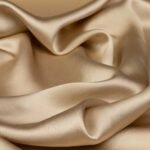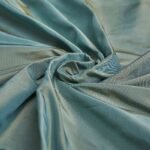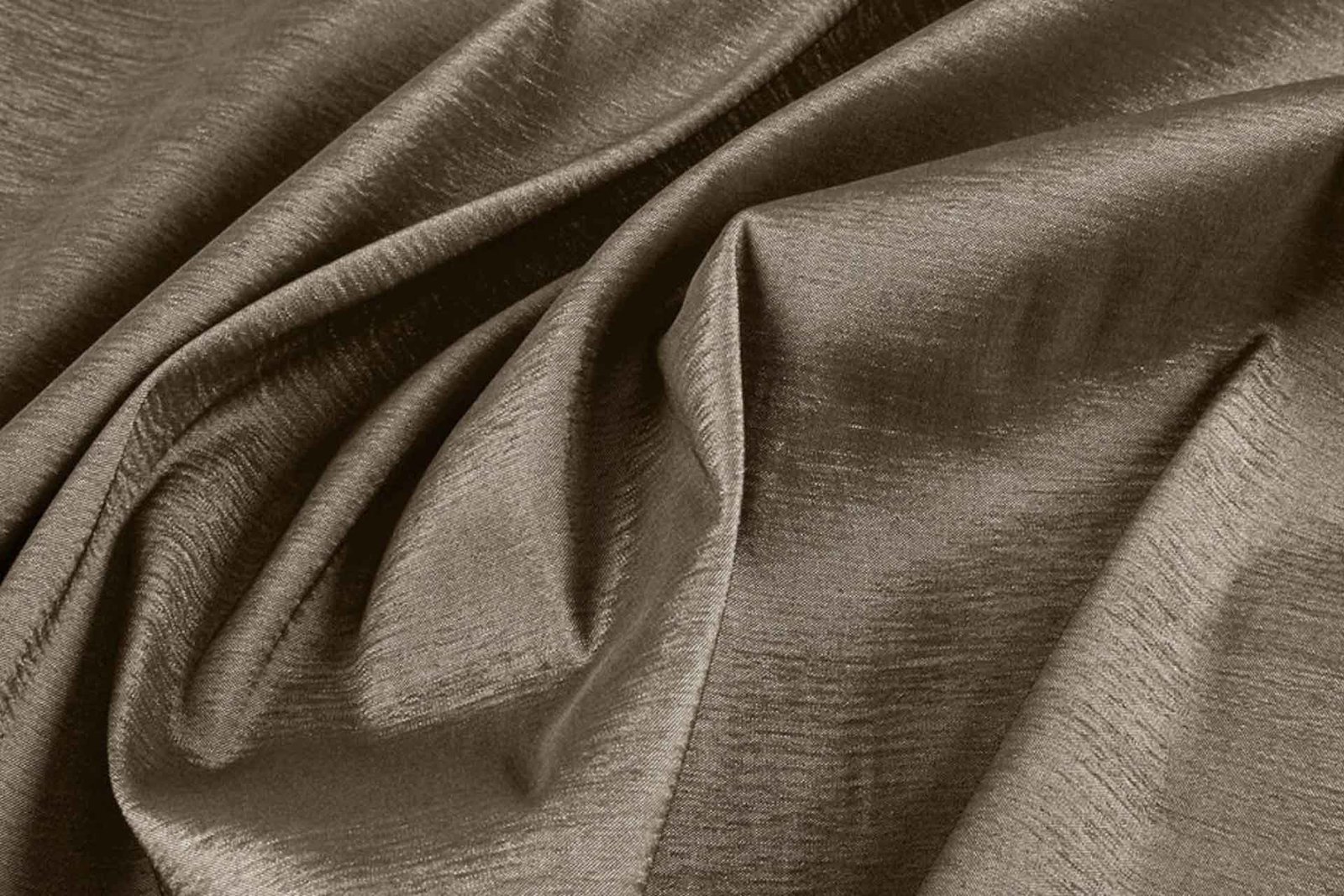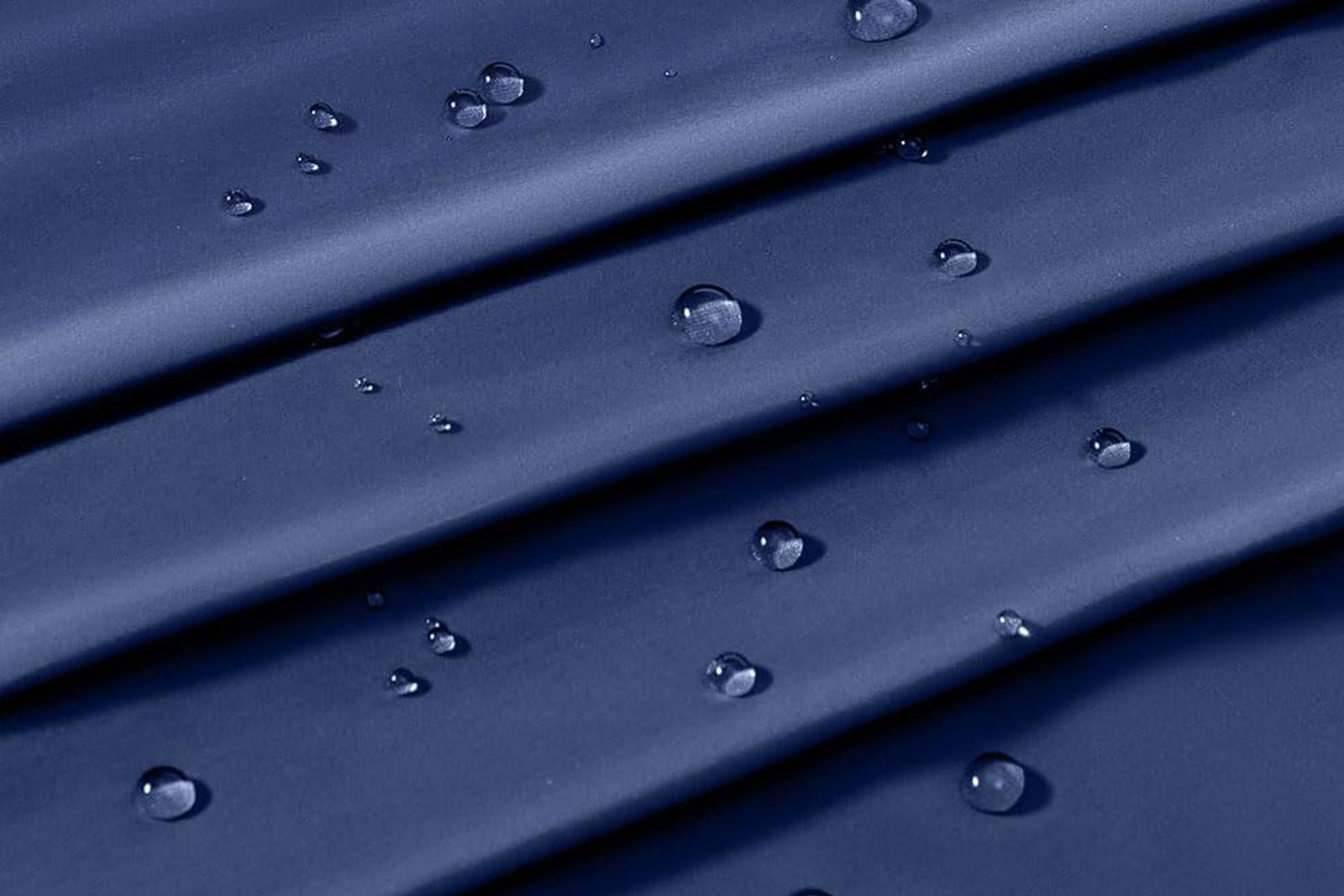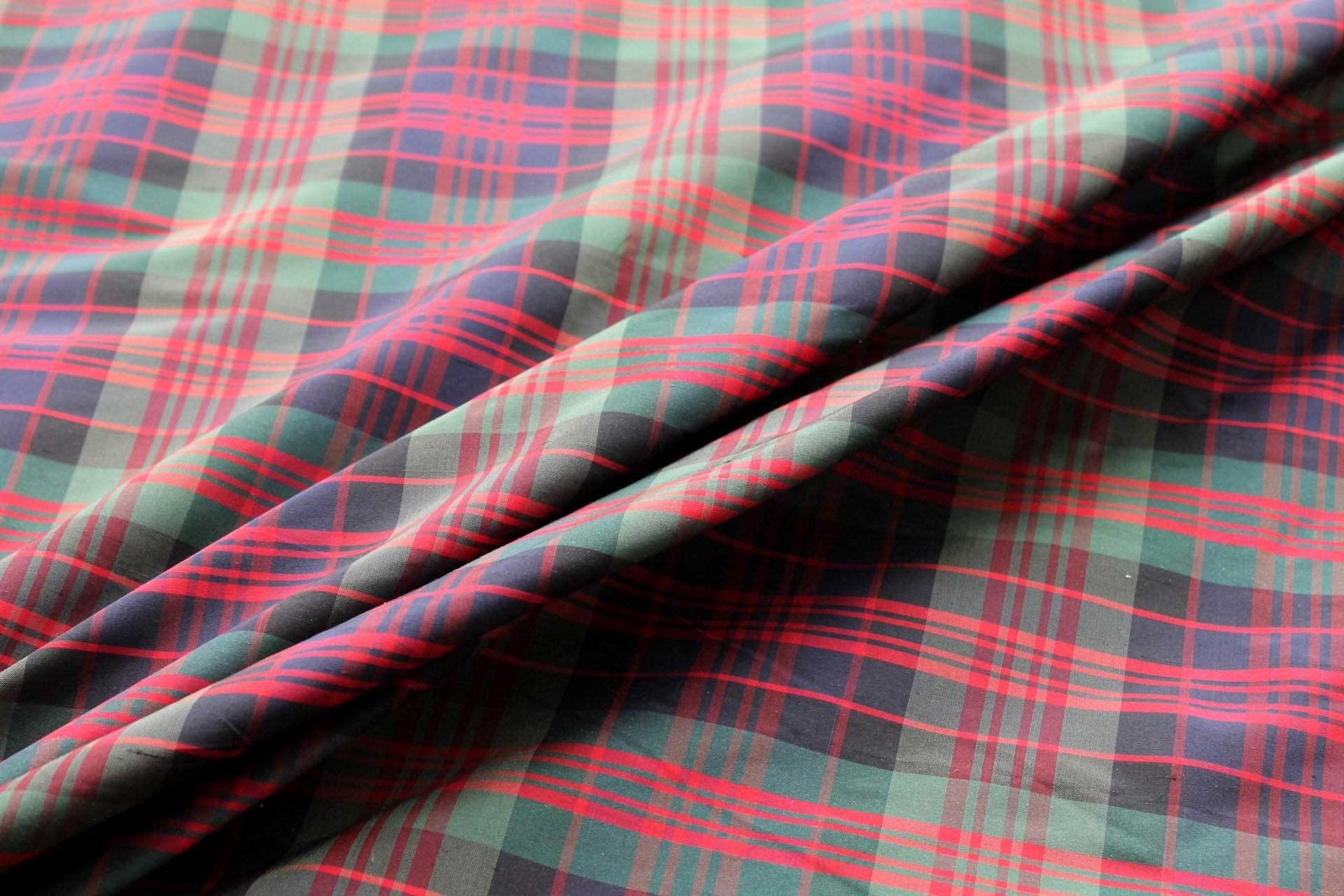
Silk crepe is a category of silk fabrics defined by their crepe texture — a subtle, irregular surface ripple produced by highly twisted yarns that create a matte, slightly pebbly surface character distinct from the smooth luster of charmeuse or the crisp stiffness of taffeta. Crepe fabrics drape fluidly, resist wrinkles through their textured structure, and have a sophisticated matte appearance that photographs and moves differently from lustrous silk weaves. Silk crepe encompasses several distinct fabric types — crepe de chine, georgette, crepe satin, and heavy crepe — each with different weight, transparency, and structural character suited to different garment applications. This guide covers the full range of silk crepe fabric types, momme specifications, production considerations, and wholesale sourcing for manufacturers specifying silk crepe for luxury garment production.
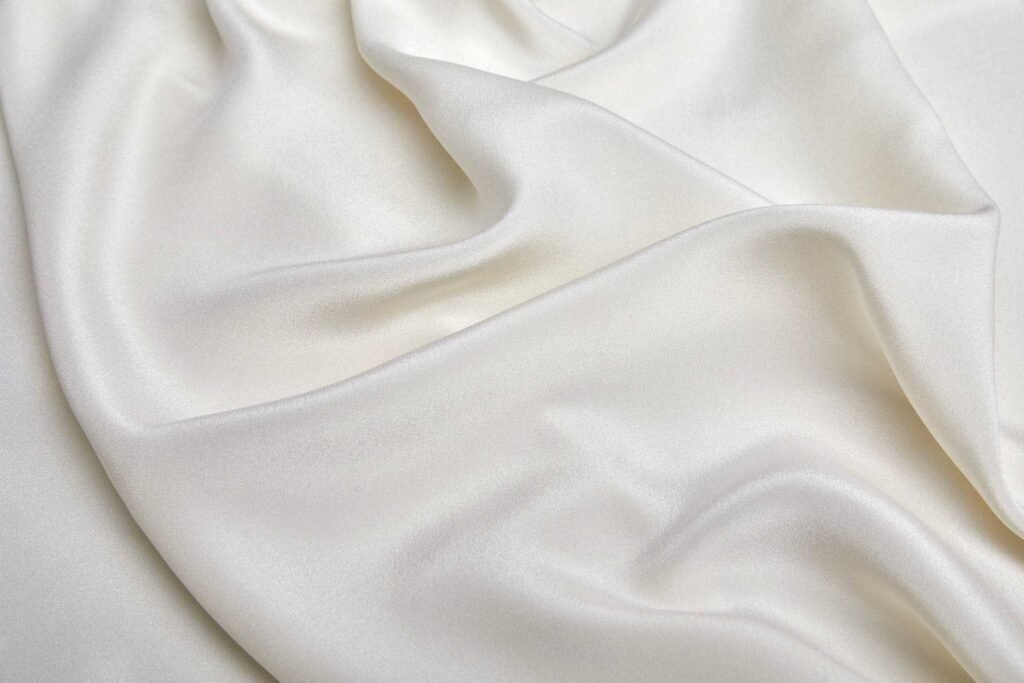
silk crepe fabric
What Creates the Crepe Texture — The Twisted Yarn Mechanism
Crepe texture in silk fabric is not produced by surface finishing or coating — it is structural, created by the yarn twist level used in weaving. Understanding how crepe texture is created explains why crepe fabrics behave differently from smooth silk weaves in production and wear.
Standard silk yarn used in smooth weaves like charmeuse and habotai is twisted at relatively low levels — enough to hold the filaments together but not enough to create significant yarn tension. When this low-twist yarn is woven, the fabric surface is smooth and the filaments lie flat.
Crepe yarn is twisted at significantly higher levels — sometimes two to five times more than standard yarn — and twisted in alternating S and Z directions (left-twist and right-twist). When woven, the high-tension twisted yarns try to untwist, creating a slight kink and ripple in the fabric structure. This relief is the crepe effect — a subtle, irregular surface texture that gives crepe fabrics their characteristic pebbled, matte appearance.
Three properties result directly from this twisted-yarn construction:
Matte surface. The irregular, kinked yarn surface diffuses light rather than reflecting it uniformly — crepe has a sophisticated matte appearance that is visually distinct from the directional luster of satin weaves. This matte quality photographs well and has a quieter, more understated elegance than high-luster silk fabrics.
Wrinkle resistance. The crepe texture structure distributes stress across the fabric's surface irregularities — creases form less readily than in smooth fabrics and recover more quickly. Silk crepe garments maintain their appearance through extended wearing better than equivalent smooth silk weaves.
Fluid, controlled drape. Crepe fabrics drape fluidly but with slightly more body than equivalent chiffon — the twisted yarn structure gives the fabric a subtle internal tension that produces controlled, graceful drape rather than completely free-flowing movement. This controlled drape is why crepe is specified for bias-cut garments, draped dresses, and structured flowing silhouettes.
Types of Silk Crepe Fabric
Silk Crepe de Chine (CDC) The most widely produced and specified silk crepe fabric — the standard against which other crepe constructions are measured. Crepe de chine uses plain weave construction with highly twisted weft yarns in alternating S and Z directions, producing a fine, evenly distributed crepe texture on both faces of the fabric.
CDC has a subtle texture — finer and more uniform than heavier crepe constructions — that is appropriate for the majority of luxury garment applications. At 12–22 momme, CDC covers a wide weight range from lightweight blouses through standard dresses to heavier structured garments.
GSM range: 52–95 GSM (12–22 momme). Best for: dresses, blouses, formal shirts, bias-cut garments, pajamas and sleepwear, scarves, linings for structured garments.
Silk Georgette A crepe construction with higher twist yarn than standard CDC — producing more pronounced crepe texture, slightly more transparency, and a softer drape than CDC at equivalent momme. Georgette is semi-sheer — lighter than CDC in appearance even at the same momme weight.
GSM range: 35–52 GSM (8–12 momme). Best for: flowing dresses, blouses, layered garments, scarves, and applications where more pronounced crepe texture alongside semi-sheer transparency is required.
Silk Crepe Satin A reversible construction — satin weave face and crepe reverse. The satin face provides high luster; the crepe reverse provides matte texture. Both faces are usable in garment construction, giving designers the option to use either the lustrous or matte surface. Crepe satin has excellent drape — better than standard charmeuse because the crepe construction adds internal structure to the satin float.
GSM range: 95–130 GSM (22–30 momme). Best for: high-end garments where both satin and matte surfaces are used in the same piece, reversible garments, formal dresses requiring maximum drape and versatility.
Heavy Crepe / Moss Crepe High momme crepe construction at 30–40+ momme producing a heavily textured, substantial fabric with excellent wrinkle resistance and structured drape. Heavy crepe has more body than CDC or georgette and produces a distinctive moss-like surface texture from the concentrated twist effect.
GSM range: 130–175+ GSM (30–40+ momme). Best for: structured dresses and suits, tailored garments, formal wear requiring fabric weight and body alongside crepe texture.
Double Crepe A balanced crepe construction woven from alternating S and Z twist yarns in both warp and weft directions — producing equal texture on both fabric faces. Double crepe is heavier and more structured than CDC, with better dimensional stability and wrinkle resistance.
GSM range: 95–150 GSM (22–35 momme). Best for: structured garments, tailored pieces, formal wear where CDC's lighter weight is insufficient for the design's structural requirements.
Silk Crepe Momme Guide
| Momme | GSM | Fabric Type | Character | Best Applications |
|---|---|---|---|---|
| 8–12mm | 35–52 GSM | Georgette | Semi-sheer, pronounced crepe | Flowing dresses, blouses, scarves |
| 12–16mm | 52–69 GSM | Light CDC | Lightweight, fine crepe texture | Light dresses, blouses, linings |
| 16–22mm | 69–95 GSM | Standard CDC | Balanced drape and body | Standard dresses, formal shirts, pajamas |
| 22–30mm | 95–130 GSM | Crepe satin / Heavy CDC | Substantial, good structure | Formal dresses, structured garments |
| 30–40mm+ | 130–175 GSM | Heavy crepe / Moss crepe | Heavy, maximum texture and body | Tailored suits, structured formal wear |
For most luxury garment applications, 16–22mm CDC covers the majority of dress and blouse specifications. Lighter weights for flowing and layered applications; heavier weights for structured and tailored garments.
Silk Crepe vs Other Silk Fabrics — When to Choose Crepe
| Factor | Silk Crepe (CDC) | Silk Charmeuse | Silk Chiffon |
|---|---|---|---|
| Surface | Matte, subtly textured | Smooth, high luster | Matte, grainy |
| Drape | Fluid, controlled | Very fluid, liquid | Very fluid, floating |
| Weight range | 12–40mm | 16–30mm | 6–12mm |
| Transparency | Opaque at standard momme | Opaque | Sheer |
| Wrinkle resistance | Good — crepe texture distributes stress | Moderate | Low |
| Structure | Moderate body | Soft, minimal body | Very soft, no body |
| Photography | Flattering — matte reduces highlight | Glamorous — luster shows in photos | Ethereal — sheer layers |
| Best for | Everyday luxury, bias-cut, structured flowing | Evening wear, lingerie, bedding | Layers, overlays, floating garments |
Choose silk crepe when: The garment requires matte sophistication rather than high-luster glamour, when wrinkle resistance is important for garments worn for extended periods, when bias-cut construction is the design approach, or when the subtle textured surface is part of the design aesthetic.
Choose charmeuse when: High luster, liquid drape, and maximum surface smoothness are the design requirements — evening wear, lingerie, and bedding where the glossy surface is the primary visual statement.
Choose chiffon when: Sheerness, floating drape, and layered transparency are the design requirements.
Bias Cut and Silk Crepe — Why They Work Together
Bias cut — cutting fabric at 45 degrees to the grain — is one of the most technically demanding garment construction approaches, and silk crepe is the fabric most frequently specified for bias-cut garments. Understanding why they work together helps buyers specify correctly for bias-cut production.
When fabric is cut on the bias, it stretches in the cutting direction and narrows across its width — the woven structure, normally rigid in the grain directions, becomes elastic at 45 degrees. In smooth fabrics like charmeuse, this bias stretch creates fluidity but also instability — the fabric can stretch unevenly, hang crookedly, or distort at seam lines.
Silk crepe's twisted yarn structure provides slight internal resistance to bias stretch — the crepe texture acts as a natural stabilizer that allows the fabric to stretch fluidly on the bias while resisting the uneven distortion that affects smoother fabrics. The result is bias-cut garments with controlled fluid drape that moves consistently rather than pulling or sagging.
For designers and manufacturers working with bias-cut construction, 16–22mm silk CDC is the most widely specified fabric — sufficient weight for controlled drape without the excess weight that would restrict the bias movement.
Production Considerations for Silk Crepe
Relaxing before cutting Silk crepe fabric should be relaxed before cutting — unroll the fabric and allow it to rest flat for at least 24 hours before cutting. Crepe fabric stored on a roll has tension applied to the twisted yarns; this tension causes the fabric to relax and potentially shift dimensions after cutting if not pre-relaxed. For bias-cut garments, relaxing before cutting is essential to prevent post-cutting distortion.
Cutting Use sharp rotary blades on a flat cutting surface. Crepe's textured surface provides slightly better grip than smooth silk fabrics — it is less prone to shifting during cutting than charmeuse or taffeta. Single-ply cutting is recommended for bias-cut pieces where precision is critical.
Sewing Use fine needles (size 9 or 11) and fine thread. Reduce machine tension slightly — crepe fabric's textured surface can pucker at seams if tension is too high. Use a straight stitch foot rather than a standard presser foot for better feeding of the textured surface. Test stitch length and tension on a sample before production.
Pressing Press at maximum 140°C on the reverse face with a damp pressing cloth — steam helps set seams in crepe fabric. The crepe texture recovers well from pressing — unlike smooth silk fabrics, pressed crepe does not show shine marks from the iron because the textured surface diffuses any surface change.
Hanging before hemming Bias-cut silk crepe garments should be hung for at least 24–48 hours before hemming — the bias fabric continues to stretch under its own weight after construction and the hem line will drop unevenly if hemmed immediately after assembly.
Key Specifications to Confirm When Sourcing Silk Crepe
| Specification | What to Confirm | Standard |
|---|---|---|
| Fiber content | 100% mulberry silk, lab test confirmed | Per agreed spec |
| Silk grade | 5A or 6A minimum | Per application requirement |
| Crepe type | CDC, georgette, crepe satin, heavy crepe | Per design requirement |
| Momme weight | mm, physical sample weighing | Per application — see momme table |
| GSM | Physical sample weighing | ±5% tolerance |
| Width | 114cm standard | Confirm before pattern grading |
| Crepe texture | Fine or pronounced — confirm against sample | Per design requirement |
| Color fastness — washing | Grade rating | Minimum Grade 3–4 |
| Color fastness — light | UV stability | Minimum Grade 3–4 |
| Shrinkage | After hand wash | ≤5% acceptable |
| Certifications | OEKO-TEX, Silk Mark | Per buyer requirement |
| MOQ | Per order type | See below |
| Lead time | Stock vs custom | Stock: 3–5 days / Custom: 7 days |
MOQ by Order Type:
| Order Type | MOQ |
|---|---|
| Stock silk crepe, standard colors | 50–100 meters per color |
| Custom dyeing | 150–300 meters per color |
| Digital or screen print | 100–200 meters per pattern |
Frequently Asked Questions — Silk Crepe
What is the difference between silk crepe de chine and silk georgette? Both are silk crepe constructions but with different texture intensity and transparency. Crepe de chine has a finer, more subtle crepe texture and is opaque at standard momme weights — the standard specification for dresses, blouses, and garments where matte sophistication without sheerness is required. Silk georgette has more pronounced crepe texture, higher yarn twist, and is semi-sheer — appropriate for flowing, layered garments and applications where some transparency is part of the design. At equivalent momme, georgette appears lighter and more transparent than CDC because the higher twist opens the weave structure slightly.
Does silk crepe wrinkle easily? Silk crepe has better wrinkle resistance than smooth silk fabrics like charmeuse or habotai — the crepe texture structure distributes mechanical stress across the fabric's surface irregularities rather than concentrating it in flat areas. Wrinkles that form in silk crepe tend to fall out naturally when the garment is hung. Heavy crepe at 30mm+ has excellent wrinkle resistance that approaches that of polyester blends — one of its advantages for garments worn for extended periods at formal events.
What is crepe satin and how is it different from charmeuse? Crepe satin is a reversible fabric with a satin weave face and crepe reverse. Charmeuse is a satin weave fabric with a slightly creped reverse but primarily satin in character. The distinction: crepe satin has a more developed crepe texture on the reverse and slightly less luster on the face than charmeuse — the two faces are more equally balanced in character. Charmeuse is primarily a satin fabric with a matte reverse; crepe satin is genuinely reversible with both faces equally useful in garment construction.
Is silk crepe good for bias-cut garments? Yes — silk crepe de chine at 16–22mm is the most widely specified fabric for bias-cut garment construction. The twisted yarn structure provides slight internal resistance to bias stretch that helps bias-cut silk crepe drape consistently and resist the uneven distortion that affects smoother fabrics. The controlled fluid drape of bias-cut silk crepe is one of the defining aesthetic qualities of luxury fashion garment production.
What is the minimum order for wholesale silk crepe? Stock silk crepe in standard colors: 50–100 meters per color. Custom dyeing: 150–300 meters minimum. Digital print: from 100–200 meters per pattern. Sample cost $25–$80 per meter depending on momme, deductible from bulk order.
Source Wholesale Silk Crepe Fabric from XINGYE TEXTILE
XINGYE TEXTILE supplies wholesale silk crepe fabric — crepe de chine, georgette, crepe satin, heavy crepe, and double crepe — in 5A and 6A mulberry silk, from 8 to 40+ momme, serving luxury garment brands, evening wear producers, bridal manufacturers, and wholesale silk fabric buyers worldwide. Factory-direct pricing, MOQ from 50 meters for stock colors, free swatches available before bulk commitment.
→ Browse Our Full Fabric Range → Read: Silk vs Satin → Read: Types of Silk Fabric → Read: Silk Chiffon Fabric → Read: Silk Satin Fabric → Request a Free Swatch → Get a Wholesale Quote