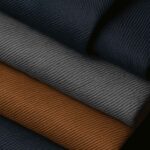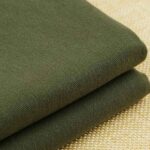
What No One Tells You Before You Start Looking for Fabric
If you're starting a clothing line, sourcing fabric is the most important decision you'll make — and the one most new brands get wrong.
Not because they pick the wrong color or the wrong weight. Because they don't know what questions to ask a supplier, they don't know how to evaluate quality, and they don't know that the cheapest fabric quote is almost never the cheapest cost per garment.
Fabric sourcing is not 'find a nice material and buy it.' It's a procurement process that involves fiber selection, weave construction, finishing treatments, color matching, quality testing, MOQ negotiation, and supply chain planning. This guide walks you through each step — from a fabric manufacturer that supplies emerging brands and established labels alike.
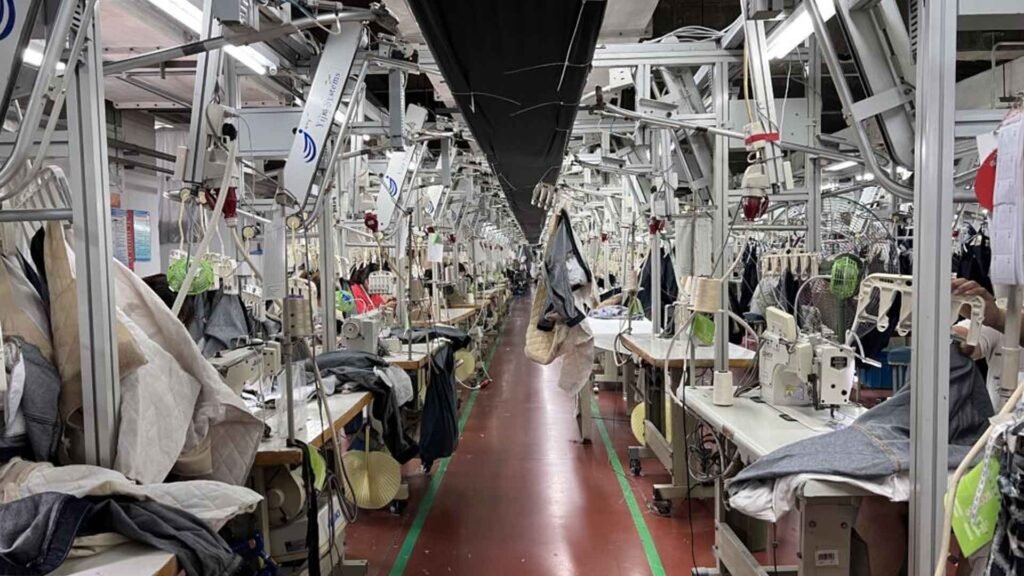
how to source fabric for clothing line
Step 1: Know Your Spec Before You Talk to a Supplier
The biggest mistake new brands make is contacting a fabric supplier and saying: 'I need fabric for a shirt. What do you have?'
That question tells the supplier you don't know what you need. You'll get shown whatever they need to move — off-spec inventory, overstocked colors, or fabrics that don't match your application.
Before you contact any supplier, write down your spec:
| Spec Element | Questions to Answer |
|---|---|
| Fiber content | Cotton, polyester, viscose, linen, wool, or a blend? What ratio? |
| Fabric weight (GSM) | Lightweight (100-180), mid-weight (180-260), or heavy (260-400)? |
| Weave structure | Twill, plain, satin, poplin, jersey, fleece, or something else? |
| Application | What garment type? What environment will it be worn in? |
| Performance requirements | Wrinkle-resistant? Water-repellent? Flame-resistant? Anti-microbial? |
| Color | Specific PMS or Pantone number? Or 'close to this reference'? |
| Quantity | How many meters per color? Total across all colors? |
| Budget per meter | What's your target price? |
| Certification requirements | OEKO-TEX? GOTS? GRS? Prop 65? REACH? |
Example of a good spec:
'I need a 65% polyester / 35% cotton twill, 240 GSM, in Navy PMS 2768, with a wrinkle-resistant finish and anti-pilling treatment. 800 meters per color, 3 colors total. OEKO-TEX certified. Budget is under ¥25/meter.'
A supplier can quote that immediately. 'I need fabric for a shirt' generates a follow-up email asking for all the information above — costing you time.
Step 2: Understand the Different Types of Fabric Suppliers
Not all fabric suppliers are the same. There are four types, and they serve different needs.
| Supplier Type | Best For | MOQ | Price Level | Quality Control |
|---|---|---|---|---|
| Mill / Manufacturer (direct) | Brands that need consistent quality, custom development, and bulk pricing | 500-3000 meters per color | Lowest | You inspect at source or hire a QC agent |
| Fabric wholesaler / stocklot | Sampling, small runs, immediate delivery | 1-100 meters | Low to medium | Variable — inspect before buying |
| Fabric agent / broker | Brands that don't want to manage multiple mills | 300-1000 meters | Medium (adds commission) | Depends on agent's relationship with mills |
| Fabric marketplace (Alibaba, etc.) | Finding multiple options, comparing prices quickly | 100-3000 meters | Low to medium | Highly variable — vet carefully |
If you're a new brand:
- Start with a wholesaler or stocklot supplier for sampling and small production runs (100-500 meters)
- Move to a mill direct once your volumes stabilize and you need consistent quality across multiple production runs
If you're an established brand:
- Work directly with mills. You'll pay less, get better quality control, and have more control over custom development.
Step 3: Find Fabric Suppliers
Trade shows (highest quality, most time-consuming)
- Première Vision (Paris) — premium fabrics, high MOQ
- Texworld (NYC, Paris, Shanghai) — broad range, mid-to-high MOQ
- Magic (Las Vegas) — apparel-focused, includes fabric sourcing
- Intertextile (Shanghai / Shenzhen) — largest Asian fabric trade show
Online platforms (most accessible, variable quality)
- Alibaba — largest selection, lowest prices, most variance in quality
- Made-in-China — similar to Alibaba, more manufacturer-focused
- Global Sources — higher vetting standard than Alibaba
Direct mill outreach (best for established brands)
- Research mills in your target fabric's specialty region
- Example: Chinese mills for polyester-based fabrics, Indian mills for cotton, Japanese mills for premium denim, Italian mills for luxury wool
Industry referrals (most reliable)
- Ask other brand owners who they use
- Ask your garment manufacturer who they recommend
- Ask a sourcing agent for a shortlist of vetted mills
Step 4: Request and Evaluate Samples
Never place a bulk order without seeing and testing a sample first. The sample is your only verification that the fabric matches your spec.
Request these samples:
| Sample Type | What It Tells You |
|---|---|
| Handloom / lab dip (20x20 cm) | Color match only. Not for hand feel or drape |
| Production sample (1 meter) | Color, hand feel, drape, weight, weave quality |
| Wash test sample (0.5 meter extra) | Shrinkage, color fastness, pilling after washing |
| Full roll sample (optional, for bulk verification) | Consistency across a full production roll |
What to check when you receive a sample:
- Color match — Hold against your standard under natural light and fluorescent light. Delta E should be < 1.5 for production color matching.
- Hand feel — Does it feel like what you expected? Compare to your reference fabric.
- Weight (GSM) — Weigh it. Confirm it matches the supplier's quoted GSM. A 10% difference is common. A 20% difference means the supplier is cutting corners.
- Weave density — Count threads per inch. Confirm against spec.
- Shrinkage test — Wash and dry the sample at the temperature your garment will be washed. Measure before and after. Should be ≤3% for most applications.
- Color fastness — Rub a white cloth against the fabric (dry and wet). Check for dye transfer.
- Pilling test — Rub the fabric surface against itself (or another fabric of similar weight) for 30 seconds. Check for pilling.
Step 5: Understand Minimum Order Quantities (MOQs)
MOQ is the biggest barrier for new brands. Here's what you're actually looking at:
| Fabric Type | Typical MOQ Per Color | What That Means in Garments |
|---|---|---|
| Stock fabric (warehouse inventory) | 100-500 meters | ~80-400 t-shirts (1.2m per tee) |
| Standard production fabric | 500-3000 meters | ~400-2400 t-shirts |
| Custom-develop fabric | 3000-5000+ meters | ~2400-4000+ t-shirts |
| Custom color (stock base fabric) | 300-1000 meters | ~240-800 t-shirts |
How to handle MOQ as a new brand:
- Use stock fabrics first — Many mills and wholesalers carry 10-50 standard colors in their most popular fabrics. You can buy 100-500 meters without custom development costs.
- Share a color — Split a custom dye lot with another brand that uses the same fabric. Impossible to coordinate? Yes — but worth asking.
- Negotiate — Ask if the mill can reduce MOQ for a 10-20% price premium. Many will.
- Use a trading company — Some trading companies aggregate small orders from multiple brands to meet mill MOQs. You pay a markup but avoid the MOQ.
Step 6: Get and Compare Quotes
A fabric quote should include:
| Line Item | What to Check |
|---|---|
| Fabric price per meter | FOB or CIF? (FOB = you pay shipping, CIF = supplier pays shipping to your port) |
| MOQ per color | Minimum you must order of each color |
| Color range | Number of colors, extra cost for custom colors |
| Sample cost | Free or charged? Returnable? |
| Lead time | Production time + shipping time |
| Shipping terms | FOB, CIF, DDP (which costs are included) |
| Payment terms | T/T (wire transfer), L/C (letter of credit). 30% deposit + 70% before shipment is standard for new relationships |
| Certification cost | OEKO-TEX, GOTS, etc. — some mills include, some charge extra |
Compare at least 3 suppliers. Price is not the only factor. A quote 20% cheaper with 50% longer lead time and no certifications may cost you more in the long run.
Step 7: Quality Control — Don't Skip This
Fabric defects happen. The question is whether they're caught at the mill or at your cut-and-sew factory.
| Inspection Stage | Who Does It | What's Checked |
|---|---|---|
| Mill internal QC | Supplier | Inline inspection during production |
| Pre-shipment inspection | You or a third-party QC agency | AQL 2.5 level (standard for apparel) — checks width, weight, color, defects per roll |
| Final inspection at cut-and-sew | Your garment factory | Shade variations across rolls, defects visible during cutting |
If you're importing from Asia, hire a third-party inspection company (e.g., QIMA, SGS, Bureau Veritas) for pre-shipment inspection. Cost is typically $200-500 per shipment — it's the cheapest insurance you'll ever buy.
Step 8: Build Relationships, Don't Just Place Orders
A fabric supplier who sees you as a repeat buyer will:
- Offer better pricing over time
- Reserve stock colors for you before they're sold out
- Prioritize your production during peak season
- Tell you when a cheaper alternative becomes available that meets your spec
- Waive sample fees after the first paid order
How to build that relationship:
- Pay on time — always
- Communicate clearly — good specs, timely responses
- Order consistently — even small repeat orders build trust faster than one large order followed by silence
- Visit the mill if possible — a face-to-face meeting establishes trust that email cannot replace
Common Fabric Sourcing Mistakes (And How to Avoid Them)
| Mistake | What Happens | How to Avoid |
|---|---|---|
| Choosing fabric by look alone | Fabric that looks great online feels wrong in person | Always get a physical sample before committing |
| Ordering from the cheapest supplier without checking quality | Inconsistent color, excessive shrinkage, pilling after 5 washes | Get wash test samples. Check references. Pay for a pre-shipment inspection |
| Not accounting for shrinkage | Garments shrink 3-8% after first wash — customers complain about sizing | Pre-shrink fabric or account for shrinkage in pattern grading |
| Ordering too little fabric | Cannot match color on re-order. Every production run requires a new dye lot | Order 10-20% extra for production waste + future replacements |
| Ignoring MOQ until after you fall in love with a fabric | Fabric is perfect but requires 5000 meters — 4x what you need | Check MOQ before you request samples, not after |
| Not testing color fastness | Dye transfers onto skin or other garments in the wash | Request a crocking test (dry and wet) before bulk order |
Recommended Fabric Sourcing Checklist
Use this checklist before placing any bulk order:
- Fabric spec is documented (fiber, weight, weave, finish)
- At least 3 suppliers have been quoted
- Physical sample received, inspected, and approved
- Wash test completed — shrinkage <3%, color fastness 4+
- MOQ confirmed and fits your budget
- Lead time fits your production schedule (add 2 weeks buffer)
- Payment terms agreed and understood
- Pre-shipment inspection arranged (if importing)
- Shipping method and cost confirmed (FOB/CIF/DDP)
- Extra fabric (10-20%) ordered for waste and future matching
Get a Quote — Fabric Sourcing from XINGYE TEXTILE
XINGYE TEXTILE manufactures polyester, TR, TC, microfiber, linen, and functional fabrics for emerging brands and established labels worldwide. Low MOQ options available (300 meters per color for stock fabrics). Sample-first ordering. OEKO-TEX, GOTS, GRS certified.
If you're starting a clothing line and need help selecting the right fabric for your application, we can help — not just with pricing, but with spec development based on your garment type and performance requirements.