Dobby fabric is a woven textile with small geometric patterns — dots, diamonds, stripes, or abstract shapes — woven directly into the fabric structure using a dobby loom mechanism, rather than printed on the surface or embroidered after weaving. The pattern is structural, not decorative — it is created by the controlled raising and lowering of individual warp threads during weaving, producing a textured surface with subtle three-dimensional pattern that cannot be washed off or worn away. Dobby fabric is widely used in dress shirts, formal uniforms, home textiles, and decorative fabrics where surface texture and subtle pattern differentiation are required alongside the performance properties of standard woven fabric. This guide covers how dobby fabric is made, the main types and compositions available, and what garment manufacturers and wholesale buyers need to specify when sourcing dobby fabric for production.
what is dobby fabric
How Dobby Fabric Is Made — The Weave Mechanism
Standard woven fabric — plain weave, twill, satin — is produced on looms where all warp threads follow the same controlled sequence of raising and lowering. Dobby fabric is produced on a dobby loom, which has a supplementary mechanism that controls individual warp threads independently, allowing different threads to be raised and lowered in complex sequences that standard looms cannot achieve.
This independent thread control is what creates the geometric patterns in dobby fabric. By programming the dobby mechanism to raise specific warp threads at specific points in the weaving sequence, the weaver creates small pattern repeats — typically geometric shapes no larger than 2–3 cm — that are woven into the fabric structure itself.
Three properties result directly from this construction method:
Pattern permanence. Because the pattern is created by the weave structure — not by printing, embroidering, or applying any surface treatment — dobby patterns cannot fade, wash out, or wear away. The fabric retains its pattern for the full service life of the garment or textile. This permanence is a key advantage over printed pattern fabrics in applications requiring long-term appearance consistency — institutional uniforms, hotel bedding, and commercial table linen.
Subtle three-dimensional texture. The geometric pattern in dobby fabric creates a slight surface relief — areas of the pattern sit fractionally higher or lower than the ground weave, producing a textured surface that catches light differently from a flat plain weave. This texture gives dobby fabric its characteristic subtle visual interest without the boldness of a jacquard or printed pattern.
Breathability and structure. Dobby fabric retains the structural properties of its base weave — typically plain weave or twill — while adding surface texture through the pattern. The fabric's breathability, drape, and weight are determined by the base weave and fiber composition, not by the dobby pattern itself. A 120 GSM cotton dobby shirt fabric has the same breathability as equivalent plain weave cotton at the same GSM — the pattern adds aesthetic value without compromising performance.
Dobby vs Jacquard vs Printed — Key Differences
Buyers frequently confuse dobby fabric with jacquard and printed pattern fabrics. Understanding the differences is important for accurate specification.
| Factor | Dobby Fabric | Jacquard Fabric | Printed Fabric |
|---|---|---|---|
| Pattern method | Woven — dobby loom mechanism | Woven — jacquard loom mechanism | Surface printed after weaving |
| Pattern complexity | Simple geometric, small repeat | Complex, large-scale, unlimited design | Unlimited — any design possible |
| Pattern scale | Small — typically 1–3 cm repeat | Large — can cover entire fabric width | Any scale |
| Pattern permanence | Permanent — cannot wash out | Permanent — cannot wash out | May fade with washing |
| Surface texture | Slight three-dimensional relief | Significant texture variation | Flat — no texture from pattern |
| Cost vs plain weave | Moderate premium — 10–20% | Significant premium — 30–100%+ | Low premium for simple prints |
| Typical applications | Shirts, uniforms, home textiles | Upholstery, decorative, luxury fashion | Casualwear, fashion, home textiles |
The practical implication: Dobby is the mid-point between plain weave (no pattern) and jacquard (complex pattern) — it adds subtle differentiation and texture at a moderate cost premium, making it the preferred choice for institutional and commercial applications where some pattern interest is desired without the cost of jacquard or the impermanence of printing.
Dobby Fabric Types and Compositions
100% Cotton Dobby Pure cotton dobby delivers maximum breathability, natural hand feel, and moisture absorption alongside the structural dobby pattern. Cotton dobby is the standard specification for premium dress shirts, formal blouses, and high-quality home textiles where natural fiber comfort and the clean appearance of dobby pattern are both required.
The dobby weave in cotton fabric produces a particularly clean, crisp pattern — the natural stiffness of cotton fiber holds the three-dimensional relief of the pattern clearly, giving cotton dobby shirts their characteristic crisp, textured appearance when freshly pressed.
Best for: premium dress shirts, formal blouses, hotel and hospitality uniform shirts, high-quality bedding and table linen, curtains where natural fiber is specified. GSM range: 100–200 GSM.
TC Dobby (Polyester-Cotton Blend) TC dobby combines the breathability and natural feel of cotton with the dimensional stability, wrinkle resistance, and wash durability of polyester. TC dobby is the most widely specified dobby fabric for institutional uniform shirts, school uniform blouses, and commercial hospitality garments where easy-care performance alongside dobby pattern differentiation is required.
The polyester component significantly reduces the ironing requirement compared to pure cotton dobby — TC dobby shirts maintain a presentable appearance through a full working day without pressing, which is why this composition dominates institutional uniform applications globally.
Best for: institutional uniform shirts, school uniform blouses, hospitality workwear, commercial bedding, and applications where easy-care performance alongside dobby aesthetics is the primary requirement. GSM range: 110–220 GSM.
100% Polyester Dobby Polyester dobby offers excellent color fastness, dimensional stability, and the lowest cost per meter of the composition options. The dobby pattern in polyester fabric has a slightly more synthetic surface appearance than cotton or TC dobby but delivers reliable performance in applications where cost efficiency and wash durability are the primary drivers.
Polyester dobby is increasingly specified for budget-tier uniform programs, promotional garments, and home textile applications where the visual differentiation of dobby pattern is required at competitive pricing.
Best for: budget uniform programs, promotional garments, cost-sensitive home textiles, curtains and drapes where color fastness under UV exposure is prioritized. GSM range: 100–240 GSM.
Polyester-Viscose Dobby (TR Dobby) TR dobby combines the dimensional stability and wrinkle resistance of polyester with the soft drape and surface sheen of viscose. The viscose component gives TR dobby a more luxurious hand feel than pure polyester dobby while maintaining better easy-care performance than pure cotton. TR dobby is used in premium uniform shirts, formal blouses, and dress garments where a higher quality hand feel alongside dobby pattern texture is specified.
Best for: premium uniform shirts, formal dress blouses, mid-to-premium institutional garments, decorative home textiles where a softer hand feel is required. GSM range: 120–250 GSM.
Dobby Fabric GSM Guide
| GSM Range | Fabric Character | Best Applications |
|---|---|---|
| 100–130 GSM | Very lightweight, excellent breathability | Lightweight summer shirts, formal blouses, lightweight dress fabric |
| 140–170 GSM | Lightweight to mid-weight, balanced drape | Standard dress shirts, uniform shirts, lightweight trousers |
| 170–240 GSM | Mid-weight, structured | Formal uniform shirts, heavier blouses, light outerwear |
| 250–320 GSM | Heavyweight, substantial | Home textiles, bedding, curtains, decorative fabric |
For shirt and uniform blouse applications, 120–160 GSM is the most widely specified range. For home textile and curtain applications, 200–300 GSM provides the weight and structure required for furnishing applications.
Dobby Pattern Types
Dobby patterns are limited in complexity by the number of independently controlled warp thread groups the dobby mechanism can manage — typically 24–32 in standard commercial dobby looms. Within this constraint, a wide range of geometric pattern types is available.
Geometric dobby The most common dobby pattern type — diamonds, squares, hexagons, and other geometric shapes repeated across the fabric surface. Geometric dobby patterns are versatile, work well in both formal and casual applications, and are available in a wide range of repeat sizes from micro-geometric (1–2mm repeat) to standard geometric (10–20mm repeat).
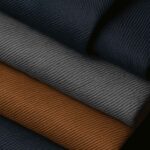
Stripe dobby Woven stripes created through the dobby mechanism — either solid stripes of different weave structure against the ground, or stripes incorporating small geometric pattern elements. Stripe dobby is widely used in formal shirt fabric where subtle stripe pattern adds visual interest without the boldness of yarn-dyed stripe constructions.
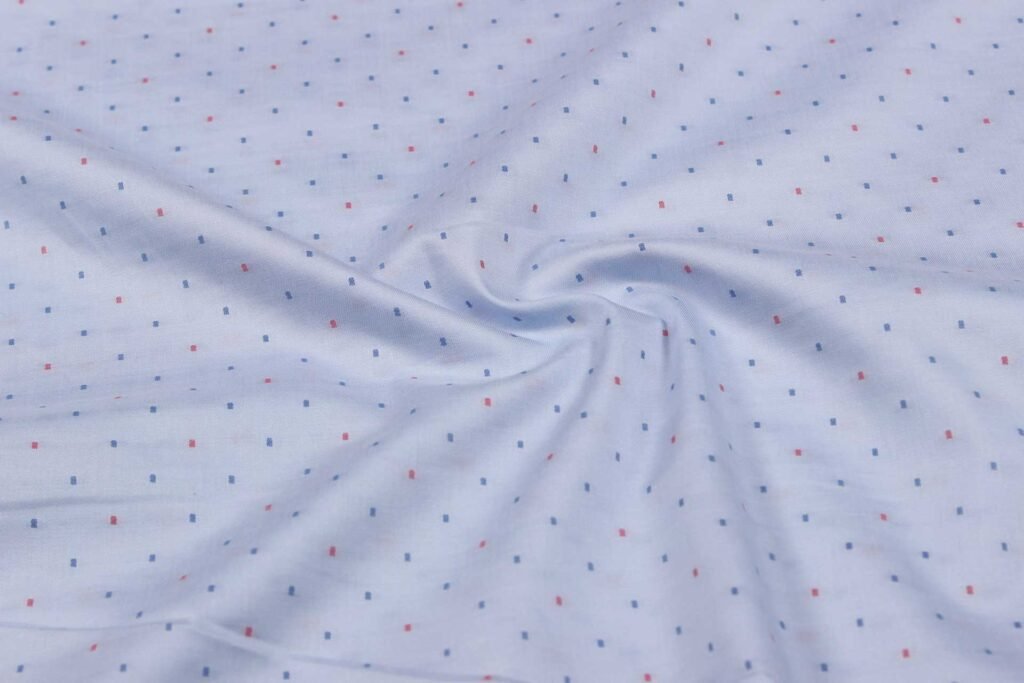
Dot dobby (Pin dot) Small raised dots woven into the fabric surface in a regular repeat pattern. Pin dot dobby is a classic formal shirt construction — the subtle dot texture gives the fabric visual depth while maintaining a clean, formal appearance appropriate for business and institutional uniform applications.
Waffle dobby A larger-scale geometric pattern producing a waffle-like surface texture. Waffle dobby is used in home textiles, toweling, and casual garments where a pronounced surface texture is desired alongside the structural properties of woven fabric.
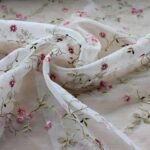
Floral and abstract dobby More complex geometric interpretations of floral or abstract motifs — limited in intricacy by the dobby mechanism's thread control range. Used in decorative home textiles and fashion fabric applications where subtle pattern complexity is required.
Dobby Fabric Applications
Dress Shirts and Formal Blouses Dobby fabric is the standard choice for premium dress shirts where plain weave fabric is considered too plain and printed patterns are considered too informal. The subtle geometric texture of dobby fabric gives dress shirts visual interest and a quality appearance while maintaining the clean, formal character appropriate for business and institutional wear. Cotton and TC dobby at 120–160 GSM are the most widely specified for this application.
Institutional and Corporate Uniform Shirts TC dobby is the dominant specification for corporate uniform shirts, hotel staff shirts, airline uniform blouses, and similar institutional applications. The easy-care performance of TC composition alongside dobby pattern differentiation — which distinguishes the uniform from plain fabric alternatives — makes TC dobby the preferred specification for volume institutional uniform programs.
School Uniform Blouses Cotton and TC dobby at 110–140 GSM are widely specified for school uniform blouses where subtle pattern texture is used to differentiate the uniform from plain fabric while maintaining the formal appearance school uniform programs require.
Home Textiles and Bedding Heavier weight cotton and TC dobby at 200–280 GSM is used in premium bedding — duvet covers, pillowcases, and bed sheets — where the subtle dobby pattern adds visual interest and a perception of quality compared to plain weave bedding at equivalent GSM. Hotel bedding programs frequently specify dobby fabric for this reason.
Curtains and Decorative Fabrics Polyester and TC dobby at 200–320 GSM is used in curtains, drapes, and decorative textiles where the structural dobby pattern provides visual texture without the cost of jacquard construction. The pattern permanence of dobby weave is particularly valuable in curtain applications where UV exposure would fade printed pattern fabrics over time.
Table Linen and Hospitality Textiles Cotton dobby is the standard specification for premium restaurant table linen, hotel table covers, and hospitality napkins. The combination of pattern permanence through repeated industrial washing and the formal appearance of dobby pattern makes cotton dobby the preferred fabric for high-end hospitality table linen programs.
Key Specifications to Confirm When Sourcing Dobby Fabric
| Specification | What to Confirm | Standard |
|---|---|---|
| Fiber composition | Exact percentages, lab test confirmed | Per agreed spec |
| Dobby pattern type | Geometric, stripe, dot, waffle | Confirm against physical sample |
| Pattern repeat size | mm measurement of repeat | Per design requirement |
| GSM | Physical sample weighing | ±5% tolerance |
| Width | Usable width after selvage | 57–59' from 60' roll |
| Color fastness — washing | Grade rating | Minimum Grade 4 |
| Color fastness — rubbing | Dry and wet rub | Minimum Grade 3–4 |
| Color fastness — light | UV stability for curtains | Minimum Grade 4 |
| Shrinkage | Warp and weft after standard wash | ≤3% TC and polyester / ≤5% cotton |
| Wrinkle recovery | For TC and polyester dobby | Confirm against test report |
| Certifications | OEKO-TEX Standard 100 | Per buyer requirement |
| MOQ | Per order type | See below |
| Lead time | Stock vs custom | Stock: 3–5 days / Custom: 7–20 days |
MOQ by Order Type:
| Order Type | MOQ |
|---|---|
| Stock dobby fabric, standard colors | 500 meters per color |
| Custom dyeing or special dobby pattern | 1,500–2,000 meters per color |
| New pattern development | 2,500 meters minimum |
Frequently Asked Questions — Dobby Fabric
What is the difference between dobby and jacquard fabric? Both are woven pattern fabrics, but they differ in pattern complexity and production mechanism. Dobby fabric uses a simpler loom mechanism that controls groups of warp threads — producing small, geometric repeat patterns typically up to 3 cm in scale. Jacquard fabric uses a more sophisticated loom that controls every individual warp thread independently — producing complex, large-scale patterns with unlimited design possibilities. Dobby is less expensive than jacquard and is appropriate for subtle geometric texture; jacquard is used for complex floral, figurative, or large-scale pattern applications.
Is dobby fabric breathable? Yes — dobby fabric's breathability is determined by its fiber composition and GSM, not by the dobby pattern itself. 100% cotton dobby at 120–140 GSM is highly breathable and suitable for warm-climate shirt applications. TC dobby is moderately breathable — the cotton component contributes moisture absorption while polyester adds structure. The dobby weave pattern does not significantly affect air permeability compared to equivalent plain weave fabric at the same GSM.
Can dobby fabric be custom patterned? Yes. We support custom dobby pattern development — specific geometric patterns, modified repeat sizes, or entirely new pattern designs — with physical sample approval before bulk production. Custom pattern development requires 2,500 meters minimum order and approximately 7 days sample lead time. Standard stock dobby patterns in regular colors are available from 500 meters per color.
Does dobby fabric wrinkle? Wrinkling behavior depends on fiber composition. 100% cotton dobby wrinkles more than TC or polyester dobby — similar to plain weave cotton at the same GSM. TC dobby has significantly better wrinkle recovery than cotton dobby due to the polyester component — TC dobby uniform shirts maintain a presentable appearance through extended wear without pressing. For applications requiring maximum wrinkle resistance, TC or polyester dobby is the correct specification over pure cotton.
What is the minimum order for wholesale dobby fabric? Standard MOQ for stock dobby fabric in regular colors is 500 meters per color. Custom dyeing or special dobby pattern development requires 1,500–2,000 meters. New pattern development starts from 2,500 meters. Free A4 swatches and color cards are available — contact our team to request samples before bulk commitment.
Source Wholesale Dobby Fabric from XINGYE TEXTILE
XINGYE TEXTILE supplies wholesale dobby fabric — 100% cotton, TC (polyester-cotton), 100% polyester, and TR (polyester-viscose) compositions — in weights from 100 to 320 GSM, serving shirt manufacturers, uniform contractors, home textile brands, and wholesale fabric buyers worldwide. Factory-direct pricing, MOQ from 500 meters for stock colors, free swatches available before bulk commitment.
Contact our sourcing team with your composition requirement, dobby pattern type, GSM, quantity, and destination for a formal quotation and physical sample within 24 hours.
→ Browse Our Full Fabric Range → Browse Fabric for Uniforms → Browse TR Fabric → Browse TC Fabric → Read: What Type of Fabric Is Twill? → Request a Free Swatch → Get a Wholesale Quote