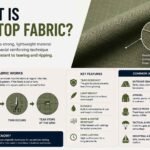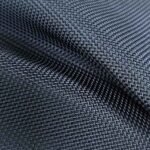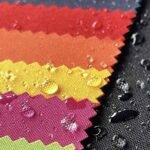
Ripstop nylon is a plain weave nylon fabric with a distinctive reinforcement grid woven at regular intervals — typically every 5–8mm — that arrests tear propagation when the fabric is punctured or cut. Standard plain weave fabric, once punctured or cut, tears freely in the direction of the applied stress. Ripstop nylon's reinforcement grid intercepts that tear at the nearest reinforcement thread, preventing it from spreading beyond the grid cell where it started. This tear-arrest property, combined with nylon's natural abrasion resistance and light weight, makes ripstop nylon the preferred fabric for applications where puncture and tear resistance are real performance requirements alongside minimum weight — outdoor garments, technical bags, tents, parachutes, and tactical equipment. This guide covers ripstop nylon construction, denier specifications, coating options, and wholesale sourcing information for manufacturers making specification decisions at production scale.
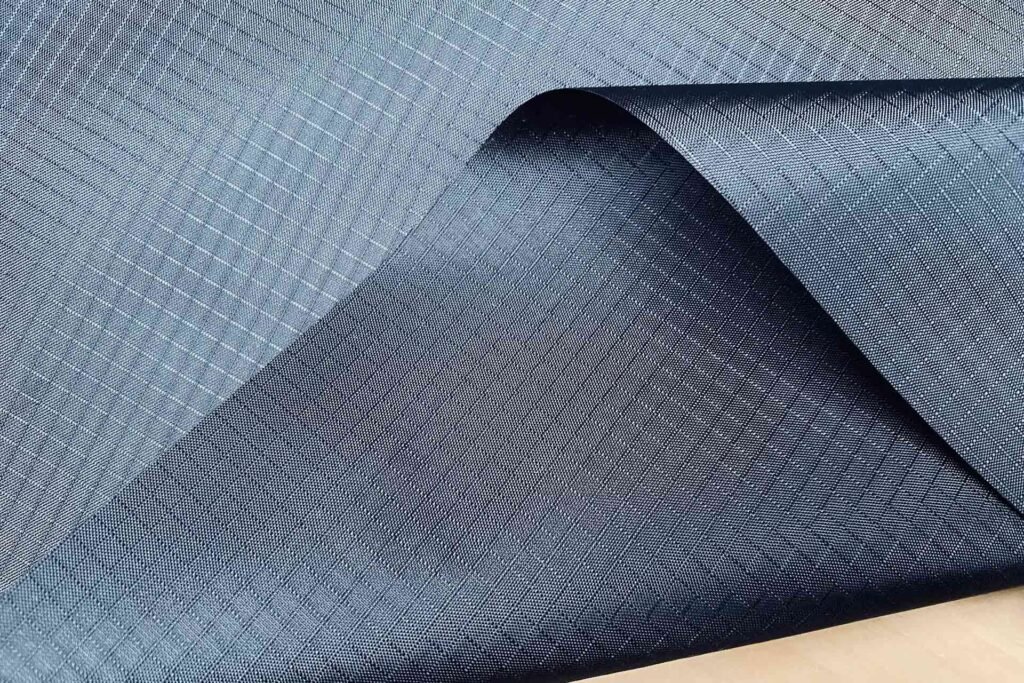
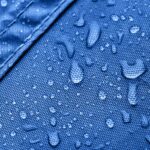
waterproof ripstop nylon fabric
How Ripstop Nylon Works — The Construction Mechanics
Standard plain weave fabric has uniform thread density across its entire surface — when the fabric is punctured or cut, a tear propagates freely along the line of applied stress because there is no structural interruption in the weave to stop it. A small puncture quickly becomes a large tear under continued stress.
Ripstop construction addresses this failure mode by incorporating thicker reinforcement threads — typically two to four times the diameter of the ground threads — at regular intervals in both warp and weft directions. These reinforcement threads create a grid of structurally stronger zones across the fabric surface.
When a tear reaches a reinforcement thread intersection, it encounters a concentration of fiber mass that requires significantly more force to break than the ground threads surrounding it. In most practical use conditions, the force required to propagate the tear through the reinforcement grid is greater than the applied stress — the tear stops at the grid intersection rather than continuing through the fabric.
The result is a fabric where the maximum size of any tear is limited by the grid spacing — typically 5–8mm. A puncture or cut that would create a 30cm tear in equivalent plain weave fabric may produce only a 5–8mm hole in ripstop nylon before the tear arrests at the reinforcement grid.
Three additional properties result from the ripstop construction:
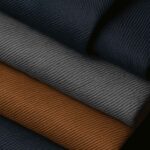
Visual identification. The reinforcement grid is visible on the fabric surface as a regular pattern of slightly raised lines — the characteristic ripstop texture that makes this fabric immediately identifiable. Grid spacing and thread size determine how prominent the pattern appears.
Weight efficiency. Ripstop construction achieves its tear resistance through strategic placement of reinforcement threads rather than overall thread density increase. At equivalent GSM, ripstop nylon delivers better tear resistance than standard plain weave nylon — making it the most weight-efficient construction available for tear-critical applications.
Dimensional stability. The reinforcement grid provides additional resistance to fabric distortion under stress — ripstop nylon maintains its shape and dimensions more consistently than plain weave fabric at equivalent GSM when subjected to pulling, stretching, or sustained load.
Ripstop Nylon Denier Specifications
Denier determines the base thread weight — and therefore the overall fabric weight, abrasion resistance, and structural rigidity of ripstop nylon. The reinforcement thread is typically heavier denier than the ground thread — the denier specification quoted for ripstop nylon usually refers to the reinforcement thread denier.
210D Ripstop Nylon The standard mid-weight ripstop specification — the most widely used denier for commercial outdoor bags, technical packs, and outdoor garment applications. 210D ripstop delivers the balance of tear resistance, abrasion resistance, and manageable weight that covers the majority of technical outdoor applications.
- GSM range: 75–90 GSM
- Character: mid-weight, good tear resistance, flexible and workable
- Best for: everyday outdoor backpacks, technical daypacks, outdoor shell jackets, tent fly fabric, tactical pouches, equipment covers
420D Ripstop Nylon Heavy-duty ripstop for applications requiring maximum tear and abrasion resistance alongside the weight advantage of ripstop construction. 420D ripstop is substantially more durable than 210D at approximately double the fabric weight — used where sustained mechanical stress in demanding outdoor conditions is the specification requirement.
- GSM range: 150–170 GSM
- Character: heavy-duty, excellent tear and abrasion resistance, structured
- Best for: heavy outdoor packs, tactical backpacks, equipment bags, heavy tent fabric, military-style gear, protective covers
600D Ripstop Nylon The heaviest standard ripstop nylon construction — maximum structural rigidity and mechanical durability for the most demanding bag and tactical applications.
- GSM range: 210–240 GSM
- Character: very heavy, maximum structural rigidity, substantial weight
- Best for: heavy tactical bags and pouches, extreme-duty outdoor equipment, military applications, heavy protective covers
Ripstop Nylon vs Standard Oxford Nylon — When to Choose Each
Ripstop and Oxford are the two dominant nylon constructions for bag and outdoor equipment applications. Understanding their specific advantages helps buyers specify correctly.
| Factor | Ripstop Nylon | Oxford Nylon |
|---|---|---|
| Tear resistance | Superior — grid arrests tear propagation | Good — no arrest mechanism |
| Abrasion resistance | Good — slightly lower than Oxford at same denier | Higher — denser weave surface |
| Weight at same denier | Slightly lighter | Slightly heavier |
| Surface appearance | Visible grid pattern | Crosshatch texture |
| Structural rigidity | Good | Higher — denser construction |
| Cost | Slightly higher than equivalent Oxford | Lower |
| Packability | Better — lighter, more flexible | Slightly less packable |
| Best applications | Ultralight packs, puncture-risk outdoor gear, technical outdoor garments | Everyday bags, commercial backpacks, structured equipment |
Decision rule: Specify ripstop nylon when weight minimization and tear/puncture resistance are the primary requirements — ultralight outdoor packs, technical garments used in environments with puncture risk (rock, vegetation, sharp equipment), and applications where the reinforcement grid aesthetic is part of the product identity.
Specify Oxford nylon when abrasion resistance and structural rigidity are the primary requirements — everyday bags, commercial backpacks, and applications where the crosshatch Oxford texture is preferred over the ripstop grid pattern.
Coating Options for Ripstop Nylon
Uncoated ripstop nylon has inherent water resistance from its tight weave structure but is not waterproof under sustained pressure. Coating or laminate finishing extends ripstop nylon's performance for specific applications.
DWR (Durable Water Repellent) Surface treatment causing water to bead and roll off the fabric face — maintains maximum breathability and fabric lightness. DWR is the standard finish for ripstop nylon used in outdoor garments and lightweight pack applications where water repellency without full waterproofing is sufficient.
- Water resistance: 500–1,500 mmH₂O
- Best for: outdoor shell jackets, windbreakers, lightweight pack fabric, stuff sacks
PU Coating Continuous polyurethane coating on the fabric reverse — creates a reliable waterproof barrier for outdoor packs and equipment covers where sustained rain exposure is a real use condition.
- Waterproof rating: 2,000–4,000 mmH₂O
- Best for: outdoor backpacks and daypacks, tent fly fabric, equipment covers, rain gear
TPU Laminate Pre-formed TPU film bonded to the ripstop nylon base — maximum waterproof performance with better breathability than PU coating. RF-weldable for seamless construction in premium dry bags and technical outdoor packs.
- Waterproof rating: 4,000–8,000 mmH₂O
- Best for: premium technical outdoor packs, dry bags, high-specification waterproof garments, medical protective equipment
FR (Flame Retardant) Finish Flame retardant treatment for military, emergency services, and industrial applications. FR ripstop nylon must comply with applicable standards for the destination market. FR finishing adds 10–20% to base fabric cost.
- Best for: military applications, emergency services equipment, industrial protective covers
Anti-Static Finish Applied for electronics equipment covers, cleanroom applications, and environments where electrostatic discharge is a risk.
Ripstop Nylon Applications
Outdoor Backpacks and Technical Packs 210D and 420D ripstop nylon with PU or TPU coating is the standard specification for technical outdoor backpacks and hiking packs where weight minimization alongside tear and puncture resistance are the primary specification requirements. The reinforcement grid provides reliable protection against sharp objects — rock edges, trekking pole tips, crampon points — that would propagate tears in standard Oxford nylon under field conditions.
Recommended spec: 210D ripstop nylon, PU coating, 2,000–4,000 mmH₂O, 100–150 GSM finished weight.
Outdoor Shell Jackets and Windbreakers Lightweight 210D ripstop nylon with DWR or TPU laminate is used for outdoor shell jackets, windbreakers, and packable rain jackets where maximum packability alongside weather resistance is the design brief. The tear resistance of ripstop construction is particularly valuable in technical climbing, scrambling, and bushwhacking applications where garment contact with sharp rock and vegetation is frequent.
Recommended spec: 210D ripstop nylon, DWR or TPU laminate, 90–150 GSM finished weight.
Tent Fabric 210D–420D ripstop nylon is the standard material for tent fly and tent body fabric — the tear arrest property of ripstop is directly relevant to tent applications where sharp pegs, poles, and rocks create puncture risk, and where a small puncture in standard fabric would quickly enlarge under wind stress. PU coating provides the waterproof performance required for tent fly applications.
Recommended spec: 210D ripstop nylon, PU coating, 3,000–5,000 mmH₂O for tent fly; DWR only for tent body breathability.
Tactical and Military Equipment 420D–600D ripstop nylon with PU or TPU coating is specified for tactical pouches, MOLLE-compatible accessories, and military-style equipment where the combination of tear resistance, abrasion resistance, and waterproof protection in a relatively lightweight construction is the specification requirement. FR-treated ripstop nylon is specified for military applications in fire-risk environments.
Recommended spec: 420D ripstop nylon, PU or TPU coating, FR finish where required.
Parachutes and Airborne Equipment Ultra-lightweight ripstop nylon — lower denier than standard commercial specifications — has historically been the primary parachute canopy fabric. The tear arrest property is critical for parachute applications where fabric failure under stress could be catastrophic. Modern sport parachute canopies use specialized low-porosity ripstop nylon constructions engineered specifically for canopy performance.
Stuff Sacks and Packable Accessories Lightweight 210D ripstop nylon with DWR finish is used for stuff sacks, packable bag covers, and lightweight outdoor accessories where minimum weight and basic weather resistance are the requirements. The ripstop construction provides protection against snags from gear packed alongside the stuff sack.
Ripstop Nylon vs Ripstop Polyester — Which to Choose
Ripstop construction is available in both nylon and polyester base fibers. The choice follows the same logic as standard nylon vs polyester selection.
| Factor | Ripstop Nylon | Ripstop Polyester |
|---|---|---|
| Abrasion resistance | Higher | Lower |
| Hand feel | Softer, more premium | Slightly stiffer |
| UV resistance | Lower — degrades faster | Higher — UV stable |
| Weight at same denier | Slightly heavier | Slightly lighter |
| Color fastness | Good | Excellent |
| Cost | 15–30% higher | Lower |
| Best for | Technical outdoor gear, premium packs, garments | Budget outdoor gear, UV-exposed applications, cost-sensitive products |
Choose ripstop nylon when: abrasion resistance, hand feel, and mechanical performance are priorities — technical outdoor packs, performance garments, premium equipment.
Choose ripstop polyester when: UV resistance and cost efficiency are priorities — outdoor furniture covers, budget outdoor accessories, promotional products with outdoor exposure.
Key Specifications to Confirm When Sourcing Ripstop Nylon
| Specification | What to Confirm | Standard |
|---|---|---|
| Fiber content | 100% nylon, lab test confirmed | Per agreed spec |
| Denier | Ground thread and reinforcement thread denier | Per application requirement |
| Grid spacing | mm between reinforcement threads | Confirm against physical sample |
| GSM | Physical sample weighing before and after coating | ±5% tolerance |
| Coating type | DWR, PU, TPU, FR | Per performance requirement |
| Waterproof rating | mmH₂O, ISO 811 or AATCC 127 | Per application minimum |
| Tear strength | ISO 13937-2 | Confirm for technical applications |
| Tensile strength | ISO 13934-1 | Confirm for load-bearing applications |
| Color fastness — washing | Grade rating | Minimum Grade 4 |
| Color fastness — light | UV stability | Minimum Grade 4 |
| Width | Usable width after selvage | Standard 144cm |
| FR compliance | EN ISO 11612 or NFPA if required | Per application and market |
| Certifications | OEKO-TEX Standard 100 | Per buyer requirement |
| MOQ | Per order type | See below |
| Lead time | Stock vs custom | Stock: 3–5 days / Custom: 7 days |
MOQ by Order Type:
| Order Type | MOQ |
|---|---|
| Stock ripstop nylon, standard colors | 500 meters per color |
| Custom dyeing or functional finish | 1,200–2,000 meters per color |
Frequently Asked Questions — Ripstop Nylon Fabric
What does ripstop mean in fabric? Ripstop refers to a weave construction where thicker reinforcement threads are woven at regular intervals — typically every 5–8mm — in both warp and weft directions, creating a grid pattern that arrests tear propagation. When the fabric is punctured or cut, the tear stops at the nearest reinforcement thread rather than propagating freely. The term 'ripstop' describes this tear-arrest property — the fabric is designed to stop (arrest) rips and tears at the reinforcement grid.
Is ripstop nylon waterproof? Uncoated ripstop nylon is water-resistant — the tight weave structure slows water penetration — but not waterproof under sustained pressure. PU-coated ripstop nylon is waterproof to 2,000–4,000 mmH₂O; TPU laminate ripstop achieves 4,000–8,000 mmH₂O. For outdoor bags and tent fly applications requiring reliable waterproof performance in sustained rain, specify ripstop nylon with PU coating or TPU laminate — confirm the waterproof rating with a test report.
Is ripstop nylon stronger than regular nylon? Ripstop nylon is specifically stronger in tear resistance than equivalent standard plain weave nylon at the same GSM — the reinforcement grid provides structural interruption that arrests tear propagation. In tensile strength and abrasion resistance, ripstop nylon is comparable to standard plain weave nylon at equivalent denier. For applications where tear and puncture resistance are the critical failure modes, ripstop is stronger than equivalent plain weave; for abrasion resistance, standard Oxford nylon at the same denier performs comparably.
What is the grid pattern on ripstop nylon? The visible grid pattern on ripstop nylon is the reinforcement thread network — thicker threads woven at regular 5–8mm intervals in both warp and weft directions produce the characteristic square grid visible on the fabric surface. The grid appearance varies by denier and thread contrast — some ripstop constructions have a subtle grid barely visible to the eye; others have a pronounced grid that is a deliberate aesthetic feature of the fabric.
What is the minimum order for wholesale ripstop nylon? Standard MOQ for stock ripstop nylon in regular colors is 500 meters per color. Custom dyeing and functional finish requires 1,200–2,000 meters minimum. Free A4 swatches available before bulk commitment — contact our team to confirm availability for your specific denier and coating requirement.
Source Wholesale Ripstop Nylon Fabric from XINGYE TEXTILE
XINGYE TEXTILE supplies wholesale ripstop nylon fabric — 210D, 420D, and 600D in 100% nylon and nylon-spandex compositions, with DWR, PU coating, TPU laminate, and FR finish options — serving outdoor gear manufacturers, bag brands, tent producers, tactical equipment buyers, and technical fabric buyers worldwide. Factory-direct pricing, MOQ from 500 meters for stock colors, free swatches available before bulk commitment.
Contact our sourcing team with your denier requirement, coating specification, quantity, and destination for a formal quotation within 24 hours.
→ Browse Nylon / Polyamide Fabric → Browse Fabric for Bags → Read: Nylon Fabric for Bags → Read: Ballistic Nylon Fabric → Read: Waterproof Nylon Fabric → Read: Types of Nylon Fabric → Request a Free Swatch → Get a Wholesale Quote