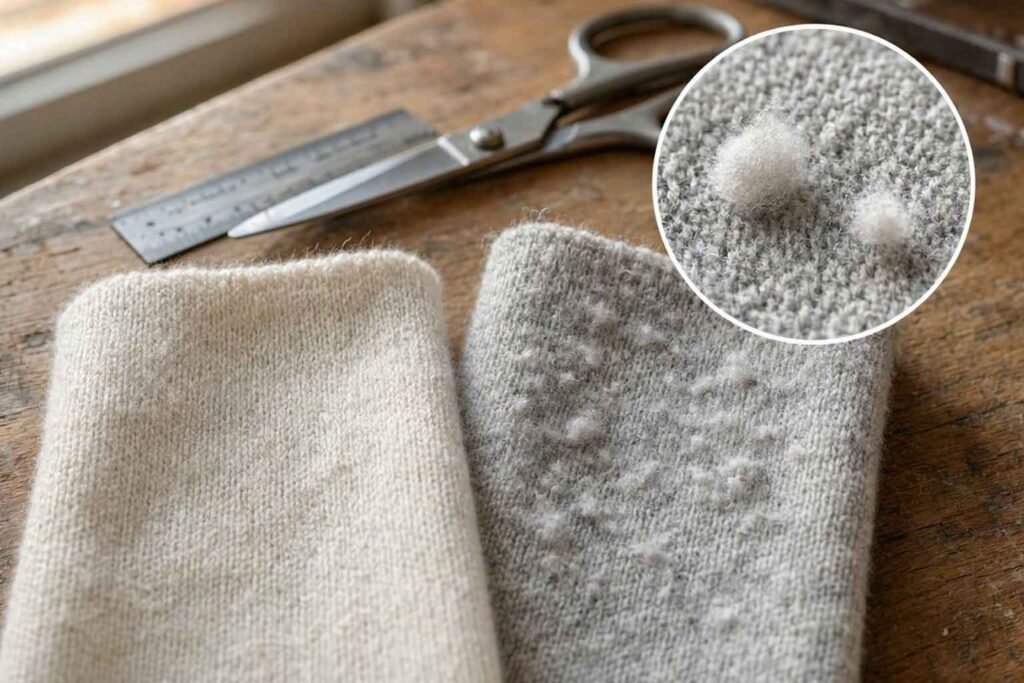
What Is Fabric Pilling
What Is Fabric Pilling?
The Science Behind Fabric Pilling
-
Fuzz Formation:
Loose fiber ends protrude from the yarn surface due to friction during wear or washing, creating a fuzzy layer known as fuzz or lint.
-
Pill Formation:
When the fuzz reaches a critical length (called the critical height), fibers begin to entangle and form small balls or pills attached to the fabric.
-
Pill Persistence or Loss:
Depending on fiber strength and cohesion, pills either break off and fall away or remain attached, causing a persistent, unsightly appearance.
Insight: Synthetic fibers like polyester and nylon tend to hold onto pills longer because of their higher tensile strength, while natural fibers like cotton and wool often shed pills more easily.
Which Fabrics Are Prone to Pilling?
-
Polyester and Cotton Blends:
These are highly susceptible to pilling. The weaker cotton fibers break and tangle around stronger polyester fibers, creating persistent pills.
-
100% Cotton:
Pure cotton fabrics generally pill less than blends but can still develop pills, especially if made from lower-quality, short-staple cotton fibers.
-
Polyester and Viscose Blends:
Viscose fibers tend to fuzz easily, and when combined with strong polyester fibers, pills form and cling stubbornly.
-
Linen and Silk:
These natural fibers have longer, smoother fibers, making them more resistant to pilling.
-
Wool and Wool Blends:
Wool can pill, especially when blended with synthetics. Even a small percentage of synthetic fibers can anchor pills, increasing pilling severity.
Fabric Construction and Pilling
-
Knitted Fabrics:
These have looser constructions, allowing fibers to move and fuzz more easily, making them more prone to pilling.
-
Woven Fabrics:
Generally tighter and denser, woven fabrics resist pilling better, although loose weaves can still pill.
-
Yarn Twist and Fiber Length:
Higher yarn twist and longer staple fibers reduce fuzz formation and pilling.
Effects of Pilling on Garment Quality
- Appearance: Pills give garments a worn, aged look, reducing aesthetic appeal.
- Texture: Pills create a rough, uneven surface that can feel uncomfortable.
- Consumer Satisfaction: Pilling often leads to dissatisfaction and increased returns or complaints.
How to Recognize Pilling on Fabrics
- Look for small fuzzy balls or clusters on high-friction areas such as underarms, collars, cuffs, and seat.
- Feel for rough or bumpy textures on the fabric surface.
- Use good lighting or a magnifying glass for detailed inspection.
- Differentiate between loose lint (which can be brushed off) and pills (which are firmly attached).
How to Prevent Fabric Pilling
-
Choose Fabrics Wisely:
Opt for tightly woven or compactly spun yarns. Compact spinning techniques reduce loose fiber ends, lowering pilling risk.
-
Proper Washing:
- Turn garments inside out before washing.
- Use gentle or delicate cycles with cold water.
- Avoid washing lint-producing fabrics (like terry cloth) with other clothes.
- Do not overload the washing machine to reduce abrasion.
-
Use Suitable Detergents and Softeners:
- Enzyme-based detergents containing cellulase help break down cotton pills.
- Fabric softeners coat fibers, reducing friction.
-
Drying Tips:
- Line dry when possible.
- If using a dryer, remove delicate items promptly to minimize friction.
-
Avoid Harsh Treatments:
- Skip bleach and harsh chemicals that weaken fibers.
- Avoid rough handling or excessive rubbing.
How to Remove Pills from Clothes
-
Fabric Shaver:
Battery-operated shavers gently cut pills off without damaging fabric.
-
Safety Razor or Scissors:
Carefully trim pills on flat surfaces, taking care not to cut the fabric.
-
Lint Roller or Tape:
Useful for light pilling or loose fuzz.
-
Pill Remover Tools:
Specially designed devices are available for various fabric types.
Industry Insights on Pilling Control
- Fiber Selection: Controlling fiber length, strength, and fineness is key.
- Spinning Technology: Compact and vortex spinning reduce fiber ends exposed on yarn surfaces.
- Fabric Design: Minimizing long floats and loose structures in fabric construction helps.
- Chemical Finishes: Anti-pilling finishes, such as polymer coatings or enzymatic treatments, can reduce fuzz but cannot eliminate pilling entirely.
- Testing and Standards:
Standardized tests like the Martindale and Random Tumble Pilling Tester simulate wear and help predict fabric pilling behavior.