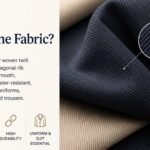
Tetron Is Not a Fabric Type — It's a Brand Name That Became a Category
If you're sourcing fabric in South Asia or the Middle East, you'll hear the word 'Tetron' constantly. A buyer in Pakistan asks for 'Tetron shirting.' A uniform spec in Bangladesh calls for 'Tetron fabric.' A thobe manufacturer in Saudi Arabia specifies 'Tetron.'
But Tetron is not a specific fabric. It's not a weave, a weight, or a finish. Tetron is a brand name for polyester fiber, originally developed by Teijin in Japan. Over decades of use in South Asian textile markets, the brand name has become a generic term for polyester fabric — the same way 'Xerox' means photocopy or 'Hoover' means vacuum cleaner.
This guide covers what Tetron fabric is, where the name comes from, how it performs, and how it compares to other polyester and polyester-blend fabrics.
What Is Tetron Fabric
Where Does the Name 'Tetron' Come From?
Tetron is a trademarked brand of Teijin Limited, a Japanese chemical and textile company founded in 1918. Teijin developed Tetron polyester fiber in the 1950s and 1960s, alongside other major polyester brands:
| Brand | Company | Country | Market |
|---|---|---|---|
| Tetron | Teijin | Japan | Asia, Middle East, Africa |
| Terylene | ICI | UK | UK, Commonwealth |
| Dacron | DuPont | USA | Americas |
| Trevira | Hoechst | Germany | Europe |
| Fortrel | Celanese | USA | Americas |
| Kodel | Eastman | USA | Americas |
Of these brands, Tetron and Terylene are the two that have survived as generic terms in their respective markets. In Pakistan, India, Bangladesh, Sri Lanka, and the Middle East, 'Tetron' is widely understood to mean polyester fabric. Many buyers and garment workers do not realize it's a brand name — they think it's the name of the fiber itself.
What Is Tetron Fabric Made Of?
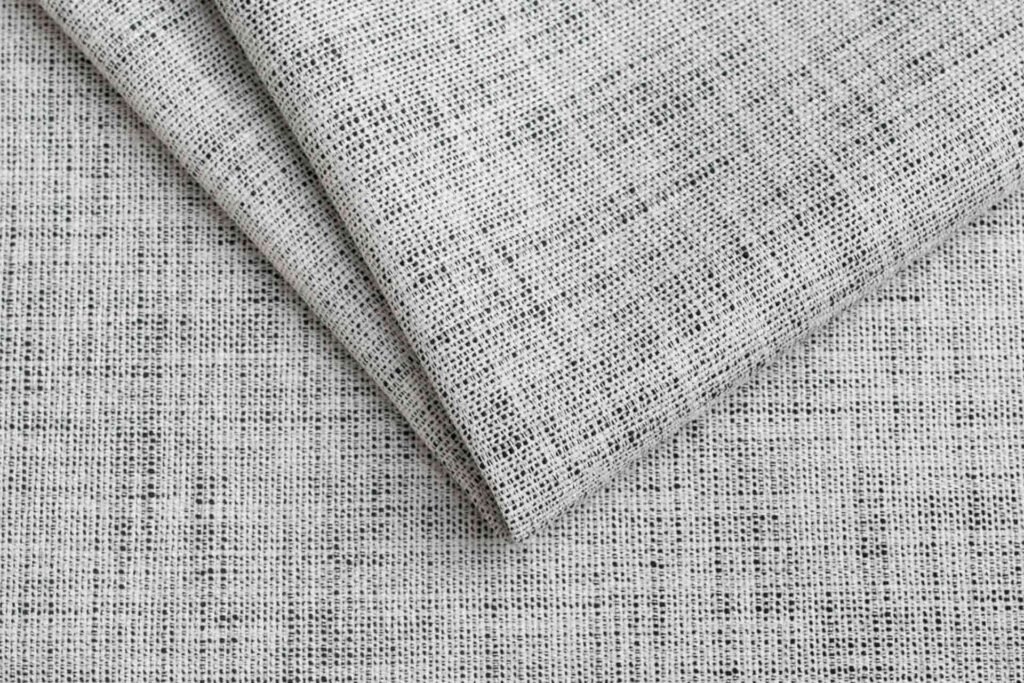
Tetron fabric is 100% polyester — specifically, polyethylene terephthalate (PET), the same polymer used in plastic bottles and the vast majority of polyester textiles worldwide.
| Property | Specification |
|---|---|
| Fiber type | Polyester (PET) — synthetic |
| Origin | Petroleum-based |
| Brand | Originally Teijin (Japan), now produced under license or used as a generic term |
| Fiber length | Available as filament (continuous) or staple (cut, like cotton) |
| Standard denier | 30D to 300D depending on application |
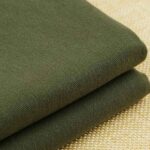
In modern usage, when a supplier lists 'Tetron fabric,' they mean 100% polyester fabric — usually in a woven construction (poplin, twill, or plain weave) suitable for shirting, uniforms, or lining.
Tetron vs Polyester — Is There a Difference?
Technically: Tetron is a brand of polyester. There is no chemical or performance difference between Tetron polyester and any other high-quality polyester fiber. The same polymer, the same production process, the same properties.
In practice: 'Tetron' in South Asian markets implies a quality standard. Because Teijin's Tetron was the first premium polyester fiber widely available in these markets, the name carries an association with quality. A fabric labeled 'Tetron' is expected to be:
- High-tenacity (strong, durable)
- Bright white (good optical brightener loading)
- Consistent in dye uptake (uniform color)
- Low shrinkage (properly heat-set)
A cheap unbranded polyester may not meet these standards. So the distinction is not chemical — it's reputational.
| Factor | Tetron (as used in market) | Generic Polyester |
|---|---|---|
| Quality association | Premium | Variable |
| Typical price | Higher | Lower to mid |
| Tenacity | Expected high | Variable |
| Color consistency | Expected good | Variable |
| Shrinkage control | Expected good | Variable |
Common Uses of Tetron Fabric
| Application | Why Tetron (Polyester) Is Used |
|---|---|
| Uniform shirts | Wrinkle-resistant, durable, affordable, easy to wash |
| School uniforms | Survives rough wear and frequent washing |
| Trousers and slacks | Holds crease, resists wrinkles through the day |
| Lining fabric | Smooth, lightweight, slippery — ideal for garment linings |
| Thobe / Kandura | White stability, wrinkle resistance, drapes well |
| Saree blouses | Affordable, color-fast, easy care |
| Workwear | Durable, chemical-resistant, quick-drying |
Tetron Blends — What Does 'Tetron Cotton' Mean?
In South Asian textile markets, you'll often see 'Tetron Cotton' or 'Tetron Viscose' on fabric labels. This means a polyester blend — not 100% polyester.
| Term | What It Actually Means | Composition |
|---|---|---|
| Tetron | 100% Polyester | 100% PET |
| Tetron Cotton | Polyester-Cotton Blend | Usually 65/35 or 52/48 poly-cotton (equivalent to TC) |
| Tetron Viscose | Polyester-Viscose Blend | Usually 65/35 poly-viscose (equivalent to TR) |
So if a buyer in Pakistan says 'I need Tetron Cotton shirting,' they are asking for poly-cotton fabric — which is the same as TC fabric. The naming convention is different, but the product is the same.
Tetron Fabric Properties
| Property | Rating | Notes |
|---|---|---|
| Durability | ★★★★★ | Polyester is strong — Tetron fabric lasts 80-100+ industrial wash cycles |
| Wrinkle resistance | ★★★★★ | Tetron (polyester) does not wrinkle. Hang dry and wear |
| Breathability | ★★☆☆☆ | Pure polyester is not very breathable. Blending with cotton or viscose improves this |
| Softness | ★★★☆☆ | Smooth but can feel synthetic. Softener improves hand feel |
| Color fastness | ★★★★★ | Polyester holds dye extremely well. Tetron-quality poly has excellent color retention |
| Shrinkage | <1% | Heat-set polyester shrinks minimally |
| Stain resistance | ★★★★☆ | Polyester resists water-based stains. Oil-based stains can be challenging |
| Quick drying | ★★★★★ | Dries in 1-2 hours at room temperature |
| UV resistance | ★★★☆☆ | Standard polyester degrades in prolonged direct sunlight. UV-resistant treatment available |
Tetron vs TR vs TC — Which One Is Better?
This depends entirely on what you're making. The table below shows how Tetron (pure poly) compares to the blends available from XINGYE TEXTILE.
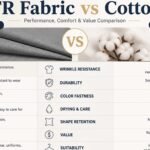
| Factor | Tetron (100% Polyester) | TC (65/35 Poly-Cotton) | TR (65/35 Poly-Viscose) |
|---|---|---|---|
| Wrinkle resistance | ★★★★★ | ★★★★☆ | ★★★★☆ |
| Breathability | ★★☆☆☆ | ★★★★☆ | ★★★☆☆ |
| Softness | ★★★☆☆ | ★★★☆☆ | ★★★★☆ |
| Drape | ★★★☆☆ | ★★★☆☆ | ★★★★☆ |
| Durability | ★★★★★ | ★★★★☆ | ★★★★☆ |
| Cost | Lowest | Mid | Mid |
Choose Tetron (100% polyester) when: You need the lowest cost, maximum wrinkle resistance, and breathability is not a concern. Lining fabrics, budget uniforms, and industrial workwear are typical applications.
Choose TC when: You need a balance of breathability and durability for shirt-weight fabrics. School uniforms, hospitality shirts, and summer workwear.
Choose TR when: You need a premium hand feel and drape closer to wool for suiting, blazers, and formal uniforms.
Tetron Care Instructions
- Wash: Machine wash warm (40°C). Do not exceed 60°C
- Bleach: Chlorine bleach is safe for white Tetron fabric but may yellow over time. Oxygen bleach is preferred
- Dry: Tumble dry low or hang dry. Tetron dries quickly
- Iron: Low heat (synthetic setting). High heat can melt or shine the fabric
- Dry clean: Safe
Frequently Asked Questions
Q: Is Tetron a natural or synthetic fabric? A: Synthetic. Tetron is a brand of polyester fiber, which is made from petroleum. It is not natural or biodegradable.
Q: Is Tetron fabric breathable? A: 100% Tetron (polyester) is less breathable than cotton or cotton blends. Tetron Cotton (TC) or Tetron Viscose (TR) blends are more breathable.
Q: Is Tetron fabric good for summer? A: In its pure form, no — pure Tetron (polyester) can feel hot and clammy in humid weather. Blended with cotton or viscose, it becomes wearable for summer.
Q: Is Tetron fabric good for uniforms? A: Yes — particularly for budget-conscious uniform programs. It is durable, wrinkle-resistant, color-fast, and affordable. For premium uniforms, TC or TR blends are preferred for better comfort and appearance.
Q: Does Tetron fabric shrink? A: High-quality heat-set Tetron (polyester) shrinks less than 1%. Low-quality Tetron may shrink 2-3%. Always request a shrinkage test from your supplier.
Q: Is Tetron the same as polyester? A: Yes — Tetron is a brand name for polyester fiber, originally from Teijin Japan. In many markets, it is used as a generic term for polyester fabric.
Get a Quote — Polyester and Polyester Blend Fabrics
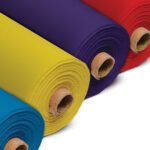
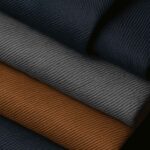
XINGYE TEXTILE manufactures Tetron-grade polyester fabric, TC (polyester-cotton), and TR (polyester-viscose) for uniform programs, garment manufacturing, and textile sourcing worldwide. Available in poplin, twill, gabardine, plain weave, and herringbone. GSM range 100-350. Custom colors. OEKO-TEX certified.
Minimum order: 300 meters per color. Sample-first ordering.