Whether you're designing your first clothing line, sourcing fabric for a small-batch production run, or scaling up to bulk manufacturing, fabric selection is the decision that shapes everything downstream — fit, durability, cost, and how your finished garment feels on the body. This guide walks through the key factors that determine fabric suitability, from basic fiber properties to production-level specifications that matter when you're placing real orders.
How to Choose Fabric for Clothes
1. Start with the Garment Category
The first question isn't 'which fabric do I like?' — it's 'what does this garment need to do?'
Different garment categories have fundamentally different fabric requirements. A fabric that works perfectly for a summer dress will fail in a workwear jacket. Before evaluating any fabric, lock in your garment category first.
| Garment Type | Primary Requirements | Recommended Fabric Direction |
|---|---|---|
| Casual shirts & dresses | Soft hand feel, breathability, easy care | Cotton, rayon, modal, linen |
| Formal trousers & suits | Drape, wrinkle recovery, structure | TR (polyester-viscose), wool blend |
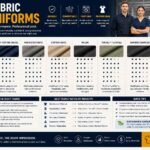
| Workwear & uniforms | Abrasion resistance, color fastness, durability | TC (polyester-cotton), twill |
| Activewear & sportswear | Stretch, moisture-wicking, lightweight | Nylon spandex, polyester spandex |
| Outerwear & jackets | Wind resistance, water repellency, weight | Coated nylon, laminated polyester |
| Sleepwear & loungewear | Softness, breathability, gentle on skin | Modal, bamboo rayon, cotton jersey |
| Children's clothing | Safety, softness, washability | Organic cotton, TC, modal |
2. Understand Fiber Composition
Fiber composition is the single most important specification in fabric selection. It determines hand feel, durability, moisture behavior, drape, and care requirements — everything that affects how a garment performs in real use.
Cotton
The most widely used natural fiber. Soft, breathable, and hypoallergenic — cotton is comfortable against skin and easy to dye in vivid colors. The trade-off is that pure cotton wrinkles easily, shrinks if not pre-washed, and has lower abrasion resistance than synthetics. Best for casualwear, childrenswear, and any application where natural comfort is the priority.
Polyester
The dominant synthetic fiber globally. Polyester is highly durable, wrinkle-resistant, and retains color well after repeated washing. It dries quickly and holds its shape across a wide range of conditions. The main limitation is breathability — polyester traps heat and moisture more than natural fibers, which is why it's often blended rather than used alone in apparel.
Polyester / Viscose Blend (TR Fabric)
One of the most widely used fabric compositions in global garment manufacturing. Typically 65% polyester and 35% viscose, TR combines the dimensional stability of polyester with the soft drape and natural feel of viscose. The result is a fabric that holds its shape, resists wrinkles, and feels comfortable against skin — making it the standard choice for formal trousers, suits, blazers, and institutional uniforms worldwide.
Polyester / Cotton Blend (TC Fabric)
TC fabric balances the durability of polyester with the breathability of cotton. Common ratios are 65/35 and 80/20 polyester-to-cotton. TC is the go-to fabric for workwear, school uniforms, and hospitality garments — applications where the fabric must survive frequent industrial washing while maintaining its appearance and shape.
Viscose / Rayon
A semi-synthetic fiber derived from plant cellulose. Viscose has a silk-like drape and feels cool against skin, making it popular in dresses, blouses, and summer clothing. It absorbs moisture well but loses strength when wet, which means it requires careful handling during washing and garment production.
Modal
A refined form of rayon made from beech tree pulp. Softer than standard viscose and more resistant to shrinkage. Modal is used in premium casualwear, underwear, and sleepwear where an exceptionally soft hand feel is the key selling point.
Nylon (Polyamide)
The strongest common apparel fiber. Nylon has superior abrasion resistance and stretch recovery compared to polyester, making it the preferred choice for activewear, swimwear, and performance outerwear. Higher raw material cost than polyester, but justified for technical and premium performance categories.
Linen
A natural fiber made from flax plants. Linen is highly breathable and becomes softer with washing, but wrinkles very easily and has a characteristic textured appearance. Used primarily in summer clothing, resort wear, and premium casualwear where the natural aesthetic is part of the product identity.
3. Choose the Right Weight (GSM)
GSM — grams per square meter — measures fabric weight. It's one of the most practical specifications in fabric sourcing because it directly affects how a garment drapes, feels, and performs.
Getting GSM wrong is a common and costly mistake. A fabric that's too light looks cheap and lacks structure. A fabric that's too heavy is uncomfortable and expensive to produce with.
| GSM Range | What It Feels Like | Best Applications |
|---|---|---|
| 80–120 GSM | Very lightweight, often semi-sheer | Lining fabric, summer blouses, inner layers |
| 130–160 GSM | Lightweight, fluid drape | Casual shirts, dresses, lightweight trousers |
| 160–200 GSM | Mid-weight, balanced structure | Uniforms, formal shirts, chino trousers |
| 200–260 GSM | Substantial, good body | Suits, formal trousers, workwear shirts |
| 260–350 GSM | Heavy, structured | Outerwear, technical workwear, denim |
If you're sourcing fabric for production, always request a physical sample and verify the GSM yourself before confirming a bulk order. Suppliers typically allow ±5% GSM tolerance, which is industry standard.
4. Consider Weave Structure
Two fabrics can share the same fiber composition and GSM but behave completely differently depending on how they're woven. Weave structure affects drape, stretch, surface texture, and durability.
Plain weave
The simplest and most stable construction — each weft thread passes alternately over and under each warp thread. Plain weave fabrics are balanced, dimensionally stable, and less prone to snagging. Used in shirts, lining fabrics, and lightweight casualwear.
Twill weave
The diagonal rib pattern you see in denim, chinos, and most uniform fabrics. Twill has more drape and flexibility than plain weave, and the diagonal structure makes it more resistant to wrinkling. The most widely used construction for trousers, workwear, and formal uniforms.
Herringbone
A variation of twill where the diagonal direction reverses at regular intervals, creating a V-shaped pattern. Herringbone retains the structural advantages of twill while adding visual texture. Common in suits, blazers, and premium trousers.
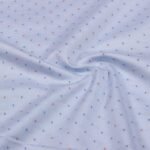
Dobby
Small geometric patterns woven directly into the fabric structure — not printed on the surface. Dobby adds subtle texture and design differentiation. Used in premium shirts, uniform fabrics, and tailored casualwear where understated pattern is desired.
Stretch constructions
Adding 2–5% spandex (elastane) to woven fabrics produces 2-way or 4-way stretch without significantly changing the fabric's appearance. Stretch trousers, fitted uniforms, activewear, and modern suiting all rely on stretch woven constructions for ease of movement and shape retention.
5. Match Functional Finishes to Your End Use
Standard fabric is rarely sufficient for performance or workwear categories. Functional finishes are chemical or mechanical treatments applied during or after fabric production to add specific properties.
Moisture-wicking
Moves sweat away from skin to the fabric surface where it evaporates. Required for activewear, sportswear, and workwear in hot or physically demanding environments.
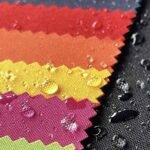
Water-resistant (DWR)
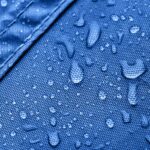
A durable water repellent finish that causes liquid to bead and roll off the fabric surface. Used in outerwear, rainwear, and outdoor workwear. Note that DWR is water-resistant, not waterproof — for full waterproofing, a laminated or coated construction is required.
Anti-wrinkle / Easy-iron
A resin treatment that improves the fabric's crease recovery after washing. Essential for school uniform shirts, formal shirts, and any garment sold with an 'easy-care' positioning.
Anti-static
Prevents electrostatic charge buildup in the fabric. Required for cleanroom garments, electronics manufacturing workwear, and petro-chemical industry applications.
Antimicrobial
Inhibits the growth of bacteria and odor-causing microorganisms on the fabric surface. Specified for medical garments, food industry uniforms, and performance sportswear where odor control matters.
Flame retardant (FR)
A critical safety requirement for oil & gas, welding, electrical utility, and military workwear. FR fabric must comply with specific standards depending on the destination market — EN ISO 11612 in Europe, NFPA 2112 in North America, or equivalent local standards.
6. Sourcing Fabric for Your Clothing Line: What Changes at Production Scale
If you're moving from fabric selection for a single garment to sourcing fabric for a clothing line or production run, several additional factors come into play that personal fabric shopping doesn't prepare you for.
Minimum Order Quantity (MOQ)
Most fabric mills work with MOQ requirements — a minimum number of meters per color or per fabric style. Understanding MOQ early prevents the situation where you've designed a collection around a fabric you can't actually order in viable quantities. Typical wholesale MOQ from Chinese mills ranges from 300 to 1,000 meters per color depending on the fabric type.
Batch-to-batch consistency
When ordering across multiple production runs, dye lot variation between batches is a real risk. Work with suppliers who have documented color management processes and can provide lab dip approvals before each bulk dye run.
Lead time
Stock fabrics are typically available within 1–2 weeks. Custom-developed fabrics — specific GSM, composition, color, or finish — require 20–35 business days minimum. Build lead time into your production calendar before confirming collection deadlines.
Certifications
If you're selling into European, North American, or premium retail channels, your buyers may require fabric certifications. The most common requirements are OEKO-TEX Standard 100 (chemical safety), GOTS (organic fiber supply chain), and GRS (recycled content verification). Confirm certification requirements with your end buyer before specifying fabric.
Sample approval
Never commit to a bulk order without approving a physical fabric sample. Approve the sample in writing — this becomes the production standard against which your bulk order will be inspected.
7. Fabric Selection Checklist
Before finalizing any fabric for production, run through this checklist:
- Garment category and primary performance requirements defined
- Fiber composition selected and justified for end use
- GSM confirmed with physical sample — not just spec sheet
- Weave structure appropriate for garment construction method
- Functional finishes specified where required
- Color fastness grade confirmed: minimum Grade 4 washing, Grade 3-4 rubbing
- Shrinkage rate within acceptable range: ≤3% warp and weft
- Supplier MOQ compatible with your order volume
- Lead time confirmed and built into production schedule
- Certifications confirmed for your target market
- Sample approved in writing before bulk order release
Sourcing Wholesale Fabric for Your Clothing Line
If you're at the stage of sourcing fabric for production — whether for a small clothing brand, a uniform contract, or a bulk apparel order — XINGYE TEXTILE supplies wholesale fabric direct from our manufacturing facility in Shijiazhuang, China.
We produce and supply TR fabric, TC fabric, polyester, nylon, modal, linen, rayon, and a full range of functional fabrics across apparel, workwear, uniform, and home textile applications. Factory-direct pricing with no trading company markup, physical samples available before bulk commitment, and flexible MOQ from 500 meters per color.
Our team can advise on fabric specification based on your garment category, target market, and certification requirements — contact us with your project details and we'll recommend the right fabric and provide a formal quotation.