Ripstop Looks Like a Pattern. It's Actually a Structural Technology.
If you've ever seen a tactical vest, a parachute, a hiking jacket, or a high-end backpack and noticed a grid of thin lines woven into the fabric — you were looking at ripstop.
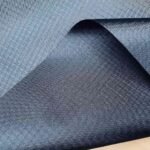
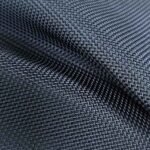
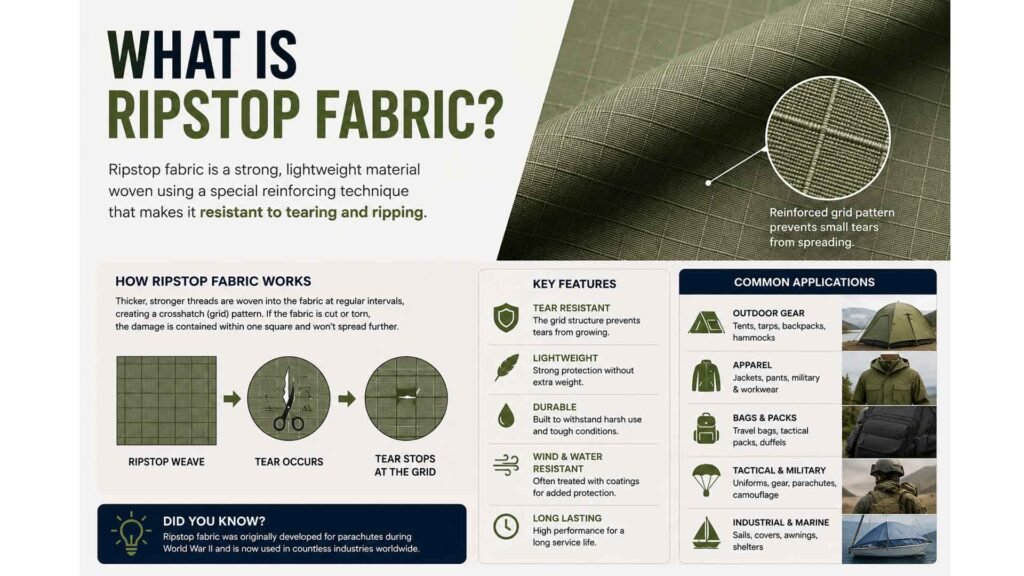
Ripstop is not a fiber. It's not a finish. It's a weave construction where stronger, thicker reinforcement threads are woven into the fabric at regular intervals — creating a visible grid pattern. The grid's purpose is simple and brilliant: when the fabric tears, the tear stops at the first reinforcement thread instead of running across the entire panel.
That grid is the difference between a 2-inch tear you can repair and a 30-inch tear that ruins a jacket. It's the reason ripstop is the default fabric for parachutes, military uniforms, tactical gear, and outdoor equipment — applications where a single tear can be fatal.
This guide covers what ripstop fabric is, how it works, the types of ripstop, its properties and applications, and how to source quality ripstop fabric.
What Is Ripstop Fabric
What Is Ripstop Fabric?
Ripstop is a woven fabric with reinforced threads running through it at regular intervals, creating a grid pattern. The reinforcement threads are thicker or stronger than the base threads, and they act as 'tear stoppers' — preventing small tears from spreading.
| Fact | Ripstop |
|---|---|
| Fabric type | Weave construction (with reinforcement grid) |
| Invented | 1940s (World War II) — used for military parachutes |
| Grid interval | Typically 5-8 mm |
| Reinforcement method | Thicker threads woven into the warp and weft at regular intervals |
| Fibers used | Nylon, polyester, cotton, and blends — most commonly nylon or poly-cotton |
| Signature look | Visible grid pattern |
| Key benefit | Tear resistance — a tear stops at the first grid line |
How Does Ripstop Work?
The genius of ripstop is its simplicity. The mechanism works like this:
-
Normal fabric tears — A snag creates a small hole. The tear propagates along a line of weakness, running across the entire panel in seconds.
-
Ripstop fabric tears — A snag creates a small hole. The tear reaches the first reinforcement thread (the grid line) within a few millimeters. The thicker, stronger thread stops the tear from propagating further.
The analogy: A tear in normal fabric is like a crack in a windshield — it spreads across the whole surface. A tear in ripstop is like a crack in safety glass — it stops at the next break point.
| Fabric | Tear Propagation | Result of a 1 cm Snag |
|---|---|---|
| Standard twill / plain weave | Tear runs the length of the panel | Ruined garment — 20-30 cm tear |
| Ripstop | Tear stops at the next grid line | Minor damage — 1-2 cm hole, repairable |
How Is Ripstop Fabric Made?
| Stage | Process | What Happens |
|---|---|---|
| 1. Yarn preparation | Base yarns (typically 40-200 denier) and reinforcement yarns (typically 2-4x thicker) are prepared | The thicker yarns will form the grid |
| 2. Weaving | Base yarns are woven in a plain or twill weave. Every 5-8 mm, a reinforcement yarn is inserted in both the warp (lengthwise) and weft (crosswise) direction | Creates the grid pattern. The intersection of reinforcement threads is slightly thicker, creating the visible 'box' texture |
| 3. Finishing | The fabric is heat-set, and treatments are applied (water-repellent, breathable coating, etc.) | Sets the shape and adds performance properties |
The grid can be created two ways:
| Method | How It Works | Characteristics |
|---|---|---|
| Interwoven (most common) | Thicker threads woven directly into the fabric during weaving | Stronger bond, grid visible on both sides, more durable |
| Laminated/coated | Reinforcement grid applied to the back of the fabric | Cheaper, grid less visible, less durable long-term |
Types of Ripstop Fabric
| Type | Fiber | Characteristics | Best For |
|---|---|---|---|
| Nylon ripstop | 100% nylon (most commonly 66 nylon) | Very strong, abrasion-resistant, water-resistant, quick-drying. The classic ripstop | Tactical gear, backpacks, outerwear, flags, kites, parachutes |
| Polyester ripstop | 100% polyester | Strong, UV-resistant, cheaper than nylon. Lower tear strength than nylon but good value | Budget outdoor gear, workwear, umbrellas, bags |
| Cotton ripstop (poly-cotton 50/50 or 65/35) | Cotton + polyester blend | Breathable, comfortable, quieter than nylon, comfortable against skin. The standard for BDU military uniforms | Military BDU uniforms, tactical shirts, workwear |
| Cotton ripstop (100% cotton) | 100% cotton | Natural feel, breathable, quiet. Heavy, shrinks more, less water-resistant | Traditional field uniforms, workwear |
| Nylon ripstop with coating | Nylon + PU or silicone coating | Waterproof/water-resistant, adds strength and stiffness | Rain jackets, tent fabric, backpacks |
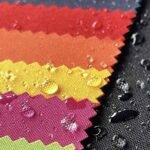
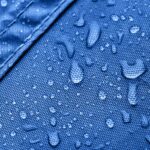
| Ripstop with DWR | Nylon or poly + DWR finish | Water beads off the surface | Outdoor jackets, hiking pants |
Ripstop Fabric Properties
| Property | Rating | Explanation |
|---|---|---|
| Tear resistance | ★★★★★ | The defining property. Tears stop at the grid — 5-10x more tear-resistant than standard fabric of the same weight |
| Weight | ★★★★☆ | Ripstop achieves high strength at low weight — a ripstop nylon jacket weighs 30-50% less than a standard fabric equivalent |
| Abrasion resistance | ★★★★☆ (nylon) | Nylon ripstop is highly abrasion-resistant. Cotton ripstop is moderate |
| Water resistance | ★★★★☆ (with coating) | Uncoated ripstop is water-resistant; coated ripstop is waterproof |
| Durability | ★★★★★ | One of the most durable fabric constructions — designed for parachutes and military use |
| Breathability | ★★★☆☆ | Uncoated ripstop breathes moderately. Coated ripstop is not breathable |
| Comfort | ★★★☆☆ (nylon) / ★★★★☆ (cotton) | Nylon is less comfortable against skin. Cotton ripstop is comfortable |
| Quietness | ★★☆☆☆ (nylon) / ★★★★☆ (cotton) | Nylon rustles when moved. Cotton ripstop is quiet — important for tactical use |
| UV resistance | ★★★☆☆ (nylon) / ★★★★☆ (polyester) | Nylon degrades in prolonged UV. Polyester resists UV better |
| Pilling | ★★★★☆ | Smooth, high-twist yarns resist pilling |
Ripstop vs Canvas vs Cordura — The Durable Fabric Comparison
| Factor | Ripstop | Canvas (Duck) | Cordura |
|---|---|---|---|
| Weave | Grid-reinforced plain/twill | Tight plain or basket weave | High-tenacity nylon, various weaves |
| Tear resistance | ★★★★★ | ★★☆☆☆ | ★★★★★ |
| Abrasion resistance | ★★★★☆ | ★★★★★ | ★★★★★ |
| Weight | Light to mid | Heavy | Mid to heavy |
| Flexibility | Excellent — drapes well | Stiff | Stiff |
| Typical use | Tactical, outdoor, uniforms | Workwear, bags, upholstery | Backpacks, motorcycle gear, military |
| Cost | $ - $$ | $ - $$ | $$$ |
Simple rule: Ripstop for tear resistance and light weight. Canvas for abrasion resistance and heavy duty. Cordura for maximum durability at higher cost.
Ripstop vs Standard Twill/Plain Weave
| Factor | Ripstop | Standard Fabric (same fiber) |
|---|---|---|
| Tear strength | 5-10x higher | Baseline |
| Weight | Can be lighter for same strength | Heavier for same strength |
| Appearance | Grid pattern visible | Smooth surface |
| Cost | +15-30% premium | Baseline |
| Water resistance | Better (denser weave) | Standard |
| Comfort | Slightly less smooth (grid texture) | Smoother |
Common Uses of Ripstop Fabric
| Application | Why Ripstop | Typical Spec |
|---|---|---|
| Military BDU uniforms | Tear resistance, durability, comfortable cotton blend | 50/50 nylon-cotton ripstop, 200-250 GSM |
| Tactical vests and gear | Tear resistance under heavy load, abrasion resistance | 500D-1000D nylon ripstop |
| Parachutes | Extreme tear resistance at minimum weight | Ultralight 30-50D nylon ripstop |
| Outdoor jackets | Lightweight, wind-resistant, tear-resistant | 20-40D nylon ripstop with DWR |
| Hiking pants | Tear resistance against rocks and branches, quick-drying | 50/50 nylon-cotton ripstop |
| Backpacks and bags | Tear resistance, abrasion resistance, lightweight | 210D-500D nylon ripstop |
| Tents and shelters | Tear resistance, water resistance | 40-70D coated nylon ripstop |
| Workwear | Tear resistance for industrial environments | Poly-cotton ripstop, 240-280 GSM |
| Uniforms (security, police) | Tear resistance for active duty | 50/50 nylon-cotton ripstop or TC ripstop |
| Flags and banners | Lightweight, wind-resistant, tear-resistant | 70D nylon ripstop |
Ripstop Denier — What the Numbers Mean
Ripstop fabric is often specified by denier (D) — the weight of the yarn. Understanding denier helps you choose the right ripstop:
| Denier | Weight | Strength | Best For |
|---|---|---|---|
| 30-50D | Ultralight | Light — good for static loads | Parachutes, ultralight jackets |
| 70D | Light | Moderate — good balance | Jackets, tents, flags |
| 100-210D | Mid | Strong | Backpacks, tactical pouches, workwear |
| 500D | Heavy | Very strong | Heavy-duty tactical gear, bags |
| 1000D | Very heavy | Extremely strong | Military gear, heavy backpacks, motorcycle gear |
Rule of thumb: For apparel (jackets, pants, uniforms), 70-250D is the practical range. For gear (bags, vests), 500-1000D. Higher denier = heavier and stiffer, not always better.
Ripstop Care Instructions
| Fabric | Care | Notes |
|---|---|---|
| Nylon ripstop | Machine wash cold, gentle cycle, hang dry or tumble dry low. No fabric softener | DWR-coated fabrics need special care — wash with technical detergent to preserve water repellency |
| Poly-cotton ripstop (BDU) | Machine wash warm, industrial laundry safe, tumble dry medium, iron medium | Durable and easy care — the reason militaries choose it |
| Cotton ripstop | Machine wash warm, tumble dry medium, iron medium-hot | Pre-shrink before cutting. Wrinkles more than blends |
| Coated ripstop | Wipe clean or hand wash cold. Do not machine wash or dry | Machine washing degrades the coating |
How to Buy Ripstop — What to Specify
| Spec Element | What to Ask |
|---|---|
| Fiber | Nylon (stronger, more expensive), polyester (cheaper, UV-resistant), or poly-cotton (comfortable, for uniforms) |
| Denier | 70D for apparel, 200-500D for gear, 1000D for heavy duty |
| GSM | 180-250 for apparel, 250-400 for gear |
| Grid interval | Standard 5-8 mm. Confirm it's interwoven, not laminated |
| Coating | Uncoated, PU coated (waterproof), or DWR finish |
| Weave | Plain ripstop or twill ripstop |
| Color | Custom dye or stock colors. Olive drab, black, navy, coyote are tactical standards |
| Certification | OEKO-TEX for chemical safety |
| Wash test | Request tear strength and shrinkage test results |
Frequently Asked Questions
Q: Is ripstop fabric waterproof? A: Uncoated ripstop is water-resistant but not waterproof. Ripstop with PU coating or a DWR finish is water-resistant to waterproof depending on the treatment. For fully waterproof applications, ripstop is laminated with a waterproof membrane.
Q: Is ripstop fabric breathable? A: Uncoated ripstop is moderately breathable. Coated ripstop is not breathable. For breathable waterproof applications, use a coated ripstop with a breathable membrane (like Gore-Tex-style construction).
Q: Is ripstop comfortable to wear? A: Cotton and poly-cotton ripstop are comfortable against the skin. Nylon ripstop is less comfortable for direct skin contact (less breathable, can feel synthetic). For uniforms worn directly against skin, choose poly-cotton ripstop.
Q: Does ripstop shrink? A: Nylon and polyester ripstop shrink minimally (<2%). Cotton ripstop shrinks more (3-6%) unless pre-shrunk. Always pre-wash cotton ripstop before cutting.
Q: Is ripstop fabric strong? A: Yes — ripstop is among the strongest fabric constructions for its weight. The reinforcement grid gives it 5-10x the tear resistance of standard fabric at the same weight.
Q: What is the difference between ripstop and oxford? A: Ripstop has a visible reinforcement grid for tear resistance. Oxford has a basket-weave texture for softness and durability — it does not have tear-stopping reinforcement. Ripstop is stronger per gram; oxford is softer and cheaper.
Q: Why is ripstop used in military uniforms? A: Military uniforms need to survive tears from barbed wire, brush, shrapnel, and daily rough use. Ripstop's grid construction stops small tears from becoming mission-ending rips — and poly-cotton ripstop does this while remaining comfortable to wear.
Get a Quote — Ripstop Fabric
XINGYE TEXTILE manufactures ripstop fabric in nylon, polyester, and poly-cotton compositions. Interwoven reinforcement grid, tear-resistant construction. Available in 70D to 500D. Plain and twill ripstop. PU-coated and DWR options. GSM range 180-400. Custom colors, custom development. OEKO-TEX certified.
Applications: Tactical uniforms, workwear, outdoor apparel, bags, tents, and technical textiles.
Minimum order: 300 meters per color. Sample-first ordering.